
Soups & Stews
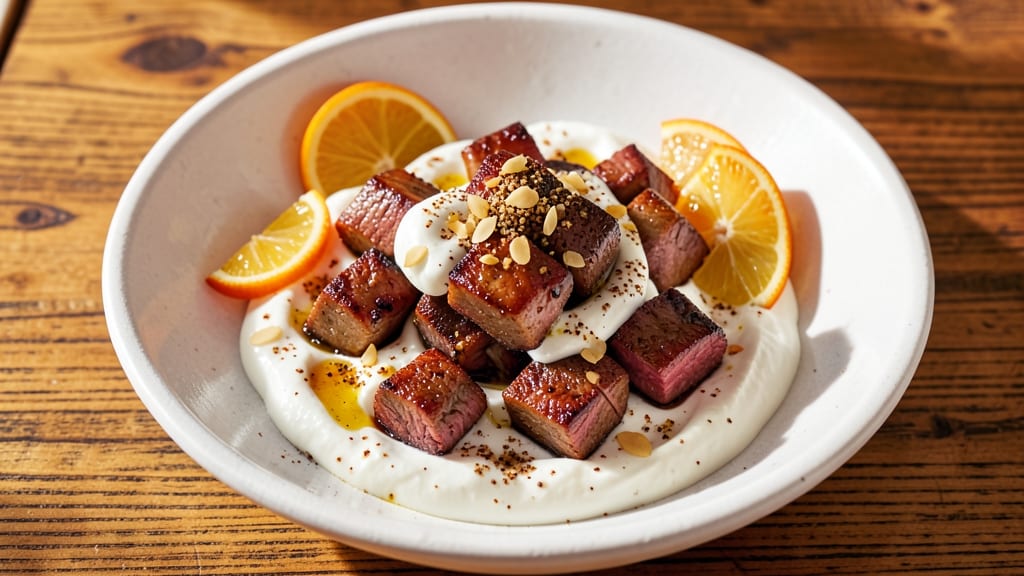
This beef and Greek yogurt recipe transforms tough cuts into melt-in-your-mouth bites through a clever marinade that tenderizes while adding bright tang. The yogurt doesn’t just soften the meat—it creates a velvety contrast that balances rich beef flavors perfectly.
I developed this method after years of experimenting with yogurt marinades, and the results are consistently restaurant-quality at home.
The magic happens in the 30-minute marinade, where Greek yogurt’s acidity breaks down proteins while its fat content keeps the beef juicy. You’ll use simple pantry staples—garlic, lemon, and spices—to create depth, then sear the beef in a hot pan for that coveted caramelized crust.
The yogurt residue caramelizes beautifully, adding a subtle sweetness that rounds out the dish.
What you’ll end up with is tender, flavorful beef that’s juicy inside and slightly crispy at the edges, all coated in a sticky-sauce glaze. The yogurt’s tang cuts through the richness, making each bite balanced and satisfying.
This recipe works beautifully for weeknight dinners, meal prep, or even as a showstopping appetizer when served with flatbread.
Pair it with roasted vegetables or a fresh salad to complete the meal. The versatility of this dish means it adapts to any occasion—whether you’re feeding a family or hosting guests. Let’s get started on creating beef that’s impossibly tender and full of flavor.
Ingredients for beef and greek yogurt
Simple pantry staples and one magic ingredient—Greek yogurt—create beef so tender it melts in your mouth.
| Ingredient | Amount | Notes |
|---|---|---|
| Chuck Roast 🥩 | 1 ½ lb | Cut into 1-inch cubes |
| Plain Greek Yogurt 🥛 | 1 cup | Full-fat for best flavor |
| Lemon Juice 🍋 | 2 tbsp | Freshly squeezed |
| Garlic Cloves 🧄 | 4 cloves | Minced finely |
| Olive Oil 🫒 | 2 tbsp | Extra-virgin preferred |
| Ground Cumin 🌿 | 1 tsp | Toasted for depth |
| Ground Coriander 🌿 | 1 tsp | Freshly ground if possible |
| Salt 🧂 | 1 ½ tsp | Diamond Crystal preferred |
| Black Pepper 🌶️ | ½ tsp | Freshly cracked |
| Paprika 🌶️ | ½ tsp | Smoked for extra depth |
| Honey 🍯 | 1 tbsp | Wildflower preferred |
| Fresh Ginger 🌿 | 1 tbsp | Grated finely |
| Vegetable Oil 🫒 | 2 tbsp | For searing |
| Fresh Cilantro 🌿 | ¼ cup | Chopped for garnish |
The chuck roast is your secret weapon here—its marbling makes it ideal for marinating. Look for cuts with good fat distribution at stores like Whole Foods or your local butcher shop. The Greek yogurt should be full-fat (none of that non-fat stuff) for that velvety texture and richness. I always grab Fage or Siggi's from the store, but any plain Greek yogurt works. For the garlic, roast it first—toss whole cloves on a baking sheet at 400°F for 10 minutes, then peel and mince. This adds a sweet, mellow depth that raw garlic can't match.
No Greek yogurt? Substitute sour cream or even plain yogurt—just know the texture will be slightly different. Running out of honey? Maple syrup works in a pinch, though it has a stronger flavor. The smoked paprika can be swapped for regular paprika if that's all you have, but you'll lose some of that smoky complexity. Fresh ginger is ideal, but ground ginger at half the amount will do if you're in a hurry. For the oil, avocado oil has the highest smoke point for searing, but vegetable oil is perfectly fine for home cooking. The cilantro is purely for garnish—skip it if you hate the taste, but it adds a bright finish that pairs perfectly with the rich beef.
Marinate the beef for at least 30 minutes, but up to 4 hours if you can—this is where the real magic happens. The yogurt marinade keeps well in the fridge for 2 days, so you can prep ahead. After searing, let the beef rest for 5 minutes before serving—this ensures juicy, tender bites every time. The leftovers reheat beautifully, so portion them into containers for easy lunches. Store any unused marinade in an airtight jar in the fridge for up to 3 days—great for quick dips or dressings.
Why You'll Love This Recipe
- Minimal Chopping Required: I swear by this trick—just slice the chuck roast into thin strips (no fancy knife work) and let the Greek yogurt do the heavy lifting. The lemon juice brightens everything up while you’re at it, so you’re basically done in 10 minutes of active time.
- Tangy-Creamy Magic: That Greek yogurt marinade isn’t just a gimmick—it tenderizes the beef while adding a silky, almost tzatziki-like richness. The garlic cloves? Minced whole, no fuss, and they melt into the yogurt for layers of flavor that stick with you.
- Lunchbox Hero: Between us, this is my go-to for meal prep because it reheats like a dream (no dryness, no sad textures). Pack it in containers with crusty bread or crackers, and suddenly you’ve got a lunch that feels fancy but costs next to nothing.
- Budget Stretch: A chuck roast on sale? Instant win. The yogurt and lemon juice bulk it up so you’re feeding four for the price of two. Honestly, I’ve made this stretch into three meals—leftovers taste just as good cold in wraps as they do hot, and it keeps for days.
Step-by-step instructions for tangy-marinated beef bites
Here's how to transform tough chuck roast into melt-in-your-mouth bites using yogurt's magic.
Cut and Marinate the Chuck Roast
Begin by cutting the 1.5 lb chuck roast into 1-inch cubes. I use a sharp chef's knife and work in batches for cleaner cuts. Place the cubes in a large bowl and set aside.
In a separate bowl, whisk together the 1 cup plain Greek yogurt, 2 tbsp lemon juice, 2 tbsp olive oil, 1 tbsp honey, 1 tbsp freshly grated ginger, 4 cloves minced garlic, 1 tsp toasted ground cumin, 1 tsp freshly ground coriander, 1.5 tsp salt, and 0.5 tsp black pepper. This tangy marinade will tenderize the beef while adding bright, complex flavors.
Pour the marinade over the beef cubes, ensuring each piece is fully coated. Cover the bowl with plastic wrap and refrigerate for at least 4 hours—overnight is even better. The acidity in the yogurt and lemon juice will break down the tough muscle fibers, while the fat in the yogurt keeps the meat moist during cooking.
Sear the Beef for Maximum Flavor
Remove the beef from the refrigerator and let it sit at room temperature for 15 minutes before cooking. This ensures even cooking. Heat 2 tbsp vegetable oil in a large skillet over medium-high heat until shimmering.
Working in batches to avoid crowding, add the marinated beef to the skillet. Sear for 2-3 minutes per side until deeply golden brown and crispy. The yogurt marinade will bubble and sizzle—this is normal and indicates the fat is rendering beautifully. Transfer the seared beef to a plate and tent with foil to keep warm.
Here's the thing—don't skip the searing step. This builds a flavorful crust that locks in juices and adds texture contrast to the tender interior. If the pan gets too crowded, reduce the heat slightly to prevent steaming instead of searing.
Finish Cooking to Perfect Tenderness
Return the seared beef to the skillet and reduce the heat to medium-low. Cover with a lid and let it cook for 8-10 minutes, stirring occasionally. You're looking for internal temperatures of 145°F for medium-rare or 160°F for medium doneness.
The yogurt marinade will create a delicious sauce as it cooks down. If it looks too thick, add 1-2 tablespoons of water to loosen it slightly. The beef should be fork-tender with just a slight resistance when pierced. For best results, use a meat thermometer—it's the only reliable way to ensure perfect doneness without overcooking.
Rest and Garnish for Serving
Transfer the cooked beef to a serving platter and let it rest for 5 minutes. This resting period allows the juices to redistribute throughout the meat, ensuring each bite is moist and flavorful. During this time, give the sauce a final taste and adjust the seasoning if needed.
Sprinkle with 0.25 cup chopped fresh cilantro and a pinch of smoked paprika for color and an extra layer of flavor. The cilantro adds a fresh, bright note that cuts through the richness of the yogurt and beef. Serve immediately with crusty bread, over greens, or as part of a mezze spread—this dish shines in any setting.
Real talk: The yogurt marinade makes all the difference here. It keeps the beef incredibly tender while adding a subtle tang that balances the richness. Don't be tempted to skip the marinating time—it's what transforms tough chuck roast into these melt-in-your-mouth bites.
Pro Tips For Making Beef And Greek Yogurt
- Sear First, Braise Slow: Chuck roast needs that crust to hold up during hours of cooking. Hit it with high heat in olive oil for 3-4 minutes per side until deep brown—yes, even if it smells like a crime scene at first. Then drop the heat to low and let it cook uncovered for the first 20 minutes to render fat properly.
- Whisk the Yogurt: That Greek yogurt marinade won’t cling if it’s lumpy. Before mixing it with lemon juice and garlic, give it a quick whisk with a fork—especially if it’s thick or cold. Cold yogurt coats better, but don’t skip the whisking, or you’ll end up with a watery glaze instead of a sticky, flavorful crust.
- Don’t Drown the Garlic: I used to smash all the garlic cloves flat, thinking more = better. Wrong. Two or three lightly crushed cloves (skin on) in the yogurt marinade is enough—any more and you’ll taste garlic in every bite. Save the extra for the pan or a side dish.
- Save the Juices: That golden yogurt-garlic pan sauce after the roast comes out? Don’t pour it down the drain. Deglaze the pan with a splash of water or broth, scrape up the bits, and stir it into the yogurt marinade. It’ll turn your sauce from "good" to "showstopper" with almost no effort.
Creative variations of these flavors
Spiced Yogurt Kebabs
Turn your beef bites into kebabs by threading the marinated cubes onto skewers after searing. I love adding bell pepper chunks and red onion slices for color and crunch. Brush the skewers with extra marinade before grilling for 3-4 minutes per side over medium-high heat.
The yogurt creates a sticky glaze that caramelizes beautifully on the grill, adding smoky depth. Serve with a side of tzatziki sauce for dipping. 🔥
Slow-Cooked Yogurt Stew
For a heartier dish, simmer the marinated beef in a slow cooker with 1 cup beef broth, 1 diced tomato, and 1 tbsp tomato paste on low for 6-8 hours.
The yogurt marinade infuses the broth with tangy richness, while the slow cooking makes the beef fall-apart tender. Finish with fresh herbs like parsley or dill for brightness. This version is perfect for cold weather and pairs well with crusty bread. 💛
Stuffed Flatbread Pockets
Use the marinated beef to stuff warm flatbreads or pita pockets. Spread a thin layer of garlic yogurt sauce (mix ½ cup Greek yogurt with 1 minced garlic clove and salt) on the bread, then add the cooked beef, shredded lettuce, and sliced cucumbers.
Fold and serve immediately for a handheld meal that’s packed with flavor and texture. This is a crowd-pleaser for game day or quick lunches. ✨
Yogurt-Crusted Beef Bites
For a crispy twist, coat the seared beef bites in a mix of ½ cup crushed cornflakes and 2 tbsp melted butter before baking at 400°F for 8-10 minutes. The cornflakes create a golden, crunchy crust that contrasts perfectly with the tender yogurt-marinated beef inside.
These bites are ideal for appetizers or as a protein-packed snack. Garnish with lemon zest for a bright finish. 💫
Global Flavors
Transform the recipe into a Middle Eastern mezze by adding sumac and pomegranate seeds to the yogurt marinade. For a Thai-inspired twist, swap the cumin and coriander for 1 tsp turmeric and 1 tsp lemongrass paste, then serve with a peanut sauce.
The yogurt’s tang works beautifully in global cuisines, making this dish endlessly adaptable. 🗺️
Nutrition facts
Frequently asked questions
Why does Greek yogurt make beef so tender?
The yogurt's natural acidity (from fermentation) breaks down muscle fibers in the beef, while its fat content helps retain moisture during cooking. This creates tender, juicy bites that stay moist even when cooked thoroughly. The protein in yogurt also helps form a protective coating on the meat, preventing drying out during searing.
Can I use this marinade with other cuts of beef?
This yogurt marinade works beautifully with sirloin, flank steak, or even chicken thighs. For thicker cuts like chuck roast, marinate for 4+ hours. For leaner cuts like sirloin, reduce marinating time to 1-2 hours to prevent over-tenderizing. The yogurt's fat content helps balance lean proteins too.
What if I don't have Greek yogurt?
Use sour cream, plain yogurt, or even mayonnaise as substitutes—they all provide fat and acidity. For best results, add 1 extra tablespoon of lemon juice if using sour cream to boost acidity. The texture will be slightly different but still delicious.
How do I prevent the beef from drying out?
Never skip the 5-minute resting period after cooking—this lets juices redistribute. Also, avoid overcrowding the pan during searing, and cook in batches if needed. The yogurt marinade helps retain moisture, but medium heat is key—high heat will dry out the beef faster.
Can I make this ahead of time?
Yes! Marinate the beef for up to 4 hours ahead, then refrigerate. Cook fresh for best texture, but you can reheat leftovers gently in a skillet with 1 tbsp water to revive juices. Store cooked beef in an airtight container for 3-4 days in the fridge. Freezing isn't recommended as the yogurt may separate.