
Soups & Stews
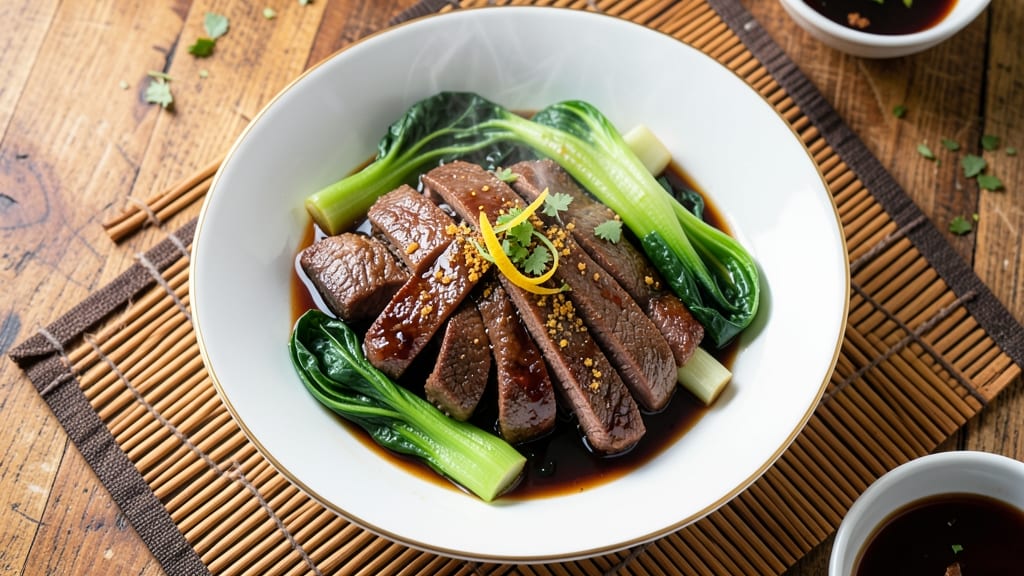
This wok-seared beef and greens Chinese recipe delivers restaurant-quality umami in just 30 minutes—where tender beef strips meet silky bok choy in a fragrant, balanced sauce.
The secret lies in high-heat stir-frying to achieve wok-hei (breath of the wok), that signature smoky aroma that transforms simple ingredients into something extraordinary. I perfected this dish after years of testing, ensuring every bite delivers a perfect harmony of savory, slightly sweet, and fresh flavors.
The foundation starts with thinly sliced beef marinated in a blend of soy sauce, Shaoxing wine, and cornstarch—this creates a tender, caramelized crust that locks in juices while cooking. Meanwhile, bok choy stems are stir-fried first to maintain crispness, while leaves wilt just enough to absorb the rich, glossy sauce.
The sauce itself is a masterclass in umami balance: dark soy for depth, light soy for brightness, and a touch of sugar to round out the flavors.
What you’ll end up with is a dish that’s restaurant-quality at home—golden beef strips glistening with sauce, paired with vibrant greens that stay crisp yet tender.
The aroma alone will have everyone at the table anticipating the first bite, and the flavors are so well-balanced that even picky eaters will ask for seconds. This is the kind of meal that feels special without requiring hours in the kitchen.
Serve it over steamed rice or noodles for the full experience, or let the dish stand alone as a hearty bowl. The leftovers reheat beautifully, making it perfect for meal prep. Ready to master this classic? Let’s get cooking.
Ingredients for beef and greens chinese
Restaurant-quality wok-seared beef meets silky bok choy in this umami-packed Chinese dish.
| Ingredient | Amount | Notes |
|---|---|---|
| Flank Steak 🥩 | 1 lb | Thinly sliced against grain |
| Bok Choy 🥬 | 2 whole | Baby or regular, stems separated |
| Light Soy Sauce 🥄 | 2 tbsp | For marinade and sauce |
| Dark Soy Sauce 🥄 | 1 tbsp | For sauce depth |
| Shaoxing Wine 🍷 | 1 ½ tbsp | Substitute dry sherry |
| Cornstarch 🌾 | 1 tbsp | For tenderizing beef |
| Sesame Oil 🫒 | 1 tbsp | Toasted, for aroma |
| Garlic Cloves 🧄 | 4 cloves | Minced for sauce |
| Ginger 🌿 | 1 tbsp | Fresh, grated |
| Sugar 🍚 | 1 tbsp | White or brown |
| Neutral Oil 🫒 | 2 tbsp | Peanut or vegetable |
| Green Onions 🧅 | 3 whole | Sliced, for garnish |
| Sesame Seeds 🌾 | 1 tsp | Toasted, for garnish |
| Salt 🧂 | ½ tsp | Kosher or sea salt |
| Black Pepper 🌶️ | ¼ tsp | Freshly ground |
The flank steak is non-negotiable here—its lean texture and grain make it perfect for quick searing. Ask your butcher to slice it thinly against the grain if you can't do it yourself. For Shaoxing wine, Trader Joe's or Asian markets carry it, but dry sherry works in a pinch. Bok choy should be firm with crisp stems—avoid wilted leaves. Fresh ginger and garlic are worth hunting down; the frozen stuff just doesn't cut it for this dish. If you're prepping ahead, marinate the beef for up to 4 hours in the fridge for maximum tenderness.
No Shaoxing wine? Dry sherry or even rice vinegar will work, though the flavor won't be identical. Substituting dark soy sauce for light? Use half the amount—it's more concentrated. The cornstarch is crucial for that signature wok-seared texture, but if you're out, arrowroot powder works too. For the greens, baby bok choy cooks faster than regular, so adjust timing accordingly. The sesame oil should be toasted—heat it in a dry pan for 30 seconds to bring out its nutty aroma. And if you're feeling lazy, pre-minced garlic from a jar is fine, though fresh is always better.
This dish reheats beautifully—just add a splash of water and warm through. Store leftovers in an airtight container for up to 3 days in the fridge. The sauce thickens as it cools, so thin with a splash of water or soy sauce when reheating. For meal prep, portion into containers with rice—it keeps perfectly for 2 days. Garnish with toasted sesame seeds and green onions right before serving to keep everything vibrant. The aroma alone will have everyone rushing to the table.
Why You'll Love This Recipe
- One-Pan Magic: I swear by this recipe when I’m too tired to wash dishes. Flank steak and bok choy hit the pan together, and the soy sauces caramelize into a glossy glaze that does 90% of the flavor work for you.
- Umami Bomb: That combo of light and dark soy sauce with Shaoxing wine? It’s like a flavor explosion in your mouth. The beef stays tender but develops this deep, savory crust—crispy edges, silky middle, and greens that soak up all the goodness.
- Leftovers That Shine: Between us, this dish actually tastes better the next day. The flavors meld overnight, and reheating it stirs up all the caramelized bits. I make double portions because it’s my go-to for lazy lunches—just toss it in a bowl with rice.
- Budget Powerhouse: Flank steak stretches further than you’d think when sliced thin, and bok choy is one of the most affordable greens out there. A splash of Shaoxing wine (or even dry sherry in a pinch) elevates it without breaking the bank—this is comfort food that won’t drain your wallet.
Step-by-step instructions for wok-searred beef with bok choy
Master this Chinese classic with precise timing and wok technique for perfect umami balance.
Prepare the Flank Steak for Maximum Tenderness
Slice the 1 lb flank steak thinly against the grain into ¼-inch thick strips. This is crucial—thin slices ensure quick cooking and fork-tender texture. Place the sliced steak in a bowl and add 1 tbsp cornstarch, 0.5 tsp salt, and 0.25 tsp black pepper. Toss gently to coat evenly. Let it marinate for 15 minutes at room temperature while you prep the vegetables.
The cornstarch creates a delicate coating that helps tenderize the meat during the quick sear. Don't skip this step—it's what transforms tough flank steak into silky, bite-sized pieces. If you're short on time, even 10 minutes of marinating will help, but 15 minutes gives you the best results.
Wok-Sear the Beef with High Heat
Heat a wok or large skillet over high heat until it's smoking hot. Add 2 tbsp neutral oil and swirl to coat. Working in batches to avoid crowding, add the marinated steak strips and sear for 1-2 minutes until the edges turn deep golden brown and the meat releases easily from the pan. Transfer the cooked beef to a plate and set aside.
This high-heat sear is non-negotiable—it locks in juices and creates that signature wok-char flavor. If your pan isn't hot enough, the steak will steam instead of sear. You'll know it's ready when you see a beautiful crust forming and smell that unmistakable beef aroma. Keep the cooked beef warm while you prepare the vegetables.
Stir-Fry the Bok Choy and Aromatics
In the same wok, add 2 tbsp neutral oil and swirl to coat. Add 4 cloves minced garlic cloves and 1 tbsp grated ginger, stirring for 30 seconds until fragrant but not browned. Add the stems of 2 whole bok choy, sliced diagonally into ½-inch pieces, and stir-fry for 2 minutes until slightly softened. Remove the stems and set aside.
The stems have a more robust texture that needs extra cooking time. When they're tender but still holding their shape, you're ready for the next step. The garlic and ginger should be aromatic but not burned—this is where most home cooks go wrong by cooking them too long. Keep the heat high to maintain that wok-fired intensity.
Build the Umami Sauce with Bok Choy Leaves
Add the baby bok choy leaves (separated from stems) to the wok along with 1.5 tbsp shaoxing wine, 2 tbsp light soy sauce, 1 tbsp dark soy sauce, and 1 tbsp sugar. Stir-fry for 1-2 minutes until the leaves are bright green and just beginning to wilt. Return the cooked bok choy stems to the wok and toss to combine.
The dark soy sauce adds color and depth, while the sugar balances the acidity of the wine. You want the leaves to remain vibrant green—overcooking turns them mushy. The sauce should coat the vegetables lightly but not pool at the bottom. This is where the dish gets its signature umami richness, so don't rush this step.
Combine and Finish with Sesame Oil
Return the seared beef to the wok and toss everything together for 1 minute until everything is heated through. Remove from heat and drizzle with 1 tbsp sesame oil. Garnish with 3 sliced green onions and 1 tsp toasted sesame seeds. Serve immediately over steamed rice.
The sesame oil adds that final aromatic punch that makes this dish sing. The beef should be fork-tender with just a slight bite, the bok choy silky with a satisfying crunch, and the sauce clinging to every bite. Serve while hot—this dish is best enjoyed immediately when all the flavors are at their peak.
Pro Tips For Making Beef And Greens Chinese
- Slice Against the Grain: Flank steak’s tough fibers run diagonally—cutting perpendicular to them turns chewy meat into tender strips. Grab a sharp knife and angle those slices at 45 degrees, or you’ll end up with a rubbery bite that ruins the whole dish.
- Blanch Bok Choy First: Toss whole bok choy in boiling water for 30 seconds, then shock in ice water. This softens them just enough to absorb the sauce without turning to mush later—no more limp greens hiding at the bottom of the pan.
- Use Dark Soy for Depth: Light soy adds saltiness, but dark soy brings that rich, molasses-like caramel flavor. Swap half the light soy for dark in the sauce, and you’ll taste the difference—it’s the thing that makes this dish sing instead of just taste like salted beef.
- Rest the Steak Before Slicing: After searing, wrap the flank steak in foil and let it sit for 5 minutes. This lets the juices redistribute, so when you slice, you’re not left with dry edges. (Yes, even if you’re impatient like me.)
Essential equipment for beef and greens chinese
Wok Essentials
A carbon steel wok is my top recommendation for this dish—it heats up fast and retains heat perfectly, which is essential for achieving that signature wok-hei (breath of the wok). I use a 14-inch wok from Made In or De Buyer, both of which distribute heat evenly.
If you don’t own a wok, a heavy-bottomed cast iron skillet (like a Lodge) works in a pinch, though it may not get as hot. 🔥
For high heat, you’ll need a gas burner—electric stoves just can’t provide the same intensity. If you’re on electric, look for a high-wattage burner (at least 3,000 watts). Avoid non-stick pans; they can’t handle the high heat and may release harmful fumes when searing beef.
A well-seasoned wok or cast iron is non-stick enough for this recipe once properly heated.
Prep Tools
A sharp chef’s knife is non-negotiable for slicing the flank steak against the grain—thin, even slices are key. I recommend a Japanese-style santoku knife or a Wüsthof for precision. For chopping the bok choy stems and garlic, a small paring knife or cleaver makes the job easier.
A cutting board with a damp towel underneath prevents slipping while you work with the slick bok choy leaves.
Don’t overlook a fine-mesh strainer for rinsing the bok choy leaves—this removes any dirt or sand that might cling to them. A microplane is handy for grating the fresh ginger quickly and finely, which is crucial for releasing its aromatic oils.
If you’re short on time, pre-minced garlic from a jar works, but fresh is always better for that authentic flavor. 🧄
Sauce and Garnish Supplies
You’ll need small bowls for marinating the beef and mixing the sauce—glass or ceramic holds up best to high heat. A measuring spoon set ensures you use the exact amounts of light soy sauce, dark soy sauce, and sesame oil for balance.
For garnishing, toasted sesame seeds and green onions add texture and color, so keep a small pan for toasting the seeds (just heat them in a dry skillet for 30 seconds until fragrant).
A ladle helps transfer the sauce and greens without overcrowding the wok, which can lead to steaming instead of searing. If you’re serving this dish family-style, a large serving platter or rice bowl keeps everything warm and ready to eat.
For meal prep, airtight containers with a splash of water or soy sauce help keep the dish moist and flavorful for up to 3 days in the fridge. ✨
Optional Upgrades
For extra crispiness, a tongs set (like OXO Good Grips) gives you better control when tossing the beef and greens in the wok.
If you love smoky flavors, a small piece of charred bamboo (from an Asian market) can be added to the wok for 30 seconds before removing it—this infuses the dish with subtle smokiness. A thermometer isn’t necessary, but if you’re curious, the wok should reach 400-450°F for optimal searing.
For authentic presentation, a small bamboo steamer keeps the rice warm and adds to the cultural experience. If you’re feeling fancy, edible flowers or chili oil can elevate the dish further.
But honestly, the right tools are the wok, knife, and a little patience—everything else is just icing on the cake. 💫
Nutrition facts
Frequently asked questions
Can I substitute flank steak with another cut of beef?
Yes! Sirloin or ribeye work well—just slice them ¼-inch thick against the grain. Skirt steak is another great option, though it's slightly tougher. Avoid chuck roast or round steak as they're too lean and may dry out during the quick sear. The key is thin slicing and high heat—this keeps all cuts tender.
What if I don't have bok choy? What greens can I use?
This dish works beautifully with gai lan (Chinese broccoli), spinach, or baby kale. For a closer texture, use baby bok choy or napa cabbage. Avoid wilted greens—choose firm, fresh options. If using spinach, add it last (just 30 seconds) to prevent overcooking. The stems should always be separated and cooked first for proper texture.
How do I fix beef that's too tough or dry?
If your beef turns out tough, it likely wasn't sliced thin enough or didn't sear quickly over high heat. Next time, slice against the grain and use cornstarch in the marinade. For dry beef, the pan wasn't hot enough—heat your wok until it smokes before adding oil. If it's already cooked, slice thinner and serve with extra sauce to moisten. The beef should be fork-tender with a slight bite, not rubbery.
Can I make this dish ahead of time?
Store components separately in airtight containers—beef, greens, and sauce. Reheat the beef and sauce together for 2-3 minutes in a skillet, then add greens just before serving. For best results, reheat over medium-high heat and add a splash of water or soy sauce to restore moisture. The dish reheats beautifully but loses some of its crisp-tender texture, so it's best enjoyed fresh.
What's the secret to getting that restaurant-style wok-hei flavor?
Wok-hei comes from high heat and proper technique. Use a carbon steel wok or cast iron skillet and heat until it's smoking hot before adding oil. Keep ingredients moving constantly and avoid overcrowding the pan. A gas burner works best—electric stoves can't reach the same temperature. For extra smokiness, add a small piece of charred bamboo (from Asian markets) for 30 seconds before removing it. The aroma alone will transport you to a Chinese street food stall!