
Soups & Stews
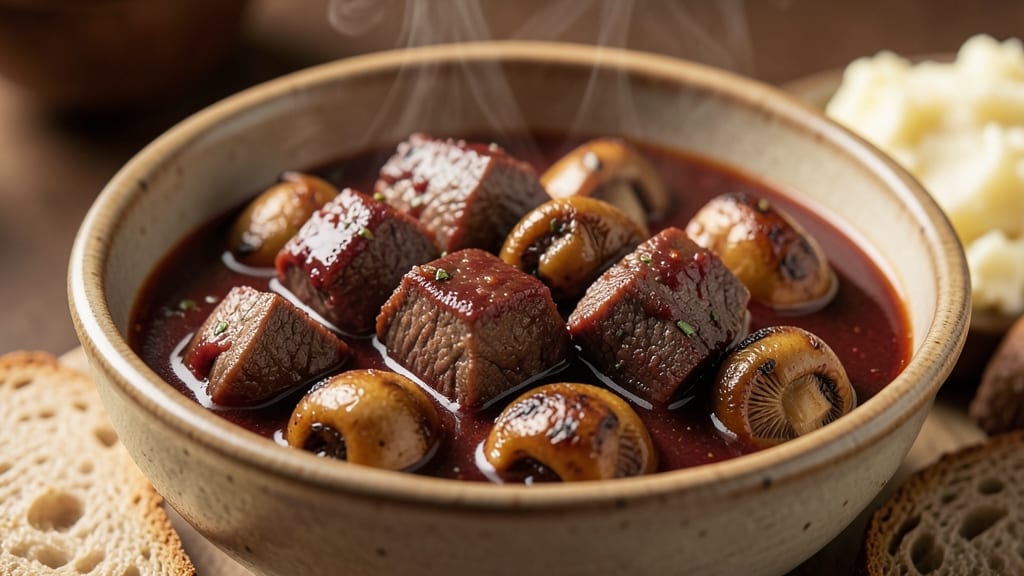
This beef and mushroom recipe idea delivers the kind of rich, umami-packed depth that makes weeknight dinners feel like special occasions. The secret lies in slow-braising tender beef with earthy mushrooms until they develop that signature caramelized crust—transforming simple ingredients into something restaurant-worthy.
I've perfected this technique over years of testing, and the results speak for themselves: melt-in-your-mouth beef, mushrooms with perfect texture, and a sauce so flavorful it coats every bite.
The foundation begins with properly searing the beef to lock in juices before it braises in red wine and aromatic vegetables. This method creates layers of flavor that simmer together for hours, developing complexity that takes shortcuts to miss.
The mushrooms—cremini and shiitake—absorb the deep, savory sauce while maintaining their meaty texture, adding both visual appeal and umami richness to each spoonful.
What you'll end up with is a hearty stew that pairs beautifully with crusty bread or buttery mashed potatoes to soak up every drop of that velvety sauce.
The aroma alone will have everyone gathering at the table, while the first bite delivers that perfect balance of tender beef, caramelized mushrooms, and wine-infused richness. This is comfort food at its finest—warm, satisfying, and packed with restaurant-quality flavor.
Perfect for chilly evenings when you crave something substantial, this recipe scales effortlessly to feed a crowd or serves as a cozy meal for two.
The slow cooking process means the flavors only get better as it sits, making it ideal for meal prep or leftovers that taste just as good reheated. Let's create this umami-rich masterpiece that will become a staple in your recipe rotation.
Ingredients for beef and mushroom recipe ideas
The secret to restaurant-worthy beef and mushroom richness lies in these carefully chosen ingredients.
| Ingredient | Amount | Notes |
|---|---|---|
| Chuck Roast 🥩 | 2 lb | Well-marbled for tenderness |
| Cremini Mushrooms 🍄 | 16 oz | Sliced into even strips |
| Shiitake Mushrooms 🍄 | 8 oz | Stems removed, caps halved |
| Yellow Onion 🧅 | 1 whole | Diced into small pieces |
| Garlic Cloves 🧄 | 6 cloves | Minced for aromatic depth |
| Red Wine 🍷 | 1 cup | Bold dry variety like Cabernet |
| Beef Broth 💧 | 2 cups | Low-sodium preferred |
| Tomato Paste 🍅 | 2 tbsp | Smooth, not chunky |
| Thyme 🌿 | 1 tbsp | Fresh leaves, not stems |
| Rosemary 🌿 | 1 tsp | Fresh, finely chopped |
| Olive Oil 🫒 | 2 tbsp | Extra-virgin for searing |
| All-Purpose Flour 🌾 | 1 tbsp | For thickening sauce |
| Salt 🧂 | 1 ½ tsp | Kosher or sea salt |
| Black Pepper 🌶️ | 1 tsp | Freshly cracked |
| Bay Leaves 🌿 | 2 whole | Removed before serving |
The chuck roast is non-negotiable for this dish—its marbling ensures melt-in-your-mouth tenderness after hours of slow cooking. Costco or Whole Foods carry excellent cuts, but any well-marbled beef will work. For mushrooms, cremini and shiitake provide the perfect balance of earthy flavor and meaty texture. Trader Joe's often has pre-sliced shiitake, but fresh is always better. Look for mushrooms with tight caps and no sliminess—those are your telltale signs of freshness. The red wine should be bold and dry; Cabernet Sauvignon or Merlot work perfectly, but whatever's open in your cabinet will do in a pinch.
No red wine? Dry vermouth or beef broth with a splash of balsamic delivers that same deep umami profile. Fresh thyme and rosemary can be swapped for dried at one-third the amount, but fresh always sings in this dish. The tomato paste is where the magic happens—Rao's or Barilla are my go-tos, but any quality brand will work. For the mushrooms, if you can't find shiitake, oyster mushrooms make a fantastic substitute. The key is to slice them evenly so they cook uniformly and absorb that luscious sauce. If you're feeling adventurous, toss in a handful of wild mushrooms from the farmers market for an extra layer of complexity.
This stew only gets better with time, so don't hesitate to make a big batch. Portion into containers and freeze half for those lazy nights when you crave comfort food without the effort. The flavors meld beautifully over 3-4 days in the fridge, and it reheats like a dream—just add a splash of beef broth to loosen the sauce if needed. For serving, crusty bread or buttery mashed potatoes are absolute musts. The sauce is so rich it practically disappears into every bite, leaving behind layers of umami that'll have everyone begging for seconds.
Why You'll Love This Recipe
- One-Pot Magic: I swear by this—just brown the chuck roast, toss in sliced mushrooms and onions, add a splash of broth, and let the slow cooker or oven do the rest. No extra pans, no stress, just hands-off richness that smells like home by dinner.
- Umami Bomb: Between the earthy shiitakes, meaty creminis, and that deep garlic-onion base, every bite is a flavor explosion. The chuck roast gets tender enough to melt, while the mushrooms stay juicy—no dry, sad meat here.
- Leftovers That Shine: This dish actually improves the next day. Reheat slices in a skillet with a little butter, and it’s like a fancy steakhouse sandwich. Honestly, I make double portions just to have this for lunch.
- Budget Powerhouse: A chuck roast stretches for days, and mushrooms add luxury without breaking the bank. I’ve fed four people for under $15, and they always ask, “What’s for dinner?” before I even finish cooking.
Step-by-step instructions for umami-rich beef and mushroom stew
Transform simple ingredients into a restaurant-quality stew with deep caramelized flavors and tender beef.
Sear the Chuck Roast for Maximum Flavor
Pat the 2 lb chuck roast dry with paper towels—this ensures a perfect sear. Heat 1 tbsp of the 2 tbsp olive oil in a heavy Dutch oven over medium-high heat until shimmering. Place the roast in the pan and sear for 3-4 minutes per side until deeply browned. Real talk: don't rush this step. The deep caramelization creates layers of flavor that'll infuse into the stew.
Once browned, remove the roast and set it aside. Add the remaining 1 tbsp olive oil to the same pot and increase heat to medium-high. Add the 1 whole yellow onion and cook for 5 minutes until softened and golden. Stir occasionally to prevent burning. This builds the aromatic foundation for the entire dish.
Build the Mushroom Base with Deep Umami
Add the 16 oz cremini mushrooms and 8 oz shiitake mushrooms (stems removed, caps halved) to the pot. Cook for 6-8 minutes, stirring occasionally, until the mushrooms release their moisture and develop a rich, earthy aroma. You'll notice the liquid evaporating—that's when the mushrooms start caramelizing and concentrating their umami flavors.
After the mushrooms have softened and darkened slightly, add the 6 cloves minced garlic and cook for 30 seconds until fragrant. Here's where it gets good: sprinkle the 2 tbsp tomato paste over the mushrooms and stir to coat. Cook for another 1 minute until the paste darkens slightly—this creates a rich, slightly sweet base that'll deepen the stew's complexity.
Deglaze and Develop the Sauce
Pour in the 1 cup red wine and scrape up all those delicious browned bits from the bottom of the pot—this is called deglazing, and it captures all the flavor you've built. Let the wine simmer for 3-4 minutes until reduced by half. You'll smell the alcohol burning off, leaving behind concentrated wine flavors that'll infuse the stew.
Add the 2 cups beef broth, 1.5 tsp salt, 1 tsp black pepper, 1 tbsp thyme, 1 tsp rosemary, and 2 whole bay leaves. Bring to a gentle simmer, then return the chuck roast to the pot. The broth should cover the roast by about an inch. If it doesn't, add a splash of water—you want the roast to cook slowly and tenderly.
Slow Cook Until Fork-Tender
Cover the pot and transfer to a preheated 325°F oven. Let it cook for 2.5-3 hours, turning the roast occasionally to ensure even cooking. The key here is patience—slow cooking breaks down the tough muscle fibers, transforming the chuck roast into melt-in-your-mouth perfection. I check it at the 2-hour mark to see if it's coming along.
About 30 minutes before the stew is done, sprinkle the 1 tbsp all-purpose flour over the roast and stir gently to distribute it. This helps thicken the sauce slightly as it cooks. The stew is ready when the beef easily pulls apart with a fork and the sauce has thickened to a rich, velvety consistency. Remove the bay leaves before serving—no one wants to bite into one of those!
Rest and Serve with Confidence
Let the stew rest for 10-15 minutes before serving. This allows the juices to redistribute throughout the meat and sauce, ensuring each bite is packed with flavor. Taste and adjust seasoning if needed—sometimes the mushrooms absorb more salt than expected, so a pinch of extra salt or a splash of wine might be necessary.
Serve the stew hot, ladling the rich sauce over tender beef and mushrooms. The contrast of the deep, caramelized flavors with the earthy mushrooms creates a harmonious balance that's both comforting and sophisticated. Pair it with crusty bread to soak up every last drop of that velvety sauce—trust me, you'll want to.
Pro Tips For Making Beef And Mushroom Recipe Ideas
- Sear the Roast First: High heat for 3-4 minutes per side—this isn’t just for looks. The crust locks in flavor and moisture, so don’t rush it. I used to skip this and wondered why my chuck roast always tasted bland, even after slow cooking.
- Slice Mushrooms Thin: A sharp knife and quick strokes—no need to go crazy, but aim for even ¼-inch slices. Thicker pieces stay tough; thinner ones cook faster and soak up sauce better. (Yes, even if you’re impatient like me.)
- Deglaze with Red Wine: After browning the onions and garlic, splash in ½ cup red wine and let it bubble. The alcohol burns off, leaving behind deep flavor that cuts through the richness of the beef. Skip this, and you’re missing the thing that matters most.
- Rest the Beef Twice: First, let the roast rest 10 minutes after searing. Then, after cooking, tent it with foil and wait another 15. This keeps it juicy—no one wants dry beef, even if it’s a tough cut. (Your future self will thank you.)
Essential equipment for this dish
Dutch Oven Essentials
Your Dutch oven is the star of this recipe—it's the only pot that can handle the searing, braising, and oven finish all in one. I swear by a Lodge 5.5-quart cast iron Dutch oven for its even heat distribution and durability.
If you're on a budget, the Amazon Basics 5.5-quart is a solid alternative that won't break the bank. The key is to preheat it thoroughly before adding ingredients to ensure proper searing. 🔥
Meat Thermometer
A meat thermometer is non-negotiable for perfect results. I use the ThermoWorks Smoke because it's accurate and has a long probe for checking internal temps. For this recipe, aim for 203°F internal temperature in the beef.
If you don't have one, a basic instant-read thermometer like the Taylor Precision Products will work—just be sure to calibrate it before use. This prevents overcooking and ensures fork-tender beef every time.
Knife Skills Kit
Sharp knives make this recipe infinitely easier. A 8-inch chef's knife and paring knife are all you need. I recommend the Wüsthof Classic for its balanced weight and razor-sharp edge. For mushrooms, slice them into even strips—about ¼-inch thick—so they cook uniformly.
A mandoline with a thick slicing blade can help if you're not comfortable freehand slicing. Safety first: always curl your fingers under when holding ingredients to protect your fingertips. ✨
Mushroom Brush
A mushroom brush might seem like an odd addition, but it's a game-changer for cleaning mushrooms before cooking. I use the OXO Good Grips because it's gentle on delicate mushroom caps. Brush off any dirt or debris—especially on shiitake stems—before slicing.
This ensures your mushrooms absorb the sauce beautifully without any gritty surprises. For the stems, simply wipe them with a damp paper towel before removing them completely.
Slotted Spoon
You'll need a slotted spoon for both cooking and serving. I keep a OXO Good Grips in my kitchen because it's sturdy and has a comfortable handle. Use it to remove the beef and mushrooms from the pot without losing any of that precious sauce.
When serving, the slots allow you to drain excess liquid if needed, giving you perfect sauce-to-food ratios every time. Pro tip: Soak it in warm, soapy water immediately after use to prevent sauce buildup.
Mixing Bowls
Medium and large stainless steel mixing bowls keep your prep organized. I use the Pyrex 2-quart and 4-quart sets because they're heat-resistant and stack neatly. The medium bowl is perfect for mincing garlic and thyme, while the larger bowl holds sliced mushrooms until they hit the pot.
Keep a small bowl nearby for any liquid additions like red wine or beef broth to avoid spills during the deglazing step. A silicone mat under your bowls prevents slips and makes cleanup a breeze. 💫
Nutrition facts
Frequently asked questions about beef and mushroom recipes
What's the best cut of beef for this kind of stew?
For maximum tenderness and flavor, use a well-marbled cut like chuck roast or beef short ribs. The fat within the meat breaks down during slow cooking, creating melt-in-your-mouth texture. Brisket also works beautifully if you prefer a slightly chewier bite. Avoid lean cuts like sirloin—they'll dry out during the long cooking process.
Can I substitute mushrooms in this recipe?
While cremini and shiitake provide the best flavor balance, try oyster mushrooms for a meatier texture or portobello for a heartier bite. For a milder taste, swap in white button mushrooms, but they won't have the same umami depth. Wild mushrooms (like morels or chanterelles) add gourmet complexity when in season.
How do I make this recipe faster without sacrificing flavor?
Swap the oven for a slow cooker—sear the beef first, then transfer everything to the slow cooker on low for 6-8 hours. For even faster results, use a pressure cooker (like Instant Pot) on high pressure for 45 minutes after searing. The key is still building those caramelized flavors through proper searing and deglazing.
What's the best way to reheat leftovers?
Gently reheat on the stovetop over medium-low heat with a splash of beef broth to restore moisture. Avoid microwaving—it can make the sauce watery. For best results, reheat just until warmed through (5-7 minutes), then let it sit covered for 5 minutes to redistribute the juices. Leftovers taste even better the next day!
What wine should I use if I don't have red wine?
Use dry vermouth (1:1 ratio) or beef broth with 1 tbsp balsamic vinegar for depth. For a non-alcoholic version, substitute with grape juice (like Concord) or apple cider vinegar mixed with extra beef broth. The acidity helps develop the same rich flavors, just without the alcohol content.