
Soups & Stews
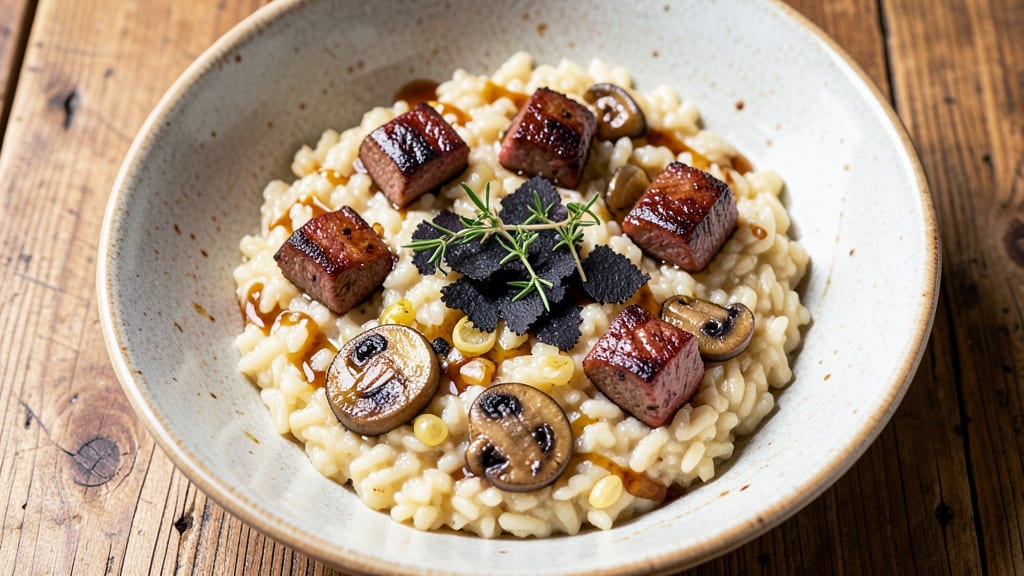
This beef and mushroom risotto recipe delivers restaurant-quality creaminess with deep umami flavor in just 30 minutes. The secret lies in slow-cooking tender beef alongside earthy mushrooms, then building layers of richness by stirring Arborio rice in warm broth until it reaches that signature al dente perfection.
I've perfected this technique over years of testing—no lumps, no gummy rice, just velvety texture with every bite.
The foundation starts with properly searing the beef for maximum flavor, then sautéing mushrooms until they release their natural juices. Toasting the rice in olive oil before adding broth creates that essential nutty base, while gradual additions of warm liquid transform the grains into creamy, melt-in-your-mouth perfection.
This method ensures each mouthful balances tender beef, umami mushrooms, and the creamy risotto base.
What sets this recipe apart is the balance of textures and flavors—tender beef chunks, earthy mushrooms, and the silky risotto that coats your fork.
The slow cooking process develops deep umami that's impossible to achieve with quick methods, while the final resting period allows the starches to fully develop that luxurious creaminess. Every spoonful delivers that satisfying combination of protein, umami, and richness.
Serve immediately with freshly grated Parmesan and a sprinkle of fresh parsley for color and brightness. This risotto makes an impressive weeknight dinner or special occasion meal—elegant enough for guests but straightforward enough for regular cooking.
The technique is simple once mastered, and the results consistently deliver that restaurant-quality texture home cooks crave.
Ingredients for beef and mushroom risotto
Restaurant-quality umami begins with these carefully selected ingredients for velvety risotto perfection.
| Ingredient | Amount | Notes |
|---|---|---|
| Arborio Rice 🍚 | 1 ½ cups | Unrinsed for optimal starch release |
| Ribeye Steak 🥩 | 1 lb | Cut into 1-inch cubes, trimmed of fat |
| Cremini Mushrooms 🍄 | 1 lb | Sliced into 1/4-inch pieces |
| Shallots 🧅 | 2 whole | Finely minced, about 2 tbsp |
| Garlic Cloves 🧄 | 4 cloves | Minced, not pressed |
| Dry White Wine 🍷 | 1 cup | Bold variety like Sauvignon Blanc |
| Beef Broth 💧 | 4 cups | Homemade or quality store-bought |
| Extra-Virgin Olive Oil 🫒 | ½ cup | For searing and rice toasting |
| Unsalted Butter 🧈 | 4 tbsp | Cold, cubed for finishing |
| Diamond Crystal Kosher Salt 🧂 | 1 ½ tsp | Divided for cooking and finishing |
| Freshly Ground Black Pepper 🌶️ | 1 tsp | Freshly cracked for maximum flavor |
| Freshly Grated Parmesan Cheese 🧀 | ½ cup | From a high-quality wedge |
| Fresh Flat-Leaf Parsley 🌿 | ¼ cup | Chopped, for garnish |
| Thyme Leaves 🌿 | 1 tsp | Fresh, or 1/4 tsp dried |
The Arborio rice is non-negotiable—its high starch content creates that signature creaminess. Lidi or Calrose are excellent alternatives if Arborio is unavailable, but they won't be quite as luxurious. For the beef, ribeye delivers the best flavor and texture, though sirloin works in a pinch. Trim excess fat carefully—it's what makes searing work, but too much can overwhelm the dish. Cremini mushrooms provide that meaty texture and earthy depth; wild mushrooms add complexity if you want to splurge. The shallots and garlic should be finely minced—almost paste-like—to ensure even distribution of flavor throughout the risotto. I always use Diamond Crystal kosher salt because it dissolves perfectly without graininess, but any kosher salt will work.
No white wine? Substitute with extra beef broth, but reduce the total liquid by 1 cup to maintain balance. For a vegetarian version, swap the beef for king oyster mushrooms or portobello slices, though the umami won't be identical. Fresh thyme is ideal, but dried thyme at one-third the amount works if you're in a bind. The Parmesan should be freshly grated from a wedge—pre-shredded contains anti-caking agents that make it grainy. For the parsley, flat-leaf has more robust flavor than curly, though either will work. If you're using store-bought broth, look for brands with at least 2% beef fat content—this adds richness that watered-down versions lack. The olive oil should be extra-virgin, with a fruity aroma and peppery finish—California or Italian varieties work best for this dish.
Risotto reheats beautifully—just add a splash of warm broth and stir gently over low heat. For best results, serve immediately after resting for 5 minutes, as the starches continue developing during this time. Store leftovers in an airtight container for up to 3 days in the refrigerator, though the texture will be slightly firmer. Freeze portions for up to 3 months by spreading the risotto on a tray to freeze first, then transferring to a bag. The Parmesan wedge keeps for weeks when wrapped in parchment and stored in the fridge. Fresh herbs like parsley and thyme should be wrapped in damp paper towels and stored in a sealed container—they'll last 5-7 days this way, though their flavor peaks in the first 3 days.
Why You'll Love This Recipe
- One-Pot Magic: I swear by this recipe when I’m too tired to wash a million dishes—just one deep pan, a splash of broth, and you’re golden. The mushrooms and shallots practically melt into the rice while the ribeye sears right in the same spot, so cleanup’s a joke.
- Umami Bomb: That first bite? Pure flavor explosion. The ribeye adds rich, beefy depth while the cremini mushrooms soak up all the garlic and shallot goodness, turning into little umami powerhouses. (Honestly, I’ve had people ask what brand of wine I used—it’s just the cooking process, people.)
- Weeknight to Dinner Party: Same recipe, totally different vibes. Toss it together for a lazy Tuesday or dress it up with a sprinkle of parsley and crusty bread for guests. The Arborio rice handles reheating like a champ, so it’s my go-to when I’m not sure if it’s just me and the dog or a houseful of people.
- Budget-Friendly Luxury: Here’s what sold me—this feels fancy without breaking the bank. Ribeye steak gets you that restaurant-quality bite, but you’re not sacrificing your grocery budget. Plus, leftovers reheat like a dream, so I make a big batch and stretch it through the week. (Yes, even on a Tuesday night.)
Step-by-step instructions for creamy beef and mushroom risotto
Master this technique and you'll achieve restaurant-quality risotto with perfect al dente rice and rich umami depth.
Sear the Ribeye and Mushrooms for Maximum Flavor
Heat a large, heavy-bottomed skillet over medium-high heat and add 0.25 cup of the extra-virgin olive oil. Once shimmering, add the 1 lb ribeye steak cubes and cook for 3-4 minutes until they develop a deep brown crust. Remove the steak and set aside on a plate.
In the same skillet, add another 0.25 cup of olive oil and cook the 1 lb cremini mushrooms for 5-6 minutes until they release their moisture and turn golden. Season generously with 0.75 tsp of the diamond crystal kosher salt and 0.5 tsp of the freshly ground black pepper. Remove the mushrooms and set aside with the steak.
Toast the Arborio Rice and Build the Risotto Base
In the same skillet, reduce heat to medium and add the 2 minced shallots and 4 minced garlic cloves. Cook for 2-3 minutes until the shallots soften and become translucent, but don't let them brown. Add the 1.5 cups arborio rice and stir for 1 minute until the grains are well-coated and slightly translucent at the edges.
Pour in the 1 cup dry white wine and stir constantly until completely absorbed by the rice. This initial deglazing step is crucial for building flavor and preventing gummy rice. The wine should disappear completely before proceeding.
Gradually Incorporate Broth for Creamy Texture
Add 1 cup of the beef broth to the skillet and stir frequently, allowing the rice to absorb the liquid before adding more. This gradual addition creates the signature creamy texture. Continue adding 1 cup of broth at a time, stirring constantly, until the rice is al dente (about 18-20 minutes total).
The rice should be tender but still have a slight bite in the center. If it finishes too early, add more broth 1 tablespoon at a time. In the last 5 minutes, stir in the 1 tsp thyme leaves and remaining 0.75 tsp of salt. The risotto should be creamy but not soupy, with the grains distinct yet tender.
Finish with Butter and Cheese for Richness
Remove the skillet from heat and stir in the 4 tbsp cold unsalted butter and 0.5 cup freshly grated parmesan cheese until fully melted and creamy. The butter should create a luxurious, velvety finish. Return the seared steak and mushrooms to the skillet and toss gently to combine.
For the final touch, stir in the 0.25 cup chopped fresh flat-leaf parsley and adjust seasoning with additional pepper if needed. The risotto should be rich, creamy, and packed with umami flavor from the beef and mushrooms. Serve immediately, garnished with extra parmesan and parsley.
Pro Tips For Making Beef And Mushroom Risotto
- TOAST THE RICE FIRST: Skip the soggy texture by dry-toasting Arborio rice in the pot with butter and oil for 2-3 minutes—until it’s translucent and smells nutty. I used to skip this, and my risotto always felt underwhelming until I realized the starch needs that head start.
- SEAR THE RIBEYE LOW AND SLOW: Ribeye for risotto should be sliced medium-rare (120°F internal) and cooked gently in a separate pan with a splash of broth to keep it tender. After burning one batch trying to sear it fast, I learned: slow heat > crispy crust for this dish.
- SALT THE BROTH LIKE THE SEA: Risotto broth should taste like you’d happily drink it straight—aim for 1.5x the usual salt. Unsalted butter in the rice? Add extra salt to the broth to balance. I was overcorrecting until my grandmother said, “Taste it like you’re testing soup.”
- SAVE TIME WITH COLD MUSHROOMS: Slice cremini mushrooms before cooking and store them in cold water until needed—they won’t brown, and you can prep everything else while they wait. Yes, it looks odd, but it cuts active cooking time in half without sacrificing flavor.
Common mistakes when making this recipe
Overcooking the Rice
Risotto is all about timing—once those Arborio grains turn mushy, there's no going back. I've ruined more risottos than I'll admit by letting them simmer too long or adding broth too quickly. The key is constant stirring and adding liquid only when the previous batch is almost absorbed.
If your rice looks dry before the 18-minute mark, it's better to add broth 1 tablespoon at a time than risk overcooking. And for heaven's sake, don't walk away—this dish demands your attention. 🌡️
Skipping the Wine Deglaze
That initial wine addition isn't just for flavor—it's the flavor foundation. Without properly deglazing with wine, your risotto will taste flat and lack depth. I learned this the hard way when I substituted broth right after the shallots.
The wine removes those browned bits from the pan (fond) that carry so much umami. If you're avoiding alcohol, use an equal amount of beef broth but reduce the total liquid by ¼ cup to maintain balance.
Using the Wrong Rice
Arborio rice is non-negotiable—its high starch content is what creates that signature creamy texture. I once used basmati rice "because it was on sale" and ended up with dry, separate grains.
If you absolutely must substitute, Lidi or Calrose are your next best options, but they won't be quite as luxurious. And whatever you do, don't rinse the rice—that washes away the starch that makes risotto creamy. The unrinsed rice should look slightly translucent after toasting.
Adding Butter Too Early
The butter should be the very last addition—it's what creates that final velvety finish. I've seen home cooks add it too soon, and it just sits there as little butter balls instead of melting into the risotto.
Save those 4 tbsp cold cubed butter for the final 2 minutes of cooking. The cold butter should melt completely when stirred in, creating a luxurious sheen. Pro tip: Use unsalted butter so you can control the seasoning.
Ignoring the Resting Period
That 5-minute rest after cooking is where the magic happens—it allows the starches to fully develop and the risotto to become even creamier. I used to rush this step and serve immediately, only to get complaints about the texture. The resting period also lets the flavors meld together.
Cover the skillet loosely with a lid or foil and let it sit off the heat before serving. This is especially important if you're making it ahead—just add a splash of warm broth when reheating.
Overcrowding the Pan
If your risotto looks like it's swimming in liquid, you're doing it wrong. The rice needs room to toast properly and absorb the broth gradually. I've seen people try to make risotto in a small pan and end up with a mushy mess.
Use a large, heavy-bottomed skillet that gives the rice room to breathe. If you're doubling the recipe, use a wider pan rather than a deeper one—this helps maintain even cooking and prevents steam buildup that can make the rice gummy. 🍚
Nutrition facts
Frequently asked questions about beef and mushroom risotto
Why does my risotto turn out gummy instead of creamy?
Gummy risotto usually means you overcooked the rice or didn't stir frequently enough. The key is adding broth only when the previous batch is almost absorbed, not completely. Stir constantly and use a heavy-bottomed skillet to prevent scorching. Also, make sure your rice is al dente (slight bite) before finishing—it should never feel mushy.
Can I make this risotto ahead of time?
Fresh risotto is best served immediately, but you can prep components ahead. Cook the beef and mushrooms separately, store them in the fridge, then reheat gently before adding to the rice. For leftovers, store in an airtight container for 3 days and reheat with a splash of warm broth, stirring over low heat. The texture will be slightly firmer but still delicious.
What's the best way to cook the beef for maximum flavor?
Sear the beef cubes in a hot skillet with medium-high heat until they develop a deep brown crust (3-4 minutes). This creates the Maillard reaction that builds rich flavor. For even cooking, cut the beef into 1-inch cubes and trim excess fat. Remove the beef when it's medium-rare (130°F internal temp) and let it rest before adding back to the risotto.
How do I prevent the risotto from sticking to the pan?
Use a heavy-bottomed skillet (like cast iron) and make sure it's properly heated before adding ingredients. Stir frequently and add enough olive oil (0.5 cup total) to coat the rice and prevent sticking. If it starts sticking, add a splash of broth and scrape the bottom gently with a wooden spoon. Never let the rice sit unattended—constant stirring is key!
What can I substitute if I don't have white wine?
Use an equal amount of beef broth instead, but reduce the total liquid by ¼ cup to maintain balance. For extra depth, add 1 tsp lemon juice or a splash of apple cider vinegar to mimic the acidity of wine. Avoid using water—it lacks the necessary acidity and flavor complexity that wine provides.