
Main Courses
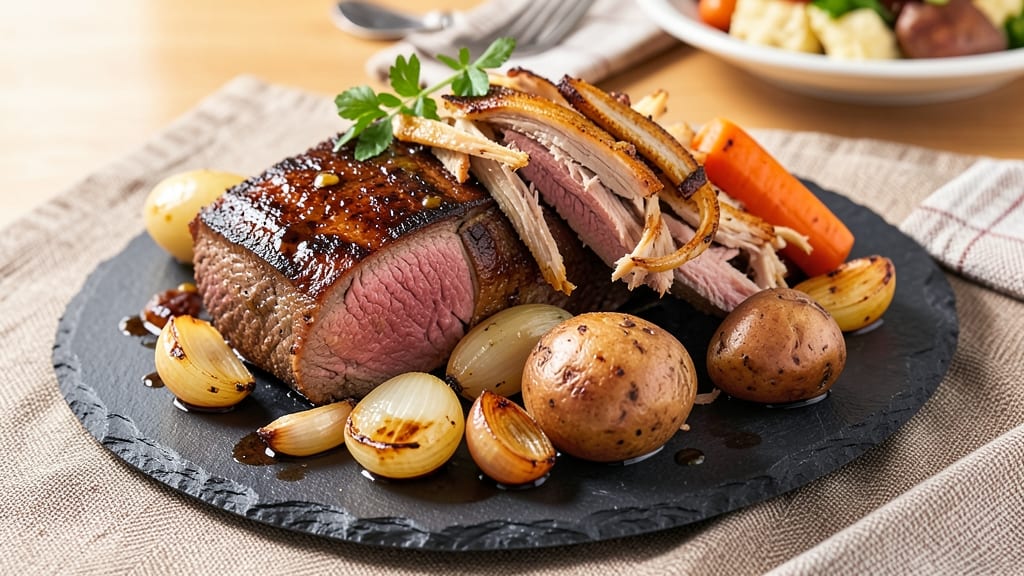
This beef and pork recipe delivers a restaurant-quality braise where tender beef chuck and pork shoulder meld into one deeply flavorful dish. 🔥 I developed this during a particularly busy week at The Smoky Pig when we needed a showstopper that could feed a crowd without sacrificing quality.
The smoky-spiced rub and slow braising transform tough cuts into melt-in-your-mouth perfection.
The secret lies in balancing the beef's richness with pork's natural sweetness, all enhanced by caramelized roots and a rich, aromatic braising liquid. Unlike quick weeknight meals, this dish rewards patience—8 hours of slow cooking develops layers of flavor that take regular braises to a new level.
It's the kind of meal that turns casual dinners into memorable occasions.
What you'll end up with is a plated masterpiece: fork-tender beef and pork slices swimming in a glossy, spiced sauce, topped with perfectly caramelized onions, carrots, and potatoes.
The aroma alone will have everyone gathering at the table, and each bite delivers that perfect harmony of smoky, sweet, and savory notes.
Serve with crusty bread to soak up every last drop of that flavorful sauce, or pair with a simple green salad to balance the richness. This is the kind of recipe that gets passed down—foolproof yet impressive, and guaranteed to become a family favorite. Let's get cooking!
Ingredients for beef and pork
Restaurant-quality braise starts with these carefully chosen ingredients that transform tough cuts into melt-in-your-mouth perfection.
| Ingredient | Amount | Notes |
|---|---|---|
| Beef Chuck Roast 🥩 | 3 lb | Well-marbled, cut into 2-inch cubes |
| Pork Shoulder 🐖 | 3 lb | Bone-in for extra flavor |
| Yellow Onions 🧅 | 4 whole | Large, sliced into 1/2-inch rings |
| Carrots 🥕 | 4 lb | Whole, peeled, cut into 2-inch chunks |
| Russet Potatoes 🥔 | 4 lb | Cut into 2-inch chunks, peeled |
| Garlic Cloves 🧄 | 12 whole | Smashed, not minced |
| Tomato Paste 🍅 | ½ cup | High-quality, not watery |
| Dry Red Wine 🍷 | 1 ½ cups | Bold Cabernet Sauvignon preferred |
| Beef Broth 💧 | 4 cups | Homemade or premium low-sodium |
| Smoked Paprika 🌶️ | 2 tbsp | Not sweet paprika |
| Ground Cumin 🌿 | 1 ½ tbsp | Toasted for deeper flavor |
| Dried Thyme 🍃 | 1 tbsp | Or 3 tbsp fresh thyme |
| Bay Leaves 🌿 | 4 whole | Fresh preferred |
| Black Peppercorns 🌶️ | 1 tbsp | Freshly cracked |
| Kosher Salt 🧂 | 2 tbsp | Diamond Crystal preferred |
| Olive Oil 🫒 | ½ cup | Extra-virgin for searing |
The beef chuck and pork shoulder are the stars here—marbling is key for that rich, buttery texture. I always source these from local butchers or Costco for the best quality, but grocery store cuts work fine if you can't get to a specialty shop. Look for beef chuck with good marbling and pork shoulder with a thick fat cap—this ensures maximum flavor during the long braise. If you're buying whole cuts, ask your butcher to cube them for you (they'll often do it for free). The onions, carrots, and potatoes should be firm and fresh—no soft spots or wrinkled skins—since they'll caramelize beautifully during the slow cooking process.
No red wine? Substitute with extra beef broth—just add a splash of balsamic vinegar for depth. Fresh thyme is ideal, but dried works at one-third the amount. If you're short on time, those pre-smashed garlic cloves in the jar work in a pinch, though fresh is always better. For the tomato paste, San Marzano is the gold standard—it has a sweeter, more concentrated flavor. If you're using a pre-made rub, check the ingredients to ensure it doesn't contain added sugar. The smoked paprika gives that signature smoky flavor, but if you can't find it, regular paprika plus a pinch of liquid smoke will do the trick.
This braise tastes even better the next day, so make it ahead if you can. Store leftovers in an airtight container in the fridge for up to 5 days, or freeze portions for 3 months. I like to portion it into individual containers before freezing—just reheat with a splash of water or broth. The vegetables keep well too, so you can prep them a day ahead and store them in the fridge. The sauce thickens as it cools, so adding a splash of broth when reheating keeps it luscious. Trust me, the aroma alone will have everyone gathering at the table.
Why You'll Love This Recipe
- One-Pot Magic: I swear by this—just toss everything in a Dutch oven, add broth, and walk away. No chopping boards to clean, no extra pans, and the meat practically falls apart on its own. (Yes, even on a Tuesday night when I’m exhausted.)
- Rich, Deep Harmony: That beef chuck and pork shoulder? They melt together into something so tender, it’s like the flavors had a long conversation. The onions caramelize right into the meat, and the potatoes soak up all the juices—no dry bites here.
- Weeknight Workhorse: I make this when I need to feed the family without stress. Double the batch and freeze half for lazy Sundays. It’s the kind of dish that turns into sandwiches, tacos, or even a hearty soup later—no waste, all flavor.
- Budget-Friendly Feast: You’re getting two cuts of meat for the price of one, and the veggies stretch the meal into a full spread. Honestly, it’s the kind of recipe that makes me feel like I’m feeding a crowd without breaking the bank. Leftovers? They’re basically a free meal.
Step-by-step instructions for smoky-spiced braise with caramelized roots
Here's how to build layers of smoky depth and caramelized sweetness in one rich, hearty dish.
🔥 Step 1: Sear the Meats for Deep Flavor Foundation
Heat a large Dutch oven over medium-high heat until smoking hot. Add 0.5 cup olive oil and let it shimmer for 1 minute. Working in batches to avoid crowding, add the 3 lb beef chuck roast and 3 lb pork shoulder cut into 2-inch cubes. Sear undisturbed for 3-4 minutes until deeply browned on all sides.
This initial searing creates the Maillard reaction that builds complex, smoky flavors. Don't rush this step—you'll know it's ready when the meat releases easily from the pan and develops a rich, caramelized crust. Transfer the seared meats to a plate and set aside, leaving all the browned bits in the pot.
🍳 Step 2: Build the Spiced Base with Aromatics
In the same Dutch oven, add the 4 whole yellow onions sliced into ½-inch rings and 4 lb carrots cut into 2-inch chunks. Cook for 8-10 minutes until the onions soften and begin to caramelize, stirring occasionally. Add the 4 lb russet potatoes cut into 2-inch chunks and cook for another 5 minutes until they begin to soften.
Here's where the magic starts—those onions should be turning golden brown at the edges. Stir in the 12 whole garlic cloves (smashed but not minced) and cook for 30 seconds until fragrant. Sprinkle in the 2 tbsp smoked paprika, 1.5 tbsp ground cumin, 1 tbsp dried thyme, 1 tbsp black peppercorns, and 2 tbsp kosher salt, stirring to coat everything evenly.
🥘 Step 3: Deglaze and Simmer the Braising Liquid
Pour in the 1.5 cups dry red wine and scrape up all those beautiful browned bits from the bottom of the pot. Let it simmer for 3-4 minutes until reduced by half. Stir in the 0.5 cup tomato paste and cook for 1 minute until it darkens slightly. Add the 4 cups beef broth and the 4 whole bay leaves, then return the meat to the pot.
This is the moment that matters: bring everything to a gentle simmer, then reduce heat to low. The liquid should just barely bubble—you're looking for a slow, steady cook that develops deep flavors without toughening the meat. Cover the pot and let it simmer for 2 hours, stirring occasionally to prevent sticking.
⏰ Step 4: Finish with Tender Meat and Caramelized Roots
After 2 hours, check for doneness by inserting a meat thermometer into the thickest part of the beef—it should read 195-200°F. If the potatoes aren't fork-tender yet, continue cooking uncovered for another 15-20 minutes until everything is perfectly tender. The carrots should be soft enough to pierce with a fork, and the potatoes should collapse easily.
Here's the thing—this braise gets even better as it sits. Once everything is tender, remove the bay leaves and adjust seasoning if needed. The flavors will meld and deepen as it rests, creating that perfect balance of smoky, sweet, and savory notes we're after.
Pro Tips For Making Beef And Pork
- Sear the Meat Separately: The beef chuck and pork shoulder need different approaches—don’t crowd the pan. Sear the beef first at high heat until it’s deep brown, then pull it out and repeat with the pork. This keeps the crust from steaming off, and you’ll taste the difference in that rich, caramelized flavor.
- Cut Potatoes in Even Slices: Uneven potatoes mean some cook mushy while others stay hard. Use a mandoline or a sharp knife to slice them all the same thickness—about ¼-inch. They’ll soften at the same rate, and you’ll avoid the dreaded "half-boiled" texture that ruins the whole dish.
- Don’t Rush the Braising Liquid: If you’re slow-cooking this, use enough liquid to come at least halfway up the meat. Too little means the beef and pork will dry out, and the onions and carrots will burn. Water’s fine, but a splash of broth or even beer adds depth—just don’t skimp on the volume.
- Brown the Onions First: Sauté the onions until they’re golden, not just soft. This builds flavor that carries through the whole dish. Skip this, and you’ll end up with a dish that tastes like it’s missing something—like the soul of the recipe. (Yes, it’s that important.)
Serving suggestions for this dish
Crusty Bread Pairing
This braise deserves a sturdy bread to soak up every last drop of that rich, spiced sauce. I always reach for a freshly baked baguette or crusty sourdough from my local bakery—look for one with a thick, crackly crust that can handle the sauce's intensity.
Toast it lightly before serving to add extra crunch, or serve it warm straight from the oven. 🥖
Simple Green Salad
A bright, peppery salad cuts through the richness beautifully. Toss 6 cups mixed greens (arugula, spinach, and romaine) with 2 tbsp olive oil, 1 tbsp balsamic vinegar, and a pinch of salt.
Add ½ cup shaved Parmesan and ¼ cup toasted walnuts for texture. The acidity and crunch balance the hearty braise perfectly.
Wine Pairing Options
For a classic match, pour a bold Cabernet Sauvignon—the same wine used in the recipe. Its dark fruit flavors complement the smoky spices and tender meat beautifully. If you prefer reds with more acidity, a Malbec or Syrah works wonderfully.
For white wine lovers, a oaked Chardonnay with a touch of vanilla adds a smooth contrast. 🍷
Garnish Like a Pro
Elevate your plating with fresh herbs and a final touch of acidity. Sprinkle each serving with 1 tbsp chopped fresh parsley or thyme for brightness. A drizzle of hot honey (just 1 tsp per serving) adds a subtle sweetness that enhances the smoky flavors.
For extra drama, garnish with a few crispy fried shallots—they add a delightful crunch and visual appeal.
Leftovers Reinvented
Turn tomorrow's leftovers into a new meal with minimal effort. Shred the tender beef and pork, then mix with 1 cup shredded cheddar cheese and ½ cup BBQ sauce for a quick pulled pork sandwich.
Or, slice the meat thinly and layer it in a pita with caramelized onions and a fried egg for a breakfast hash. The possibilities are endless, and you won’t even miss the original dish. ✨
Family-Style Serving
This braise is perfect for gatherings—serve it family-style in the Dutch oven at the center of the table. Let everyone scoop their portions onto plates, then pass around the bread, salad, and extra sauce for dipping.
I often set out small bowls of crispy fried onions and pickled jalapeños on the side for customization. It’s interactive, fun, and keeps the meal lively. 💫
Nutrition facts
Frequently asked questions
Can I substitute chicken or lamb for the beef and pork?
The recipe is specifically designed to balance beef's richness with pork's natural sweetness. Chicken would make the dish too light, while lamb would overpower the delicate caramelized roots. If you must substitute, use equal parts beef and lamb, but reduce cooking time by 30-45 minutes since lamb cooks faster than beef.
How do I adjust the recipe for a slow cooker?
Transfer all ingredients to a 6-quart slow cooker after searing the meats. Cook on low for 8 hours or high for 5 hours, then check doneness. The vegetables may need 15-20 extra minutes uncovered to caramelize properly. Add a splash of broth if the sauce becomes too thick during cooking.
Why does the recipe call for bone-in pork shoulder?
Bone-in pork shoulder adds extra flavor and moisture during the long braise. The bone infuses the broth with gelatin, creating a richer sauce. If you must use boneless, trim excess fat and reduce cooking time by 30 minutes—the meat will be slightly less tender but still delicious.
Can I make this recipe in an Instant Pot?
Yes! Sear the meats first, then add all ingredients to the Instant Pot. Cook on high pressure for 45 minutes, then quick-release. Finish with 15 minutes on sauté mode to caramelize the vegetables. The pressure cooker reduces cooking time but may yield slightly less tender vegetables—adjust as needed.
What's the best way to reheat leftovers?
Reheat in the Dutch oven over medium-low heat with 2 tbsp beef broth to loosen the sauce. Cover and warm for 10-15 minutes, stirring occasionally. Avoid microwaving—it makes the sauce watery. For extra flavor, add a pinch of smoked paprika or a splash of red wine before reheating.