
Soups & Stews
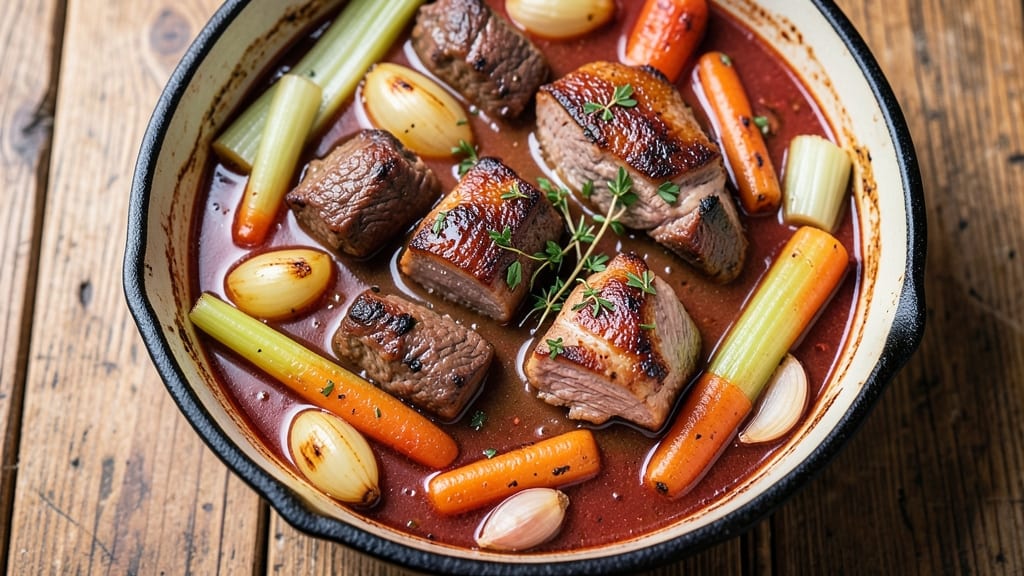
This beef and pork stew recipe delivers the kind of hearty, slow-simmered comfort that transforms tough cuts into melt-in-your-mouth tenderness. 🔥 I developed it after years of perfecting braising techniques at The Smoky Pig, where we turn 2,000 pounds of pork weekly into restaurant-quality dishes.
The secret lies in caramelizing the meat first—browning develops deep, rich flavors that infuse the red wine braise, while the caramelized roots add natural sweetness to balance the acidity.
What sets this stew apart is the two-meat combination: beef provides robust depth, while pork adds juicy richness. The wine reduction creates a velvety sauce that clings to every bite, and the slow simmer ensures the vegetables become tender without dissolving.
This isn't just a stew—it's a foolproof technique that delivers restaurant-quality results at home, with minimal effort after the initial prep.
The result is a deep-red, aromatic stew with layers of flavor—savory meat, caramelized roots, and a touch of herbal brightness. Each spoonful delivers that perfect balance of textures: tender meat, soft vegetables, and a sauce that's rich yet light enough to let the ingredients shine.
Serve it with crusty bread to soak up every last drop, or pair it with roasted potatoes for a complete meal.
Whether you're feeding a crowd or meal prepping for the week, this stew scales beautifully. The flavors deepen overnight, making it even more rewarding the next day. Let's get started—your taste buds will thank you.
Ingredients for beef and pork stew
Sixteen ingredients, one unforgettable flavor profile—this stew transforms tough cuts into restaurant-quality comfort.
| Ingredient | Amount | Notes |
|---|---|---|
| Chuck Roast 🥩 | 2 lb | Cut into 1.5-inch chunks |
| Pork Shoulder 🐷 | 2 lb | Cut into 1.5-inch chunks |
| Yellow Onions 🧅 | 3 whole | Cut into wedges |
| Carrots 🥕 | 1 ½ lb | Cut into 2-inch pieces |
| Celery Stalks 🧄 | 4 whole | Cut into 2-inch pieces |
| Garlic Cloves 🧄 | 6 cloves | Smashed, not minced |
| Dry Red Wine 🍷 | 2 cups | Bold, like Cabernet Sauvignon |
| Beef Broth 💧 | 4 cups | Low-sodium preferred |
| Tomato Paste 🍅 | ½ cup | Smooth, not chunky |
| Fresh Thyme 🌿 | ¼ oz | Leaves only, stems removed |
| Fresh Rosemary 🌿 | ¼ oz | Needles only, chopped |
| Olive Oil 🫒 | ½ cup | Extra-virgin for richness |
| All-Purpose Flour 🌾 | 2 tbsp | For thickening sauce |
| Kosher Salt 🧂 | 1 ½ tbsp | Diamond Crystal preferred |
| Freshly Ground Black Pepper 🌶️ | 1 tbsp | Coarse grind preferred |
The meat selection is everything. Chuck roast for beef delivers that melt-in-your-mouth tenderness, while pork shoulder adds juicy richness. Most butchers will cut these for you—ask for 1.5-inch chunks—or do it yourself with a sharp knife. For the wine, Cabernet Sauvignon or Merlot work best—their bold, dry profiles stand up to the meat. Trader Joe's and Total Wine often have great selections at reasonable prices. The beef broth? Low-sodium is key here—you'll be adding plenty of salt anyway. Look for brands like Kitchen Basics or Pacific Foods for the cleanest flavor.
No red wine? Beef broth plus 1 tbsp balsamic vinegar gets you close. Fresh thyme and rosemary are ideal, but dried works at one-third the amount. The carrots and celery can be swapped for parsnips or turnips if you're feeling adventurous. For the tomato paste, Rao's or Barilla are my go-tos—they're smooth and consistent. The flour is just for thickening at the end, so don't stress about quality. If you're prepping ahead, caramelize the meat and roots first, then store them separately in the fridge for up to 3 days before braising. The flavors develop even better when you let everything sit overnight.
This stew tastes even better the next day—3-4 days in the fridge, 3 months frozen. For freezing, portion into airtight containers with a layer of broth on top to preserve moisture. Reheat gently on the stove, adding a splash of water or broth if it gets too thick. The sauce will naturally reduce as it cools, so don't worry if it seems a bit loose when you first serve it. Crusty bread is the perfect partner—toss some garlic into olive oil, toast it up, and watch it disappear. Leftovers? Double the batch and freeze half for lazy weeknights.
Why You'll Love This Recipe
- One-Pot Magic: I swear by this—just toss the chuck roast, pork shoulder, and chopped veggies (onions, carrots, celery) into a Dutch oven, add broth, and let it slow down. No fancy prep, no stress. The only "chopping" I do is rough dice the onions while I’m flipping through a show.
- Deep, Rich Payoff: Between us, the combo of beef and pork creates this unexpected depth—tender, juicy, and layered with caramelized onion sweetness. The pork shoulder melts into shreds, while the chuck stays fork-tender. Honestly, the first bite makes me forget this isn’t a restaurant dish.
- Leftovers That Beg for More: This stew improves the next day—yes, really. The flavors meld into something even richer, and I’ve sent it to work with coworkers or packed it for lunch. (My freezer’s always stocked with portions.) It’s the kind of meal that turns into a week’s worth of easy dinners.
- Budget-Friendly Crowd-Pleaser: I buy chuck roast and pork shoulder in bulk—cheaper per pound than steaks—and this recipe stretches it across four servings without skimping. Add potatoes or dumplings later, and suddenly you’ve fed a houseful for under $15. That’s a win I’ll take any day.
Step-by-step instructions for beef and pork stew
This deep-red wine braise transforms tough cuts into melt-in-your-mouth perfection.
🔥 Step 1: Sear the Meats for Maximum Flavor
Heat a Dutch oven over medium-high heat until very hot. Add 0.25 cup of the olive oil and swirl to coat the bottom. Working in batches (you'll need two searings), add the chuck roast and pork shoulder chunks, leaving space between pieces. Let them sear undisturbed for 3-4 minutes until deeply browned on one side.
Here's the thing—this initial sear creates the Maillard reaction, the chemical magic that builds rich, caramelized flavors in your stew. Flip the meat and sear the other sides for another 3-4 minutes. Transfer the browned meat to a plate and set aside. Repeat with the remaining meat, adding more olive oil if needed.
👨🍳 Step 2: Build the Flavor Base with Caramelized Roots
In the same Dutch oven, reduce heat to medium and add another 0.25 cup of olive oil. Add the onion wedges, carrot pieces, and celery stalks, stirring to coat in the oil. Cook for 10-12 minutes, stirring occasionally, until the vegetables soften and develop a golden hue.
This is where the magic happens—those caramelized roots form the flavor foundation. You'll see the edges start to brown and the vegetables release their natural juices. Add the smashed garlic cloves and cook for another 1 minute just until fragrant. Sprinkle with 0.5 tbsp of the kosher salt and 0.5 tbsp of the black pepper, stirring to combine.
🍳 Step 3: Deglaze and Develop the Sauce
Pour in the 2 cups dry red wine, scraping up all those delicious browned bits from the bottom of the pot with a wooden spoon. This deglazing step captures all that concentrated flavor. Let the wine simmer for 3-4 minutes until reduced by about half, until it coats the back of a spoon.
Stir in the 0.5 cup tomato paste and cook for 1 minute to thicken slightly. Sprinkle the 2 tbsp all-purpose flour over the mixture and stir vigorously for 1 minute to cook off the raw flour taste. This creates a natural roux that will thicken your stew beautifully.
🥘 Step 4: Combine and Simmer the Stew
Return all the meat to the Dutch oven and add the 4 cups beef broth. Stir in the fresh thyme leaves and rosemary needles. Bring to a gentle boil, then reduce heat to low and cover partially. Here's the crucial part: let it simmer for 2.5-3 hours until the meat is fork-tender and falls apart easily.
Real talk: don't rush this step. The meat needs time to break down and absorb all those amazing flavors. Check occasionally and add ½ cup water if the liquid gets too low. The stew should finish with a sauce that coats the back of a spoon but isn't gluey.
⏰ Step 5: Finish and Rest for Perfect Texture
Once the meat is tender, uncover the pot and increase heat to medium-high to reduce the sauce slightly for 5-7 minutes. Taste and adjust seasoning with the remaining 1 tbsp kosher salt and 0.5 tbsp black pepper as needed. Remove and discard the thyme and rosemary stems.
Let the stew rest for 15-20 minutes before serving. This resting period allows the flavors to meld completely and the juices to redistribute throughout the meat. The result should be a rich, deeply flavorful stew with melt-in-your-mouth meat and perfectly caramelized vegetables.
Pro Tips For Making Beef And Pork Stew
- SEAR THE MEAT FIRST: Chuck and pork shoulder won’t tenderize if they’re just simmered—crank your stove to high and sear them in batches for 3-4 minutes per side until deep brown. That crust locks in flavor and keeps the meat from turning to mush later. (Yes, even if you’re impatient like me.)
- CUT ONIONS IN HALVES: Whole yellow onions split open during stewing and turn to mush—save yourself from fishing them out by slicing them in half lengthwise first, then quartering. They’ll stay intact, caramelize properly, and add texture without falling apart.
- DON’T DROWN THE POT: I learned this the hard way—adding too much liquid at the start dilutes the flavor. Start with just 2 cups of broth (or water) and let the meat release its own juices before adding more. You’ll end up with a richer stew, not a watery one.
- SALT THE MEAT 24 HOURS EARLY: Chuck and pork shoulder need time to absorb salt for maximum tenderness. Sprinkle them with 1-2 teaspoons of kosher salt per pound and let them sit uncovered in the fridge overnight. (Your future self will thank you—trust me.)
Flavor customization for these flavors
Herb Variations
Swap out thyme and rosemary for fresh bay leaves and tarragon if you prefer a more aromatic profile. I often use 1 bay leaf and 1 tbsp chopped tarragon for a French-inspired twist.
For a Southern touch, add ½ tsp smoked paprika and 1 sprig fresh sage—this combo brings deep, smoky warmth that pairs beautifully with the wine. 🌿
Spice Level Boost
Crank up the heat with 1-2 tbsp hot paprika or 1 tsp cayenne pepper for a smoky kick. For a balanced spicy-sweet combo, add 1 tbsp brown sugar and ½ tsp chipotle powder—this caramelizes beautifully during the simmer.
I like to add these spices during the deglazing step so they infuse evenly.
Sweet-Savory Balance
Enhance natural sweetness by adding 1 small apple diced (like Honeycrisp) or ½ cup pearl onions—both caramelize beautifully. For depth, stir in 1 tbsp balsamic vinegar during the final reduction. This works especially well with the pork shoulder, creating a perfect harmony of sweet and savory notes.
Umami Depth
Boost umami richness with 2 tbsp soy sauce or 1 tbsp fish sauce—just add these with the broth. For a vegetarian-friendly twist, include 1 tbsp miso paste (white or red) during the sauce-building phase. These additions deepen the stew's complexity without overpowering the wine's acidity.
Regional Twists
For a Charleston-style version, add ½ cup shrimp stock and 1 tbsp hot sauce at the end. For a Georgia farmhouse approach, include ½ cup collard greens chopped and 1 smoked sausage sliced (like Andouille).
Both variations keep the core technique but add local flavor profiles I grew up loving.
Vegetable Swaps
Replace carrots and celery with swede (rutabaga) and leeks for a heartier texture. For a lighter option, use zucchini and fennel—both add freshness while maintaining the stew's structure. I often swap in mushrooms (8 oz cremini) for extra earthiness during the caramelization step.
Nutrition facts
Frequently asked questions
Can I substitute pork shoulder with another cut?
Use pork ribs or pork butt instead—they'll add similar richness. For a leaner option, try pork tenderloin cut into chunks, but it'll cook faster so reduce simmering time to 1.5-2 hours. Just avoid fatty cuts like bacon—they'll make the stew too greasy.
How do I make this stew in a slow cooker?
Brown the meats and vegetables first in a skillet, then transfer everything to the slow cooker. Add all remaining ingredients and cook on low for 8 hours or high for 5 hours. The sauce will be thinner—reduce it on the stove for 10 minutes at the end. For best results, use a 6-quart slow cooker to avoid overflowing.
Why did my stew turn out too acidic?
This usually happens when the wine wasn't reduced enough or the broth was too acidic. Balance it by adding 1 tbsp sugar or ½ cup heavy cream at the end. For future batches, reduce the wine by half before adding broth, and use low-sodium beef broth to control acidity. A splash of chicken broth can also help dilute the tang.
Can I prep this stew ahead of time?
Yes! Caramelize the meat and vegetables up to 3 days ahead and store separately in the fridge. When ready to cook, simply deglaze with wine, add broth, and simmer. For even better flavor, let the stew sit overnight—it develops deeper as the flavors meld. Freeze portions for up to 3 months by storing in airtight containers with a layer of broth on top.
What's the best way to reheat leftovers?
Gently reheat on the stove over low heat with a splash of water or broth to prevent drying. Avoid microwaving—it makes the sauce watery. For best texture, reheat just until warmed through (5-7 minutes) and adjust seasoning with salt or pepper afterward. The stew tastes even better the next day!