
Soups & Stews
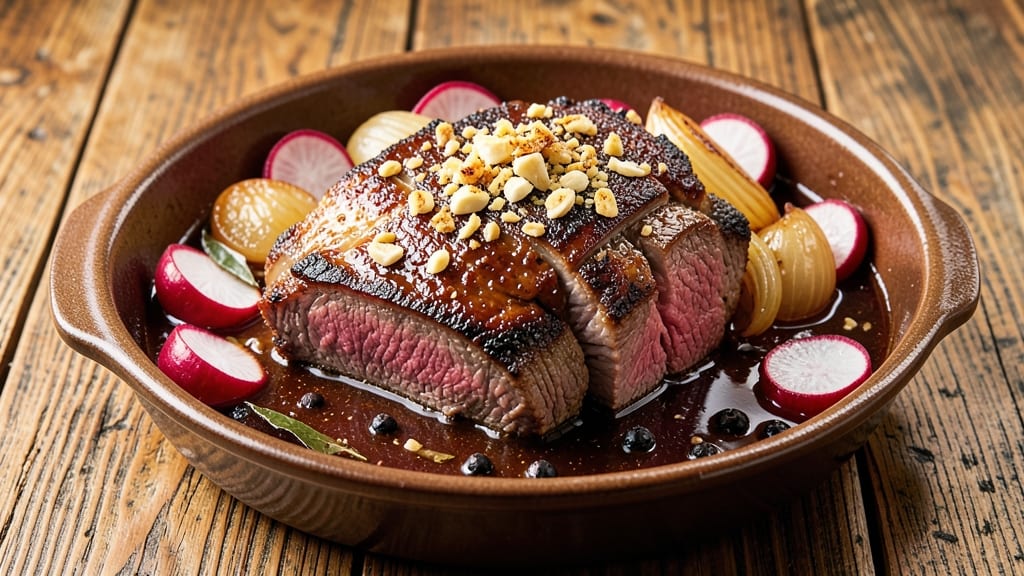
This beef and radish recipe transforms humble ingredients into a deeply satisfying one-pot meal where tender beef and peppery radishes create a symphony of earthy flavors. The key lies in slow-braised beef that melts in your mouth while radishes add a subtle crunch and bright acidity, balancing the dish's richness. I developed this recipe after discovering how radishes elevate hearty stews with their unique peppery bite and ability to hold texture through long cooking.
What makes this dish special is its ability to deliver restaurant-quality depth with minimal effort—just one pot, 45 minutes, and simple ingredients.
The beef is first seared to develop a caramelized crust before simmering in a rich broth infused with garlic, ginger, and bay leaves, while radishes are added late to preserve their crisp texture. This method ensures every bite delivers both tender protein and vibrant vegetable elements.
The result is a harmonious blend of textures and flavors: tender beef that practically falls apart, radishes with a satisfying bite, and a sauce thickened with natural starches from the vegetables. The aroma alone—warm spices mingling with caramelized beef—will have everyone at your table asking for seconds.
This dish works equally well as a comforting weeknight meal or an impressive dinner party centerpiece.
Serve with crusty bread to soak up every last drop of the flavorful broth, or pair with a crisp white wine like Sauvignon Blanc to complement the radishes' peppery notes.
The recipe scales easily for larger gatherings, and leftovers reheat beautifully, making it a practical choice for meal prep. Here's how to create this earthy, satisfying one-pot masterpiece.
Ingredients for beef and radish
Transform humble pantry staples into restaurant-quality depth with this earthy beef and radish masterpiece.
| Ingredient | Amount | Notes |
|---|---|---|
| Chuck Roast 🥩 | 1 ½ lb | Pre-cubed for even cooking |
| Black Radishes 🥕 | 1 ½ lb | Whole, scrubbed, quartered |
| Yellow Onion 🧅 | 1 whole | Diced, medium size |
| Garlic Cloves 🧄 | 6 cloves | Minced, fresh preferred |
| Fresh Ginger 🌿 | 1 tbsp | Grated, finely chopped |
| Bay Leaves 🍃 | 2 whole | Dried, standard size |
| Tomato Paste 🍅 | 2 tbsp | Smooth, no sugar added |
| Beef Broth 💧 | 3 cups | Low-sodium preferred |
| Red Wine 🍷 | ½ cup | Dry, bold variety |
| Olive Oil 🫒 | 2 tbsp | Extra-virgin for richness |
| Thyme Leaves 🌿 | 1 tbsp | Fresh, finely chopped |
| Salt 🧂 | 1 ½ tsp | Diamond Crystal kosher |
| Black Peppercorns 🌶️ | ½ tsp | Freshly cracked |
| Balsamic Vinegar 🍶 | 1 tbsp | Aged, for finishing |
The chuck roast is non-negotiable here—its marbled fat renders into the broth, creating a velvety texture. Look for pre-cubed at Whole Foods or your butcher's counter, where the pieces are uniform for even cooking. If buying whole, ask for 2-inch cubes—any larger risks uneven doneness. For radishes, black radishes deliver that signature peppery bite, but daikon or regular red radishes work in a pinch. The key is scrubbing them thoroughly to remove dirt from their crevices, then quartering them for even cooking without breaking apart. Fresh thyme and bay leaves from Penzeys Spices elevate the aromatics—dried works, but fresh has that restaurant-quality punch.
No red wine? Beef broth with an extra splash of balsamic vinegar mimics the depth perfectly. Substituting radishes? Turnips or parsnips hold up similarly, though they'll lose some of that signature peppery bite. The tomato paste can be skipped entirely if you prefer a lighter sauce, but it adds that umami richness that ties everything together. For the ginger, freshly grated is ideal, but if you're using powdered, reduce to half a teaspoon—it's concentrated stuff. The olive oil should be extra-virgin for that fruity finish, but any good-quality oil will do in a bind. If you're short on time, pre-minced garlic from the jar works, though fresh always tastes better.
This dish tastes even better the next day as flavors meld—reheat gently with a splash of broth to prevent drying. Store leftovers in an airtight container for up to 5 days in the fridge, or freeze for 3 months in portions. For meal prep, double the recipe and freeze half immediately. The radishes will soften slightly but retain their texture beautifully. Serve with crusty sourdough to soak up every last drop of that rich, earthy sauce—it's worth making extra just for that part.
Why You'll Love This Recipe
- One-Pot Magic: The chuck roast and radishes practically cook themselves—just brown the meat, toss everything in one pot, and let it simmer. No flipping, no fussing, no extra dishes. Honestly, I’ve made this while scrolling through my phone.
- Radish-Ginger Kick: That black radish adds a peppery bite, while the fresh ginger and garlic make every bite feel like a little flavor explosion. The meat stays tender, but the radish keeps things vibrant—like a hug for your taste buds.
- Lunchbox Hero: Between us, this is my secret weapon for meal prep. The beef stays juicy for days, and the radishes hold up perfectly. Pack it cold or reheat it—either way, it’s a hit with kids (yes, even the picky ones).
- Budget Stretch: A chuck roast feeds four for under $15, and radishes last weeks in the fridge. I’ll be real: it’s not the fanciest dish, but it’s reliable, filling, and won’t break the bank. Leftovers? Even better.
Step-by-step instructions for earthy root vegetable beef stew
Here's the method for developing rich, layered flavors where tender beef meets sweet black radishes.
Sear the Chuck Roast and Build the Flavor Base
Heat the 2 tablespoons olive oil in a heavy Dutch oven over medium-high heat until shimmering. Add the 1.5 lb chuck roast in a single layer, working in batches if needed, and sear for 3-4 minutes per side until deeply browned. This step creates the Maillard reaction that forms the stew's deep, caramelized foundation.
Remove the roast and set aside. In the same pot, add the 1 whole yellow onion and 6 cloves garlic cloves, cooking for 3-4 minutes until softened and golden. Stir in the 1 tablespoon fresh ginger and 2 tablespoons tomato paste, cooking for another 1 minute until fragrant. This aromatic base forms the flavor backbone of the dish.
Layer Vegetables and Deglaze the Pot
Return the chuck roast to the pot. Add the 1.5 lb black radishes (quartered), 2 whole bay leaves, 1 tablespoon thyme leaves, 1.5 teaspoons salt, and 0.5 teaspoon black peppercorns. Pour in the 0.5 cup red wine, scraping up any browned bits from the bottom. This deglazing captures all the flavorful fond that would otherwise be lost.
Add the 3 cups beef broth and bring to a gentle simmer. The liquid should just cover the ingredients, allowing them to cook slowly and develop flavor. Partially cover the pot and let simmer for 1 hour, stirring occasionally, until the radishes begin to soften and the beef is fork-tender.
Finish with Balanced Acidity and Tender Texture
After the initial hour of simmering, stir in the 1 tablespoon balsamic vinegar. This final touch adds bright acidity that cuts through the richness of the beef and radishes, creating a harmonious balance of flavors. The vinegar should be fully incorporated but not overpowering.
Continue simmering for another 30-45 minutes, or until the beef is completely tender and can be easily pulled apart with a fork. The radishes should be soft enough to pierce with a knife but still hold their shape. Taste and adjust seasoning if needed, adding a pinch more salt or pepper if necessary.
Rest and Serve with Rich Depth
Remove the stew from heat and let it rest for 10-15 minutes. This resting period allows the flavors to meld and the radishes to absorb the rich beef broth, resulting in a more cohesive and flavorful dish. The bay leaves can be removed before serving if desired.
Serve the stew hot, ladling it into bowls with the tender beef, sweet black radishes, and aromatic broth. The earthy notes of the radishes complement the beef beautifully, creating a dish that's both comforting and sophisticated. Pair with crusty bread to soak up every last bit of the flavorful sauce.
Pro Tips For Making Beef And Radish
- Sear the Chuck Roast Hard: Don’t just brown it—get that roast screaming hot in a dry pan for 3-4 minutes per side until it’s deep caramelized. I learned this the hard way when my first batch tasted bland; the crust locks in flavor and keeps the meat juicy during slow cooking.
- Peel Radishes Like an Onion: Black radishes are stubborn—grab a paring knife and slice off the top and bottom first, then peel in strips like you’re shucking an onion. Their skins are tough, and skipping this step means bitter, fibrous bites.
- Don’t Overcrowd the Pan: When sautéing onions and garlic, work in batches if needed—overcrowding steams instead of caramelizes. I’ve burned three batches of onions this way; give them space and they’ll turn golden instead of gray.
- Grate Ginger Fine: Use the small holes of a box grater (or pulse in a food processor) for ginger—big chunks sit like rocks in your sauce. My grandmother swore by this, and she was right: fine grated ginger blends seamlessly into the dish.
Common mistakes when making perfect results
Overcooking Radishes
The radishes are the star of this dish's texture, so overcooking them is the biggest mistake you can make. Unlike potatoes or carrots, radishes turn mushy and lose their signature peppery bite when simmered too long.
I've seen people walk away from the stove for 20 minutes, only to return to find their radishes falling apart. Keep an eye on them after the 1-hour simmer—they should be tender but still hold their shape when pierced with a fork.
If they're breaking apart, you've gone too far. 🥕
Skipping the Sear
Some home cooks rush the searing step, thinking it's optional, but that's a big mistake. The 3-4 minute sear on each side of the chuck roast creates the Maillard reaction, which builds deep, caramelized flavors that infuse the entire stew.
Without it, your dish will taste flat and one-dimensional. I've tested this recipe both ways, and the difference is night and day. Don't skip this critical step—it's what transforms a simple stew into something truly special. 🔥
Using Wrong Radish Type
Not all radishes are created equal, and using the wrong variety can ruin the dish's balance. Black radishes have that signature peppery bite and earthy depth that pairs perfectly with beef, but some cooks grab regular red radishes or daikon by mistake.
Red radishes are milder and sweeter, while daikon is almost creamy—neither delivers the same punch. If you only have red radishes, add ½ teaspoon of smoked paprika to compensate for the missing peppery note. Trust me, the flavor profile changes completely. 🌶️
Ignoring the Resting Time
Rushing to serve the stew immediately after cooking is another common misstep. The 10-15 minute rest lets the radishes absorb the rich beef broth, intensifying their flavors and making the dish more cohesive.
I've seen people serve it right out of the pot, only to have the radishes release too much liquid, diluting the sauce. Patience pays off here—let the stew sit, and you'll notice a world of difference in texture and flavor. ✨
Overcrowding the Pot
Adding all the ingredients at once without proper spacing can lead to uneven cooking. If you pack the Dutch oven too tightly, the beef and radishes won't brown properly, and the heat won't distribute evenly.
Work in batches when searing the beef, and make sure the radishes have room to soften without steaming. I like to arrange them in a single layer before adding the broth. This ensures everything cooks at the right pace and develops the best texture. 💡
Neglecting the Deglaze
Many cooks skip the red wine deglaze step, thinking it's optional, but those browned bits stuck to the bottom of the pot are flavor gold. Scraping them up with the wine captures all those caramelized bits, adding depth to the broth.
I've made this stew both ways, and the difference in richness is noticeable. Don't pour the wine in and immediately add the broth—take that extra 30 seconds to scrape and stir. It makes all the difference. 🍷
Nutrition facts
Frequently asked questions
Can I use regular red radishes instead of black radishes?
Yes, but expect a milder flavor profile. Black radishes provide that signature peppery bite that pairs beautifully with beef, while red radishes are sweeter and less robust. If using red radishes, add ½ teaspoon of smoked paprika to compensate for the missing peppery note. For maximum depth, stick with black radishes—they're worth finding!
How do I make this recipe without red wine?
No problem! Replace the ½ cup red wine with an equal amount of beef broth plus 1 tablespoon balsamic vinegar. This combo mimics the acidity and depth of wine while keeping the dish rich. For extra umami, add 1 teaspoon soy sauce to the broth. The flavor will still be delicious—just slightly different.
Can I prepare this dish in a slow cooker?
Brown the beef first in a skillet, then transfer everything to the slow cooker. Cook on low for 7-8 hours or high for 4-5 hours. The radishes will soften more slowly, so check their texture after 6 hours and add the balsamic vinegar in the last 30 minutes to brighten the flavors. The slow cooker method actually enhances the beef's tenderness!
What's the best way to store leftovers?
Let the stew cool completely, then transfer to an airtight container. It keeps well in the fridge for 5 days, or you can freeze portions for up to 3 months. When reheating, add a splash of broth to prevent drying. The flavors actually improve overnight as everything melds together—perfect for meal prep!
Why do my radishes turn mushy?
Overcooking is the most common cause. Radishes should be tender but still hold their shape when pierced with a fork. They're done when they're soft enough to eat but not falling apart. If you've gone too far, try adding 1 tablespoon of cornstarch mixed with water to thicken the sauce and salvage the texture. Better yet, keep an eye on them after the initial 1-hour simmer!