
Soups & Stews
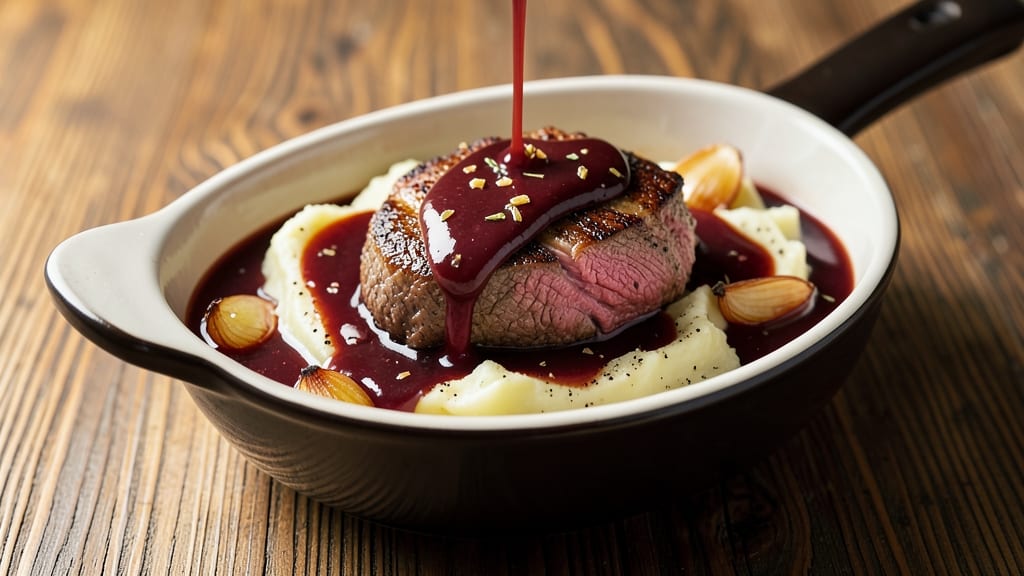
Transforming simple beef drippings into a velvety beef and red wine gravy recipe is the secret weapon that elevates any roast to restaurant-quality. This sauce captures all the deep, savory flavors from your pan while adding rich complexity through red wine reduction.
The key lies in proper deglazing and slow reduction, which creates that luxurious, clinging texture we all crave.
What makes this gravy truly special is how it transforms humble ingredients—beef drippings, red wine, and a simple roux—into something extraordinary. The wine adds brightness and depth, while the roux provides the perfect thickening agent without overpowering the natural beef flavor.
This is the kind of sauce that makes every bite of your main course taste even more indulgent.
The process is straightforward but requires patience: deglaze the pan with wine, reduce until syrupy, then gradually whisk in your roux to create a smooth, velvety consistency.
The result is a sauce that coats proteins and potatoes beautifully, delivering that perfect balance of richness and acidity that defines classic beef gravy.
Perfect for serving alongside roast beef, mashed potatoes, or even as a dipping sauce for crusty bread. The rich, velvety texture and deep flavor make this gravy the star of any meal. Let's get started on creating this timeless classic.
Ingredients for beef and red wine gravy
Unlock restaurant-quality richness with these 10 essential ingredients for velvety beef and red wine gravy.
| Ingredient | Amount | Notes |
|---|---|---|
| Beef Drippings 🥩 | 2 cups | From roasted beef, fat content ideal |
| Dry Red Wine 🍷 | 1 cup | Bold Cabernet Sauvignon preferred |
| All-Purpose Flour 🌾 | ¼ cup | Diamond Crystal preferred for roux |
| Unsalted Butter 🧈 | 2 tbsp | Cold for roux, full-fat preferred |
| Beef Stock 🥄 | 1 cup | Homemade or high-quality store-bought |
| Shallots 🧅 | 1 whole | Minced for aromatic base |
| Fresh Thyme Leaves 🌿 | ¼ cup | Or 1 tsp dried thyme |
| Garlic Cloves 🧄 | 2 cloves | Minced for depth of flavor |
| Salt 🧂 | ½ tsp | Kosher or sea salt |
| Freshly Ground Black Pepper 🌶️ | ¼ tsp | For finishing |
The beef drippings are your flavor goldmine—save them in a jar in the fridge until you're ready to make this gravy. Costco or Whole Foods sell pre-made beef stock if you're short on time, but homemade is always better. For the wine, Cabernet Sauvignon or Merlot work best—their bold flavors stand up to the beef. The flour matters too: Diamond Crystal has a finer grind that creates a smoother roux. If you're using dried thyme, Penzeys or the bulk section at Trader Joe's have the freshest options.
No beef drippings? 2 tbsp olive oil works in a pinch, though it won't have the same depth. Short on wine? Beef broth with 1 tbsp balsamic vinegar mimics the acidity. Want to skip the roux? Cornstarch slurry (1 tbsp cornstarch + 2 tbsp cold water) thickens beautifully. The shallots and garlic can be swapped for 1 small yellow onion if needed. Fresh thyme is ideal, but dried works at one-third the amount. For extra richness, add 1 tbsp brandy when deglazing.
This gravy tastes even better the next day—store in an airtight container in the fridge for up to 5 days. Freeze for 3 months in ice cube trays for single-serving portions. The roux is delicate, so reheat gently over low heat, whisking constantly. If it thickens too much, thin with a splash of beef stock. Perfect for drizzling over roasted beef, mashed potatoes, or even as a dipping sauce for crusty bread.
Why You'll Love This Recipe
- Pan-to-Pot Magic: I swear by this trick—just scrape up those beef drippings from your roast, toss in a splash of red wine, and let it bubble. No fancy equipment, no stress. That rich, caramelized base builds itself while you sip your coffee.
- Wine-Infused Umami Bomb: The moment that flour-to-butter roux hits the wine? Pure alchemy. Deep, savory, with just a whisper of earthiness—like a fancy bistro sauce, but I made it in my cast-iron skillet. The beef stock ties it all together with that velvety finish.
- Leftovers That Lie: Between us, this gravy begs to be stretched. Double the batch and freeze it—perfect for slathering over mashed potatoes next week or drizzling on steak sandwiches. Honestly, I’ve found myself reaching for it when I least expect to, and that’s the real win.
- Budget-Friendly Luxury: A bottle of red wine and a few pantry staples? This is how you eat well without breaking the bank. The drippings alone turn scraps into something special, and the butter adds richness without costing a fortune. (Yes, even on a Tuesday night.)
Step-by-step instructions for beef and red wine gravy
Transform simple beef drippings into velvety, restaurant-worthy gravy with this foolproof method.
Create a Golden Roux with Beef Drippings and Flour
Pour the 2 cups beef drippings into a heavy-bottomed saucepan over medium heat. Let it come to a gentle simmer, then whisk in the 0.25 cup all-purpose flour all at once. This is where the magic happens—you're making a roux, and color matters. Stir constantly for 3-4 minutes until the mixture turns a rich, nut-brown color and smells toasty.
I press down on the spoon occasionally to ensure even cooking—this prevents the roux from burning while developing that deep, caramelized flavor. If it starts to darken too quickly, reduce the heat slightly. The roux is the foundation of your gravy, so don't rush this step. You'll know it's ready when it coats the back of a spoon smoothly and smells like warm, buttery toast.
Deglaze with Red Wine and Build Aromatics
Immediately pour in the 1 cup dry red wine and scrape up every last bit of browned bits from the bottom of the pan with a wooden spoon. This deglazing step captures all that concentrated beef flavor. Let the mixture simmer for 5-6 minutes until it reduces by about half and the alcohol smell completely dissipates.
While that simmers, finely mince the 1 whole shallot and 2 cloves garlic. Add them to the pan along with the 0.25 cup fresh thyme leaves and cook for 2-3 minutes until the shallots soften and become translucent. Here's the thing—don't let the garlic burn. You'll know it's ready when the raw garlic smell transforms into something sweet and mellow. Stir frequently to prevent sticking.
Develop Depth with Butter and Beef Stock
Reduce heat to medium-low and add the 2 tbsp cold unsalted butter, whisking constantly until it melts completely. This adds richness and helps emulsify the gravy. Then pour in the 1 cup beef stock all at once. Bring to a gentle simmer and let it cook uncovered for 8-10 minutes, stirring occasionally, until the gravy thickens to your desired consistency.
I like to test the consistency by dipping a spoon in and running my finger through it—it should leave a clean line that doesn't immediately fill back in. If it's too thick, whisk in 1-2 tablespoons of hot water to loosen it. The gravy should coat the back of the spoon but still be pourable. This is where patience pays off—rushing will give you a gluey mess instead of silky perfection.
Season and Finish to Perfection
Remove the pan from heat and let it sit for 2-3 minutes to allow the flavors to meld. Then season with the 0.5 tsp salt and 0.25 tsp freshly ground black pepper. Give it one final taste—this is your chance to adjust. I often add a splash more beef stock if it's too thick, or a pinch more salt if the beef wasn't heavily seasoned.
For that final touch, I like to whisk in 1 tablespoon of cold butter just before serving. This creates beautiful sheen and adds a luxurious mouthfeel. Strain the gravy if you prefer a completely smooth texture, or leave it slightly rustic with the thyme leaves for extra aroma. Serve immediately over your roasted beef or mashed potatoes while still warm and bubbling.
Pro Tips For Making Beef And Red Wine Gravy
- DEGLAZE HOT, NOT LAZY: Don’t let those beef drippings cool—scrape up every browned bit with a wooden spoon while the pan’s still smoking. I used to rush this, and half my wine flavor would end up in the sink instead of the gravy.
- USE FLOUR LIKE A ROUX: Whisk the all-purpose flour into the butter first, then add the wine slowly while stirring like your life depends on it. This prevents lumps and gives you a smoother base—no one wants to taste flour grit in their gravy.
- SIMMER, DON’T BOIL: Once the wine’s reduced and stock’s added, keep the heat at a gentle simmer. Boiling turns gravy gluey, and no one wants glue for dinner. Five minutes of patience = velvety perfection.
- SALT IN LAYERS: Add half the salt with the stock, then taste and adjust at the end. The wine and butter already pack flavor, so over-salting early makes it hard to fix—trust the process, even if it feels weird.
Essential equipment for this dish
Heavy-Bottomed Saucepan
Your saucepan is the workhorse of this recipe—avoid thin, reactive metals like aluminum or nonstick. I swear by a stainless steel 3-quart saucepan with a heavy base, like the All-Clad Stainless or Le Creuset.
These distribute heat evenly and prevent hot spots that can burn your roux. If you're on a budget, the Cuisinart MultiClad Pro is a great mid-range option that still performs beautifully. 🔥
Whisk with French Wire
A balloon whisk with French wire is my go-to for smooth, lump-free gravy. The OXO Good Grips or Cuisipro models have the perfect balance of flexibility and durability. Avoid plastic whisks—they can't handle the heat and won't give you that silky finish.
I keep mine near my stove at all times because it's essential for emulsifying the roux and incorporating the butter at the end.
Wooden Spoon for Deglazing
Never use metal when deglazing—it scratches your pan and ruins the flavor. A high-quality wooden spoon (I use Lodge Cast Iron brand) is perfect for scraping up those precious browned bits.
The natural oils in the wood also help prevent sticking. If your spoon is old, soak it in hot water for 10 minutes to restore its flexibility before use.
Fine-Mesh Strainer
For that restaurant-quality finish, a fine-mesh strainer removes any unwanted bits while keeping the gravy's body. The Microplane brand makes an excellent one that fits perfectly over your serving dish.
If you're serving immediately, you can skip this step—but if you're making gravy ahead, straining ensures a silky texture. Just don't overdo it—some texture adds character!
Instant-Read Thermometer
While not strictly necessary, an instant-read thermometer helps you monitor the roux's temperature. Aim for 200-210°F—this is the sweet spot for a perfect golden roux without burning. The ThermoWorks Thermapen is my favorite because it's fast and accurate.
If you don't have one, watch the color closely: it should be nut-brown, not dark brown or black.
Kitchen Scale for Precision
For the roux, precision matters. A digital kitchen scale ensures you get the perfect ratio of 2 parts fat to 1 part flour (like the OXO Good Grips model). This balance is crucial for a smooth gravy.
If you're measuring by volume, use the spoon-and-level method for flour—packing it down gives you a thicker roux than intended. The scale eliminates guesswork and gives you consistent results every time. ✨
Nutrition facts
Frequently asked questions
Can I substitute dry red wine with something else?
Yes, but the flavor will change. For best results, use 1 cup beef stock + 1 tablespoon balsamic vinegar to mimic the acidity and depth. If you're in a pinch, 1 cup beef broth with 1 teaspoon red wine vinegar works too. Avoid white wine—it lacks the bold tannins that balance the richness of beef. The wine's reduction is key for that velvety texture and complex flavor.
What if my gravy turns out too thick?
Don't panic! Thin it gradually with 1 tablespoon hot beef stock or water at a time, whisking constantly. Start with less—you can always add more later. For a quick fix, whisk in 1 tablespoon cold butter while off heat to add richness without thinning. The ideal consistency should coat the back of a spoon but still be pourable. Over-thinning is easier to fix than under-thickening.
Can I make this gravy ahead of time?
This gravy actually tastes better the next day. Store it in an airtight container in the fridge for up to 5 days. For longer storage, freeze in ice cube trays (thaw quickly in the microwave) or single-serving portions in freezer bags. Reheat gently over low heat, whisking constantly to prevent skin formation. Add a splash of stock if it thickens too much.
Why did my roux burn before turning golden?
This usually happens from uneven heat distribution or stirring too infrequently. Use a heavy-bottomed saucepan and keep heat at medium—never high. Stir constantly with a wooden spoon, pressing down to check for even cooking. If it darkens too quickly, reduce heat immediately. The perfect roux should be nut-brown, not dark brown or black. A thermometer helps—aim for 200-210°F.
What's the best way to use leftover beef drippings?
Save them in a clean jar in the fridge for up to 1 week or freeze for 3 months. For gravy, use 2 cups drippings per recipe. If you don't have enough, supplement with 2 tablespoons olive oil or butter, but the flavor won't be as rich. The drippings contain concentrated beef flavor—don't skip them if possible! They're the secret to that restaurant-quality depth.