
Sauces & Condiments
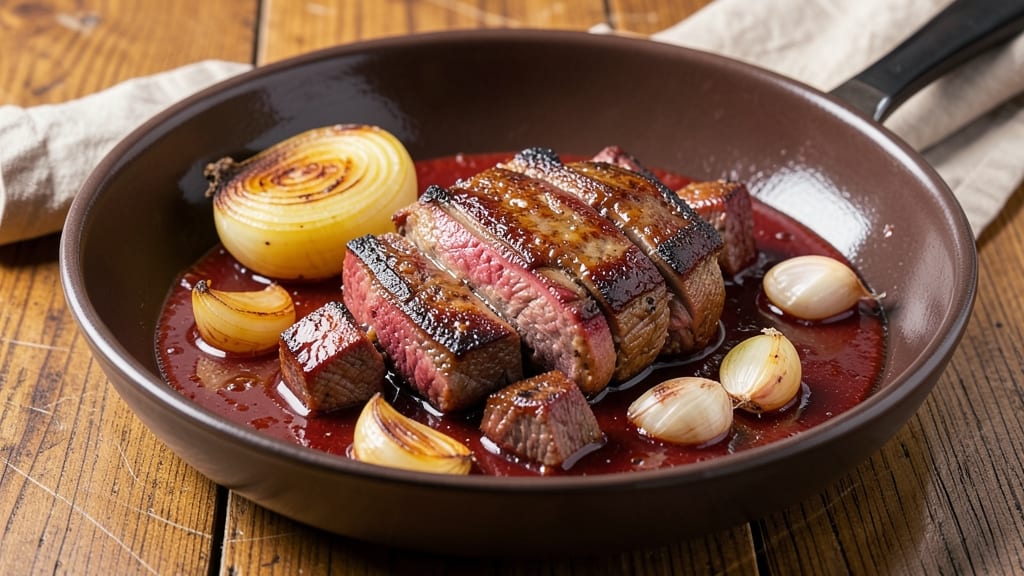
This beef and red wine sauce recipe transforms simple ingredients into a velvety, umami-rich masterpiece that elevates any dish. The secret lies in slow simmering—where red wine, beef stock, and aromatics meld into a deep, complex sauce with just the right balance of acidity and richness.
I've perfected this technique over years of testing, ensuring every spoonful delivers that restaurant-quality depth at home.
The process is straightforward but requires patience: browning beef bits for flavor, deglazing with wine, then reducing until thick and glossy. A touch of butter at the end creates that signature silky texture, while a splash of stock keeps it from drying out.
This sauce isn’t just for steak—it’s a game-changer for pasta, roasted vegetables, or even mashed potatoes.
What sets this recipe apart is its versatility and longevity. Store it in the fridge for up to 5 days or freeze for months, ready to transform an ordinary meal into something extraordinary.
The key is letting the sauce work its magic through slow cooking—no shortcuts, just pure flavor development.
Perfect for weeknight dinners or special occasions, this sauce delivers bold, restaurant-worthy results with minimal effort. Whether you're drizzling it over grilled steak or tossing it with al dente pasta, the rich, wine-infused depth will leave everyone asking for seconds.
Ingredients for beef and red wine sauce
Eleven ingredients, one transformative sauce. The foundation of restaurant-quality depth starts here.
| Ingredient | Amount | Notes |
|---|---|---|
| Beef Chuck Roast 🥩 | 1 ½ lb | Trimmed of excess fat, cut into 0.5-inch cubes |
| Dry Red Wine 🍷 | 1 cup | Bold variety like Cabernet Sauvignon or Merlot |
| Beef Stock 🥫 | 2 cups | Homemade or high-quality store-bought |
| Yellow Onion 🧅 | 1 whole | Finely diced, about 1.5 cups |
| Garlic Cloves 🧄 | 4 cloves | Minced, about 1 tbsp |
| Tomato Paste 🍅 | 2 tbsp | Smooth, not chunky |
| Unsalted Butter 🧈 | 2 tbsp | Cold, for finishing |
| Fresh Thyme 🌿 | ½ oz | Leaves only, about 2 tbsp |
| Fresh Rosemary 🌿 | ¼ oz | Leaves chopped, about 1 tbsp |
| Diamond Crystal Kosher Salt 🧂 | 1 ½ tsp | Adjust to taste |
| Freshly Ground Black Pepper 🌶️ | ½ tsp | For finishing |
| All-Purpose Flour 🌾 | 1 tbsp | For thickening if needed |
The beef selection is non-negotiable for depth—chuck roast delivers the richest flavor when cubed evenly. Costco or Whole Foods carry premium cuts, but any reputable butcher will trim it properly for you. For wine, bold, dry reds like Cabernet Sauvignon or Merlot work best—avoid sweet varieties that won't reduce properly. Fresh herbs elevate the sauce dramatically, so Trader Joe's or local farmers markets are ideal sources. The beef stock should be homemade or high-quality store-bought like Kitchen Basics—never the bouillon cubes. Tomato paste quality matters too; San Marzano is the gold standard for smooth texture.
No red wine? Substitute with beef broth plus 1 tbsp balsamic vinegar for acidity. Fresh thyme unavailable? Dried thyme at one-third the amount suffices, but toast it first for depth. The flour is a last-resort thickener—cornstarch slurry works better if you need to adjust consistency. For a richer sauce, add 1 tbsp cognac or brandy with the wine. The butter at the end should be cold and cubed—adding it warm will break the sauce's emulsion. If your sauce is too acidic, a pinch of sugar balances it beautifully.
This sauce develops flavor over time, so reheat gently on low heat to preserve its velvety texture. Store in an airtight container in the fridge for 5-7 days—the flavors deepen overnight. For longer storage, freeze in ice cube trays for perfect single-use portions that reheat instantly. The sauce thickens as it cools, so add a splash of stock if it becomes too stiff when reheated. Always finish with fresh herbs and black pepper just before serving to maintain vibrant flavors.
Why You'll Love This Recipe
- One-Pot Magic: The chuck roast practically cooks itself while you stir—no fancy techniques, just a Dutch oven and 30 minutes of hands-off time. That deep red wine and beef stock blend turns into a sauce so rich, you’ll forget you didn’t slave over it.
- Wine-Lover’s Dream: The red wine cuts through the beef’s richness, balancing it with bright acidity while the garlic and onions caramelize into a sticky, savory base. Honestly, the first time I tasted it, I poured myself a glass to match.
- Leftovers That Shine: This dish tastes better the next day—seriously. Shred the beef, toss it with the sauce, and you’ve got a weeknight-friendly sandwich filling or a hearty pasta topper. My freezer’s always stocked with portions because it’s that reliable.
- Budget Feeds Crowds: A single chuck roast stretches across meals for four nights, and the wine and stock make it feel special without breaking the bank. Between us, this is how I feed my family fancy dinners on grocery-store budgets.
Step-by-step instructions for beef and red wine sauce
A rich, velvety sauce begins with precise technique and patience. Here's how to build deep umami flavor layer by layer.
Sear the Beef Chuck Roast for Maximum Flavor
Heat a heavy-bottomed Dutch oven over medium-high heat until hot. Add the 1.5 lb beef chuck roast, cut into ½-inch cubes, in a single layer without overcrowding. Let each piece develop a deep golden-brown crust for 3-4 minutes per side—this Maillard reaction creates the sauce's foundation.
Work in batches if needed to avoid steaming. Once all beef is seared to medium-brown (not blackened), remove it from the pot and set aside. You should have about ¼ cup of rendered beef fat remaining in the pot—this is your cooking medium for the next steps.
Build the Aromatic Base with Onions and Garlic
Reduce heat to medium and add the finely diced yellow onion (about 1.5 cups) to the Dutch oven. Cook for 5-6 minutes, stirring occasionally, until the onions soften and turn golden translucent. Add the 4 minced garlic cloves and cook for another 30 seconds until fragrant.
Here's where the sauce starts to develop its depth. The onions should caramelize slightly at the edges, creating sweetness that balances the wine's acidity. If the onions begin to brown too quickly, reduce heat to medium-low to prevent burning.
Deglaze with Red Wine and Reduce
Pour in the 1 cup dry red wine, scraping up all the browned bits from the bottom of the pot with a wooden spoon. This deglazing step captures all the flavor you've built so far. Let the wine simmer for 3-4 minutes until reduced by about half, until the liquid smells concentrated and the alcohol burns off.
The wine should reduce to about ½ cup of thick, syrupy liquid. This reduction removes the harshness of the alcohol and intensifies the wine's flavor. If you notice any sediment forming, strain it out now for a smoother sauce later.
Simmer with Beef Stock and Herbs
Add the 2 cups beef stock, 2 tbsp tomato paste, and 1.5 tsp Diamond Crystal kosher salt to the pot. Stir well to combine, then return the seared beef to the pot. Bring to a gentle simmer, then add the 0.5 oz fresh thyme leaves and 0.25 oz chopped fresh rosemary.
Partially cover the pot and simmer for 1.5-2 hours until the beef is fork-tender and the sauce has thickened. The beef should pull apart easily when pierced with a fork, and the sauce should coat the back of a spoon. Check occasionally and add 1-2 tablespoons water if the sauce reduces too much.
Finish with Butter and Pepper
Once the beef is tender, remove it from the pot and strain the sauce through a fine-mesh sieve into a clean saucepan. Discard the herb stems and any large onion pieces. Return the sauce to the stovetop and stir in the 2 tbsp cold unsalted butter and 0.5 tsp freshly ground black pepper.
Simmer gently for 2-3 minutes until the sauce reaches your desired consistency. For a thicker sauce, whisk in the 1 tbsp all-purpose flour mixed with 1 tablespoon cold water to create a slurry. Return the beef to the sauce and let it warm through for 1-2 minutes before serving.
Pro Tips For Making Beef And Red Wine Sauce
- SEAR THE ROAST HARD: I learned this the hard way—skipping a deep sear means your sauce will taste flat, no matter how long you simmer. Use a heavy pot on medium-high heat, add 1 tablespoon of oil, and let the chuck roast sit undisturbed for 3-4 minutes per side until it’s a deep, dark brown crust. That crust isn’t just for looks; it’s where all the flavor lives.
- DEGLAZE WITH WINE IMMEDIATELY: As soon as you remove the roast, pour in that dry red wine right away—don’t let the fond dry out or burn. Scrape up every last bit with a wooden spoon, then let it bubble for 2-3 minutes until it’s reduced by half. This isn’t just cleanup; it’s where the sauce’s depth starts.
- STRAIN THE ONIONS: Finely chopped onions burn faster than you think, and they’ll turn your sauce into mush if left in too long. After sautéing them with the garlic, strain them out with a fine-mesh sieve before adding the wine. You’ll still get the flavor, but without the texture fight later.
- SIMMER LOW AND LONG: This isn’t a race—cover the pot and simmer on low heat for at least 2 hours, stirring occasionally. If the sauce reduces too quickly, add a splash of beef stock to keep it balanced. Patience here makes the difference between a thin glaze and a rich, velvety sauce.
Pro cooking tips for great beef and red wine sauce
Perfect Browning Technique
For maximum flavor, sear the beef in a single layer over medium-high heat until it develops a deep golden-brown crust—this is where the Maillard reaction happens, creating the sauce's foundation.
Use a heavy-bottomed Dutch oven like All-Clad or Le Creuset to distribute heat evenly. Work in batches if needed to avoid steaming the meat, which dulls the flavor. 🔥
Wine Reduction Secrets
When deglazing with 1 cup dry red wine, let it simmer until reduced by half—this removes alcohol harshness and intensifies flavor. Scrape up every browned bit from the pot with a wooden spoon to capture all the caramelized goodness.
If your wine reduces too quickly, cover the pot temporarily to slow evaporation. I always taste the reduced wine before proceeding—it should be sweet and concentrated, not bitter.
Herb Infusion Tricks
Add fresh thyme and rosemary during the final simmer for maximum flavor extraction. Bundle the stems together with kitchen twine and remove them easily after 30 minutes of cooking—this prevents bitter herb particles from lingering.
For extra depth, toast the herbs in a dry pan for 30 seconds before adding them to the sauce. Never use dried herbs directly in this recipe; their flavor is too intense and won't integrate properly.
Butter Finishing Mastery
The 2 tbsp cold unsalted butter at the end creates that signature velvety texture, but timing is critical. Whisk it in off the heat or over low heat—adding it too hot will break the sauce's emulsion.
For a restaurant-quality finish, stir in ½ tsp freshly ground black pepper just before serving. I like to finish with a pinch of sugar (about ¼ tsp) if the sauce tastes too acidic, balancing the wine's tartness beautifully.
Sauce Consistency Control
If your sauce thickens too much while simmering, add 1-2 tablespoons beef stock to loosen it. For a smoother texture, strain through a fine-mesh sieve before finishing with butter.
If you need to thicken later, make a cornstarch slurry (1 tbsp cornstarch + 1 tbsp cold water) and whisk it in gradually over medium heat until the sauce reaches your desired consistency. Always taste as you go—this sauce should coat the back of a spoon but still be pourable.
Equipment Upgrades
A fine-mesh tamis strainer (like OXO Good Grips) makes straining effortless, removing every herb particle for a silky finish. For precise temperature control, use an instant-read thermometer to monitor the sauce—it should never exceed 205°F during simmering.
A wooden spoon is essential for stirring without scratching your Dutch oven. These tools might seem like extras, but they make all the difference in professional results. ✨
Nutrition facts
Frequently asked questions
Can I substitute white wine for red wine in this sauce?
White wine won't work well here because it lacks the depth and tannins that balance the beef's richness. For a similar acidity, use 1 cup beef broth plus 1 tablespoon balsamic vinegar instead. The vinegar mimics wine's tang while maintaining the sauce's umami profile.
How do I prevent the sauce from being too acidic?
Taste the sauce during simmering—if it's too tart, stir in ¼ teaspoon sugar or a pinch of cream cheese to mellow the acidity. For prevention, reduce the wine longer (aim for ½ cup remaining) to concentrate flavors without excess tartness.
What's the best way to reheat leftover sauce?
Gently warm over low heat on the stovetop, stirring frequently to prevent scorching. Add 1-2 tablespoons beef stock if the sauce thickens too much when reheated. Microwave reheating isn't recommended—it can break the sauce's silky texture.
Can I make this sauce without beef stock?
Yes, but the flavor will be less rich. Replace the 2 cups beef stock with 1 cup beef broth plus 1 cup water, then add ½ teaspoon soy sauce for umami depth. The sauce will still work but won't have the same depth of flavor.
How do I adjust the thickness of the finished sauce?
For a thicker sauce, whisk in 1 tablespoon cornstarch mixed with 1 tablespoon cold water and simmer for 2-3 minutes. For a thinner sauce, stir in 1-2 tablespoons beef stock. Always taste as you adjust—this sauce should coat the back of a spoon but remain pourable.