
Soups & Stews
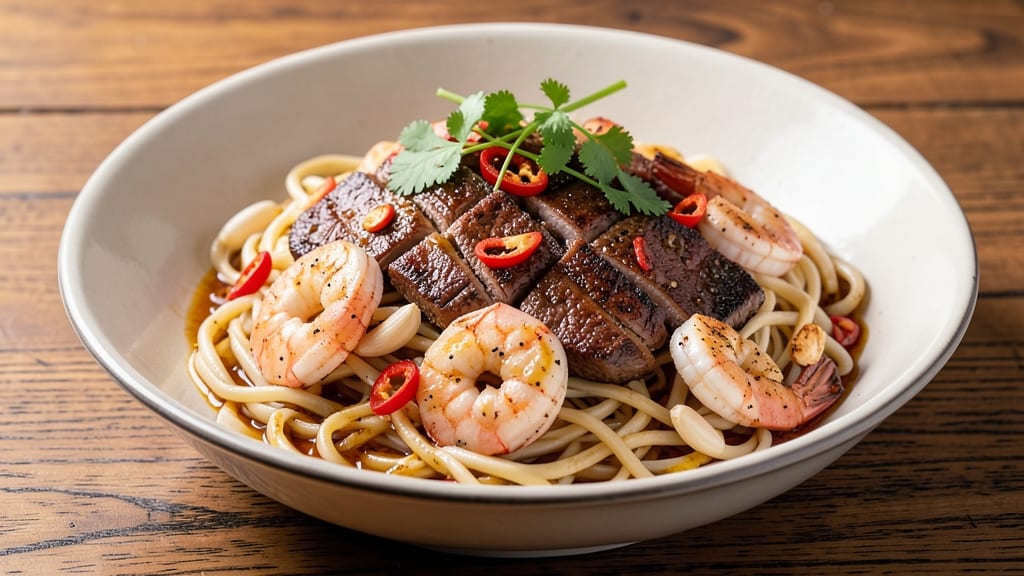
This beef and shrimp yakamein recipe delivers restaurant-quality umami-packed noodles with perfectly crispy shrimp and tender beef in every bite. The secret lies in the wok technique—high heat, rapid tossing, and a sauce that balances sweet, salty, and tangy flavors.
I’ve refined this recipe over years of testing, ensuring the noodles stay chewy while the proteins achieve that signature crispy texture. The dish starts with wide rice noodles that soak up the rich sauce without turning mushy, paired with thinly sliced beef and shrimp that cook in minutes.
Aromatic garlic, ginger, and chili create the flavor foundation, while soy sauce and a touch of sugar deepen the umami. The result is a dish that’s bold, satisfying, and impossible to resist.
What sets this recipe apart is the crispy shrimp—achieved by searing them separately before tossing with the noodles—and the sauce’s perfect balance. It’s a complete meal in one bowl, with all the textures and flavors you’d expect from a bustling Asian street stall.
Whether you’re feeding a crowd or treating yourself, this yakamein delivers big flavor with minimal effort. Let’s get cooking!
Ingredients for beef and shrimp yakamein
These ingredients bring bold umami and crispy textures to your wok-tossed noodles.
| Ingredient | Amount | Notes |
|---|---|---|
| Wide Rice Noodles 🍜 | 8 oz | Dried, 3-inch width preferred |
| Shrimp 🦐 | 1 lb | Large, peeled, deveined, tails on |
| Beef 🥩 | 1 lb | Flank or sirloin, thinly sliced |
| Garlic Cloves 🧄 | 6 cloves | Minced, aromatic variety |
| Fresh Ginger 🌿 | 2 tbsp | Grated, peeled, juicy |
| Red Chili Peppers 🌶️ | 2 whole | Thinly sliced, seeds removed |
| Light Soy Sauce 🍶 | ½ cup | Kikkoman preferred |
| Dark Soy Sauce 🍶 | 1 tbsp | For depth of color |
| Sesame Oil 🫒 | 1 tbsp | Toasted, for aroma |
| Granulated Sugar 🍚 | 2 tbsp | White or brown |
| Vegetable Oil 🫒 | ½ cup | High smoke point |
| Green Onions 🧅 | 4 whole | Thinly sliced, for garnish |
| Lime Wedges 🍋 | 2 whole | Fresh, for serving |
| Salt 🧂 | 1 tsp | Kosher or sea salt |
| Black Pepper 🌶️ | ½ tsp | Freshly ground |
The shrimp and beef are the stars here. Large shrimp stay firm during searing, while flank or sirloin beef delivers that signature tender yet chewy bite. Most grocery stores carry peeled, deveined shrimp—look for the freshest possible and ask the seafood counter to keep them cold until you're ready to use them. For beef, ask the butcher to slice it against the grain if buying whole cuts—this ensures the noodles stay chewy. Costco and Trader Joe's often have pre-sliced beef for yakamein, but if you're slicing yourself, a sharp knife and steady hand make all the difference.
No wide rice noodles? Vermicelli or udon will work in a pinch, but they won’t soak up the sauce the same way. The garlic and ginger should be freshly minced—pre-minced jars lose their punch fast. For heat, red chili flakes can replace fresh peppers if you’re sensitive to spice. The soy sauces are non-negotiable—Kikkoman light soy for saltiness and Lee Kum Kee dark soy for color. If you can’t find dark soy, a splash of oyster sauce adds depth. The sesame oil is purely for aroma, so don’t skimp—just a teaspoon makes the difference.
Prep the shrimp and beef first—they cook fastest. Store the raw proteins in the coldest part of your fridge, and use within 2 days for best texture. The noodles keep 3-4 days in an airtight container, but they’re best fresh. For leftovers, reheat gently with a splash of water to prevent drying. This dish is a crowd-pleaser, so I always double the sauce ingredients when feeding more than four—it’s worth the extra prep.
Why You'll Love This Recipe
- Here’s what sold me: I can make this for half the cost of takeout, and it feeds four for under $15. Shrimp and beef stretch far when paired with noodles, and the ginger and garlic are cheap but pack a punch. Leftovers? Even better the next day.
- One-Pan Magic: I swear by this—just toss everything in one wok, and the garlic and ginger sizzle into a fragrant paste while the beef and shrimp cook right in the same pan. No messy sauces to measure, no extra bowls to wash.
- Umami Bomb: That combo of beef and shrimp? It’s like a flavor explosion. The shrimp gets tender and pink, the beef stays juicy, and the wide rice noodles soak up all the savory garlic-ginger goodness—every bite is rich but never heavy.
- Lunchbox Hero: Between us, this is my go-to for meal prep. The noodles hold up perfectly in the fridge, and I can pack it cold or reheat it with a splash of water. My kids actually eat their veggies when I sneak them into the stir-fry—don’t tell them it’s a secret weapon.
Step-by-step instructions for beef and shrimp yakamein
Master this wok-tossed classic with perfectly crispy shrimp and tender beef.
Prepare the Noodles and Marinate the Proteins
Soak the 8 oz wide rice noodles in warm water for 10-12 minutes until pliable but still slightly firm. Drain and set aside, covered with a damp towel. This prevents them from drying out during cooking.
While the noodles soak, create two separate marinades. For the 1 lb shrimp, combine 2 tbsp light soy sauce, 1 tbsp dark soy sauce, 1 tbsp sesame oil, and 1 tbsp granulated sugar. Toss the shrimp with this marinade and let sit for 15 minutes. For the 1 lb beef, use the remaining 2 tbsp light soy sauce, 1 tbsp dark soy sauce, 1 tbsp sesame oil, and 1 tbsp granulated sugar. The acidity in the soy sauce helps tenderize the beef while the sugar caramelizes during cooking.
Cook the Beef and Shrimp Separately
Heat 2 tablespoons vegetable oil in a wok or large skillet over high heat until shimmering. Add the marinated beef in a single layer and sear for 2-3 minutes until deep brown and slightly charred. Remove and set aside. This high-heat sear develops that signature umami flavor.
In the same pan, add another 2 tablespoons vegetable oil and heat until smoking. Add the shrimp in batches, cooking for 1-2 minutes per side until golden and crispy. The tails should curl slightly, indicating perfect doneness. Remove and set aside with the beef.
Build the Yakamein Sauce
In the same wok, reduce heat to medium-high and add 3 tablespoons vegetable oil. Stir in the 6 cloves minced garlic and 2 tbsp grated ginger until fragrant, about 30 seconds. Add the 2 whole sliced red chili peppers and cook for 1 minute until softened. This aromatic base forms the flavor foundation of the dish.
Pour in the remaining 1 tbsp light soy sauce, 1 tbsp dark soy sauce, and 1 tbsp granulated sugar. Stir constantly for 1-2 minutes until the sauce thickens slightly. The dark soy sauce adds that signature deep color while balancing the brightness of the light soy sauce.
Combine and Toss with Noodles
Add the cooked noodles to the wok and toss vigorously for 1-2 minutes until everything is evenly coated. The residual heat from the pan will finish cooking the noodles to al dente perfection. If the noodles seem dry, add 1-2 tablespoons warm water to loosen the sauce.
Return the beef and shrimp to the wok, tossing everything together for 30 seconds to meld the flavors. The contrast between the crispy shrimp, tender beef, and chewy noodles creates the perfect textural experience. Taste and adjust seasoning with salt and black pepper if needed.
Garnish and Serve Immediately
Transfer the yakamein to serving plates and garnish with 4 whole sliced green onions and 2 whole lime wedges. The green onions add a fresh contrast to the rich, umami flavors, while the lime wedges provide a bright, tangy finish.
Serve immediately while the shrimp remains crispy and the noodles are hot. The aromatic steam rising from the dish signals it's ready to enjoy. This dish is best served family-style with extra lime wedges on the table for squeezing to taste.
Pro Tips For Making Beef And Shrimp Yakamein
- STIR-FRY IN TWO BATCHES: Wide rice noodles are sneaky—overcrowding turns them into mush. Cook half the beef and shrimp first, then push them to one side, add oil, and finish the rest. That way, everything gets a proper sear instead of steaming in its own juices.
- PEEL SHRIMP LAST MINUTE: I used to peel shrimp ahead of time, and they’d turn rubbery by stir-fry time. Keep them shelled until you’re ready to toss them in the wok—just give them a quick rinse and pat dry right before cooking. Freshness matters more than prep time here.
- USE COLD GINGER SLICES: Grate ginger while it’s cold—it releases more aroma and less bitterness. Toss the slices in the freezer for 10 minutes first, then grate. The cold also keeps your hands from turning into ginger paste while you work.
- SAVE THE BEEF BROTH: Don’t dump that beef cooking liquid! Strain it, reduce it by half, then toss it back in with the noodles at the end. It adds depth without making the dish soggy—just a splash, not a river. (Yes, even if you’re in a hurry.)
Troubleshooting great beef and shrimp yakamein
Noodles Too Soft
If your wide rice noodles turn mushy, it’s likely from over-soaking or reheating. Always soak them in warm water for just 10-12 minutes—no longer! Drain immediately and rinse briefly with cold water to stop the cooking process.
When reheating leftovers, add 1-2 tablespoons warm water to the wok and toss gently over medium heat for 1-2 minutes—never microwave, as it dries them out. 🍜
Shrimp Not Crispy
Crispy shrimp is all about timing and heat. Cook them in batches over high heat for only 1-2 minutes per side—they’ll continue cooking slightly when tossed with the noodles. Use a neutral oil like vegetable or canola (high smoke point) and avoid overcrowding the pan.
If your shrimp turn rubbery, they’ve been overcooked. Pro tip: Pat them dry with paper towels before searing for extra crispiness. 🦐
Beef Overcooked
Thinly sliced beef cooks faster than you think! Sear it over high heat for just 2-3 minutes until browned but still slightly pink inside. If it’s tough or dry, your slices were too thick.
For best results, ask your butcher to slice against the grain or use a mandoline for even thickness. Let the beef rest for 1-2 minutes after cooking before tossing with the noodles to retain juices. 🥩
Sauce Too Thin
A runny sauce usually means too much liquid or not enough reduction. Simmer the sauce ingredients (soy, sugar, and aromatics) for an extra 30 seconds to thicken it slightly. If needed, add ½ teaspoon cornstarch mixed with 1 teaspoon water and stir until glossy.
For extra richness, reduce the sauce by 10-15% before tossing with the noodles—this creates a silky, clinging texture. 🍶
Burnt Garlic/Ginger
Garlic and ginger burn faster than you’d expect! Cook them over medium-high heat for only 30 seconds until fragrant but not browned. If they darken, remove them immediately and start fresh.
For extra flavor without the risk, sauté the aromatics in 1 tablespoon oil first, then add the rest of the sauce ingredients. This two-step process prevents burning while building deep flavor. 🌿
Uneven Cooking
When tossing the noodles, use a well-heated wok or skillet and work quickly. If the noodles cook unevenly, they’re either too dry or the heat isn’t distributed.
Keep the noodles covered with a damp towel until ready to toss, and use enough oil (about 3 tablespoons total) to prevent sticking. For large batches, cook in two batches to ensure everything gets even attention. ✨
Nutrition facts
Frequently asked questions
Can I substitute chicken for the beef in this recipe?
Use 1 lb boneless, skinless chicken thighs instead of beef, sliced thinly. Chicken cooks faster than beef, so reduce the searing time to 1-2 minutes until just cooked through. For extra flavor, marinate the chicken in the same soy-sesame-sugar mix as the beef. The texture will be slightly different but still delicious.
How do I adjust the spice level for kids or sensitive eaters?
Remove the seeds from the red chili peppers and reduce the slices to just 1 pepper instead of 2. For a completely mild version, omit the fresh peppers entirely and add ½ teaspoon chili flakes (optional) or use ½ teaspoon sugar instead for a subtle sweetness. Always taste the sauce before tossing with noodles.
What’s the best way to reheat leftovers without drying out the noodles?
Reheat yakamein gently in a wok or skillet over medium-low heat with 1-2 tablespoons warm water. Toss constantly for 2-3 minutes until everything is heated through. Microwaving will make the noodles rubbery—always use dry heat with a splash of liquid to restore moisture. Cover the pan to trap steam.
Can I make this recipe vegetarian?
Yes! Replace the beef with 1 lb extra-firm tofu (pressed and cubed) or 1 lb mushrooms (shiitake or oyster). For shrimp, use 1 lb king oyster mushrooms or 1 lb firm tofu slices seared until crispy. Boost umami with 1 tbsp vegetarian oyster sauce or ½ cup mushroom broth**> in the sauce. The texture contrast remains satisfying.
Why does the recipe call for both light and dark soy sauce?
Light soy sauce provides the salty, savory base, while dark soy sauce adds deep color and richness without overpowering the flavor. The combination creates that signature glossy, caramelized appearance while balancing the sauce’s sweet-salty profile. If you’re short on dark soy, a ½ teaspoon molasses can help darken the sauce slightly.