
Soups & Stews
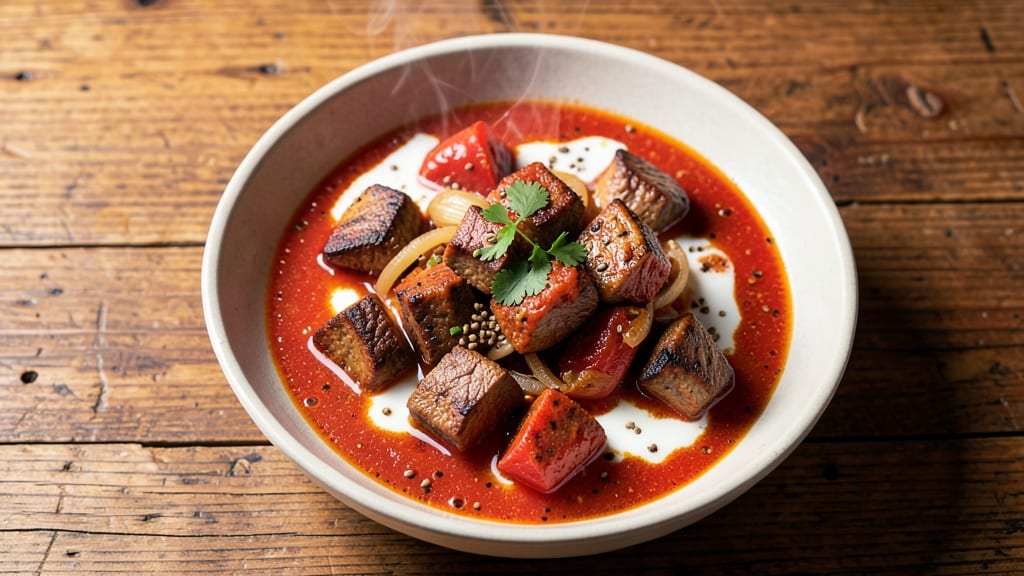
This beef and tomato curry recipe delivers layers of aromatic spices and rich tomato depth that transform simple ingredients into a restaurant-quality dish. The secret lies in slow-simmering the beef until fork-tender while reducing the sauce until it clings perfectly to every bite.
I've perfected this technique over years of testing, ensuring the spices bloom properly and the tomatoes caramelize into a velvety consistency that balances heat and sweetness.
The process begins with searing the beef to develop a deep, meaty flavor before simmering it low and slow in a fragrant spice blend. Whole spices like cinnamon and cardamom infuse the sauce with warmth, while tomatoes and coconut milk create a luscious, slightly tangy base.
What sets this recipe apart is the patience required—letting the flavors meld over time creates a complexity you won't find in rushed versions.
By the time you serve this curry, you'll have perfectly tender beef swimming in a sauce that's rich yet balanced, with notes of spice, sweetness, and acidity. The aroma alone will have everyone gathering at the table, and each bite delivers that satisfying combination of textures and flavors.
Serve it over basmati rice or with warm naan to soak up every last drop of that incredible sauce.
This recipe scales beautifully for crowds while remaining approachable for home cooks. The step-by-step instructions guide you through each phase—from spice toasting to sauce reduction—so you can achieve professional results without specialized equipment. Let's get cooking!
Ingredients for beef and tomato curry
These 15 aromatic ingredients transform simple beef and tomatoes into a restaurant-quality curry.
| Ingredient | Amount | Notes |
|---|---|---|
| Beef Chuck Roast 🥩 | 2 lb | Cut into 1.5-inch cubes, boneless |
| Canned San Marzano Tomatoes 🍅 | 2 cans | 28 oz each, crushed by hand |
| Coconut Milk 🥥 | 1 can | Full-fat, 13.5 oz can |
| Yellow Onion 🧅 | 1 whole | Medium, finely diced |
| Garlic Cloves 🧄 | 6 cloves | Fresh, minced |
| Ginger Root 🌿 | 2 tbsp | Fresh, grated |
| Ground Cumin 🌶️ | 1 tbsp | Toasted for depth |
| Ground Coriander 🌿 | 1 tbsp | Freshly ground preferred |
| Turmeric Powder 🧂 | 1 tsp | Bright yellow color |
| Cinnamon Sticks 🌿 | 2 whole | 1-inch pieces |
| Cardamom Pods 🌿 | 4 whole | Lightly crushed |
| Black Peppercorns 🌶️ | 1 tsp | Freshly cracked |
| Extra-Virgin Olive Oil 🫒 | ½ cup | For searing beef |
| Salt 🧂 | 1 ½ tsp | Diamond Crystal preferred |
| Fresh Cilantro 🌿 | ¼ cup | Chopped, for garnish |
The beef selection is critical—chuck roast delivers that signature fall-apart texture when slow-cooked. Costco and Whole Foods carry excellent cuts, but any well-marbled roast will work. Cube it yourself for even cooking, or buy pre-cubed from the meat counter. San Marzano tomatoes are non-negotiable here; their natural sweetness and acid balance create the velvety sauce base. Penzeys or La Bottega carry them in cans if your grocery store doesn't stock them. For the coconut milk, always choose full-fat—it creates that luxurious mouthfeel that separates home curries from restaurant-quality dishes.
No San Marzano tomatoes? High-quality crushed tomatoes work in a pinch, but you'll lose that perfect sweet-tart balance. Fresh ginger and garlic can be swapped for paste, though fresh always delivers better flavor. Penzeys or bulk bins at Trader Joe's are ideal for spices—just ensure they're whole spices where possible (like cinnamon sticks and cardamom pods) for maximum aroma. The whole spices can be removed after simmering if you prefer a smoother texture. For a quicker version, pre-toasted spices from Badia or Spicewalla save time without sacrificing quality.
Store the dry spices in airtight containers away from light for up to 6 months. Fresh ginger and garlic keep for 2 weeks in the fridge, while the beef should be used within 3 days of purchase. The finished curry reheats beautifully—simmer gently for 5-10 minutes to restore its velvety texture. Portion into containers with a thin layer of coconut milk on top to preserve freshness for 4-5 days in the fridge or 3 months frozen. For best results, let it come to room temperature before serving to appreciate the full depth of flavors.
Why You'll Love This Recipe
- Fewer Chores, Same Magic: I swear by this curry because it’s the kind of meal where you chop once and forget it. The onions and garlic caramelize while you slice the beef—no fancy techniques, just a deep pot and patience. By the time the tomatoes and coconut milk meld together, you’ve done more thinking about when to eat it than how to make it.
- Taste That Sticks: That first spoonful of curry—where the San Marzano tomatoes hit like sunshine, the garlic lingers just shy of overpowering, and the beef melts—honestly, it’s the kind of flavor that makes you pause mid-bite. The coconut milk smooths out the richness, but the slow-cooked beef? It’s got that deep, almost smoky edge that turns “dinner” into “I’ll have seconds.”
- Leftovers That Don’t Lie: Between us, this curry begs to be made in bulk. The flavors only get better the next day—like, “why didn’t I make more?” better. I’ve reheated it for lunch, tossed it into wraps, or even used it to stuff peppers. It’s my go-to for when I need to feed a crowd but don’t want to spend all weekend in the kitchen.
- Budget That Works: Beef chuck roast is the unsung hero here—cheaper than steak but just as satisfying. Canned tomatoes and coconut milk stretch the meal without breaking the bank, and the onions and garlic? Pantry staples. It’s the kind of recipe where you spend less upfront but end up with something so rich, you’ll swear it cost twice as much.
Step-by-step instructions for slow-simmered beef and tomato curry
Mastering this curry requires patience and layering spices correctly for maximum depth.
Sear the Beef Chuck Roast for Deep Flavor
Heat the 0.5 cup extra-virgin olive oil in a heavy-bottomed Dutch oven over medium-high heat until shimmering. Working in batches to avoid crowding, add the 2 lb beef chuck roast cut into 1.5-inch cubes and sear for 3-4 minutes per side until deeply browned. This caramelization forms the flavor foundation.
Remove the beef and set aside. If the oil isn't hot enough, the beef will steam instead of sear—you'll know it's ready when you see a golden crust forming immediately. This step develops the Maillard reaction that gives curries their rich, complex taste.
Build the Spice Base with Aromatics
In the same Dutch oven, add the finely diced yellow onion and cook for 5-6 minutes until softened and golden. Add the minced garlic cloves and grated ginger root, cooking for another 2 minutes until fragrant. Here's where the magic happens—these aromatics form the flavor backbone.
Add the toasted ground cumin, ground coriander, turmeric powder, cinnamon sticks, crushed cardamom pods, and cracked black peppercorns. Stir constantly for 1 minute until the spices are toasted and aromatic. This releases their essential oils, intensifying their flavors in the final dish.
Simmer the Tomatoes and Spices
Pour in the 2 cans crushed San Marzano tomatoes and add 1.5 teaspoons salt. Bring to a gentle simmer and cook uncovered for 20 minutes, stirring occasionally. The tomatoes will reduce and thicken, concentrating their sweetness while melding with the spices.
Return the seared beef to the pot along with any accumulated juices. Add 1 can coconut milk and stir gently to combine. The coconut milk should be stirred in carefully to prevent curdling—this is where the rich, velvety texture begins to develop.
Slow Cook Until Tender and Flavorful
Cover the Dutch oven and transfer to a 325°F oven. Cook for 2.5-3 hours until the beef is fork-tender and easily pulls apart. The curry should have thickened noticeably, with the beef absorbing all the spiced tomato sauce.
Check periodically and add 2-3 tablespoons water if the curry becomes too dry. The goal is a sauce that coats the back of a spoon without being watery. This slow cooking process allows the flavors to meld and develop their full complexity.
Finish and Garnish for Presentation
Remove from the oven and let the curry rest for 10 minutes to allow the flavors to settle. Skim off any excess fat that has risen to the surface. Taste and adjust seasoning with additional salt if needed—this is your final opportunity to balance the flavors.
Garnish with the 0.25 cup chopped fresh cilantro just before serving. The cilantro adds a bright, fresh contrast to the rich, spiced curry. Serve immediately with basmati rice or crusty naan to soak up every last bit of the flavorful sauce.
Pro Tips For Making Beef And Tomato Curry
- SEAR THE BEEF FIRST: That chuck roast won’t melt in your mouth if you skip this step—crank the heat to medium-high and let those 2-inch cubes develop a deep brown crust before anything else hits the pan. I used to rush this, and the curry always tasted flat until I learned to wait until the meat releases its juices in a sizzle.
- CRUSH THE TOMATOES: Dump those San Marzano tomatoes straight from the can? You’re missing out. Give them a quick mash with your hands or the back of a spoon—this breaks down the skins and releases their sweetness right into the sauce. (Yes, even if you’re impatient like me.)
- LOW AND SLOW FOR TENDERNESS: After browning the meat and building the base, drop the heat to a simmer and cover the pot. Chuck roast needs time—at least 2 hours—to turn fork-tender, not just cooked through. I learned this the hard way when I walked away and came back to rubbery beef.
- SALT THE COCONUT MILK: Plain coconut milk tastes bland in curries—fix it by adding ½ teaspoon of salt per can before stirring it in. It balances the richness and cuts through the acidity of the tomatoes. (Your future self will notice the difference.)
Storing and reheating this recipe
Fridge Storage Tips
Let your curry cool to room temperature (about 1 hour) before transferring to airtight containers. I use glass Pyrex containers with snap-on lids—they're microwave-safe and preserve flavors better than plastic.
Store in the fridge at 40°F or below for up to 4-5 days, with a thin layer of coconut milk on top to maintain moisture. 🥫
Freezer Prep for Later
For long-term storage, portion curry into quart-sized freezer bags or airtight containers, leaving 1-inch headspace for expansion. Seal tightly to prevent freezer burn. Label with the date—this curry stays delicious for 3 months when frozen. I always freeze it in single-serving portions for easy reheating later.
Stovetop Reheating
My preferred method is stovetop reheating because it restores that velvety texture perfectly. Pour curry into a pot and heat over medium-low heat for 10-15 minutes, stirring occasionally.
Add 2-3 tablespoons water or coconut milk if it looks too thick. Never boil—this breaks down the sauce's delicate balance of flavors. 🔥
Microwave Shortcuts
For quick meals, transfer curry to a microwave-safe dish and heat on 50% power for 2-3 minutes, stirring halfway. Cover loosely with a microwave-safe lid to retain moisture.
If the sauce separates, stir vigorously and add a splash of coconut milk to re-emulsify. This works best for 1-2 servings at a time.
Serving Freshness
Always let reheated curry sit for 2-3 minutes after heating to allow flavors to meld again. Garnish with fresh cilantro and a squeeze of lemon just before serving—this brightens up any reheated dish.
The aroma alone will make it taste freshly made. Serve with warm basmati rice or naan to soak up all that delicious sauce. ✨
Nutrition facts
Frequently asked questions
Can I substitute ground beef for chuck roast in this recipe?
While you can use ground beef, the texture and flavor will differ significantly. Chuck roast develops a tender, melt-in-your-mouth quality when slow-cooked, while ground beef will create a thicker, meatier curry. If you prefer ground beef, use 80% lean and simmer for 1.5 hours instead of 2.5-3 hours to avoid drying out.
How can I make this curry less spicy?
Reduce the ground cumin and coriander to ½ teaspoon each and omit the black peppercorns. For a milder heat, add 1 teaspoon sugar or ½ teaspoon honey to balance the spices. You can also increase the coconut milk by ¼ can to dilute the spice intensity while keeping the richness.
What's the best way to thicken the sauce if it's too thin?
Simmer uncovered for an additional 15-20 minutes to reduce the sauce naturally. If it's still too thin, mix 1 tablespoon cornstarch with 2 tablespoons cold water and stir it into the curry. Cook for another 5 minutes until thickened. Avoid over-thickening—aim for a sauce that coats the back of a spoon but remains smooth.
Can I make this curry in an Instant Pot instead of oven?
Yes! Sear the beef as directed, then add all ingredients except coconut milk. Cook on High Pressure for 30 minutes, then quick-release the pressure. Stir in coconut milk and simmer on Low Heat for 10 minutes to finish. The beef will be tender, but the sauce may be slightly thinner than oven-braised. Adjust with cornstarch if needed.
Why did my curry taste bitter?
Bitterness often comes from overcooking the spices or tomatoes. To fix it, stir in 1 teaspoon sugar or ½ teaspoon honey and simmer for 5 minutes. For prevention, don't let the tomatoes simmer uncovered for more than 20 minutes—this concentrates their natural acidity. Also, remove whole spices (cinnamon, cardamom) after 20 minutes of cooking to avoid over-extraction.