
Soups & Stews
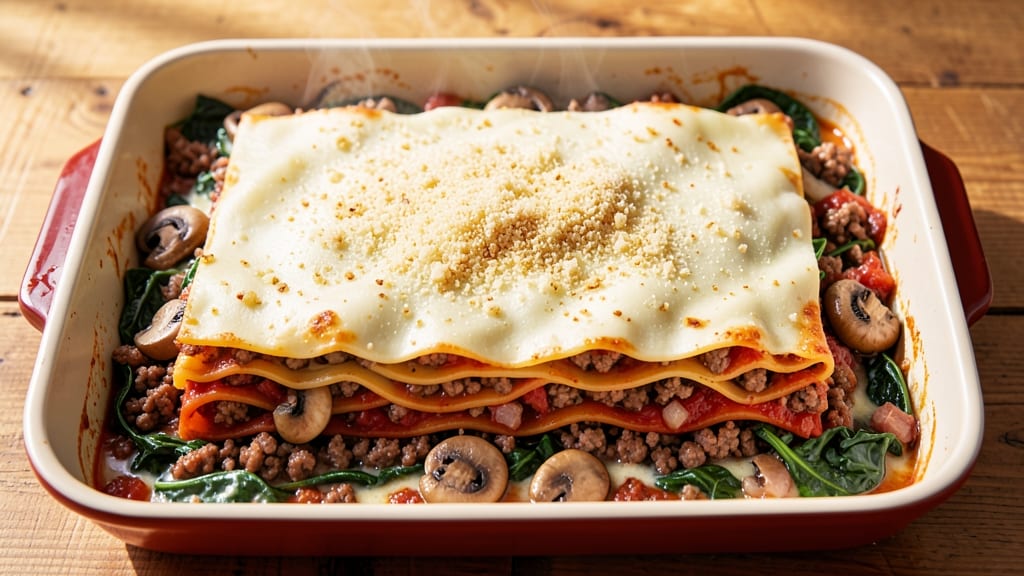
This beef and vegetable lasagne recipe delivers the hearty comfort of Italian tradition with modern convenience—tender beef, earthy mushrooms, vibrant spinach, and rich tomato sauce all baked into layers of pasta.
The secret lies in proper layering and baking at 375°F for golden perfection, ensuring each bite combines textures and flavors without falling apart. I've perfected this version to balance authenticity with practicality, so you get restaurant-quality results without spending hours in the kitchen.
The foundation starts with a flavorful beef ragù that simmers until the meat is fork-tender, while sautéed mushrooms and wilted spinach add depth and freshness to each layer. Fresh lasagne noodles hold up better than dried when baked, and a creamy béchamel ties everything together with velvety richness.
What sets this apart is the technique of partially baking the layers before adding the final cheese—this prevents a soggy middle while creating a crispy, golden top.
By the time it emerges from the oven, you'll have a lasagne with tender beef, crisp edges, and layers that stay distinct yet harmonious. The aroma alone will have everyone gathering at the table, and each forkful delivers a perfect balance of savory, herby, and cheesy flavors.
Serve with a simple arugula salad to cut through the richness or crusty bread to soak up every last bit of sauce.
This recipe scales beautifully for gatherings or leftovers that reheat perfectly—ideal for meal prep or special occasions. The key to success is patience during assembly and baking, but the result is worth every minute. Let's get started on creating your lasagne masterpiece.
Ingredients for beef and vegetable lasagne
Pantry staples meet fresh produce for this hearty beef and veggie lasagne.
| Ingredient | Amount | Notes |
|---|---|---|
| Ground Beef 🥩 | 1 ½ lb | 80% lean, finely ground |
| Lasagne Noodles 🍝 | 12 pieces | Fresh, uncooked lasagne sheets |
| Mushrooms 🍄 | 1 lb | Cremini or white, sliced thin |
| Spinach 🌿 | 5 oz | Fresh, loosely packed |
| Onion 🧅 | 1 whole | Yellow or white, diced |
| Garlic Cloves 🧄 | 4 cloves | Fresh, minced |
| Tomato Sauce 🍅 | 2 cups | High-quality jarred or homemade |
| Heavy Cream 🥛 | 1 cup | Full-fat for richness |
| Butter 🧈 | 2 tbsp | Unsalted, melted |
| All-Purpose Flour 🌾 | 2 tbsp | For béchamel roux |
| Parmesan Cheese 🧀 | 1 ½ cups | Freshly grated from block |
| Mozzarella Cheese 🧀 | 1 ½ cups | Fresh, shredded |
| Salt 🧂 | 1 ½ tsp | Kosher or sea salt |
| Black Pepper 🌶️ | ½ tsp | Freshly ground |
| Dried Oregano 🍃 | 1 tsp | Italian blend preferred |
The beef is the star—80% lean ground chuck gives you that perfect balance of tenderness and flavor. Costco or Trader Joe's usually have it pre-ground, which saves time. If you're buying a whole chuck roast to grind yourself, look for good marbling. The mushrooms? Cremini or white work best—they hold their shape better than portobello when baked. Fresh spinach is ideal, but frozen works in a pinch (thaw and drain well). For the onions, yellow or white are fine—just make sure they're fresh, not wilty.
No fresh lasagne noodles? Dried lasagne noodles work too—just boil them al dente (about 2 minutes less than package says). Short on Parmesan? Pecorino Romano is a great substitute. The tomato sauce can be homemade (San Marzano tomatoes are a game-changer) or a high-quality jarred brand like Rao's. For the béchamel, whole milk instead of heavy cream cuts calories slightly, though it won't be quite as rich. The mozzarella? Fresh is best, but low-moisture shredded from a block works if you're in a hurry—just don't use the pre-shredded kind with additives.
This lasagne reheats beautifully—honestly tastes better the next day once everything melds. Keeps for 4-5 days in the fridge, freezes for 3 months. I always make a double batch because leftovers are perfect for lunches. Store in an airtight container with parchment paper between layers to prevent sticking. For serving, a sprinkle of fresh basil or parsley adds a pop of color—trust me, it makes it look restaurant-worthy.
Why You'll Love This Recipe
- No-Fuss Assembly: I swear by the "dump-and-bake" hack here—just brown the beef with onions, toss in mushrooms and spinach, layer with noodles and sauce, and you’re done. Even my toddler could help (and did, with minimal mess).
- Savory Depth in Every Bite: That caramelized onion base? Chef’s kiss. The mushrooms soak up all the meaty juices while the spinach wilts into tender pockets—rich, umami-packed layers that make store-bought sauce feel lazy.
- Leftovers That Beg for More: Between us, this lasagne improves the next day. The noodles soften just right, the beef stays juicy, and the veggies meld into a cohesive, hearty bite. I microwave a slice for lunch and still lick the plate.
- Budget-Friendly Crowd-Pleaser: Ground beef stretches far with mushrooms and spinach bulking it up, and lasagne noodles are cheaper than fresh pasta. Feed six for under $15, and no one will guess it’s not homemade from scratch.
Step-by-step instructions for beef and vegetable lasagne
Let's build this hearty lasagne layer by layer—each step brings us closer to that perfect balance of tender beef, earthy mushrooms, and creamy cheese.
Cook the Lasagne Noodles Al Dente
Bring a large pot of salted water to a rolling boil. Add the 12 pieces of lasagne noodles and cook according to package instructions until they're just al dente—about 1 minute less than recommended. You want them tender but still with a slight bite. Drain immediately and set aside in a bowl covered with a clean kitchen towel to prevent drying.
This step is crucial because overcooked noodles turn mushy when baked, while perfectly cooked ones hold their shape and absorb flavors beautifully. Don't skip the towel—it keeps them moist without making them soggy.
Brown the Ground Beef and Sauté Vegetables
In a large skillet, cook the 1.5 lb of ground beef over medium-high heat for 5-7 minutes, breaking it apart with a wooden spoon until it's fully browned and no longer pink. Drain excess fat, leaving about 1 tablespoon in the pan.
Add the diced onion and sliced mushrooms, cooking for 5 minutes until softened. Stir in the minced garlic cloves and cook for another 30 seconds until fragrant. Season with 1.5 teaspoons of salt, 0.5 teaspoon of black pepper, and 1 teaspoon of dried oregano. This mixture forms the flavorful base for your lasagne.
Create the Cheesy Béchamel Sauce
In a medium saucepan, melt the 2 tablespoons of butter over medium heat. Whisk in the 2 tablespoons of all-purpose flour and cook for 1-2 minutes until the mixture forms a smooth paste. Gradually whisk in the 1 cup of heavy cream, stirring constantly to prevent lumps.
Continue cooking for 3-5 minutes until the sauce thickens enough to coat the back of a spoon. Remove from heat and stir in 1 cup of freshly grated parmesan cheese and 1 cup of shredded mozzarella cheese. This rich, creamy layer will bind everything together beautifully.
Assemble the Lasagne Layers
Preheat your oven to 375°F. Spread 1 cup of tomato sauce on the bottom of a 9x13-inch baking dish. Arrange 4 lasagne noodles horizontally, slightly overlapping if needed. Spread half of the beef-vegetable mixture over the noodles, followed by 1 cup of the béchamel sauce.
Sprinkle ½ cup of mozzarella cheese and ½ cup of parmesan cheese over the sauce. Repeat the layers: noodles, remaining beef mixture, another 1 cup of tomato sauce, remaining béchamel sauce, and the final ½ cup each of mozzarella and parmesan. Top with the remaining 4 lasagne noodles to create a sealed top layer.
Bake Until Bubbly and Golden
Cover the lasagne tightly with aluminum foil and bake for 30 minutes. Remove the foil and bake for another 15-20 minutes until the top is golden brown and bubbly. The edges should be slightly crispy, and the cheese should be melted and bubbling.
Let the lasagne rest for 10-15 minutes before slicing. This resting time allows the layers to set and makes it easier to serve perfect portions. Each slice should reveal layers of tender beef, creamy sauce, and melted cheese—this is where all the hard work pays off!
Pro Tips For Making Beef And Vegetable Lasagne
- Sear the Beef First: Brown that ground beef in batches—don’t skimp on the heat. High flame, broken into small crumbles, until it’s dark around the edges. That crispy bit? It’s what makes the whole lasagna taste richer, not just the meat. (Yes, even if it means two pans and extra time.)
- Wilt Spinach Properly: Dump fresh spinach into the hot pan after the onions are soft, and stir like you’re angry—just 30 seconds max. Overcook it, and you’ll end up with a sad, watery mess. If using frozen, thaw it first and squeeze out every drop of ice water. (Trust me, your lasagna layers will thank you.)
- Salt the Noodles Wrong: Skip the salt in the boiling water—lasagna noodles absorb enough flavor from the sauce. What matters is giving them a quick rinse in cold water after cooking to stop them from sticking. Then toss them with a little olive oil so they don’t dry out while layering. (This isn’t the prettiest method, but it’s the tastiest.)
- Layer Like a Pro: Start and end with meat—no cheese on the top layer, no sauce on the bottom. Use about 1/3 of your sauce first, then noodles, then meat-veggie mix, repeating. Press down gently with a spatula to compact layers, but don’t mash them. (Your future self will thank you when it doesn’t slide apart.)
Flavor customization for this dish
Spicy Kick Options
Add 1-2 tablespoons of hot sauce (like Cholula or Tabasco) to the tomato sauce layer for a subtle heat that lingers. For more intensity, stir ½ teaspoon of crushed red pepper flakes into the beef mixture or sprinkle ¼ teaspoon of cayenne pepper over the final cheese layer.
I love adding a few drops of Calabrian chili paste for a smoky, fruity heat that pairs perfectly with the mushrooms. 🌶️
Herb Variations
Swap out the oregano for fresh basil or thyme—chop ½ cup of basil and fold it into the béchamel sauce for a bright, fresh finish. For a more Mediterranean twist, add 1 teaspoon of dried rosemary to the beef mixture while browning.
I also love sprinkling fresh parsley on top before serving for a pop of color and freshness.
Cheese Swaps
Replace half the mozzarella with fontina cheese for a nuttier, creamier texture that melts beautifully. For a vegetarian-friendly option, swap the beef layer with sautéed lentils or mushroom duxelles, then top with ricotta cheese instead of mozzarella.
If you love sharpness, add ½ cup of shredded pecorino romano to the béchamel for extra depth.
Vegetable Boosts
Add 1 cup of roasted zucchini or sun-dried tomatoes to the beef layer for extra veggie goodness. For a fall version, mix in ½ cup of sautéed butternut squash> and ¼ cup of toasted walnuts for crunch.
I also love adding 1 cup of sautéed bell peppers (red, yellow, or green) to the tomato sauce for a sweet, colorful twist.
Creamy Twists
Replace the heavy cream in the béchamel with coconut milk for a dairy-free option that still delivers richness. For extra decadence, stir 2 ounces of cream cheese into the béchamel sauce while heating.
If you prefer tang, add 1 tablespoon of lemon juice to the sauce before baking for a bright contrast to the rich beef and cheese.
Protein Swaps
Use Italian sausage instead of beef for a spicier, meatier flavor—just brown it with the onions. For a lighter option, replace half the beef with ground turkey or chickpeas (drained and rinsed).
I also love adding ½ cup of cooked lentils to the beef mixture for extra fiber and texture without compromising flavor.
Nutrition facts
Frequently asked questions
Can I use dried lasagne noodles instead of fresh?
Yes, but with one key adjustment: boil dried noodles 1 minute less than package instructions for al dente texture. They absorb more moisture when baked, so you may need to add 1 extra layer of tomato sauce between noodle layers to prevent dryness. Fresh noodles hold their shape better and stay more distinct when baked.
Why does my lasagne get soggy in the middle?
This usually happens from three common mistakes: overcooking the noodles, skipping the foil during initial baking, or not letting it rest after baking. Always cook noodles al dente, cover with foil for the first 30 minutes to steam gently, then uncover to crisp the top. The 10-minute rest before slicing lets moisture redistribute evenly.
How can I make this lasagne ahead of time?
Assemble the lasagne completely (including final cheese layer), cover tightly with foil, and refrigerate for up to 24 hours before baking. For freezing, bake fully, cool completely, then wrap tightly with plastic wrap and foil. Freeze for up to 3 months. Thaw overnight in the fridge before reheating—never microwave directly from frozen.
What's the best way to reheat leftovers?
Slice the lasagne into portions and reheat in a 350°F oven for 15-20 minutes covered with foil until heated through. For microwave reheating, cover with a damp paper towel and heat in 30-second intervals on medium power, stirring between each interval. The oven method preserves texture better while preventing drying.
Can I substitute mushrooms with another vegetable?
Try sautéed zucchini or roasted eggplant for a similar texture, or add bell peppers for sweetness. For heartier options, use spinach or kale (wilt first) or roasted butternut squash. Just ensure vegetables are cooked down to avoid excess moisture in your layers—drain well if needed.