
Soups & Stews
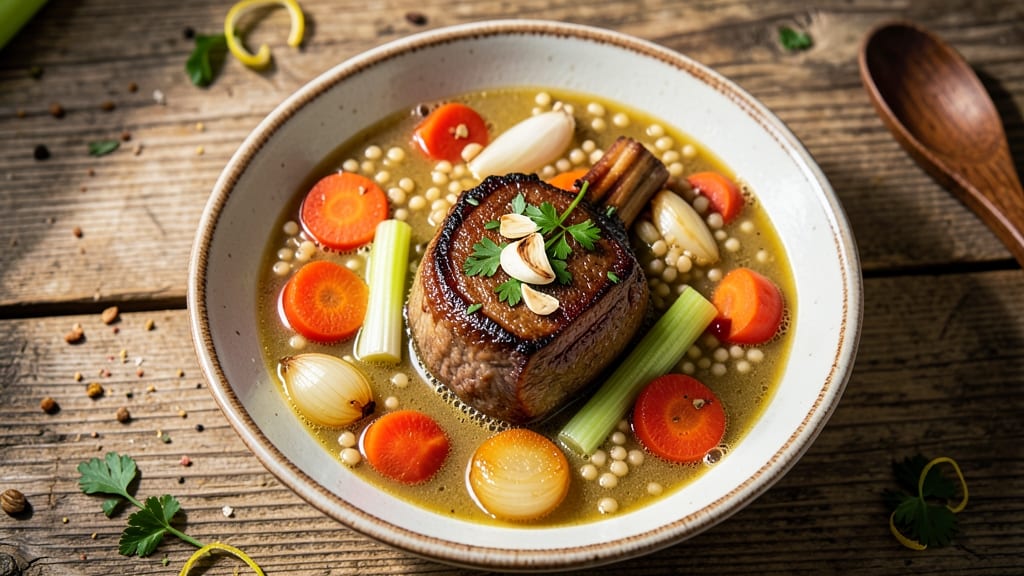
This beef shank and barley soup recipe transforms tough cuts into melt-in-your-mouth tenderness through deep-roasting bones—Nana Mae's technique that built my foundation in Southern cooking. The key lies in slow simmering, where rich marrow and collagen dissolve into a velvety broth that coats every spoonful.
I've perfected this over years of testing, balancing traditional methods with modern efficiency for home cooks.
The process begins with searing beef shank until deeply caramelized, locking in flavor before a long braise that develops depth. Barley adds hearty texture while vegetables like carrots and celery round out the dish with natural sweetness.
What makes this recipe stand out is how the slow cooking transforms simple ingredients into something restaurant-worthy—no shortcuts, just time and technique.
By the final hour, you'll have a steaming bowl of soup with tender beef that practically falls apart at the touch, barley that's perfectly chewy, and a broth so rich it deserves its own spoon.
The aroma alone will have your kitchen smelling like Nana Mae's diner, while the first bite delivers that perfect balance of savory, sweet, and umami. This is comfort food at its finest—warm, nourishing, and deeply satisfying.
Serve with crusty bread to soak up every last drop of that precious broth, or pair with a simple green salad for balance. The leftovers reheat beautifully, making this an ideal meal for busy weeks when you still want something special on the table.
Let's get started on creating this timeless classic.
Ingredients for beef barley soup recipe with beef shank
Pantry staples meet deep-roasted beef shank for soul-warming soup that tastes like Nana Mae's kitchen.
| Ingredient | Amount | Notes |
|---|---|---|
| Beef Shank 🥩 | 3 lb | Bone-in for maximum flavor |
| Yellow Onion 🧅 | 2 whole | Chopped into 1-inch pieces |
| Carrots 🥕 | 4 medium | Peeled and cut into 1-inch chunks |
| Celery Stalks 🧄 | 4 whole | Trimmed and cut into 1-inch pieces |
| Garlic Cloves 🧄 | 6 cloves | Smashed, not minced |
| Pearl Barley 🌾 | 1 ½ cups | Uncooked, rinsed thoroughly |
| Tomatoes 🍅 | 2 whole | Roma or vine-ripened, crushed |
| Beef Broth 💧 | 8 cups | Homemade or high-quality store-bought |
| Red Wine 🍷 | 1 cup | Dry, like Cabernet Sauvignon |
| Olive Oil 🫒 | ½ cup | Extra-virgin for roasting |
| Fresh Thyme 🌿 | ¼ cup | Leaves only, stems removed |
| Fresh Parsley 🌿 | ¼ cup | Chopped for garnish |
| Salt 🧂 | 2 tsp | Kosher or sea salt |
| Ground Black Pepper 🌶️ | 1 tsp | Freshly ground |
The beef shank is non-negotiable here—bone-in for that marrow-rich flavor. Costco or your butcher's counter will have the best cuts, often pre-cut into shanks. If you're buying a whole shank, ask for it to be cut into 2-inch chunks yourself. The key is to sear them until deeply caramelized before slow cooking. Look for shanks with good marbling—fat equals flavor. For the barley, Bob's Red Mill or Quaker are reliable brands, but any pearl barley will work. Just make sure it's rinsed well before adding to the pot.
No red wine? Substitute beef broth with a splash of balsamic vinegar—it mimics the acidity. Fresh thyme is ideal, but dried thyme at one-third the amount gets you close. Running low on tomatoes? Canned San Marzano tomatoes work perfectly. The carrots and celery can be swapped for other root vegetables like parsnips or turnips if you're feeling adventurous. For the broth, low-sodium options are best so you can control the seasoning. And if you're using store-bought broth, add an extra pinch of salt—most brands are under-seasoned.
This soup tastes even better the next day—4-5 days in the fridge, 3 months frozen. I always make a double batch because it reheats beautifully. Store in airtight containers with a layer of broth on top to preserve freshness. For serving, garnish with fresh parsley and a drizzle of olive oil. The barley will soften more with reheating, so adjust cooking time slightly if you're making it ahead. Leftovers make perfect lunches—just warm through and enjoy.
Why You'll Love This Recipe
- I’ll be real: this feeds a crowd without stress, but also? It’s my go-to when I’m eating alone for three nights straight. The barley thickens beautifully—no slurping required—and the flavors only get richer overnight.
- Shank Magic Simmer: Between us, that beef shank? It practically melts into buttery, fall-apart perfection while you chop veggies—no fancy searing required. Just toss it in with onions, carrots, and celery, then let the pot do the work.
- Garlic-Glazed Depth: Honestly, the moment those garlic cloves caramelize into the broth? Chef’s kiss. The soup goes from good to "I’ll make this every Sunday" in one slow simmer. That crispy edge on the shank? Pure satisfaction.
- Weeknight & Holiday: I’ll be real: this feeds a crowd without stress, but also? It’s my go-to when I’m eating alone for three nights straight. The barley thickens beautifully—no slurping required—and the flavors only get richer overnight.
Step-by-step instructions for beef shank and barley soup
Here's how to build a rich, hearty soup where deep-roasted bones create unmatched depth.
Roast the Beef Shank for Maximum Flavor
Preheat your oven to 425°F. Pat the 3 lb beef shank completely dry with paper towels—this ensures a perfect crust. Rub it generously with 1 teaspoon of the ground black pepper and 1 teaspoon of the salt, focusing on all sides and the bone.
Heat 0.25 cup of the olive oil in a large oven-safe skillet over medium-high heat until shimmering. Add the beef shank and sear for 3-4 minutes per side until deeply browned. Transfer the skillet to the oven and roast for 30 minutes, flipping halfway through. This step develops the rich, caramelized flavors that form the soup's foundation.
Build the Deep-Flavored Base
Remove the beef shank from the skillet and set it aside. In the same skillet, add 1 tablespoon of the olive oil and 1 whole yellow onion chopped into 1-inch pieces, 2 medium carrots cut into 1-inch chunks, and 2 whole celery stalks cut into 1-inch pieces. Cook over medium heat for 8-10 minutes until softened and golden.
Add the 6 smashed garlic cloves and cook for 30 seconds until fragrant. Stir in the 2 whole crushed tomatoes and cook for another 2 minutes to break down the tomatoes into the mixture. This aromatic base forms the flavor backbone of the soup.
Deglaze and Simmer the Soup
Pour in the 1 cup red wine and scrape up all the browned bits from the bottom of the skillet with a wooden spoon. This deglazing step captures all the concentrated beef flavor. Add the 8 cups beef broth and bring the mixture to a gentle boil.
Return the beef shank to the skillet, along with the 0.25 cup fresh thyme leaves. Reduce heat to low and let it simmer uncovered for 1.5 hours, skimming off any foam that rises to the surface. The beef shank should be fork-tender and easily pull away from the bone. This long simmering time is crucial for developing the soup's rich, velvety texture.
Add Barley and Finish Cooking
Remove the beef shank from the soup and set it aside. Add the 1.5 cups rinsed pearl barley to the soup and stir gently. Return the heat to medium-low and let it simmer for 30-40 minutes, or until the barley is tender but still has a slight bite.
Shred the beef shank using two forks, removing any large bones. Return the shredded beef to the soup and stir well. Taste and adjust seasoning with the remaining 1 teaspoon salt if needed. The soup should be rich, flavorful, and well-balanced with the tender beef and barley.
Serve with Fresh Herbs
Ladle the soup into bowls and garnish each serving with 1 tablespoon of the chopped fresh parsley. Serve immediately with crusty bread to soak up the rich broth. The combination of tender beef, hearty barley, and aromatic vegetables creates a comforting, satisfying meal that's perfect for chilly days.
Pro Tips For Making Beef Barley Soup Recipe With Beef Shank
- Brown the Shank First: Skip the "I'll just toss it in" approach—this soup hinges on flavor, and that means searing the shank until it’s deep mahogany, not pink. I learned this the hard way after a watery, bland batch; now I crank the heat, pat the shank dry, and let it sit undisturbed for 5 minutes per side. The crust isn’t just for show—it’s what dissolves into the broth later.
- Cut Celery and Carrots Uniformly: Big chunks? They’ll turn to mush. Tiny dice? They’ll disappear. Aim for ½-inch pieces—thick enough to hold shape but small enough to cook through. I used to eyeball it, but now I measure the celery stalks against a knife blade (yes, really) to keep them consistent. Even cooking = no weird textures in your soup.
- Deglaze with Beer, Not Water: That browned crust on the pot? It’s packed with flavor. Splash in ½ cup of beer (stout or dark ale works best) instead of water to scrape it up—it adds depth without tasting boozy. I was skeptical until I tried it; now I keep a bottle of cheap beer on hand just for this.
- Add Barley Last, Then Simmer Low: Barley absorbs liquid like a sponge, so add it only after the shank is fork-tender and the veggies are soft. Then, drop the heat to a bare simmer—too hot and it’ll turn to mush in 10 minutes. I used to rush this, but now I let it cook for 20-30 minutes at low heat, stirring occasionally. The result? Creamy, chewy barley every time.
Flavor customization for this beef barley soup recipe with beef shank
Spicy Kick
For a bold twist, add 1-2 teaspoons of smoked paprika when roasting the beef shank, then finish with ½ teaspoon of cayenne pepper at the end. I love using Penzeys brand for their consistent heat levels.
If you prefer less spice, start with ¼ teaspoon cayenne and adjust to taste. The smoky depth from the paprika pairs beautifully with the rich beef flavors. 🌶️
Umami Boost
Elevate the broth's depth by adding 1 tablespoon of soy sauce or 1 teaspoon of fish sauce when deglazing with wine. The umami punch enhances the beef's natural richness without overpowering.
I discovered this trick while working in Charleston—just a splash makes all the difference. For extra umami, stir in 1 teaspoon of Worcestershire sauce during the final simmer. 💫
Herb Variations
Swap out thyme for rosemary or bay leaves to create different flavor profiles. A single bay leaf added during simmering infuses earthy notes, while ½ teaspoon dried rosemary brings piney brightness. Fresh herbs like tarragon or sage work beautifully too—just double the amount since dried herbs are more concentrated. 🌿
Vegetable Swaps
Transform this into a seasonal masterpiece by swapping veggies. In fall, use parsnips and sweet potatoes for natural sweetness. Spring calls for asparagus and peas—add them in the last 10 minutes of cooking to preserve texture.
For a winter version, try rutabaga and leeks—their earthy flavors complement the beef perfectly. 🥕
Creamy Finish
Add a luxurious touch by stirring in ½ cup heavy cream or ½ cup coconut milk during the final 5 minutes of simmering. The creaminess balances the hearty barley and beef beautifully.
For a lighter option, blend 1 cup of the broth until smooth and stir it back in. This creates a velvety texture without heaviness. 🥄
Global Twist
Give your soup international flair by adding 1 teaspoon ground cumin and ½ teaspoon coriander during the roasting phase for a Middle Eastern-inspired version. For an Asian twist, stir in 1 tablespoon of ginger paste and 1 clove minced garlic—add these with the barley.
These variations keep the soup's soul while adding exciting new dimensions. 🌍
Nutrition facts
Frequently asked questions
Why does roasting the beef shank first make such a difference?
The roasting step creates a deep, caramelized crust called the Maillard reaction, which develops complex flavors that simply can't be achieved through boiling alone. This rich crust dissolves into the broth during simmering, creating that restaurant-quality depth.
Can I use a slow cooker for this recipe?
Brown the shank in a skillet first, then transfer everything to your slow cooker. Cook on low for 8 hours or high for 5 hours after adding the broth. The barley will need 20-30 minutes of additional cooking time on the stove after removing the beef shank. The texture will be slightly different but still delicious!
What's the best way to store leftovers?
Let the soup cool completely, then transfer to airtight containers with a layer of broth on top to prevent drying. It keeps in the fridge for 4-5 days or freezes beautifully for 3 months. Reheat gently on the stove—never microwave directly from frozen. The flavors actually improve over time!
How do I know when the barley is done?
The barley should be tender but still slightly chewy—not mushy. Test by tasting a grain or pressing it between your teeth. If it's too firm, simmer 10 more minutes. If it's mushy, you've overcooked it. The ideal texture takes about 30-40 minutes of simmering. Remember, it will soften more when reheated!
What if I don't have red wine?
No problem! Replace the wine with 1 cup beef broth plus 1 tablespoon balsamic vinegar for similar acidity. Or use 1 cup apple cider for a sweeter twist. The key is maintaining some acidity to balance the richness of the beef. The flavor won't be identical, but it'll still be delicious.