
Soups & Stews
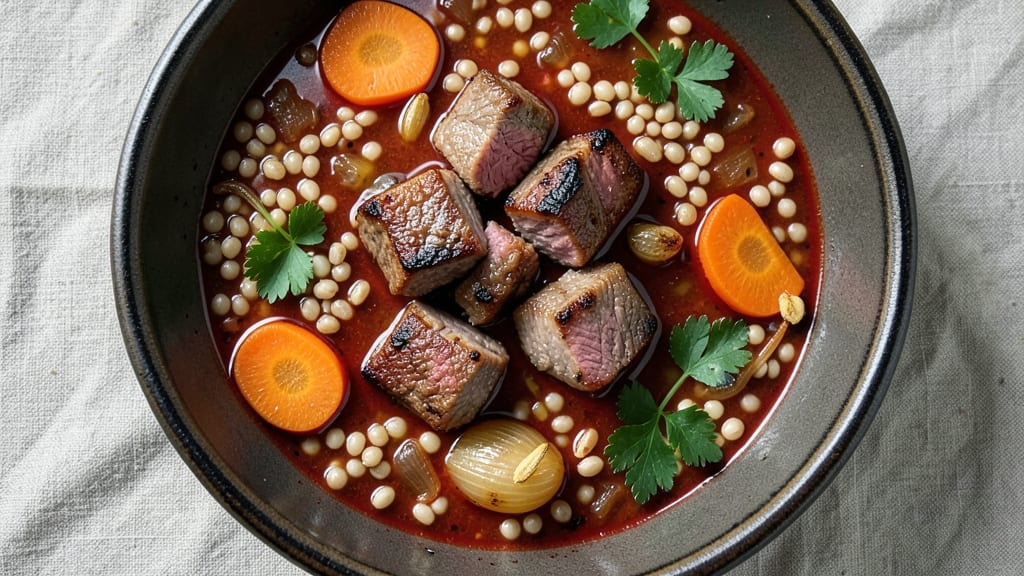
This beef barley soup recipe with red wine transforms humble ingredients into a rich, aromatic masterpiece that simmers for hours. The red wine isn't just flavor—it's the soul of the soup, adding depth and complexity that elevates every spoonful.
I developed this recipe after years of testing, and the secret lies in proper wine reduction and slow simmering techniques that develop layers of flavor.
The beauty of this recipe is its simplicity combined with professional results. You'll start with tender beef chuck that breaks down into melt-in-your-mouth pieces, while pearl barley absorbs the rich, wine-infused broth.
The key steps involve browning the meat properly, deglazing with wine, and letting everything simmer until the flavors meld perfectly. This is comfort food at its finest—warm, hearty, and packed with restaurant-quality flavor.
What you'll end up with is a deeply aromatic soup where the beef is fork-tender, the barley is perfectly chewy, and the broth is rich with caramelized wine notes.
The aroma alone will fill your kitchen with warmth, while each bite delivers a perfect balance of savory, earthy, and slightly tangy flavors. The wine reduction process concentrates its flavors, creating a broth that's far more complex than simple beef broth could ever be.
This soup is incredibly versatile—serve it as a main dish with crusty bread or as a side for holiday meals. The flavors actually improve as it sits, making it perfect for meal prep.
The technique is straightforward, but the results are anything but ordinary. Let's get started on creating this comforting classic that will become your new favorite weeknight dinner.
Ingredients for beef barley soup recipe with red wine
Six ingredients transform into restaurant-quality beef barley soup with wine-infused depth.
| Ingredient | Amount | Notes |
|---|---|---|
| Beef Chuck Roast 🥩 | 2 lb | Cut into 1-inch cubes |
| Pearl Barley 🌾 | 1 cup | Uncooked, rinsed well |
| Red Wine 🍷 | 1 ½ cups | Bold, dry variety like Cabernet |
| Beef Broth 🥫 | 6 cups | Low-sodium preferred |
| Yellow Onion 🧅 | 1 whole | Chopped, medium size |
| Carrots 🥕 | 3 medium | Peeled, chopped into chunks |
| Celery Stalks 🧄 | 3 whole | Chopped, including leaves |
| Garlic Cloves 🧄 | 4 cloves | Minced, fresh preferred |
| Tomato Paste 🍅 | 2 tbsp | Smooth, no sugar added |
| Fresh Thyme 🌿 | 2 tbsp | Leaves only, chopped |
| Bay Leaves 🍃 | 2 whole | Dried, standard size |
| Salt 🧂 | 1 ½ tsp | Kosher or sea salt |
| Black Peppercorns 🌶️ | 1 tsp | Freshly cracked |
| Olive Oil 🫒 | 2 tbsp | Extra-virgin preferred |
| Fresh Parsley 🌿 | ¼ cup | Chopped, for garnish |
The beef is non-negotiable here—chuck roast breaks down beautifully, while sirloin stays tough. Costco or local butchers usually have it pre-cubed, which saves time, but if you're buying a whole roast, ask for the chuck section. Look for good marbling—those little fat streaks melt into flavor. The red wine should be bold and dry (Cabernet, Merlot, or whatever's open). If you're not drinking it, save the good stuff—this isn't the time for cooking wine. The barley? Pearl barley is standard, but if you can find it, Arborio rice makes a great 1:1 substitute for a creamier texture.
No red wine? Beef broth with 1 tbsp balsamic vinegar gets you close, though you'll lose some depth. Fresh thyme is ideal, but dried works at half the amount. The tomato paste can be swapped for 1 cup crushed tomatoes if you prefer. Carrots and celery? Baby carrots or pre-chopped veggie mixes work in a pinch. The garlic can be roasted (microwave 40 seconds with a splash of oil) for a sweeter flavor. For extra richness, stir in 1 tbsp soy sauce at the end—trust me, it's a game-changer. The parsley is just for garnish, so skip it if you're prepping ahead.
This soup tastes even better the next day—flavors meld overnight. Keeps 5-6 days in the fridge, freezes for 3 months. I always make a double batch because it's perfect for lunches. Store in airtight containers, and if freezing, portion into individual containers so you can grab one without thawing the whole batch. The barley thickens as it cools, so add a splash of broth when reheating. For serving, I like to toast crusty sourdough to soak up every last drop.
Why You'll Love This Recipe
- I swear by this trick: just sear the beef chuck roast in big chunks—no need to dice it. The slow simmer breaks it down into melt-in-your-mouth pieces while you’re free to stir the onions and wine without stressing over knife work.
- No Chopping Needed: I swear by this trick: just sear the beef chuck roast in big chunks—no need to dice it. The slow simmer breaks it down into melt-in-your-mouth pieces while you’re free to stir the onions and wine without stressing over knife work.
- Wine Lifts Everything: That first splash of red wine isn’t just for flavor—it deepens the broth into something rich and velvety. Honestly, the difference between this and a dry beef soup is night and day. The acidity cuts through the richness, and suddenly, you’ve got restaurant-quality depth.
- Weeknight to Holiday: Between us, this is my lazy Sunday standby and the dish I pull out when my in-laws visit. The barley soaks up all the beefy goodness, so you’re left with a hearty bowl that feels special without requiring a 5-course setup.
Step-by-step instructions for beef barley soup with red wine
This hearty soup comes together in one pot with rich, wine-infused flavor.
Sear the Beef for Deep Flavor
Heat the 2 tablespoons olive oil in a large Dutch oven over medium-high heat. Add the 2 lb beef chuck roast, cut into 1-inch cubes, in a single layer. Let them sear undisturbed for 3-4 minutes until they develop a deep golden brown crust—this builds incredible flavor. You'll hear them sizzle and see the edges turn richly brown.
Once browned on one side, gently flip the beef cubes and sear the other sides for another 3-4 minutes. Don't overcrowd the pot—work in batches if needed. As the beef browns, it releases its natural juices, which will form a fragrant, caramelized crust at the bottom of the pot. This is the foundation of your soup's rich flavor.
Build the Aromatic Base
Remove the seared beef from the pot and set it aside. In the same Dutch oven, add the chopped yellow onion, chopped carrots, and chopped celery stalks. Cook over medium heat for 5-6 minutes, stirring occasionally, until the vegetables soften slightly and the onion becomes translucent.
Add the minced garlic cloves and cook for another 30 seconds until fragrant—you'll smell that unmistakable garlic aroma filling your kitchen. Stir in the 2 tablespoons tomato paste and cook for 1 minute to deepen its flavor. The paste will darken slightly as it cooks down, adding a subtle sweetness that balances the wine's acidity.
Deglaze and Simmer the Soup
Pour in the 1.5 cups red wine, scraping up any browned bits from the bottom of the pot with a wooden spoon. These bits, called fond, are packed with flavor. Bring the mixture to a gentle simmer over medium heat for 5 minutes to allow the wine to reduce slightly and its alcohol to cook off.
Return the beef to the pot, then add the 6 cups beef broth, 1 cup pearl barley (rinsed), 2 whole bay leaves, 2 tablespoons chopped fresh thyme, 1.5 teaspoons salt, and 1 teaspoon freshly cracked black peppercorns. Bring the soup to a boil, then reduce the heat to low, cover, and let it simmer for 1 hour. The barley needs this time to soften and absorb the rich flavors of the broth and beef.
Finish and Adjust Seasoning
After 1 hour, check the barley for doneness—it should be tender but still have a slight bite. If it's not quite soft enough, continue simmering for another 15-20 minutes, uncovered, until the barley reaches your preferred texture. The soup should be thick and hearty, with the barley holding its shape but breaking down slightly.
Taste the soup and adjust the seasoning if needed. You might need a bit more salt or pepper to balance the flavors. Remove the bay leaves before serving, as they can become bitter if left in too long. The soup is now ready to be served hot, garnished with 0.25 cup chopped fresh parsley for a pop of color and freshness.
Pro Tips For Making Beef Barley Soup Recipe With Red Wine
- Brown the Chuck Roast: Don’t rush this step—get that meat screaming hot in a dry pot for 5-7 minutes until it’s deep brown, not just pink. I used to skip this, and the soup always tasted flat; the Maillard reaction is what builds real depth in the flavor, especially with red wine.
- Rinse the Barley: Pearl barley needs a quick rinse before adding it to the pot—just swirl it under cold water for 10 seconds to remove any dust or off flavors. I learned this the hard way when a batch turned out gritty; it’s a small step that makes a real difference in texture.
- Deglaze with Wine Early: As soon as you pull the roast out, splash in that red wine immediately while the pot is still hot—scrape up every last bit of browned bits stuck to the bottom. This isn’t just for flavor; it’s how you get the richest, most complex base for your broth.
- Simmer, Don’t Boil: Keep the soup at a gentle simmer (tiny bubbles, occasional swirls) after adding the barley—boiling toughens the meat and turns the barley mushy. I was skeptical until I tried it; the barley stays firm, and the beef stays tender without falling apart.
Flavor customization for these flavors
Wine Flavor Variations
Swap the Cabernet Sauvignon for Pinot Noir if you prefer lighter, fruit-forward notes—it adds a touch of cherry and earthiness that pairs beautifully with the beef. For a bolder profile, try Malbec or Syrah, which bring dark berry and spice undertones that stand up to the hearty barley.
I’ve found that Chianti works surprisingly well too, offering a bright acidity that cuts through the richness. 🍷
Sweet & Smoky Twist
Add 1 tablespoon brown sugar and ½ teaspoon smoked paprika when deglazing with wine for a caramelized, slightly smoky depth. The sugar enhances the wine’s natural sweetness while the paprika adds a subtle campfire aroma.
Let it simmer for an extra 5 minutes to meld the flavors—this works especially well with Zinfandel or Shiraz.
Herb & Spice Boost
Infuse the soup with 1 sprig rosemary and ½ teaspoon ground coriander during the simmer for a Mediterranean-inspired twist. The rosemary adds piney freshness, while coriander brings citrusy warmth.
For a North African touch, swap thyme for 1 teaspoon ground cumin and ½ teaspoon cinnamon—just be sure to use a bold red like Tempranillo to balance the spices. 🌿
Umami Depth
Stir in 1 tablespoon soy sauce or 1 teaspoon fish sauce during the final 10 minutes of simmering for an extra layer of savory richness. This works exceptionally well with Port wine (reduce it first) or Cabernet Blend, as the wine’s tannins complement the umami perfectly.
I’ve also had great results with 1 slice of Parmesan rind simmered in the broth for 20 minutes—it adds a nutty, cheesy depth without altering the texture.
Spicy Kick
For heat lovers, add 1-2 slices of jalapeño (seeds removed) when deglazing with wine. The spice mellows as it simmers but leaves a lingering warmth. Pair this with a peppery red like Sangiovese or Monastrell for a balanced, fiery finish.
If you prefer smoky heat, swap jalapeño for ½ teaspoon chipotle powder—just add it after the wine has reduced to avoid bitterness. 🌶️
Nutrition facts
Frequently asked questions
Can I substitute red wine with something else?
Yes, but you'll lose some depth. For a non-alcoholic version, use 1.5 cups beef broth plus 1 tbsp balsamic vinegar—it mimics the acidity. If you prefer wine, dry white wine works in a pinch, though it won't have the same richness. For boldness, try 1 cup beef broth + ½ cup tomato paste instead. The wine's job is to add complexity, so substitutions will be less flavorful but still edible.
How do I know when the barley is perfectly cooked?
Barley should be tender but still hold its shape—like al dente pasta. Test by tasting a grain: it should be soft with a slight bite. If it's mushy, it's overcooked. For extra insurance, check the package instructions (usually 30-45 minutes total simmering time). Remember, barley continues cooking slightly after you remove it from heat, so pull it out when it's just barely done.
Can I make this soup in a slow cooker?
Brown the beef first in a skillet, then transfer everything to your slow cooker. Cook on low for 6-7 hours or high for 3-4 hours. The slow cooker's gentle heat makes the beef extra tender and lets flavors meld beautifully. Just add the barley during the last 30 minutes of cooking so it doesn't turn to mush. The wine will reduce naturally during the long cook time.
Why does my soup taste too salty?
This usually happens when using canned broth (which is often high-sodium). If it's too salty, add 1-2 cups hot water or broth and let it simmer for 10 minutes to dilute. For future batches, use low-sodium broth and reduce salt by ½ teaspoon. You can also add ½ cup plain yogurt or sour cream at the end—it balances saltiness while adding creaminess without curdling.
What's the best wine to use for maximum flavor?
Look for a bold, dry red wine like Cabernet Sauvignon, Merlot, or Malbec—these have enough body to stand up to the beef. Avoid sweet wines (like Port) or overly fruity varieties, as they can make the soup taste cloying. If you're using a wine you'd drink, save the good stuff—this isn't the time for cooking wine! A $10-$15 bottle from the grocery store works perfectly.