
Main Courses
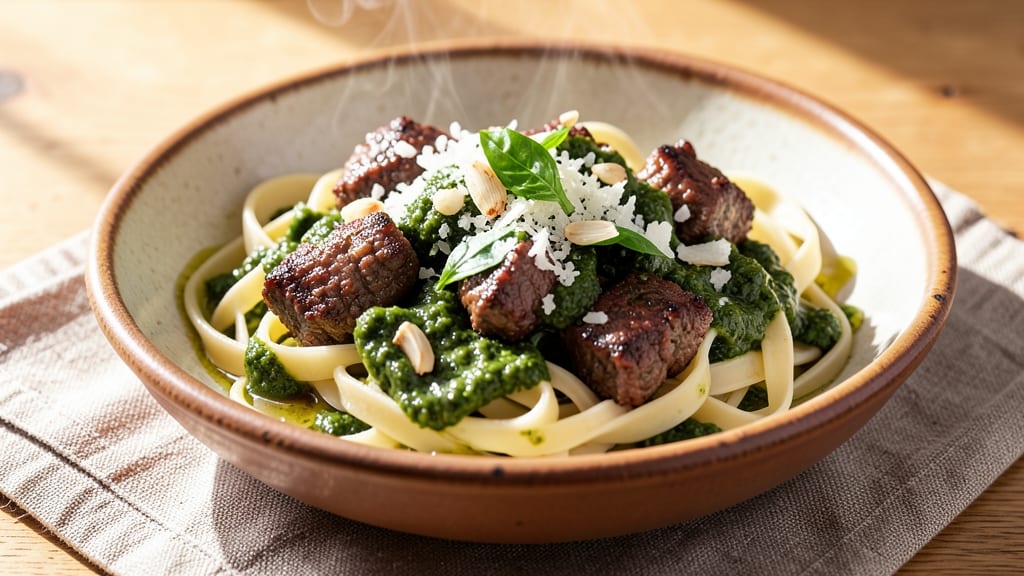
This beef basil pesto pasta recipe reimagines classic comfort food with a vibrant herb-infused twist that balances rich beef and bright basil perfectly. The secret lies in blending fresh basil, garlic, and Parmesan into a silky pesto that coats tender pasta and savory beef in every bite—no store-bought shortcuts needed.
I developed this after craving a meal that felt indulgent yet fresh, and it’s become a weeknight staple that always delivers restaurant-quality results.
The beauty of this dish is its simplicity: ground beef or sirloin browns quickly in a pan while the pasta cooks al dente, then everything comes together in a single pot with the homemade pesto.
The beef adds depth to the dish, while the basil pesto keeps it bright and herbaceous, creating a harmony of flavors that’s both comforting and exciting. No special equipment is required—just a few essential pantry staples and fresh ingredients.
What you’ll end up with is a creamy, herby pasta dish where each forkful delivers tender beef, perfectly cooked pasta, and a rich pesto sauce that clings to every strand.
The dish is hearty enough to satisfy a hungry crowd but still feels light and fresh, thanks to the basil’s vibrant notes. It pairs beautifully with garlic bread or a simple arugula salad for a complete meal.
This recipe is designed to be foolproof, with clear steps to ensure the pesto stays vibrant and the beef remains juicy. Whether you’re feeding a family or treating yourself to a special weeknight dinner, this beef basil pesto pasta delivers the perfect balance of comfort and sophistication. Let’s get cooking!
Ingredients for beef basil pesto pasta
Fresh basil and Parmesan create the vibrant pesto that elevates simple beef and pasta into restaurant-quality comfort.
| Ingredient | Amount | Notes |
|---|---|---|
| Ground Beef (80% lean) 🥩 | 1 lb | Sirloin works too for texture |
| Fresh Basil Leaves 🌿 | 2 cups | Packed, stems removed |
| Parmesan Cheese 🧀 | ¾ cup | Freshly grated from block |
| Extra-Virgin Olive Oil 🫒 | ½ cup | High quality, fruity |
| Garlic Cloves 🧄 | 4 cloves | Peeled, rough chopped |
| Fettuccine Pasta 🍝 | 12 oz | Or other long pasta |
| Pine Nuts 🥜 | ¼ cup | Toasted for richness |
| Lemon Juice 🍋 | 1 tbsp | Freshly squeezed |
| Salt 🧂 | 1 ½ tsp | Diamond Crystal preferred |
| Black Pepper 🌶️ | ½ tsp | Freshly ground preferred |
| Red Wine (optional) 🍷 | ¼ cup | Dry variety for depth |
| Vegetable Broth 💧 | ½ cup | Low-sodium preferred |
| Butter 🧈 | 2 tbsp | Unsalted, for pasta |
The beef is the foundation—80% lean ground beef gives the right balance of tenderness and flavor, but sirloin works beautifully too if you want more texture. Most grocery stores carry both, and I usually grab whatever's on sale. For the basil, farmers markets have the freshest leaves, but the grocery store's plastic containers work in a pinch. The Parmesan must be freshly grated—block cheese from the deli section melts best and adds that authentic depth. If you're using pine nuts, Trader Joe's has the most affordable bulk option, but walnuts or cashews make great substitutes if you're watching your budget.
No fresh basil? Dried basil at half the amount will work, though it won't be as vibrant. Running low on Parmesan? Pecorino Romano has a sharper bite that pairs well with beef. The red wine is optional but adds a nice depth—Cabernet Sauvignon or Merlot work best if you've got it open. For the pasta, fettuccine is classic, but linguine or pappardelle work just as well. The vegetable broth can be swapped for chicken broth if you prefer, though it'll have a slightly different flavor profile. And if you're making this ahead, cook the pasta al dente and finish it in the sauce later so it doesn't get mushy.
The pesto keeps best when stored in an airtight container with a thin layer of olive oil on top—prevents browning and keeps it fresh for up to 5 days in the fridge. The cooked pasta reheats beautifully, but I find it's even better the next day once the flavors meld. If you're prepping ahead, freeze the pesto separately in ice cube trays for easy portioning—just thaw and toss with fresh pasta and beef when ready. The beef can be browned in advance and stored in the fridge for up to 3 days before combining with the sauce.
Why You'll Love This Recipe
- I swear by this trick: brown the beef right in the same pan you’ll toss the pasta. No extra dishes, no stress—just one skillet, one spatula, and you’re golden. The beef soaks up all that garlic and olive oil while you boil water, so by the time your pasta’s al dente, your kitchen’s cleaner than a Sunday morning.
- One-Pan Magic: I swear by this trick: brown the beef right in the same pan you’ll toss the pasta. No extra dishes, no stress—just one skillet, one spatula, and you’re golden. The beef soaks up all that garlic and olive oil while you boil water, so by the time your pasta’s al dente, your kitchen’s cleaner than a Sunday morning.
- Herb-Packed Punch: That basil-pesto moment? It’s the star. I pulse fresh basil, garlic, and a handful of Parmesan with olive oil until it’s bright green and almost too pretty to eat. But honestly? The second that creamy, herby sauce hits your tongue after the rich beef—well, let’s just say I’ve been known to lick the bowl.
- Lunchbox Hero: Between us, this is my go-to for meal prep. Cook a big batch, let it cool, and portion it into containers. The flavors actually get better the next day—more mellow, less overwhelming. Toss in a side salad or some crusty bread, and you’ve got a lunch that’ll make you the office favorite (or at least the one everyone texts for leftovers).
Step-by-step instructions for beef basil pesto pasta
Here's how to create a rich, herb-forward twist on classic Italian pasta that balances hearty beef with bright basil flavors.
Cook the Pasta and Prepare the Beef
Bring a large pot of water to a rolling boil and add the 12 oz fettuccine pasta along with 1.5 tsp salt. Cook until 1 minute shy of package directions for al dente texture. Reserve ½ cup pasta water before draining—this starchy liquid is essential for emulsifying the pesto later.
While the pasta cooks, heat a large skillet over medium-high heat and add the 1 lb ground beef (80% lean). Break it apart with a wooden spoon and cook until browned and fully cooked (about 5-6 minutes). Drain excess fat, leaving about 1 tablespoon in the pan for flavor. Season the beef with ½ tsp black pepper and set aside.
Toast the Pine Nuts and Make the Pesto Base
In a dry skillet over medium heat, toast the ¼ cup pine nuts for 2-3 minutes, stirring constantly, until they're golden and fragrant. Watch them closely—they burn quickly. Transfer to a plate to cool while you prepare the rest of the pesto.
In a food processor, combine the 2 cups fresh basil leaves, 4 cloves garlic (rough chopped), 0.75 cup Parmesan cheese, 0.5 cup extra-virgin olive oil, 1 tbsp lemon juice, and the toasted pine nuts. Pulse until the mixture is smooth but still slightly textured—you want visible flecks of basil and nuts for texture. Taste and adjust seasoning with additional salt if needed.
Build the Sauce and Combine Everything
Return the skillet with beef to medium heat and add the 0.25 cup vegetable broth (and 0.25 cup red wine if using). Scrape up any browned bits from the bottom of the pan—these contain deep flavor. Let the liquid reduce by half (about 2 minutes), then remove from heat.
Add the cooked fettuccine to the skillet and toss to coat in the beef mixture. Stir in 2 tbsp butter and ¼ cup reserved pasta water to loosen the sauce. Then, gradually add the pesto mixture, tossing constantly until the sauce coats the pasta evenly. If it's too thick, add more pasta water 1 tablespoon at a time until you reach a silky, clinging consistency. The final dish should be vibrant green with visible beef pieces throughout.
Serve Immediately with Fresh Garnishes
Transfer the pasta to warmed serving plates and garnish with additional fresh basil leaves and grated Parmesan cheese. The dish should be rich but not greasy, with bright basil flavors cutting through the richness of the beef and cheese. Serve immediately while still hot—this pasta doesn't wait.
For best results, pair with a simple arugula salad dressed with lemon vinaigrette to balance the richness. The combination of tender beef, fresh herbs, and al dente pasta creates a comforting yet elevated dish that feels both classic and special.
Pro Tips For Making Beef Basil Pesto Pasta
- CRANK THE HEAT: High heat for the beef is non-negotiable—medium or low means greasy, uneven cooking. I learned this the hard way when my first batch turned out like a sad meatloaf. Once it’s browned, pull it off the pan immediately to avoid overcooking.
- STACK THE BASIL: Pile fresh basil leaves on top of the Parmesan in your food processor—it keeps them from flying out like confetti when you pulse. And for God’s sake, don’t use dried basil; this isn’t a shortcut, it’s a crime against flavor.
- SALT THE PASTA WATER: The water should taste like the sea before the pasta goes in—no one remembers to add salt later. Trust me, your pasta will absorb enough flavor to make the sauce feel like an afterthought if you skip this.
- TOAST THE GARLIC: Sauté minced garlic in olive oil for 30 seconds until it’s golden, not burnt—this adds depth the raw version can’t match. Sounds weird, but it works: the aroma jumps off the plate, and the pesto stops tasting like a sad salad dressing.
Essential equipment for beef basil pesto pasta
Pasta Essentials
You don't need fancy equipment for this dish, but a few key tools make all the difference. A large pot with a lid is non-negotiable for cooking pasta—look for one with 8-10 quarts capacity to prevent overflow.
I use a Cuisinart stainless steel pot because it heats evenly and prevents scorching. For draining, a colander with long handles keeps your hands safe from hot water splashes. 🍲
A food processor is essential for making the pesto—skip the blender, which can overheat and turn the basil bitter. I recommend the Ninja BN601 for its powerful motor and easy cleanup.
If you don’t have one, a mortar and pestle works for a smaller batch, though it requires more elbow grease.
Skillet Selection
For browning the beef, a 12-inch cast iron skillet is my go-to because it retains heat perfectly and develops deep flavors. A Lodge Pre-Seasoned Cast Iron Skillet is my top recommendation—it’s durable, affordable, and develops a natural non-stick surface over time.
If you prefer non-stick, a high-quality stainless steel skillet with a well-seasoned surface works too. Avoid non-stick pans for browning beef—they can’t handle the heat needed for proper searing. 🔥
Pesto Tools
A small mixing bowl (like a stainless steel mixing bowl) is perfect for combining the pesto ingredients before blending. I also keep a spatula handy to scrape down the sides of the food processor during pulsing.
For the pine nuts, a small dry skillet or even a microwave-safe bowl works—just watch them closely to avoid burning. A measuring cup set ensures you add the right amounts of olive oil and broth without guesswork. 🥜
Optional Upgrades
If you love making pesto ahead, invest in silicone ice cube trays to freeze individual portions—just thaw and toss with fresh pasta later. A microplane is a game-changer for grating fresh Parmesan quickly.
For serving, a slotted spoon helps transfer pasta without losing sauce. If you’re feeling fancy, a pasta server (like the OXO Good Grips) makes plating elegant twists effortless. 💡
Budget-Friendly Swaps
No food processor? A sharp chef’s knife and a cutting board work for chopping basil and garlic by hand—just be patient. Skip the pine nuts and use walnuts or cashews instead (toast them first for extra flavor).
A large saucepan can double as your pasta pot if you don’t have a deep pot. For cheese, pre-grated Parmesan saves time, though it lacks the freshness of freshly grated. 💰
Nutrition facts
Frequently asked questions about beef basil pesto pasta
Can I use dried basil instead of fresh in the pesto?
You can substitute dried basil, but use only half the amount (about 1 cup dried for 2 cups fresh). The flavor will be less vibrant, but it still works well. For best results, add a pinch of red pepper flakes to compensate for the milder taste. The texture will also be slightly grainier since dried herbs don't break down as smoothly in the food processor.
How do I prevent the pesto from turning brown or separating?
To keep pesto fresh and vibrant, always store it in an airtight container with a thin layer of olive oil on top—this prevents oxidation. For separation, blend the pesto with a bit of pasta water (about 1-2 tablespoons) while processing to help emulsify. If it still separates later, just stir vigorously before using. The oil in the pesto naturally helps it cling to the pasta.
What's the best way to reheat leftover beef basil pesto pasta?
Reheat gently in a skillet over low-medium heat with a splash of pasta water or broth to loosen the sauce. Avoid microwaving as it can make the pasta mushy. For best texture, add fresh basil leaves and a drizzle of olive oil when serving. The dish reheats beautifully and tastes even better the next day as flavors meld.
Can I make this dish vegetarian?
Swap the beef for grilled portobello mushrooms or crispy chickpeas for protein. For extra richness, add white beans or marinated tofu to the sauce. The pesto and pasta will still shine as the star. Just reduce the cooking time for mushrooms to 5-6 minutes until tender.
Why does my pesto taste bitter?
Bitter pesto usually means over-processed basil or old ingredients. Pulse the basil just until combined (about 10-15 seconds) to avoid bitterness. Use fresh basil and garlic—never frozen. If it's too bitter, balance it with lemon juice or a pinch of sugar. Also, make sure your olive oil is high-quality and not rancid.