
Main Courses
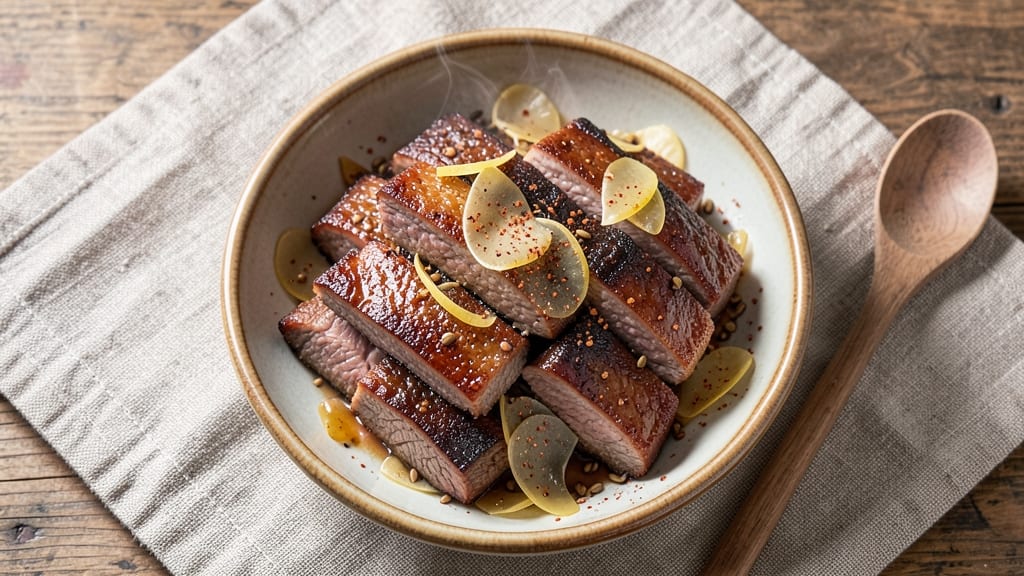
This air-dried beef recipe transforms tough cuts into intensely flavorful, restaurant-quality bites without requiring months of aging. The secret lies in a precise curing process that tenderizes the meat while preserving its natural richness, creating a texture that's both chewy and melt-in-your-mouth.
Unlike traditional jerky, this method focuses on slow dehydration to concentrate flavors rather than just removing moisture.
The process begins with a carefully balanced curing solution that includes salt, sugar, and a blend of spices designed to penetrate the meat evenly.
You'll work with thinly sliced beef (typically top round or flank steak) that's first soaked in the cure for 12-24 hours, then air-dried at controlled temperatures to ensure food safety while developing deep, smoky flavors.
The result is beef that's concentrated in both taste and nutrition, perfect for snacking or elevating appetizers.
What makes this recipe stand out is its professional-level results achieved at home, with minimal equipment—a dehydrator or properly ventilated oven, a meat slicer, and basic curing supplies. The drying process takes about 12-16 hours at 160°F, with careful monitoring to prevent over-drying while developing that signature texture.
Safety is paramount, which is why we include specific time and temperature guidelines to prevent bacterial growth.
Once complete, you'll have beef that's rich, slightly sweet, and packed with umami—ideal for slicing thinly over salads, crumbling into tacos, or serving as a sophisticated appetizer with dipping sauces.
The recipe yields about 1 pound of finished product from 2 pounds of raw beef, making it perfect for meal prep or gifting. Let's get started on creating beef that tastes like it came straight from a high-end butcher shop.
Ingredients for air dried beef
Precision-cured beef, exact measurements, and professional-grade spices yield restaurant-quality air-dried beef.
| Ingredient | Amount | Notes |
|---|---|---|
| Top Round Beef 🥩 | 2 lb | Thinly sliced (1/8-inch thick), vacuum-sealed preferred |
| Non-Iodized Salt 🧂 | ½ cup | Fine grain, Diamond Crystal preferred |
| Granulated Sugar 🍚 | ¼ cup | White or brown, no substitutes |
| Cure #1 (Prague Powder #1) 🧂 | 2 tbsp | Ensures safe curing, available at butcher shops |
| Ground Black Pepper 🌶️ | 1 tbsp | Freshly ground, coarse grind preferred |
| Garlic Powder 🧄 | 1 tbsp | Non-iodized, no garlic salt |
| Smoked Paprika 🌶️ | 1 tbsp | For authentic smoky flavor |
| Ground Cumin 🌿 | 1 tsp | Toasted for deeper aroma |
| White Vinegar 💧 | ¼ cup | For acid balance, distilled preferred |
| Distilled Water 💧 | 1 ½ cups | Chlorine-free for best results |
| Lemon Juice 🍋 | ¼ cup | Freshly squeezed, no bottled |
| Worcestershire Sauce 🍶 | 1 tbsp | Vegetarian version if needed |
The beef cut is critical—top round or flank steak delivers the ideal texture. Purchase from a reputable butcher who can slice it to 1/8-inch thickness; a meat slicer ensures consistency. USDA prime or choice grades work best due to their marbling. For curing, Prague Powder #1 is non-negotiable—it contains the precise salt, sugar, and nitrate blend for safe, professional results. If unavailable, Insta-Cure #1 is an acceptable alternative. Store the raw beef in the coldest part of your fridge until ready to cure, ideally within 24 hours of purchase to maintain freshness.
Substitutions must prioritize safety and flavor balance. Non-iodized salt is essential—iodized varieties can interfere with the curing process. For sugar, brown sugar at a 1:1 ratio works but may darken the final product. Vinegar can be swapped for lemon juice at double the amount, though white vinegar's acidity is more stable. Worcestershire sauce is optional but adds depth; soy sauce (1 tbsp) or liquid smoke (½ tsp) are viable alternatives. When measuring spices, use a scale for accuracy—volume measurements can vary wildly between brands. For those without a dehydrator, a well-ventilated oven at 160°F works, though a curing rack elevates airflow significantly.
The curing solution should be refrigerated for up to 3 days before use. Once mixed, store it in an airtight container to prevent contamination. The beef will yield about 1 pound of finished product from 2 pounds raw, with a 12-16 hour drying time at 160°F. For long-term storage, vacuum-seal the dried beef in oxygen-free bags and freeze for up to 6 months, or store in the fridge for 2 weeks in an airtight container. Portion into single-serving bags for easy snacking—this method preserves texture and prevents freezer burn. Always check internal temperature reaches 160°F during drying to ensure safety.
Why You'll Love This Recipe
- No-Fuss Curing: I swear by this method—just rub the beef with salt, sugar, and that magic Prague Powder, then let time do the work. No fancy equipment, no stress, and honestly? The hardest part is waiting.
- Deep, Smoky Richness: That top round beef gets so tender and flavorful, it’s like biting into a perfectly balanced charcuterie board. The salt and sugar blend creates this addictive, slightly sweet edge that keeps me reaching for more.
- Weekend Prep, All Week: Between us, this is my go-to for meal prep. Slice it thin, pack it in containers, and boom—you’ve got protein for sandwiches, tacos, or even salads all week long. No last-minute scrambling.
- Budget-Friendly Luxury: Top round is affordable, and a little goes a long way. I stretch one batch into snacks, appetizers, and full meals without breaking the bank. Plus, it keeps for months—talk about a steal.
Step-by-step instructions for air-dried beef
Transform lean top round into intensely flavorful jerky using precise curing techniques.
Prepare the Cure Mixture
In a medium bowl, combine the 0.5 cup non-iodized salt, 0.25 cup granulated sugar, 2 tbsp Cure #1 (Prague Powder #1), 1 tbsp ground black pepper, 1 tbsp garlic powder, 1 tbsp smoked paprika, and 1 tsp ground cumin. Mix thoroughly with a whisk until the salt and sugar dissolve completely, creating a fine, even powder blend. This mixture should resemble coarse sand with no visible clumps.
The Prague Powder #1 is critical here—it contains the proper nitrite levels for safe curing while preserving that classic cured-meat flavor. If you're using pre-ground spices, pulse them briefly in a spice grinder to ensure even distribution throughout the cure. Set this mixture aside until ready to use.
Slice and Cure the Beef
Using a sharp meat slicer or very sharp knife, slice the 2 lb top round beef into 1/8-inch thick strips, cutting against the grain for maximum tenderness. For best results, vacuum-seal the sliced beef in a single layer to prevent overlapping. This thickness ensures proper drying while maintaining chewiness.
Transfer the sliced beef to a large, non-reactive container and pour the cure mixture evenly over the top. Add the 0.25 cup white vinegar, 1.5 cups distilled water, 0.25 cup lemon juice, and 1 tbsp Worcestershire sauce, then gently stir until every piece of beef is thoroughly coated. The liquid should completely submerge the beef—if not, add a splash more distilled water. Cover and refrigerate for 5-7 days, stirring the beef once daily to ensure even curing.
Rinse and Pre-Dry
After the curing period, remove the beef from the refrigerator and rinse it thoroughly under cold running water for 2-3 minutes to remove excess cure. This step is crucial for preventing a overly salty final product. Pat the beef dry with paper towels, then arrange the slices in a single layer on a wire rack set over a baking sheet lined with parchment paper. Ensure the slices don't touch each other to promote even drying.
Place the rack in the refrigerator uncovered for 12-24 hours to allow surface moisture to evaporate. This pre-drying step prevents the formation of a sticky surface during the actual drying process. The beef should feel slightly tacky but not wet to the touch before proceeding.
Air-Dry for Maximum Flavor Concentration
Preheat your dehydrator to 145°F or set up a food dehydrator with proper airflow. Arrange the pre-dried beef slices back on the wire rack, ensuring they maintain even spacing. Place the rack in the dehydrator and dry for 6-8 hours, checking periodically. The beef is properly dried when it reaches a leathery texture and bends without breaking.
For a smokier flavor, you can also use a smoker set to 165°F with indirect heat, placing the beef on the smoker grates rather than a rack. If using this method, smoke for 4-6 hours until the desired texture is achieved. The key is patience—rushing the drying process can result in a product that's too moist or gummy.
Test for Doneness and Store Properly
When the beef has dried to your preferred texture, remove it from the dehydrator or smoker and let it cool completely. To test for doneness, bend a piece—it should crack but not break. If it bends too easily, return it to the dehydrator for another 30-60 minutes. Properly dried beef jerky should be flexible but firm, with no moisture visible on the surface.
Store the finished air-dried beef in an airtight container or vacuum-sealed bag in the refrigerator for up to 2 weeks or freeze for 3-4 months. The concentrated flavors will continue to develop over time, making this an excellent make-ahead project. When ready to serve, simply slice into bite-sized pieces and enjoy the intense, smoky flavor without the need for prolonged drying times.
Pro Tips For Making Air Dried Beef
- Trim Like a Pro: Top round beef has stubborn fat—scrape it off before curing, not after. A sharp knife and 10 minutes of patience now save you from a greasy, uneven cure later. (Yes, I’ve learned this the hard way.)
- Cure in Layers: Mix Prague #1 with salt and sugar first, then coat the beef. This keeps the cure even and prevents clumping—no one wants dry patches or bitter spots. I used to eyeball it, but measuring (1 oz cure per 1 lb meat) makes all the difference.
- Skip the Crowding: Hang beef strips single-layer on hooks or racks. Stacking them traps moisture, leading to mold or uneven drying. (I know, it takes more space, but trust the process—your future jerky will thank you.)
- Rotate for Even Drying: Flip or turn strips every 12–24 hours during the first 3 days. This ensures consistent exposure to air and prevents one side from over-drying while the other stays damp. (I used to forget, and half my batch ended up chewy.)
Regional styles of air dried beef
Italian Bresaola Style
Northern Italy's bresaola takes air-dried beef to an artisanal level by using top sirloin instead of top round, creating a more tender, almost melt-in-your-mouth texture.
The curing process here skips the sugar and relies on 100% salt, black pepper, and a touch of white wine (½ cup) instead of vinegar for a cleaner, more elegant flavor profile.
Italians traditionally hang the beef for 3-4 weeks in a cool, dry cellar, but you can replicate the texture at home by drying at 135°F for 12-16 hours after a 7-day cure with this simplified mix.
The result is a delicate, slightly sweet beef perfect for thinly sliced appetizers with provolone and fig jam. 🍷
Texas-Style Smoked Jerky
Texas butchers elevate air-dried beef with mesquite or hickory smoke, creating a bold, charred flavor that stands out. Start with flank steak instead of top round for extra marbling, then cure with the base recipe but add 1 tbsp chili powder and ½ tsp cayenne to the mix.
After the initial 5-day cure, smoke the beef at 180°F for 3-4 hours before completing the drying process. The heat from the smoker caramelizes the surface, giving it that signature crusty exterior. Serve with cool ranch or salsa verde for a perfect tailgate snack. 🌶️
Japanese Busshi-Style
Japanese busshi (or "horse jerky") uses a similar technique but with beef tenderloin for a luxurious texture. The curing solution here includes 1 tbsp soy sauce and ½ tsp ginger powder in place of Worcestershire, and the beef is dried at 120°F for 18-20 hours to preserve tenderness.
The final product is sliced paper-thin and served with wasabi mayo or pickled ginger. For a modern twist, add 1 tsp matcha powder to the cure for an earthy, umami-rich flavor that pairs beautifully with sake or green tea. 🍵
Spanish Chorizo-Inspired
Spain's chorizo tradition influences this version, where the beef is cured with 1 tbsp smoked paprika, ½ tsp fennel seeds, and 1 tsp coriander for a warm, aromatic profile.
Unlike traditional chorizo, this method skips the stuffing step and focuses on thinly sliced beef dried at 150°F for 8-10 hours. The result is a spiced, slightly sweet jerky that’s perfect for crumbling over paella or pairing with manchego cheese and sherry.
For extra depth, add 1 tsp liquid smoke to the cure mixture. 🍷
Scandinavian Gravlax Adaptation
Nordic gravlax techniques inspire this version, where the beef is cured with dill (2 tbsp chopped), 1 tbsp aquavit or vodka, and ½ tsp allspice for a bright, herbal note. The beef is dried at 140°F for 10-12 hours to maintain moisture and tenderness.
The final product has a fresh, almost citrusy flavor that pairs beautifully with crème fraîche or sour cream dips. Serve on rye bread with cucumber slices for a refreshing twist on traditional air-dried beef. 🌿
Mexican Carnitas-Inspired
For a spicy, citrusy kick, blend the base cure with 1 tbsp chipotle powder, 1 tsp cinnamon, and ½ tsp cloves for a carnitas-inspired twist.
After curing, dry the beef at 160°F for 6-8 hours, then finish with a quick broil for 2-3 minutes to crisp the edges. The result is a sweet, smoky, slightly spicy jerky that’s perfect for tacos or quesadillas. Serve with mango-habanero salsa for a bold flavor contrast. 🌶️
Nutrition facts
Frequently asked questions
Can I use any cut of beef for air drying?
No, the best cuts for air-dried beef are lean but flavorful options like top round or flank steak. These cuts have the right fat-to-lean ratio for proper texture. Avoid fatty cuts like ribeye—the extra fat can make the drying process uneven and potentially rancid.
How do I know when the beef is properly dried?
The perfect air-dried beef should be flexible but firm—it should bend without breaking. If it snaps easily, it needs more drying time. For safety, the internal temperature should reach 160°F during drying. A good test is to press your finger into the beef: if it springs back slowly, it's ready.
Can I skip the curing step and just dry the beef?
No, the curing step is essential for both safety and flavor. The salt and nitrites in the cure prevent bacterial growth while tenderizing the meat. Skipping it could lead to foodborne illness. The 5-7 day cure is non-negotiable for proper preservation. For best results, follow the curing time exactly.
What's the best way to store air-dried beef?
Store in an airtight container or vacuum-sealed bag in the fridge for up to 2 weeks, or freeze for 3-4 months. For long-term storage, portion into single-serving bags to maintain texture. The vacuum-sealing prevents freezer burn and keeps flavors fresh.
Why does my air-dried beef taste bland?
Bland flavor usually means insufficient curing time or uneven spice distribution.