
Main Courses
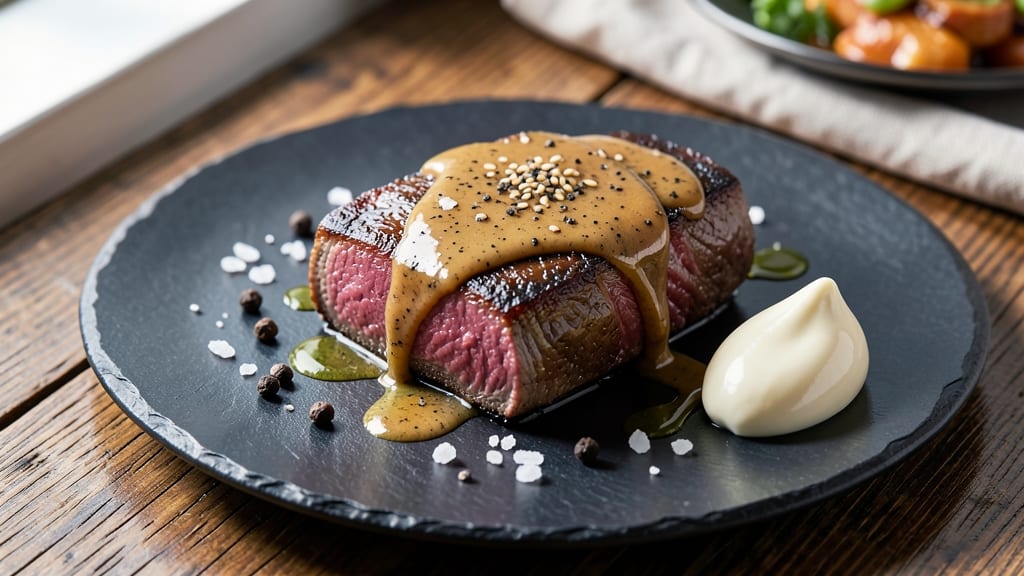
Angus beef filet mignon delivers the most luxurious steak experience at home—where a perfectly seared crust meets a juicy pink core that melts at every bite. This recipe combines dry-brining for depth, precise temperature control, and a rich peppercorn sauce to elevate even the simplest dinner into a restaurant-worthy masterpiece. The secret lies in patience: letting the steak rest before cooking ensures maximum tenderness, while a reverse sear guarantees that buttery crust without overcooking the interior.
Start with a high-quality, center-cut filet mignon—Angus beef’s marbling ensures every slice is melt-in-your-mouth tender. After a 24-hour dry brine with coarse salt and black pepper, sear the steak over high heat to develop that caramelized crust, then finish in a 400°F oven for even doneness.
The result? A steak so tender it practically falls apart, with a crust that’s crispy yet succulent. Pair it with a classic peppercorn sauce or a bold red wine reduction to complement the beef’s natural richness.
This method transforms a weeknight dinner into an unforgettable experience—no fancy equipment required. The key is timing: resting the steak before slicing preserves all that juiciness, while the sauce ties everything together with a velvety finish.
Serve alongside roasted garlic potatoes or asparagus to complete the plate, and watch as your guests rave about the restaurant-quality results. Here’s how to achieve it every time.
For an extra touch of sophistication, consider a smoked salt crust or herb butter basting during the final minutes of cooking. These optional twists add depth without complicating the process, ensuring your filet mignon stands out.
Whether you’re cooking for a special occasion or simply treating yourself, this recipe delivers the perfect balance of technique and indulgence.
Ingredients for angus beef filet mignon
Center-cut Angus beef, dry-brined salt, and European butter form the foundation of this restaurant-quality steak experience.
| Ingredient | Amount | Notes |
|---|---|---|
| Center-Cut Angus Beef Filet Mignon 🥩 | 1 ½ lb | Center-cut for even cooking, 1.5-inch thick |
| Coarse Kosher Salt 🧂 | 1 tbsp | Diamond Crystal preferred for even distribution |
| Freshly Ground Black Peppercorns 🌶️ | 1 ½ tsp | Freshly cracked for maximum aroma |
| Unsalted Butter 🧈 | ½ cup | European-style for higher smoke point |
| Extra-Virgin Olive Oil 🫒 | 2 tbsp | Lightly flavored for neutral base |
| Heavy Cream 🥛 | ½ cup | Full-fat for velvety sauce |
| Whole Black Peppercorns 🌶️ | 1 tbsp | Lightly toasted for peppercorn sauce |
| Dry White Wine 🍷 | ¼ cup | Sauvignon Blanc recommended |
| Fresh Thyme Leaves 🌿 | 2 sprigs | For garnish and aroma |
| Fresh Rosemary Sprig 🌿 | 1 whole | For basting during cooking |
| Garlic Cloves 🧄 | 2 cloves | Minced for peppercorn sauce |
The Angus beef must be center-cut with visible marbling—USDA Prime or Choice grade from a trusted butcher like D'Artagnan or your local specialty market. Look for a 1.5-inch thick cut to ensure even cooking. The coarse kosher salt (specifically Diamond Crystal) is crucial for the dry brine; it dissolves more evenly than table salt, creating a deeper flavor profile. Whole Foods Market or Highland Farms often carry high-quality Angus filets pre-trimmed, saving you time while ensuring premium quality. If purchasing frozen, thaw in the refrigerator for 24 hours before dry-brining.
No European-style butter? Plugrá or Kerrygold are excellent substitutes—avoid salted butter as it can alter the sauce's balance. For the peppercorn sauce, toast the whole peppercorns in a dry pan for 2 minutes to deepen their aroma before grinding. Substituting wine? A beef stock reduction works, but the acidity from wine brightens the sauce. Fresh herbs like thyme and rosemary elevate the dish; if unavailable, dried herbs at half the amount suffice, though fresh is ideal for that restaurant-quality finish.
Store the raw filet in its original packaging until ready to use, then transfer to a sealed container with the dry brine for 24 hours in the refrigerator. The peppercorn sauce keeps for 5 days refrigerated or 3 months frozen—portion into ice cube trays before freezing for easy use. Butter and cream should be refrigerated and used within 2 weeks of opening. For leftovers, reheat gently in a skillet to preserve moisture, and serve with roasted garlic potatoes or grilled asparagus to complement the steak’s richness.
Why You'll Love This Recipe
- I swear by this: just salt, pepper, and butter. That’s it. The filet’s natural richness does all the heavy lifting—no fancy rubs or marinades needed. Honestly, the first time I tried it, I almost felt guilty for overcomplicating steak before.
- Two-Ingredient Magic: I swear by this: just salt, pepper, and butter. That’s it. The filet’s natural richness does all the heavy lifting—no fancy rubs or marinades needed. Honestly, the first time I tried it, I almost felt guilty for overcomplicating steak before.
- Buttery Perfection: The moment that butter melts into the crust? Chef’s kiss. That crispy edge with the creamy center—it’s like the universe conspired to make this dish. And no, I won’t apologize for searing it in olive oil first; that’s where the real flavor happens.
- Date Night Ready: Between us, this is my go-to for impressing without stress. Whether it’s a last-minute dinner or a Saturday splurge, the filet cooks fast and looks elegant. Pair it with roasted potatoes or a simple salad, and suddenly you’re the host who had it all together.
Step-by-step instructions for perfectly cooked Angus beef filet mignon
Master this technique and you'll achieve a buttery crust with a juicy pink center every time.
Season and Sear the Filet Mignon
Begin by patting the 1.5 lb center-cut angus beef filet mignon completely dry with paper towels—this ensures maximum contact with the hot pan. Season both sides generously with 1 tbsp coarse kosher salt and 1.5 tsp freshly ground black peppercorns, pressing the seasoning into the meat so it adheres well.
Heat 2 tbsp extra-virgin olive oil in a heavy skillet over medium-high heat until shimmering. Place the filet in the pan and sear for 3-4 minutes per side until a deep golden-brown crust forms. The key is to let it develop this crust undisturbed—resist the urge to move it around. You'll know it's ready when it releases easily from the pan.
Create the Butter Baste and Add Aromatics
Reduce heat to medium and add the 0.5 cup unsalted butter, tilting the pan to coat the filet completely. Let it baste for 1-2 minutes, spooning the melted butter over the meat to build flavor and keep it moist. Add the 2 cloves minced garlic, 1 whole fresh rosemary sprig, and 2 sprigs fresh thyme leaves, allowing them to infuse the butter for 30 seconds—this adds depth without overpowering the beef.
Pour in the 0.25 cup dry white wine and scrape up any browned bits from the bottom of the pan. This deglazing step captures all that concentrated beef flavor. Let the wine simmer for 1-2 minutes until reduced by half, creating a glossy, flavorful base for your sauce.
Finish Cooking and Rest the Meat
Carefully transfer the filet to a warm plate and tent loosely with aluminum foil. Let it rest for 10-15 minutes—this crucial step allows the juices to redistribute throughout the meat. During this time, keep the skillet on low heat and add the 0.5 cup heavy cream and 1 tbsp whole black peppercorns to the pan. Simmer gently for 3-4 minutes until the sauce thickens slightly to a velvety consistency.
Use an instant-read thermometer to check the internal temperature. For medium-rare, it should read 125-130°F. If it's not quite there, return the filet to the skillet for 1-2 minutes to finish cooking. The exterior should remain beautifully crusty while the interior stays tender and juicy.
Serve with Perfectly Paired Sauce
Slice the filet against the grain into ½-inch thick portions. Spoon the peppercorn cream sauce over the top and garnish with additional fresh thyme leaves for a pop of color. Serve immediately with your choice of sides—roasted potatoes, asparagus, or a simple green salad.
The result should be a perfectly seared exterior with a buttery crust, a juicy pink center that yields slightly to pressure, and a rich, velvety sauce that ties everything together. This method guarantees restaurant-quality results at home every time.
Pro Tips For Making Angus Beef Filet Mignon
- SEAR WITH PATIENCE: High heat is non-negotiable, but rushing the sear ruins the crust. Let the pan scream hot for 2-3 minutes before adding oil—your filet needs that first sizzle to lock in flavor, not just a sad, limp brown.
- SALT THE MEAT FIRST: I used to skip this, thinking salt would compete with the butter. Wrong. Pat the filet dry, then coat it generously with kosher salt 40 minutes before cooking—it seasons deeper and prevents a bland center.
- USE TWO BUTTERS: Melt 1 tablespoon of butter in the pan for the sear, then add another 1 tablespoon of cold butter in the last 30 seconds. The cold butter bastes the steak and creates a glossy, rich finish—no extra effort, just double the payoff.
- REST IT COVERED: After resting, I’d always uncover the steak to let it breathe. Bad move. Keep it loosely covered with foil for those first 5 minutes—traps residual heat and keeps the juices circulating, so every slice stays tender. (Yes, even if it looks weird.)
Troubleshooting your angus beef filet mignon
Overcooked Exterior
If your filet mignon develops a burnt crust while the inside stays cold, you’re likely using too high heat or moving the steak too soon. I’ve found that medium-high heat (not blazing hot) is ideal—your pan should shimmer but not smoke excessively.
Use a heavy cast-iron skillet like Lodge to distribute heat evenly. For extra insurance, sear for 3 minutes per side max before finishing in a 400°F oven for even cooking. 🔥
Dry, Tough Interior
The biggest mistake is skipping the rest time or cutting into the steak too soon. After searing, transfer the filet to a warm plate and rest for 10-15 minutes—this lets juices redistribute. If your steak feels dry, it may have been overcooked.
Use a meat thermometer to check internal temp: 125-130°F for medium-rare. For thicker cuts, consider a reverse sear (low oven first, then high-heat finish).
Sauce Too Thin
A watery sauce usually means the cream wasn’t reduced enough. Simmer the sauce on low heat for 3-4 minutes until it coats the back of a spoon. For extra thickness, whisk in 1 tsp cornstarch mixed with 1 tbsp cold water.
If using wine, ensure it’s bone-dry before adding cream. Pro tip: Toast whole peppercorns for 2 minutes before grinding to deepen their flavor without overpowering the sauce. ✨
Uneven Cooking
Thin or thick sections can lead to inconsistent doneness. Trim excess fat to ¼-inch thickness for even cooking. If your filet has uneven surfaces, place it on a wire rack in a pan before searing to allow heat circulation.
For thicker cuts, sear first, then finish in a 400°F oven for 5-8 minutes (depending on thickness) to ensure even doneness throughout. 🌡️
Lost Juices
Juices escape when steak rests uncovered or is sliced too soon. Always tent with foil during resting to trap moisture. For extra insurance, baste with melted butter during the last 2 minutes of searing.
If your steak still feels dry, slice against the grain into ¼-inch pieces—this shortens muscle fibers, making each bite more tender. 💫
Peppercorn Sauce Too Spicy
If the peppercorn flavor overpowers, reduce the amount of whole peppercorns to ½ tbsp (or use ½ tsp ground pepper instead). For a milder kick, toast the peppercorns lightly and strain them from the sauce.
Balance with a splash of lemon juice or white wine to brighten the flavors. A pinch of salt can also help round out the sauce’s profile. 🌶️
Nutrition facts
Frequently asked questions
How thick should my Angus beef filet mignon be for perfect cooking?
For ideal results, aim for a 1.5-inch thick center-cut filet. This thickness ensures even cooking and a juicy center while allowing time to develop that perfect crust. Thinner cuts (1-inch) will cook faster and may overcook before the crust forms.
Can I use a different cut of beef instead of filet mignon?
While filet mignon is ideal for its tenderness, you can substitute with ribeye or strip steak if needed. However, these cuts have more connective tissue and may require longer resting times (15-20 minutes) to achieve similar tenderness. Angus beef is still recommended for its superior marbling.
What's the best way to store leftover filet mignon?
Wrap leftovers tightly in plastic wrap or aluminum foil, then place in an airtight container. Refrigerate for up to 3 days or freeze for 2-3 months. When reheating, warm gently in a skillet with butter over low heat for 2-3 minutes to preserve moisture. Never microwave—it makes the meat tough.
How do I adjust cooking time for a thicker filet?
For every ¼-inch thicker than 1.5 inches, add 2-3 minutes to your total cooking time. Use a meat thermometer to check doneness: 125°F for rare, 130°F for medium-rare. Thicker cuts benefit from a reverse sear—start in a 275°F oven until 110°F internal, then sear.
What's the difference between dry-brining and wet-brining?
Dry-brining (as in this recipe) uses coarse salt applied directly to the meat's surface for 24 hours, creating a flavorful crust. Wet-brining soaks the meat in a saltwater solution, which can make the exterior soggy. For filet mignon, dry-brining enhances tenderness without compromising texture.