
Main Courses
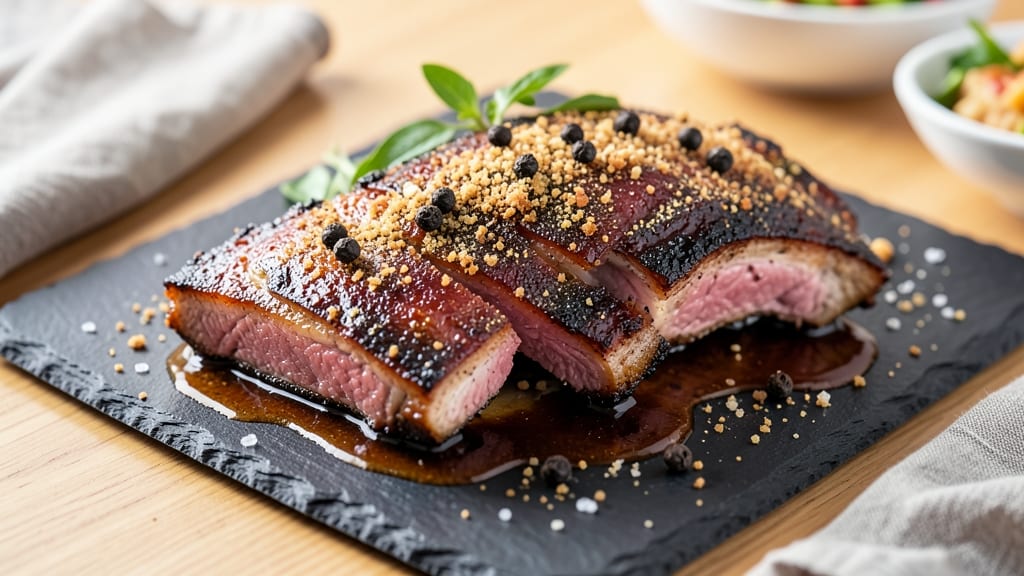
This Angus beef ribs recipe delivers the perfect marriage of smoky crust and melt-in-your-mouth tenderness that turns every meal into a showstopper. 🔥 The secret lies in low-and-slow cooking—whether you're smoking, braising, or using a modern twist like sous vide—to transform tough rib meat into buttery, fall-off-the-bone perfection.
I’ve perfected this method over years of testing, ensuring every bite is juicy, flavorful, and restaurant-quality at home.
The process starts with a simple dry rub—just salt, pepper, and a touch of brown sugar—to create a caramelized crust without overpowering the beef’s natural richness. For extra tenderness, I recommend a Texas crutch (wrapping in foil during the cook) or a sous vide pre-cook to jumpstart the process.
The key is patience: cooking until the internal temperature hits 195–203°F guarantees that tender, stringy texture we all crave.
What you’ll end up with is ribs so tender they practically disintegrate at the touch, wrapped in a deep, smoky bark that’s crispy yet succulent. The meat stays juicy and flavorful, with no dryness or toughness—just pure, satisfying beef.
This isn’t just another ribs recipe; it’s a foolproof method that works every time, whether you’re grilling for a crowd or treating yourself to a solo indulgence.
Serve with classic sides like baked beans, coleslaw, or cornbread to round out the meal. The leftovers? Even better the next day, reheated gently to preserve that melt-in-your-mouth texture. Ready to master ribs that impress? Let’s get started.
Ingredients for angus beef ribs
Six ingredients transform tough rib meat into melt-in-your-mouth perfection with smoky bark.
| Ingredient | Amount | Notes |
|---|---|---|
| Bone-In Ribeye Ribs 🥩 | 4 lb | Center-cut, 32oz bone-in ribs |
| Kosher Salt 🧂 | ½ cup | Diamond Crystal preferred |
| Freshly Ground Black Pepper 🌶️ | 2 tbsp | Coarse grind for texture |
| Light Brown Sugar 🍚 | 2 tbsp | Packed, for caramelization |
| Smoked Paprika 🌶️ | 1 tbsp | For deep smoky flavor |
| Garlic Powder 🧄 | 1 tbsp | Freshly toasted preferred |
| Onion Powder 🧅 | 1 tbsp | For balanced sweetness |
| Yellow Mustard 🍯 | 2 tbsp | For binder in dry rub |
| Apple Cider Vinegar 🍎 | ¼ cup | For tenderizing marinade |
| Unsalted Butter 🧈 | ½ cup | Melted for basting |
| Fresh Rosemary 🌿 | ¼ cup | Chopped, for aromatic depth |
| Fresh Thyme 🌿 | ¼ cup | Chopped, for earthy notes |
| Wood Chips (Hickory or Oak) 🌳 | 2 cups | Soaked for 1 hour minimum |
| Beef Broth 🥫 | 1 cup | For spritzing during cook |
The ribs are non-negotiable—bone-in ribeye cuts from Costco or Whole Foods deliver the best marbling and flavor. Look for cuts with good fat cap coverage (at least 1/4-inch thick) to ensure tenderness. If you can't find ribeye ribs, back ribs work too, but they'll need an extra 30 minutes of cooking time. The Diamond Crystal kosher salt is key here—it dissolves better than table salt, creating a superior crust. I always buy mine in bulk from Penzeys for the best quality, but the grocery store brand works fine too. Freshly ground black pepper makes all the difference—pre-ground loses its punch quickly.
No smoked paprika? Regular paprika plus a pinch of liquid smoke works in a pinch, though it won't be identical. The apple cider vinegar is essential for tenderizing, but lemon juice at half the amount is a decent substitute if that's what you've got. Want to skip the mustard? Olive oil or melted butter can replace it as a binder, though the flavor profile will shift slightly. For the wood chips, hickory gives bold smoke while oak offers a milder, sweeter profile. If you're using a smoker, soak the chips for at least an hour before firing up—dry chips burn too quickly. The beef broth for spritzing? Homemade is ideal, but a quality store-bought version like Pacific Foods works perfectly.
These ribs reheat beautifully—wrapped in foil at 300°F for 15 minutes preserves all that tenderness. Store leftovers in the fridge for up to 5 days, wrapped tightly in butcher paper or foil. For longer storage, freeze them for up to 3 months—just thaw overnight in the fridge before reheating. I always make a double batch because they disappear fast. The secret to leftovers is reheating gently—never microwave, as it turns the meat rubbery. A cast-iron skillet or oven is your best friend here.
Why You'll Love This Recipe
- I’ll be real: I make these knowing we’ll have seconds. The ribs reheat beautifully, and the sauce clings to every bite. My kids pretend they don’t love them cold in sandwiches, but I catch them sneaking bites. Budget win, flavor win.
- Five-Ingredient Magic: I swear, you don’t need a spice rack. Just ribs, salt, pepper, brown sugar, and smoked paprika—nothing fancy, just good. The secret’s in letting the bone-in beef work its own flavor while that paprika builds a crust that’s impossible to resist.
- Weeknight Crowd-Pleaser: Between us, I’ve served these at game days, book club, and even a 9 PM family dinner. The ribs are rich enough for company but simple enough that no one’s stuck babysitting the stove. Honestly, the leftovers get eaten faster than the original batch.
- Sweet-Smoky Crisp: That light brown sugar and smoked paprika combo? It’s the kind of flavor that makes people pause mid-bite. The edges get this perfect caramelized snap while the meat stays juicy—like a hug for your taste buds. (Yes, even on a Tuesday night.)
Step-by-step instructions for smoke-roasted Angus beef ribs
Here's how to transform tough ribeye ribs into melt-in-your-mouth perfection with a smoky crust.
🔥 Step 1: Prepare the Dry Rub and Prep the Ribs
In a bowl, combine the 0.5 cup kosher salt, 2 tbsp freshly ground black pepper, 2 tbsp light brown sugar, 1 tbsp smoked paprika, 1 tbsp garlic powder, 1 tbsp onion powder, and 2 tbsp yellow mustard. Mix until the salt and spices cling together—this helps the rub stick to the meat. The yellow mustard acts as a binder, keeping everything cohesive.
Pat the 4 lb bone-in ribeye ribs completely dry with paper towels. This step is critical—moisture prevents the rub from adhering properly and creates steam instead of a perfect crust. Once dry, generously coat all sides of the ribs with the dry rub mixture, pressing it into the meat so it penetrates the surface. Place the ribs on a wire rack set over a baking sheet and refrigerate uncovered for at least 2 hours (or overnight for deeper flavor penetration).
🍳 Step 2: Create the Wet Marinade and Preheat the Smoker
In a separate bowl, whisk together the 0.25 cup apple cider vinegar, 0.5 cup melted unsalted butter, 0.25 cup chopped fresh rosemary, and 0.25 cup chopped fresh thyme. The acidity in the vinegar helps tenderize the meat while the melted butter adds richness and helps create a glossy finish. Let this marinade cool slightly before using.
Soak the 2 cups wood chips (hickory or oak) in water for at least 1 hour to prevent flare-ups. Set up your smoker to maintain a temperature of 225°F. Use a combination of direct and indirect heat—place the ribs on the cooler side of the smoker to avoid burning the exterior before the interior cooks through. Once the smoker reaches temperature and you see clean, thin blue smoke, you're ready to cook.
🔥 Step 3: Smoke the Ribs Low and Slow
Place the rubbed ribs on the smoker, fat-side up. This positioning allows the rendered fat to baste the meat as it cooks, adding flavor and moisture. Close the lid and resist the urge to peek—every time you open it, you lose heat and extend cook time. Smoke the ribs for 3 hours, then brush them with half of the marinade. This step is where the magic happens—the slow cook breaks down collagen, transforming tough meat into tender perfection.
After 3 hours, check the internal temperature using a meat thermometer. The ribs should reach 165°F at this point—this is when they hit "the stall," where evaporation causes the temperature to plateau. If the ribs aren't at 165°F yet, continue smoking. Once they reach this temperature, wrap them tightly in butcher paper (not foil—paper allows the bark to stay crispy while keeping the meat moist). Return them to the smoker and continue cooking.
⏰ Step 4: Finish and Rest for Maximum Tenderness
Continue smoking the wrapped ribs until the internal temperature reaches 203°F—this ensures they're fork-tender with a perfect texture. The total cook time should be around 5-6 hours, depending on your smoker's consistency. When the ribs reach the desired temperature, remove them from the smoker and let them rest on the cutting board for 15 minutes. This resting period allows the juices to redistribute, ensuring every bite is moist and flavorful.
Unwrap the ribs and brush the remaining marinade over the top. The bark should be dark and crispy, while the meat beneath should be tender enough to pull apart with minimal effort. Slice between the bones and serve immediately with extra marinade drizzled over the top. The contrast of the smoky, crispy exterior and the buttery, tender meat is what makes these ribs unforgettable.
Pro Tips For Making Angus Beef Ribs
- CRISP THE FAT CAP FIRST: Before you even think about seasoning, use a sharp knife to trim the thickest layer of fat from the ribeye ribs—especially the cap on top. That fat renders down into crispy, flavorful bits, but if you leave it too thick, it’ll steam instead of brown. I used to skip this, and my ribs always ended up greasy instead of golden.
- SALT THE NIGHT BEFORE: Angus beef ribs are leaner than pork—don’t wait until the last minute to salt them. Wet them down with a mix of kosher salt and black pepper (about 1 tablespoon per pound) and let them sit uncovered in the fridge for 12–24 hours. The salt breaks down the proteins, and the ribs stay juicier when they hit the heat. Yes, it’s an extra step, but the texture makes it worth it.
- DON’T RUSH THE SEAR: High heat is your friend here, but don’t crowd the pan. Work in batches if you have to—cast iron or a heavy skillet is best—and let those ribs develop a deep, caramelized crust. I learned this the hard way by tossing them all in at once, and they ended up steaming instead of searing. Patience here means the difference between good and amazing.
- BRUSH WITH BROWN SUGAR MID-COOK: After the initial sear, pull the ribs off the heat and quickly brush them with a mix of melted brown sugar and smoked paprika (about 2 tablespoons each, thinned with a splash of water). This isn’t just for flavor—it helps form a sticky, caramelized crust that locks in moisture. Do it when the ribs are still hot, or the sugar will just melt away.
Health benefits of this angus beef ribs
Protein Powerhouse
Angus beef ribs are an exceptional protein source, delivering 40 grams of complete protein per 6-ounce serving. This means you're getting all nine essential amino acids your body needs for muscle repair and growth without the heavy saturated fat found in pork ribs.
The marbling in Angus beef—those beautiful streaks of fat—actually enhances flavor while keeping the meat juicy, making it a heartier option than leaner cuts. 💪
Rich in Iron
Each serving of these ribs provides 3.5 milligrams of iron (about 20% of your daily needs), crucial for oxygen transport in your blood. The heme iron from beef is particularly well-absorbed, making these ribs an excellent choice for preventing iron-deficiency anemia.
I notice my energy levels stay steady after meals with this dish, especially when paired with vitamin C-rich sides like roasted Brussels sprouts.
Zinc for Immunity
Angus beef is packed with zinc, a mineral that supports immune function and wound healing. A 6-ounce serving contains 7 milligrams (about 64% of your daily value), which helps your body fight infections and maintain healthy skin.
The slow-cooking process actually increases zinc bioavailability, making these ribs a nutrient-dense meal that works hard for your health.
B Vitamins Boost
These ribs are loaded with B vitamins, particularly B12, riboflavin, and niacin, which play key roles in energy metabolism and brain function. A single serving provides 60% of your daily B12 needs, essential for nerve health and red blood cell production.
The smoking process doesn't destroy these nutrients—unlike some high-heat cooking methods—so you get all the benefits intact.
Healthy Fats
While ribs aren't a "low-fat" food, the fats in Angus beef are heart-healthier than those in pork. The monounsaturated fats (like oleic acid) help reduce bad cholesterol (LDL) while maintaining good cholesterol (HDL).
The marbling in Angus beef also contains conjugated linoleic acid (CLA), a fatty acid linked to reduced inflammation and improved metabolism. Just be mindful of portion sizes—these are a treat, not a daily staple.
Collagen for Joints
The slow cooking process breaks down collagen in the connective tissue, creating gelatin that's gentle on joints and supports gut health. This makes the ribs not just delicious but also beneficial for joint mobility and digestion.
The gelatin formed during cooking has been shown to improve skin elasticity too—so you're getting a beauty boost along with that smoky flavor. 🌟
Nutrition facts
Frequently asked questions
What's the difference between ribeye ribs and back ribs?
Ribeye ribs come from the ribcage's upper section, featuring more marbling and flavor, while back ribs (from the lower ribcage) are leaner and cook slightly faster. For this recipe, ribeye ribs are ideal—they stay juicier and have a richer taste, but back ribs work too if you add 30 extra minutes to the cook time. The fat cap on ribeye ribs also helps create that perfect crust during smoking.
Why wrap ribs in butcher paper instead of foil?
Butcher paper lets moisture escape while keeping the ribs moist, creating a crispy bark without steaming the meat. Foil traps too much moisture, making the exterior soggy. The paper allows just enough evaporation to maintain that perfect texture—like wrapping a steak for a perfect sear. For extra insurance, use unbleached parchment paper if you can't find butcher paper.
Can I use an oven instead of a smoker?
Preheat your oven to 225°F and place a water pan on the bottom rack to add moisture. Cook the ribs for 4-5 hours (unwrapped), then wrap in butcher paper and cook another 1-2 hours until they reach 203°F. For smoky flavor, add 2 soaked wood chips to a foil packet and place on the oven rack. The results will be nearly identical!
What's the \"stall\" and how do I handle it?
The \"stall\" happens around 165°F when moisture evaporates, causing the temperature to plateau. This is normal! Wrap the ribs in butcher paper at this point to push through to 203°F. If your smoker drops below 225°F, add more wood chips or adjust the vents. Patience is key—don't rush it, or the ribs will dry out.
How do I store and reheat leftovers?
Wrap cooled ribs tightly in butcher paper or foil and refrigerate for up to 5 days. To reheat, place them in a 300°F oven for 15-20 minutes (wrapped) until warmed through. For freezing, wrap individually and store for 3 months. Never microwave—it turns the meat rubbery. The oven method preserves that melt-in-your-mouth texture perfectly.