
Sauces & Condiments
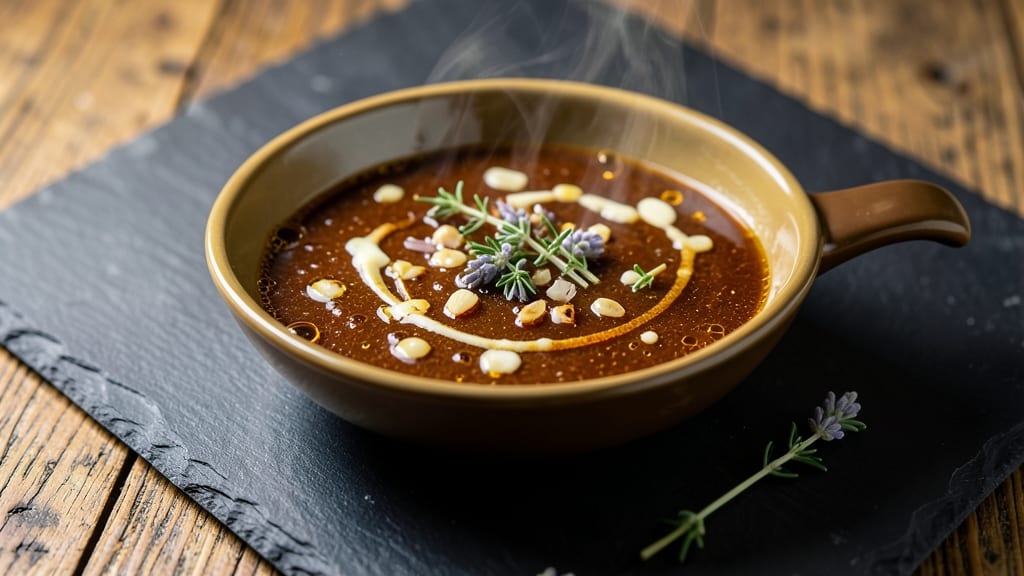
This au jus sauce recipe with beef broth transforms simple beef drippings into a rich, velvety sauce that elevates any roast or steak. The secret lies in deglazing the pan with wine and beef broth, creating layers of savory depth that homemade bones deliver.
I developed this method after years of perfecting restaurant-quality sauces at home—no shortcuts, just pure flavor built from scratch.
The process is straightforward but precise: sear your beef, deglaze with red wine, then simmer with beef broth and aromatics until reduced to a glossy, concentrated sauce. Straining ensures a silky texture without lumps, while a touch of cornstarch (optional) adds body if needed.
What starts as humble drippings becomes a sauce so rich it makes even the simplest roast feel like a special occasion.
This sauce isn't just for Sunday roasts—it transforms sandwiches, tacos, or even mashed potatoes into something extraordinary. The balance of wine acidity and beefy richness makes it versatile enough for any meal. Once you taste homemade au jus, store-bought versions will never compare again.
Ready in just 30 minutes, this sauce requires minimal effort but delivers maximum flavor. The key is patience—letting the sauce reduce slowly builds depth that instant sauces can't match. Serve it warm over your favorite proteins, and you'll understand why this is a weeknight game-changer.
Ingredients for au jus sauce recipe with beef broth
Six core ingredients plus a few pantry staples—this transforms humble drippings into restaurant-quality au jus.
| Ingredient | Amount | Notes |
|---|---|---|
| Beef Drippings 🥩 | 2 cups | From roasted beef, strained |
| Red Wine 🍷 | ½ cup | Bold, dry variety like Cabernet |
| Beef Broth 🥄 | 2 cups | Homemade or high-quality store-bought |
| Shallots 🧅 | 2 whole | Minced, for aromatic base |
| Garlic Cloves 🧄 | 4 cloves | Minced, for depth of flavor |
| Fresh Thyme 🌿 | ¼ cup | Leaves only, chopped finely |
| Black Peppercorns 🌶️ | ½ tsp | Freshly cracked for intensity |
| Cornstarch 🌾 | 1 tbsp | Optional, for thickening |
| Cold Water 💧 | 1 tbsp | For cornstarch slurry |
| Olive Oil 🫒 | 1 tbsp | For finishing, if needed |
The beef drippings are non-negotiable—homemade from roasted beef delivers that unmatched depth. Skip the store-bought pan drippings; they lack the rich, meaty essence. For the wine, Cabernet Sauvignon or Merlot work best—their bold tannins stand up to the beef. If you're using store-bought beef broth, Kitchen Basics or Pacific Foods are my go-tos; they're rich without being salty. Shallots and garlic are the aromatic backbone—mince them finely for even distribution. Fresh thyme is ideal, but dried works at half the amount if you're in a pinch.
No red wine? Beef broth with a splash of balsamic vinegar mimics the acidity, though it won't be identical. The cornstarch is optional but worth it for a silky finish—mix it with cold water first to avoid lumps. If you're using a slow cooker, reduce the broth first on the stove to concentrate the flavor. For extra richness, add a splash of Worcestershire sauce (ensure it's vegan if needed). The olive oil at the end isn't just for finishing—it adds a luxurious sheen and balances acidity.
This sauce peaks after resting 10-15 minutes—the flavors meld beautifully. Store it in a clean jar in the fridge for up to 5 days, or freeze for 3 months. I like to portion it into ice cube trays for easy reheating—just pop a cube into a saucepan with a splash of water. The sauce thickens as it cools, so thin with a little broth if it's too stiff when reheating. Leftovers make incredible sandwich spreads or pasta additions.
Why You'll Love This Recipe
- Pan’s Best Friend: I swear by this sauce because it uses what’s already in your pan—those golden beef drippings most people toss. Just deglaze with red wine, add shallots and garlic, and simmer. No extra pots, no extra mess.
- Wine & Garlic Magic: That first sip? Rich, savory, with a bright wine kick—like a fancy bistro sauce but with ingredients you already own. The shallots caramelize just enough to add depth without overpowering.
- Leftovers? More Like Leftovers’ BFF: This sauce thickens beautifully when cooled, so it’s perfect for reheating with roast beef, mashed potatoes, or even eggs the next day. I’ve turned a weeknight dinner into breakfast-for-dinner with zero extra effort.
- Budget Booster: Good beef broth and a splash of wine stretch into a whole meal’s worth of flavor. Honestly, I’ve made this for under $5 per serving—and it still tastes like I spent hours on it. (Between us, no one will guess.)
Step-by-step instructions for au jus sauce with beef broth
This rich, velvety sauce transforms simple ingredients into restaurant-quality depth.
Build the Aromatic Base
Heat the 2 cups beef drippings in a heavy-bottomed saucepan over medium heat. Once the drippings begin to shimmer, add the 2 whole shallots and 4 cloves garlic cloves that have been finely minced. Cook for 5-7 minutes, stirring occasionally, until the shallots soften and turn a delicate golden color.
Here's the thing—don't rush this step. You're developing the foundation of your sauce, and those caramelized aromatics make all the difference. The garlic should smell intensely fragrant, and the shallots should be translucent without browning. If you see any browning, reduce the heat slightly to prevent burning.
Next, stir in the 0.25 cup fresh thyme and 0.5 teaspoon freshly cracked black peppercorns. Toast these spices for 30 seconds until you can smell their aromatic oils releasing. This brief toasting enhances their flavor without overpowering the sauce. Remove the pan from heat immediately after to prevent the thyme from turning bitter.
Deglaze with Wine and Broth
Return the pan to medium heat and carefully pour in the 0.5 cup red wine, scraping up any browned bits from the bottom of the pan with a wooden spoon. This deglazing step captures all that concentrated flavor you've built. Let the wine simmer for 3-4 minutes until it reduces by about half and the alcohol burns off.
You'll know it's ready when the wine transforms from a bright red to a deeper amber color and the aroma shifts from sharp to rich and complex. Now add the 2 cups beef broth and bring the mixture to a gentle simmer. Let it cook uncovered for 15-20 minutes, stirring occasionally, until the sauce reduces by about one-third and thickens slightly.
This reduction step is crucial—it concentrates the flavors and creates that signature velvety texture. If the sauce starts to look too thin before it reduces sufficiently, you can always thicken it later with the cornstarch slurry, but let's give it time to work on its own first.
Finish and Thicken the Sauce
In a small bowl, whisk together the 1 tablespoon cornstarch and 1 tablespoon cold water to create a smooth slurry. Slowly drizzle this mixture into the simmering sauce while stirring constantly with a wooden spoon. The sauce should begin to thicken almost immediately, becoming glossy and coatable.
Continue cooking for 2-3 minutes until the sauce reaches your desired consistency—it should be thick enough to coat the back of a spoon but still pour smoothly. If you prefer a thinner sauce, you can always add a splash more beef broth. Taste and adjust the seasoning with additional salt if needed, though the homemade drippings and broth should already be well-seasoned.
For that final touch, remove the pan from heat and stir in the 1 tablespoon olive oil. This not only adds richness but also creates a beautiful sheen on the surface of the sauce. Let the sauce rest for 5 minutes off the heat before serving—this allows the flavors to meld completely and the sauce to reach its peak consistency.
Strain and Serve
Line a fine-mesh strainer with cheesecloth or a coffee filter and carefully strain the sauce into a clean saucepan or serving dish. This step removes any impurities and gives you that silky-smooth texture that defines a perfect au jus. Discard the strained solids—they've done their job.
Gently reheat the strained sauce over low heat if needed, just until warmed through. The sauce should be warm enough to pour but not simmering vigorously. Serve immediately over sliced beef, roasted potatoes, or crusty bread to soak up every last drop of that rich, savory goodness.
Here's a pro tip: If you're serving this with beef, pour a little sauce over the meat just before serving. The heat will help it cling beautifully, creating that classic au jus presentation where the meat practically swims in the sauce.
Pro Tips For Making Au Jus Sauce Recipe With Beef Broth
- Sweat Shallots Slowly: I learned this the hard way—rushing the shallots in beef drippings makes them bitter. Use low heat and let them soften for 8-10 minutes until translucent, stirring occasionally. The extra time builds flavor without burning.
- Deglaze Immediately: Don’t let those drippings harden—scrape up every browned bit with a wooden spoon while the pan is still hot. Add the red wine right away and let it bubble for 30 seconds to pull all the caramelized goodness into the sauce.
- Strain Twice: After simmering, strain the sauce through a fine-mesh sieve first, then a cheesecloth-lined strainer. The second pass removes stray bits that would otherwise make your au jus look cloudy and taste gritty.
- Salt the Broth Last: Add the beef broth after the wine has reduced by half. Taste before salting—homemade broth can be salty, and you’ll avoid overdoing it. A pinch of salt at the end guarantees perfect balance.
Storing and reheating this recipe
Fridge Storage
Transfer your au jus sauce to an airtight container (I prefer glass jars with tight-sealing lids) while it's still warm to prevent condensation buildup. Let it cool completely at room temperature for no more than 2 hours before refrigerating.
Store it in the fridge for up to 5 days—the flavors actually deepen as the sauce rests. When ready to use, reheat gently on the stove over low heat with a splash of beef broth to restore its silky texture. 🥄
Freezer Preservation
For longer storage, portion the sauce into ice cube trays—this makes reheating a breeze for future meals. Once frozen, transfer the cubes to a freezer-safe bag or container, leaving ½-inch headspace for expansion. This sauce keeps its quality for up to 3 months in the freezer.
When thawing, pop a cube directly into a saucepan with 1 tablespoon beef broth and warm over medium-low heat for 2-3 minutes. The sauce will thicken naturally as it warms. ❄️
Reheating Perfection
Never microwave au jus—it ruins the delicate texture. Instead, pour the refrigerated sauce into a saucepan and heat over low heat with 1-2 tablespoons beef broth to loosen it. Stir constantly until warmed through but not boiling.
If the sauce seems too thick after reheating, thin it with an additional splash of broth. For extra richness, finish with a drizzle of olive oil before serving. The result? A velvety sauce that tastes just like it did fresh. 🔥
Make-Ahead Magic
This sauce is perfect for meal prep! Prepare it a day ahead and store it in the fridge—it actually tastes better the next day as the flavors meld. I like to make a double batch on Sunday so I can use it throughout the week for sandwiches, tacos, or as a dipping sauce for fries. Just
Reviving Thickened Sauce
If your au jus thickens too much after refrigeration, don't panic. Simply stir in 1 tablespoon beef broth at a time while reheating until you reach the perfect consistency. For an extra boost, whisk in ½ teaspoon cornstarch mixed with 1 teaspoon water to restore body. The goal is a sauce that coats the back of a spoon but still pours smoothly—this balance is what makes it irresistible. 🌟
Nutrition facts
Frequently asked questions
Can I make au jus without red wine?
Swap the wine for ½ cup beef broth plus 1 tablespoon balsamic vinegar to mimic the acidity. For extra depth, add ½ teaspoon Worcestershire sauce (ensure it's vegan if needed). The sauce will still develop rich, savory flavors—just with a slightly different profile.
How do I get the best beef drippings for au jus?
Roast a bone-in beef roast or chuck roast at 400°F for 2-3 hours until deeply browned, then strain the drippings through a fine-mesh sieve. For maximum flavor, use the drippings immediately after roasting—they contain concentrated meaty essence. If storing, refrigerate in an airtight container for up to 3 days.
Why did my au jus turn out too thin?
This usually happens from one of two issues: either the sauce didn't reduce enough or the broth was too diluted. For future batches, simmer uncovered until reduced by one-third. If it's too thin now, whisk in 1 tablespoon cornstarch mixed with 1 tablespoon cold water and cook for 2-3 minutes until thickened. For a quicker fix, add 1 tablespoon beef bouillon powder to concentrate the flavor.
What are the best ways to use leftover au jus?
This versatile sauce elevates more than just roasts! Use it as a sandwich spread, drizzle over mashed potatoes or roasted veggies, or mix into taco filling for instant depth. Freeze leftovers in ice cube trays for easy portioning—just pop a cube into any dish that needs a beefy boost. Even pasta dishes become restaurant-worthy with a splash of au jus.
Can I make au jus in a slow cooker?
Yes, but with adjustments. First, reduce the broth on the stovetop until it's concentrated (about ½ cup remaining). Then transfer to a slow cooker with the drippings, wine, and aromatics. Cook on low for 4-6 hours, stirring occasionally. Since slow cookers don't concentrate flavors as effectively, you may need to strain and reduce further on the stove before serving. The result will be tender but slightly less glossy than stovetop au jus.