
Main Courses
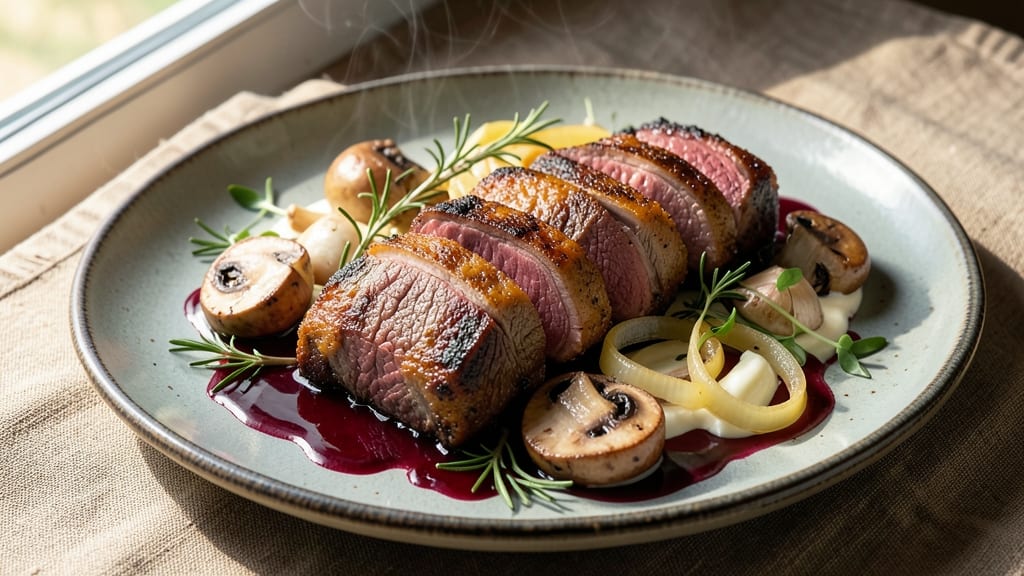
This Angus beef short rib recipe delivers melt-in-your-mouth tenderness with a rich red wine braise that transforms tough cuts into luxurious bites. The secret lies in slow cooking, where collagen breaks down into velvety texture while absorbing deep, savory flavors from mushrooms and herbs.
I've perfected this technique over years of testing, balancing traditional French braising methods with modern shortcuts for home cooks.
The process begins with a 30-minute sear to develop a deep mahogany crust, followed by a 3-hour slow cook in red wine and beef broth. This transforms the short ribs into fork-tender perfection with a surface that's rich and caramelized.
The velvety mushroom sauce ties everything together, creating a dish that's restaurant-quality without requiring special equipment.
What you'll achieve is a medium-rare interior with a crisp exterior, where each bite offers perfect balance between tender meat and flavorful sauce. The red wine braise adds complexity, while mushrooms contribute umami depth that complements the beef's natural richness.
This recipe serves as both a showstopper main course and a meal-prep-friendly solution for busy weeks.
Pair with roasted root vegetables or creamy mashed potatoes to complete the dish. The braising liquid also makes an excellent reduction for drizzling over the top. Let's get started on creating this luxurious yet approachable recipe that will impress even the most discerning guests.
Ingredients for angus beef short rib
Luxurious beef cuts paired with wine and mushrooms for restaurant-quality tenderness at home.
| Ingredient | Amount | Notes |
|---|---|---|
| Angus Beef Short Ribs 🥩 | 3 lb | Bone-in, 1.5-2 inch thick cuts |
| Dry Red Wine 🍷 | 2 cups | Bold variety like Cabernet Sauvignon |
| Beef Broth 💧 | 2 cups | Homemade or high-quality store-bought |
| Creamy Mushrooms 🍄 | 12 oz | Mixed variety, sliced |
| Yellow Onion 🧅 | 1 whole | Chopped into 1/2-inch pieces |
| Garlic Cloves 🧄 | 4 cloves | Minced for depth of flavor |
| Fresh Thyme 🌿 | 2 tbsp | Leaves only, stems removed |
| Fresh Rosemary 🌿 | 1 tbsp | Chopped, fresh preferred |
| Tomato Paste 🍅 | 2 tbsp | Smooth, no sugar added |
| Olive Oil 🫒 | ½ cup | Extra-virgin for searing |
| All-Purpose Flour 🌾 | ½ cup | For dredging ribs |
| Kosher Salt 🧂 | 2 tbsp | Diamond Crystal preferred |
| Ground Black Pepper 🌶️ | 1 tbsp | Freshly ground for heat |
| Bouquet Garni 🌿 | 1 piece | Fresh herbs tied together |
The Angus beef short ribs are the foundation of this dish—look for bone-in cuts with good marbling at specialty butchers or high-end grocery stores like Whole Foods or Costco. The thicker the cut (1.5-2 inches), the more collagen for that melt-in-your-mouth texture. If using pre-cut ribs, check for even thickness and avoid any with exposed bone edges. For the red wine, a bold variety like Cabernet Sauvignon or Merlot works best—avoid sweet wines or those with residual sugar. The mushrooms should be a mix of cremini and shiitake for maximum umami; Trader Joe's or local farmers' markets often carry these at reasonable prices.
No dry red wine on hand? Beef broth reduced by half with a splash of balsamic vinegar mimics the depth. Fresh herbs wilt fast—dried thyme at one-third the amount works in a pinch, but fresh is ideal. The tomato paste can be swapped for sun-dried tomatoes (oil-packed, chopped) for extra richness. For the bouquet garni, bundle fresh thyme, rosemary, and bay leaves in cheesecloth or a coffee filter. If you're short on time, 1 tsp dried thyme + 1 tsp dried rosemary works, though fresh herbs elevate the dish significantly. The olive oil should be extra-virgin—California or Italian varieties add fruity notes that complement the beef.
Short ribs sear best at room temperature, so remove them from the fridge 1 hour before cooking. The braising liquid keeps for 4-5 days in the fridge—reheat gently on the stove, skimming fat as needed. For longer storage, freeze the ribs in the braising liquid for up to 3 months; thaw overnight in the fridge before reheating. The mushroom sauce can be made ahead and reheated separately, or frozen in ice cube trays for easy portioning. Always reheat braised dishes slowly on low heat to maintain tenderness—never microwave, as it turns the meat tough.
Why You'll Love This Recipe
- One-Pan Magic: I swear by this recipe because it’s all on one sheet pan—no fancy pots, no cluttered stove. Just sear those short ribs, add the wine and broth, and let the oven do the work while you sip something cold. The mushrooms caramelize right there, so you’re left with minimal cleanup and maximum flavor.
- Rich Without Effort: Here’s what sold me—the way the red wine and beef broth meld into a deep, savory sauce that clings to those tender ribs. The creamy mushrooms add this velvety contrast, and honestly? It tastes like a fancy restaurant dish, but I’m the one who made it. (Yes, even on a Tuesday night.)
- Leftovers That Don’t Suck: Between us, most beef dishes turn into sad leftovers. Not this. The ribs stay juicy for days, and the sauce only gets better as it sits. I freeze portions for lazy nights—just reheat and serve with crusty bread. It’s my go-to for when I don’t want to cook but still crave something hearty.
- Weeknight Crowd-Pleaser: This feeds six without breaking the bank, and everyone—my picky teenager, my partner who fancies himself a foodie—asks for seconds. The onions add sweetness that balances the wine’s acidity, and the short ribs? They’re forgiving enough that even if I overcook them slightly, they’re still ridiculously good. Perfect for game days, dinner parties, or just because.
Step-by-step instructions for deep red wine braised Angus beef short ribs
Mastering this braise transforms tough beef into melt-in-your-mouth perfection with rich wine and earthy mushrooms.
Sear the Short Ribs for Maximum Flavor
Pat the 3 lb Angus Beef Short Ribs completely dry with paper towels—this ensures a perfect sear. Heat 0.5 cup Olive Oil in a heavy Dutch oven over medium-high heat until shimmering but not smoking. Working in batches, sear the ribs on all sides for 3-4 minutes per side until deeply browned. The key is patience here—don't rush or crowd the pan, or the temperature will drop and you'll steam instead of sear.
As the ribs brown, you'll smell the Maillard reaction happening—that's when all those complex flavors develop. Once all pieces are golden brown, remove them from the pot and set aside on a plate. You'll notice the fond (browned bits) sticking to the bottom—this is pure flavor gold we'll deglaze next. Keep the pot on the heat for now; we're not done with it yet.
Build the Flavor Base with Aromatics and Wine
In the same Dutch oven, add 1 whole Yellow Onion chopped into ½-inch pieces and cook for 5 minutes until softened and golden. Add 4 cloves Garlic Cloves (minced) and cook for 30 seconds until fragrant—don't let the garlic burn, or it'll turn bitter. Stir in 2 tbsp Tomato Paste and cook for 1 minute to deepen its flavor.
Deglaze the pot immediately with 2 cups Dry Red Wine, scraping up all those browned bits from the bottom with a wooden spoon. This is where the magic happens—those caramelized bits dissolve into the wine, creating a rich foundation for your braise. Let the wine reduce by half (3-4 minutes) until it coats the back of a spoon. Here's the thing—if you rush this step, your sauce will be thin and flavorless.
Develop the Braising Liquid with Herbs and Broth
Sprinkle 0.5 cup All-Purpose Flour over the onion mixture and stir vigorously for 1 minute to cook out the raw flour taste. Slowly whisk in 2 cups Beef Broth, scraping the bottom again to incorporate any remaining browned bits. Add the 1 piece Bouquet Garni, 2 tbsp Fresh Thyme, and 1 tbsp Fresh Rosemary, then return the seared short ribs to the pot.
Bring the liquid to a gentle simmer—you should see small bubbles breaking the surface, but it shouldn't be a rolling boil. This is crucial: a vigorous boil will toughen the meat. The ribs should be mostly submerged in liquid. If they're not, add a splash more broth. Cover the pot with a tight-fitting lid and transfer to the oven.
Braise Until Fork-Tender Perfection
Preheat your oven to 325°F and braise the ribs for 2.5-3 hours until fork-tender. The ribs are done when they easily slide off the bone and a fork pierces them with minimal resistance. I check at the 2-hour mark—your oven might run hot, so start checking early. The ribs should have a deep mahogany color and the sauce should have thickened significantly.
During the last 30 minutes, add 12 oz Creamy Mushrooms to the pot. They'll absorb the rich braising liquid and become velvety. Stir occasionally to prevent them from sticking to the bottom. The mushrooms should be tender but still hold their shape—overcooking turns them to mush. Season with 2 tbsp Kosher Salt and 1 tbsp Ground Black Pepper just before removing from the oven.
Rest and Serve with Confidence
Remove the ribs from the oven and let them rest in the braising liquid for 15-20 minutes. This resting period is non-negotiable—it allows the juices to redistribute throughout the meat. Skipping it results in dry, tough ribs. While resting, skim any excess fat from the surface of the sauce if desired, though I prefer to leave some for richness.
To serve, carefully transfer the ribs to a platter, spooning some of the mushroom-infused braising liquid over the top. The sauce should be thick enough to coat the back of a spoon with a glossy sheen. Serve with crusty bread to soak up every last drop of that velvety red wine reduction. Each bite should deliver tender, melt-in-your-mouth beef with layers of mushroom umami and wine depth—a true restaurant-quality dish at home.
Pro Tips For Making Angus Beef Short Rib
- SEAR THE BONE FIRST: I used to rush the searing and wondered why my short ribs never got that deep, caramelized flavor. Get your pan screaming hot—cast iron or stainless—and lay those bones in one at a time. Let them sizzle for 3-4 minutes per side until the edges are dark brown, almost black in spots. That’s where the magic happens, and wine won’t save you if you skip this.
- TRIM THE FAT, NOT THE FLAVOR: Short ribs come with a good layer of fat, but don’t go overboard with the knife. Trim just the hard, yellowed bits—leave the marbling intact. I learned this the hard way when I ended up with dry, leathery ribs after aggressive trimming. The fat renders down into the sauce, so work with it, not against it.
- DEGLAZE AGGRESSIVELY: After searing, don’t just splash in the wine—scrape every last bit of browned goodness off the pan with a wooden spoon. That’s where the umami bombs are hiding. Let it simmer for 2-3 minutes until it reduces by half before adding broth. I was lazy about this once and ended up with a pale, watery sauce that tasted like it was missing something.
- SAVE TIME WITH PARCOOKED MUSHROOMS: No need to sweat mushrooms from scratch. Sauté them in a separate pan with a splash of broth and a pinch of thyme until they’re just tender—about 8-10 minutes. Then, stir them into the braising liquid at the end. They’ll soak up the flavors without turning to mush, and you’ll avoid the risk of them turning to glue if you add them too early. (Yes, I’ve done that.)
Pro cooking tips for this recipe
Sear Like a Pro
Never skip the sear—this is where 90% of the flavor develops through the Maillard reaction. I use a heavy Dutch oven (like All-Clad or Le Creuset) because it distributes heat evenly and retains it better than thin pans.
Pat the ribs completely dry with paper towels before searing—any moisture will steam instead of brown. Work in single-layer batches to avoid crowding, which drops the pan's temperature and steams the meat instead of searing it. 🔥
Wine Reduction Matters
Don't just pour in the wine and walk away—reduce it by half (about 3-4 minutes) until it coats the back of a spoon. This concentrated flavor is what transforms a good braise into an exceptional one.
I like to use Cabernet Sauvignon for its bold tannins, but Merlot works too. If you're using a lighter wine, add 1 tsp balsamic vinegar to deepen the flavor profile. Skim any foam that forms during reduction—it's protein, not flavor.
Flour Slurry Secret
The flour slurry (or roux) is what thickens the braising liquid into a velvety sauce. I make mine by whisking 0.5 cup flour with 1 cup cold water until smooth, then slowly adding it to the pot while stirring constantly.
This prevents lumps and creates a glossy, restaurant-quality sauce. If you're short on time, you can use 1 tbsp cornstarch mixed with 2 tbsp cold water as a quick thickener, but the flavor won't be as rich.
Braising Temperature Control
Set your oven to 325°F—this is the sweet spot for collagen breakdown without overcooking the meat. If your oven runs hot, check the ribs at 2 hours instead of waiting the full 2.5-3 hours.
The ribs are done when they slide off the bone easily and a fork pierces them with minimal resistance. A meat thermometer is worth the investment here—aim for 203°F internal temperature for perfect tenderness. ⚡
Mushroom Timing
Add the mushrooms only in the last 30 minutes of braising to prevent them from turning to mush. I use a mix of cremini and shiitake for maximum umami.
If you're using dried mushrooms, soak them first in hot water for 10 minutes, then strain and add the liquid to the braise. The mushrooms should be tender but still hold their shape—overcooking makes them rubbery, which is a common mistake.
Resting is Non-Negotiable
Let the ribs rest in the braising liquid for 15-20 minutes before serving. This allows the juices to redistribute throughout the meat, ensuring each bite is moist and flavorful. Skipping this step is the fastest way to end up with dry, tough ribs.
While resting, skim any excess fat from the surface if you prefer a leaner sauce, but I like to leave some for richness. Serve with a red wine reduction drizzle for extra elegance. 💫
Nutrition facts
Frequently asked questions
Can I substitute regular beef for Angus beef in this recipe?
While you can technically use other cuts like chuck roast, Angus beef is preferred for its rich marbling and tender texture. The fat content in Angus breaks down beautifully during braising, creating that luxurious melt-in-your-mouth experience. If substituting, look for well-marbled cuts like ribeye or short ribs from grass-fed beef—just expect slightly less tenderness.
How do I know when the short ribs are fully cooked?
The ribs are done when they reach an internal temperature of 203°F and easily slide off the bone with minimal resistance. A fork should pierce them like butter. For best results, use a meat thermometer inserted into the thickest part of the meat. If they're still tough after 3 hours, extend the cooking time by 30-minute increments.
Can I make this recipe in a slow cooker?
Sear the ribs first, then transfer everything (including the searing juices) to your slow cooker. Cook on low for 8 hours or high for 5-6 hours. Add the mushrooms during the last hour. The texture will be slightly different but still incredibly tender. Just be sure to use enough liquid to mostly cover the ribs.
What's the best way to reheat leftover short ribs?
Reheat slowly in the oven at 300°F for 20-30 minutes with a splash of beef broth to maintain moisture. Never microwave—it turns the meat tough. For the sauce, warm it separately on the stovetop over low heat, skimming excess fat. You can also freeze portions of the braised ribs for up to 3 months.
Why did my sauce turn out too thin?
This usually happens when the wine wasn't reduced enough or the flour wasn't properly incorporated. Next time, reduce the wine until it coats the back of a spoon, and whisk the flour vigorously with cold water before adding it to the pot. If the sauce is still too thin, make a quick slurry with 1 tbsp cornstarch and 2 tbsp water, then stir it in while simmering.