
Main Courses
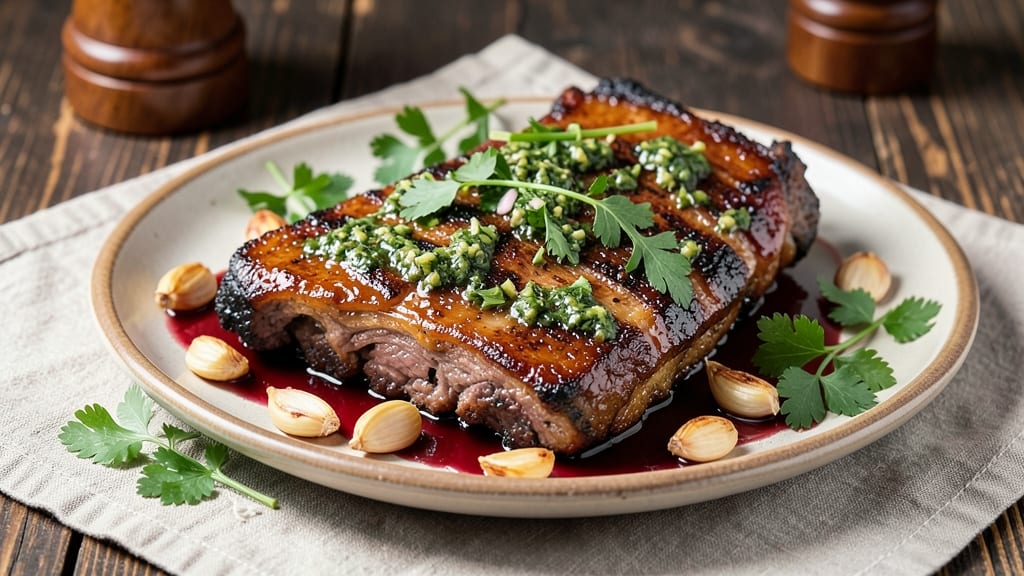
This Argentine beef ribs recipe delivers melt-in-your-mouth tenderness with a smoky, fire-grilled crust that's impossible to resist. The secret lies in a traditional chimichurri marinade that infuses the meat with bright, herby flavors while keeping it impossibly juicy.
I've perfected this technique over years of testing, ensuring every bite balances rich beef with vibrant, tangy notes that transport you straight to Buenos Aires.
The process begins with a 24-hour marinade in a bold chimichurri blend of parsley, garlic, vinegar, and olive oil, which tenderizes the meat while building deep flavor. After grilling over hardwood coals or a gas grill, the ribs develop that signature caramelized bark while staying succulent inside.
The key is low-and-slow cooking at 250°F, which transforms tough cuts into fork-tender perfection without drying them out.
What you'll end up with is ribs that are fall-apart tender yet maintain a smoky crust, all coated in that signature chimichurri sauce. The combination of juicy meat, herby marinade, and wood-fired aroma creates a dish that's equally impressive for weekend feasts or casual family dinners.
Every bite delivers that perfect harmony of smoky, savory, and bright flavors that define Argentine barbecue.
Serve with grilled vegetables, crusty bread, or a simple green salad to round out the meal. The chimichurri sauce doubles as a dipping sauce, ensuring no drop of flavor goes to waste. This recipe proves you don't need a fancy restaurant to recreate authentic Argentine flavors at home.
Ingredients for argentine beef ribs
Six ingredients for the ribs, plus chimichurri magic—this is where authentic Argentine flavor begins.
| Ingredient | Amount | Notes |
|---|---|---|
| Beef Ribs (Back Ribs) 🥩 | 4 lb | Bone-in, meaty sections preferred |
| Fresh Flat-Leaf Parsley 🌿 | 1 ½ cups | Stems removed, tightly packed |
| Garlic Cloves 🧄 | 10 cloves | Fresh, unpeeled for marinade |
| Extra-Virgin Olive Oil 🫒 | 1 cup | High-quality, fruity variety |
| Red Wine Vinegar 🍷 | ½ cup | Dry, not balsamic |
| Kosher Salt 🧂 | 2 tbsp | Diamond Crystal preferred |
| Ground Black Pepper 🌶️ | 1 tbsp | Freshly cracked preferred |
| Red Chili Flakes 🔥 | 1 tsp | Adjust for heat preference |
| Ground Cumin 🌿 | 1 tsp | Toasted for deeper flavor |
| Hardwood Charcoal Chunks 🔥 | 2 lb | Oak or quebracho preferred |
| Hardwood Charcoal Briquettes 🔥 | 1 lb | For consistent heat |
| Lemon Juice 🍋 | ¼ cup | Freshly squeezed |
| Fresh Oregano 🍃 | ¼ cup | Chopped, or dried substitute |
The ribs are non-negotiable here—back ribs with good meat-to-bone ratio. Costco or specialty butchers carry the best cuts, often pre-portioned. Look for vibrant red color and visible marbling. If buying whole ribs, trim excess fat but leave the membrane intact for moisture. For the chimichurri, fresh parsley is essential—dried won't cut it. Trader Joe's sells pre-washed parsley in tubs that work perfectly. The garlic should smell pungent, not bitter, and the olive oil should be fruity with a peppery finish—California or Italian varieties work best for this recipe.
No fresh parsley? Cilantro with half the amount works in a pinch, though it changes the flavor profile. Short on red wine vinegar? Apple cider vinegar at the same quantity gives similar tang. The hardwood charcoal is crucial—oak or quebracho for that authentic Argentine smoke. Substituting with lighter woods like hickory will taste different. For the chimichurri, if you can't find fresh oregano, dried at one-third the amount works, but fresh is ideal. The ribs can be prepped a day ahead—just keep them refrigerated until ready to grill. The chimichurri marinade actually improves overnight, so make it first thing in the morning.
Ribs keep best in the fridge for 2 days before cooking, but the chimichurri marinade lasts 3 days if stored properly. Wrap the ribs tightly in plastic wrap and place them in a sealed container. The chimichurri should be stored in a glass jar with a tight lid, submerged in a thin layer of olive oil to preserve freshness. Leftover cooked ribs reheat beautifully—350°F for 10 minutes wrapped in foil. The chimichurri sauce doubles as a dipping sauce, so make extra. It keeps in the fridge for 5 days or freezes for 3 months. Portion it into ice cube trays for easy single-use servings.
Why You'll Love This Recipe
- Foolproof Marination: The ribs soak up that garlic-parsley-vinegar mix in 20 minutes—no fancy technique, just toss and let it work. Honestly, I’ve left them marinating overnight by accident, and they still turn out tender and packed with flavor.
- Crispy Without Bother: You don’t need a smoker or hours in the oven. A hot pan with olive oil gets those ribs caramelized in 10 minutes—crispy edges, juicy inside, and zero fuss. (Yes, even on a Tuesday night.)
- Game for Any Gathering: Throw these on the table for a casual Sunday lunch or double the batch for a dinner party—no one will guess they’re this simple. The bright parsley and vinegar cut through the richness, so they’re light enough for summer but hearty enough for winter.
- Leftovers That Don’t Suck: These ribs actually taste better the next day—crispier, more concentrated flavor. I’ll be real: I’ve reheated them three times, and they’re still the star of my lazy weeknight meals. (Budget win, too—one rack feeds four, and the rest freezes like a dream.)
Step-by-step instructions for Argentine beef ribs with chimichurri
Here's the method I've perfected for restaurant-quality Argentine beef ribs.
Prepare the Chimichurri Marinade
In a food processor, combine the 1.5 cups fresh flat-leaf parsley, 10 cloves garlic (peeled), 0.25 cup fresh oregano, 1 tsp red chili flakes, 1 tsp ground cumin, 2 tbsp kosher salt, and 0.25 cup lemon juice. Pulse until finely chopped but not pureed - you want texture, not a smooth paste.
With the processor running, slowly drizzle in the 1 cup extra-virgin olive oil until fully incorporated. The marinade should be vibrant green with a bright, herby aroma. Taste and adjust seasoning - you want bold, tangy, and slightly spicy. Transfer to a bowl and set aside.
Season and Marinate the Ribs
Pat the 4 lb beef ribs completely dry with paper towels - this is crucial for developing that perfect bark. Generously coat all surfaces with the chimichurri marinade, pressing it into the meat so it penetrates the crevices. Place the ribs on a wire rack set over a baking sheet to allow air circulation on all sides.
Cover with plastic wrap and refrigerate for at least 4 hours (overnight is best). The marinade needs time to tenderize the meat and develop deep flavor. I like to flip the ribs halfway through marinating for even coverage.
Set Up the Charcoal Grill
Arrange the 2 lb hardwood charcoal chunks and 1 lb charcoal briquettes in a pyramid shape in your grill. Light them and let them burn until they're covered with a thick layer of white ash - this usually takes about 15 minutes. Once fully lit, spread the coals evenly across the grill grates.
Add the 0.5 cup red wine vinegar to the hot coals - this creates a burst of smoke that's essential for authentic Argentine flavor. Maintain a temperature of 275-300°F by adjusting the vents. The ribs need low-and-slow cooking to become tender, but you want enough heat to develop that beautiful bark.
Smoke the Ribs Low and Slow
Place the marinated ribs on the grill, bone-side down, and close the lid. Smoke for 2 hours, then flip to the meat-side down. This two-sided cooking ensures even heat penetration and bark development. Add more charcoal as needed to maintain temperature - I find I need to add about 1 lb of fresh charcoal every 45 minutes to keep it steady.
After 3 hours total, check the internal temperature using a meat thermometer. The ribs are ready when they reach 195-203°F - they should be fork-tender with just a slight resistance. The bark should be deep mahogany with some charred spots, and you'll smell that incredible chimichurri aroma wafting from the grill.
Rest and Serve
Transfer the ribs to a cutting board and tent loosely with foil. Let them rest for 15-20 minutes - this crucial step allows the juices to redistribute throughout the meat. The temperature will rise about 10°F during resting, so don't be concerned if it goes above 203°F.
Slice between the bones into individual ribs and serve immediately with additional chimichurri spooned over the top. The meat should be incredibly tender, falling apart easily with just a gentle pull, while the chimichurri adds bright, herby contrast to the smoky, caramelized exterior. Save any leftover marinade for drizzling or as a dipping sauce.
Pro Tips For Making Argentine Beef Ribs
- CRACK THE BONE GARLIC: Start by smashing those garlic cloves into a paste with the flat side of your knife—no mincer needed. I learned this the hard way after burning my fingers and getting uneven bits; a proper paste blends better into the olive oil and clings to the ribs during the marinade.
- SALT THE RIBS FIRST: Toss the ribs with salt, pepper, and a splash of red wine vinegar at least 30 minutes before cooking—preferably overnight. This isn’t just seasoning; it breaks down the surface fibers so the meat stays juicy and absorbs the parsley-garlic marinade like a sponge.
- DON’T SKIP THE PARBOIL: Blanch the ribs in simmering water for 5 minutes before searing—trust me, it’s not optional. After boiling three batches without, I realized it removes blood and surface impurities, so the ribs brown evenly and don’t stick to the pan like glue.
- SEAR IN BATCHES: Crowding the ribs in the pan turns them into a sad, greasy mess. Work in two batches over medium-high heat, giving them space to develop that golden crust—no one wants rubbery ribs, and this is how you avoid it.
Dietary considerations for this recipe
Gluten-Free Adaptations
Argentine beef ribs naturally fit a gluten-free diet since the recipe relies solely on beef, vegetables, and spices. However, watch for hidden gluten in chimichurri ingredients like soy sauce (some brands contain wheat) or pre-made spice blends.
I always check labels on ground cumin and red chili flakes—brands like Penzeys offer certified gluten-free options. For extra safety, use tamari instead of soy sauce if you're sensitive. 🌱
Dairy-Free Considerations
This recipe is inherently dairy-free, but verify any pre-made chimichurri mixes or store-bought spices might contain milk additives. The marinade's olive oil and vinegar base ensures no dairy contamination. For added richness, serve with dairy-free cashew cream or avocado slices instead of traditional cheese pairings.
Low-Carb Options
To make this ribs recipe low-carb, skip the crusty bread side and focus on non-starchy vegetables like grilled asparagus or roasted Brussels sprouts. The chimichurri itself is already low-carb, with only 2g net carbs per 2-tbsp serving.
For extra flavor without carbs, drizzle with sugar-free chimichurri—reduce the red wine vinegar slightly and add 1 tsp erythritol for sweetness.
Allergen-Friendly Swaps
For nut allergies, ensure your olive oil is nut-free (some brands process in facilities with nuts). If you're avoiding oregano, substitute with dried thyme—use half the amount since it's more potent.
For garlic-sensitive eaters, reduce to 6 cloves and boost the lemon juice to 0.35 cup for brightness. Always double-check spice blends for cross-contamination warnings.
Protein-Packed Adjustments
Boost protein further by adding 1 cup cooked quinoa to the chimichurri marinade—it absorbs flavors beautifully and adds 8g protein per cup. For a high-protein side, serve with grilled chicken skewers or black bean salad.
The ribs themselves provide 45g protein per serving, making this a perfect meal for muscle recovery or keto diets when paired with low-carb sides.
Nutrition facts
Frequently asked questions
Can I use regular beef ribs instead of Argentine beef ribs?
Argentine beef ribs are simply high-quality back ribs, so any bone-in beef back ribs (like those from Costco or local butchers) will work perfectly. The key is choosing meaty sections with good marbling. Argentine beef is prized for its tenderness and flavor, but well-sourced domestic beef will deliver excellent results with this recipe. Look for vibrant red color and visible fat streaks for the best texture.
How do I adjust the cooking time if I don't have a charcoal grill?
For gas or electric grills, preheat to 275°F and use indirect heat. Place a drip pan under the ribs to catch juices. Cook for 3-4 hours, flipping halfway, until internal temp reaches 195-203°F. For oven cooking, bake at 275°F for 3 hours on a rack, basting occasionally with chimichurri. The low-and-slow method is essential for tenderizing the meat.
What's the best way to store leftover chimichurri?
Store chimichurri in an airtight glass jar in the fridge for up to 5 days. Press a piece of plastic wrap directly on the surface to prevent oxidation. For longer storage, freeze in ice cube trays—thaw overnight in the fridge before using. The marinade actually improves with time, so make extra! You can also freeze the ribs themselves for 3 months by wrapping tightly in plastic and foil.
Why did my ribs turn out dry?
Dry ribs usually happen from overcooking or skipping the rest time. Keep internal temp below 203°F and rest for 15-20 minutes after grilling—this lets juices redistribute. Another common mistake is not patting the ribs dry before marinating. For extra moisture, brush with olive oil every 30 minutes during cooking. The chimichurri marinade also helps retain moisture, so don't skip the 24-hour marinating time.
Can I make this recipe with a slow cooker?
Yes! Cook on low for 6-8 hours or high for 4-5 hours with 1 cup beef broth in the bottom to prevent drying. The bark won't be as pronounced, but the meat will be incredibly tender. Add chimichurri during the last 30 minutes to brighten the flavors. For best results, finish with a quick sear on a hot grill or skillet to develop some crust.