
Sauces & Condiments
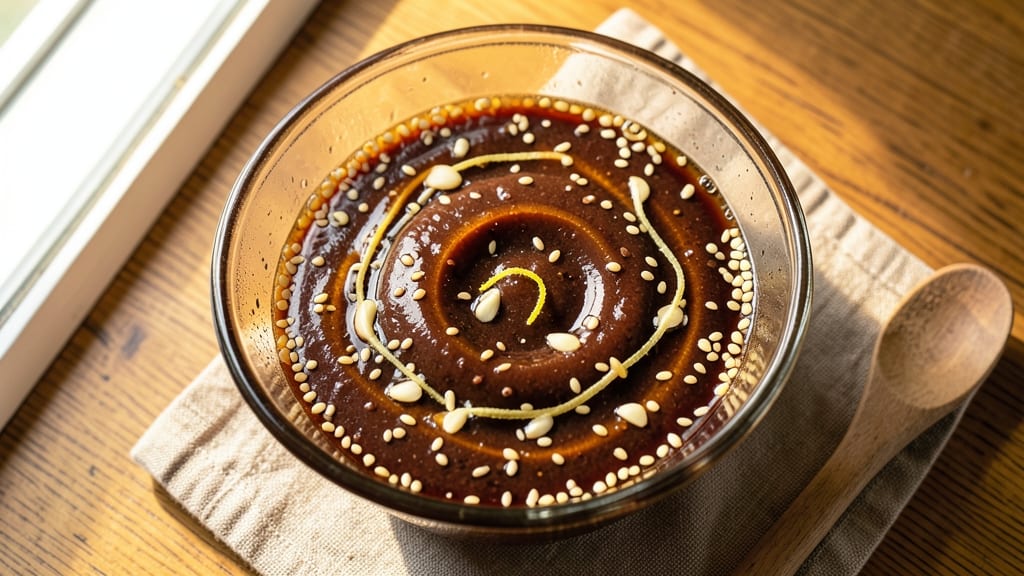
This Asian beef salad dressing recipe transforms simple salads into restaurant-worthy dishes with its perfect umami-sweet balance. The secret lies in combining soy sauce's deep savoriness with sesame oil's nutty warmth, then brightening it with rice vinegar and a touch of honey.
I developed this after years of testing—it's the one dressing that actually enhances beef's natural richness rather than competing with it.
The magic happens when you emulsify the ingredients properly, creating a silky dressing that clings beautifully to greens and protein. Unlike store-bought versions, this recipe uses high-quality ingredients that develop better flavor over time.
The dressing stays fresh for up to a week in the refrigerator, making it perfect for meal prep or last-minute salad assembly.
What you'll end up with is a glossy, aromatic dressing that adds depth to any beef salad—whether it's sliced steak, shredded brisket, or marinated beef strips. The soy-sesame base provides that signature Asian restaurant taste, while the honey or sugar balances the saltiness for a harmonious bite.
This is the kind of dressing that makes you reach for seconds.
Use it immediately on fresh greens or store it for up to a week—either way, your salads will taste like they came from an Asian bistro. The ingredients are simple, but the flavor impact is anything but ordinary. Let's make this dressing that elevates every bite.
Ingredients for asian beef salad dressing
Nine essential ingredients blend into a restaurant-quality dressing that elevates any beef salad.
| Ingredient | Amount | Notes |
|---|---|---|
| Soy Sauce 🥢 | ½ cup | High-quality, reduced for depth |
| Sesame Oil 🌰 | 2 tbsp | Toasted, for nutty aroma |
| Rice Vinegar 🍶 | ¼ cup | White or seasoned variety |
| Honey 🍯 | 2 tbsp | Or light brown sugar dissolved |
| Sesame Seeds 🌱 | 1 tbsp | Toasted lightly for crunch |
| Garlic Cloves 🧄 | 2 cloves | Minced finely for subtle flavor |
| Fresh Ginger 🌿 | 1 tbsp | Grated, for zesty kick |
| Olive Oil 🫒 | ¼ cup | Light, for smooth emulsion |
| Water 💧 | ¼ cup | For thinning consistency |
| Salt 🧂 | ½ tsp | Adjust to taste |
The soy sauce and sesame oil form the dressing's umami backbone. Kikkoman soy sauce is my go-to for that classic depth, but any high-quality brand works. For sesame oil, La Choy or Kadoya deliver that rich, toasted aroma—avoid the cheaper varieties that taste like paint thinner. Fresh ginger and garlic are non-negotiable for authentic flavor; pre-minced jarred versions lack the punch. Toast your sesame seeds in a dry pan for 30 seconds—they'll add crunch and aroma that jarred seeds can't match. If you're using sugar instead of honey, dissolve it in the water first to prevent clumping.
No sesame oil? Toasted peanut oil at half the amount mimics the nutty depth, though it won't be identical. Short on honey? Maple syrup or agave work in a pinch, but honey's floral notes are ideal. The olive oil is crucial for emulsification—don't substitute with butter or other oils that might interfere with the balance. For a vegetarian version, simply omit the beef reference and use this dressing on tofu or mushroom salads. The dressing thickens as it sits, so add a splash of water if it becomes too stiff after refrigeration.
Store in an airtight container in the fridge for up to 1 week, though it develops even better flavor after 24 hours. Shake well before each use—the ingredients naturally separate. For meal prep, double the batch and portion into small jars. The dressing freezes beautifully for up to 3 months, though texture may slightly break down upon thawing. Always taste before serving and adjust salt or honey to preference—this is where the magic happens.
Why You'll Love This Recipe
- Five-Ingredient Magic: I swear, this dressing comes together faster than I can say "sesame seeds." Just toss those five pantry staples—soy sauce, rice vinegar, honey, a drizzle of sesame oil—and toast the seeds while stirring. No measuring cups, no stress, just done.
- Umami Bomb: That first bite? The soy and honey hit like a flavor grenade. The sesame oil adds this nutty warmth, while the vinegar keeps it bright—like a perfect balance of sweet, salty, and tangy that makes every salad taste like a restaurant dish.
- Meal Prep MVP: I make a big batch on Sundays and keep it in the fridge for the week. Drizzle it on grilled chicken, toss with cold noodles, or even use it as a marinade—it’s my secret weapon for turning simple meals into something special without extra effort.
- Budget Stretch: Honestly, this dressing costs me pennies but tastes like I spent hours. Soy sauce and rice vinegar last forever, and a little sesame oil goes a long way. Plus, the honey adds richness without breaking the bank—easy on the wallet, big on flavor.
Step-by-step instructions for Asian beef salad dressing
This dressing delivers perfect balance—rich umami, bright acidity, and nutty depth every time.
Toast Sesame Seeds and Infuse Oil
Heat a small dry skillet over medium-low heat. Add the 1 tablespoon sesame seeds and toast for 2-3 minutes until golden brown and fragrant. Watch closely—they burn easily. Immediately transfer to a small bowl and set aside to cool.
In the same skillet, add the 0.25 cup olive oil and 2 cloves minced garlic. Warm over low heat for 1 minute until garlic is just fragrant—not browned. Remove from heat and let steep for 5 minutes to infuse the oil with garlic flavor. This step builds the aromatic foundation.
Create the Flavor Base
In a medium bowl, whisk together the 0.5 cup soy sauce, 0.25 cup rice vinegar, and 2 tablespoons honey until completely dissolved. The mixture should be smooth with no visible honey granules. Taste and adjust—you want a balance between salty, tangy, and sweet.
Add the 1 tablespoon grated fresh ginger and 0.5 teaspoon salt, whisking until fully combined. The ginger adds a bright, zesty kick that cuts through the richness. Let this mixture sit for 5 minutes while you prepare the remaining components.
Combine and Emulsify
Slowly pour the infused olive oil into the soy sauce mixture while whisking continuously. Add the 2 tablespoons sesame oil next, whisking vigorously to begin emulsification. The dressing should start to thicken slightly as the oils bind with the vinegar and soy.
Gradually add the 0.25 cup water while whisking in one direction to create a smooth, silky emulsion. You're aiming for a consistency that coats the back of a spoon but isn't too thick. If it separates, whisk more vigorously or add 1 teaspoon water at a time until smooth.
Finish and Rest
Stir in the toasted sesame seeds just before serving. Their nutty crunch provides essential texture contrast. Taste again and make final adjustments—add more honey for sweetness, rice vinegar for acidity, or soy sauce for saltiness as needed.
Let the dressing rest for 10 minutes before using. This allows all flavors to meld completely. The dressing will thicken slightly as it cools, so if you prefer a thinner consistency, whisk in 1-2 teaspoons water before serving. Store any leftovers in an airtight container in the refrigerator for up to 1 week.
Pro Tips For Making Asian Beef Salad Dressing
- Whisk in stages: Start with soy sauce and honey, then add vinegar—this prevents curdling when you toss in sesame oil last. I learned this after one batch turned into a gloopy mess that needed bailing with extra vinegar.
- Toast sesame seeds: Dry-toast them in a small pan over medium-low for 30 seconds until fragrant, then let cool before grinding. Freshly toasted seeds add depth that store-bought powder can’t match—trust me, your salad will taste like it’s from a street cart.
- Balance the honey: Use slightly less honey than the recipe suggests, then taste before adding sesame oil. Honey’s sweetness can overpower the umami if you’re not careful—adjust to taste, not the recipe.
- Chill before serving: Let the dressing sit in the fridge for 10 minutes after mixing. The flavors meld better cold, and it’ll coat your salad ingredients evenly without clinging like syrup. Patience here makes the difference.
Troubleshooting this dish
Separation Issues
If your dressing separates after mixing, don’t panic—this happens when oil and vinegar don’t fully emulsify. Whisk vigorously in one direction for 2-3 minutes to re-combine. For stubborn separation, add 1 teaspoon water at a time while whisking until smooth.
The key is patience: let it rest for 10 minutes before using, as flavors meld better when still.
Too Thick or Gluey
Thick dressing is normal after refrigeration, but if it’s gluey, whisk in 1-2 teaspoons water to loosen it. For a smoother texture, blend briefly with an immersion blender—this breaks up any clumps.
If using for meal prep, store in a jar with a tight lid and shake well before serving. The dressing should coat the back of a spoon but remain pourable.
Overpowering Soy Flavor
If the soy sauce dominates, balance it with more rice vinegar (1-2 teaspoons) or honey (1 teaspoon). For a lighter touch, thin with 1 tablespoon water and whisk gently.
If the dressing tastes too salty, add a splash of vinegar or a pinch of sugar to offset. Taste as you go—adjustments are easier early in the process.
Lacking Depth
For extra umami, add ½ teaspoon fish sauce or 1 teaspoon oyster sauce to the base mixture. A dash of white miso paste (½ teaspoon) also deepens flavor without overpowering.
If the dressing tastes flat, let it sit for 30 minutes longer—flavors develop over time. Toasting the sesame seeds longer (up to 4 minutes) intensifies their aroma too.
Grainy Texture
Graininess usually comes from undissolved honey or sugar. Warm the mixture gently in a microwave (10 seconds) or small saucepan (low heat) while stirring until smooth.
For extra silkiness, strain through a fine-mesh sieve to remove any lingering particles. If using brown sugar, dissolve it in the water first to prevent clumping.
Weak Ginger/Garlic
Fresh ginger and garlic are non-negotiable for authentic flavor. If your ingredients taste mild, increase them slightly: add ½ teaspoon extra ginger or 1 extra garlic clove. Toast the garlic in the oil for 30 seconds longer to deepen its flavor.
For a stronger kick, add a pinch of red pepper flakes (¼ teaspoon) or a few drops of hot sauce at the end.
Nutrition facts
Frequently asked questions
Can I make this dressing without sesame oil?
Yes, but the flavor will differ. Replace the 2 tablespoons sesame oil with 1 tablespoon toasted peanut oil or 1 tablespoon avocado oil for a neutral alternative. For authenticity, use ½ teaspoon ground toasted sesame seeds mixed into the dressing instead. The nutty aroma is key to that signature Asian taste!
How long does this dressing keep in the fridge?
This dressing stays fresh for up to 7 days when stored in an airtight container. The flavors actually improve after 24 hours as the ingredients meld. For longer storage, freeze for up to 3 months—just thaw overnight in the fridge and whisk to recombine before using.
What's the best way to use this with beef?
For maximum flavor, marinate thinly sliced beef strips in half the dressing for 15-20 minutes before assembling your salad. The remaining dressing can be tossed with greens and toppings. Works best with flank steak, sirloin, or pre-cooked rotisserie chicken too!
Can I make this spicier?
Add ¼ teaspoon red pepper flakes or 1 teaspoon sriracha to the base mixture. For heat without spice, include ½ teaspoon freshly grated ginger (already in the recipe) and toast the garlic longer in the oil. Always taste before serving—adjust gradually!
What if I don't have rice vinegar?
Use apple cider vinegar or white wine vinegar in equal amounts. For a sweeter alternative, substitute 1 tablespoon orange juice plus 1 teaspoon lemon juice. The acidity is crucial for balancing the soy's saltiness—just ensure your replacement has similar tang.