
Soups & Stews
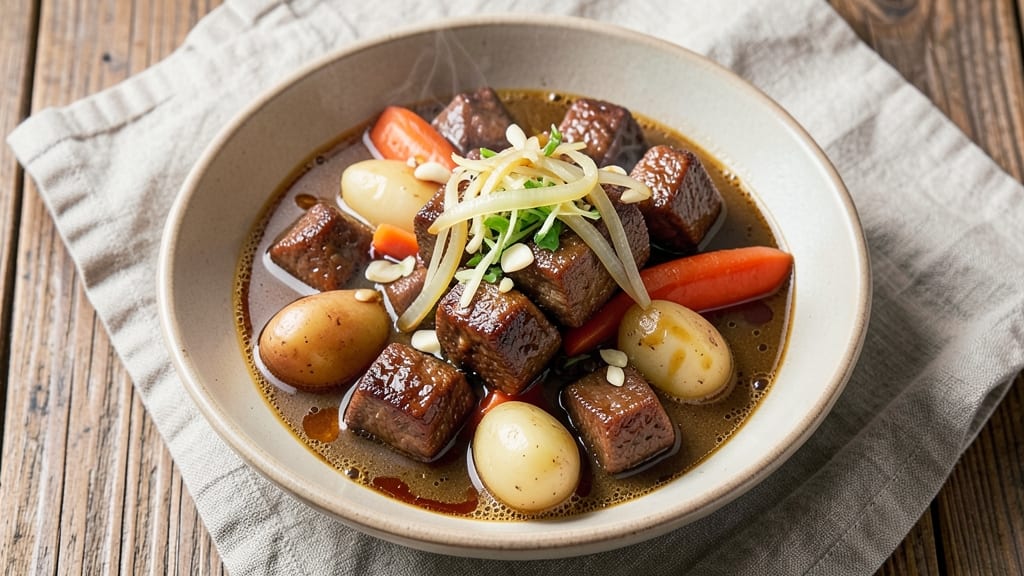
This Asian beef stew recipe transforms tough cuts into melt-in-your-mouth perfection using your slow cooker's gentle heat and aromatic spices. The key lies in balancing sweet, savory, and umami flavors—ginger, garlic, soy, and star anise create a rich broth that tenderizes the beef while infusing every bite with depth.
What starts as simple ingredients becomes a restaurant-worthy meal with minimal effort, ideal for busy weeknights or meal prep.
The beauty of slow cooking is how it develops complex flavors over time—6-8 hours on low lets the beef break down into fork-tender strands while vegetables absorb the fragrant broth.
Unlike quick-cooked stews, this method builds layers of taste, turning basic ingredients into something extraordinary. The aromatic roots (carrots, potatoes) soak up the sauce, making every spoonful hearty and satisfying.
By the time you're ready to serve, you'll have a steaming bowl of tender beef, velvety broth, and perfectly softened vegetables—all ready to pair with steamed rice or crusty bread.
The slow-cooker technique ensures foolproof results, even for beginners, while the Asian-inspired seasoning delivers bold, comforting flavors that feel both familiar and exciting.
This recipe isn't just about convenience; it's about transforming a simple slow cooker into a flavor powerhouse. The umami-rich broth, caramelized edges, and tender meat make it a meal worth repeating—whether you're feeding a family or prepping leftovers for the week. Let's get started on creating this deeply satisfying stew.
Ingredients for asian beef stew recipe slow cooker
Transform tough beef into restaurant-quality tenderness with these umami-rich ingredients.
| Ingredient | Amount | Notes |
|---|---|---|
| Chuck Roast 🥩 | 2 lb | Well-marbled, cut into 1-inch cubes |
| Yellow Onion 🧅 | 1 whole | Large, sliced into half-moons |
| Carrots 🥕 | 4 medium | Whole, peeled, cut into chunks |
| Russet Potatoes 🥔 | 4 medium | Whole, peeled, cut into chunks |
| Fresh Ginger 🌿 | 1 inch | Peeled, sliced into thin coins |
| Garlic Cloves 🧄 | 6 cloves | Peeled, smashed |
| Star Anise 🌟 | 2 whole | Lightly crushed |
| Low-Sodium Soy Sauce 🥢 | ½ cup | Kikkoman preferred |
| Honey 🍯 | 2 tbsp | Pure, high-quality |
| Beef Broth 💧 | 2 cups | Low-sodium, homemade or store-bought |
| Sesame Oil 🫒 | 1 tbsp | Toasted, for finishing |
| Diamond Crystal Kosher Salt 🧂 | 1 tsp | Adjust to taste |
| Ground Black Pepper 🌶️ | ½ tsp | Freshly ground |
| Fresh Green Onions 🧅 | 2 whole | Sliced, for garnish |
The chuck roast is non-negotiable for this recipe—its marbling ensures melt-in-your-mouth texture. Costco or Walmart typically carry high-quality chuck roasts in the meat department, often pre-cut into convenient cubes. Look for deep red color and visible fat marbling; avoid cuts with grayish edges. The ginger and star anise are flavor anchors—Whole Foods or Asian markets carry fresh ginger with vibrant color, while star anise pods should be whole and plump. For soy sauce, Kikkoman is the gold standard, though any low-sodium brand works.
No star anise? Two cinnamon sticks provide a similar aromatic depth, though with a slightly sweeter note. Substituting soy sauce? Coconut aminos at 1:1 ratio maintains umami without sodium overload. Fresh ginger unavailable? Ground ginger at half the amount works in a pinch, though it lacks the bright zing. The potatoes and carrots can be swapped for sweet potatoes or parsnips—just adjust cooking time by 30 minutes. For extra richness, add 1/4 cup red wine with the broth, though it's not required.
This stew tastes even better the next day as flavors meld. Store leftovers in an airtight container for up to 5 days in the fridge or 3 months frozen. Portion into single servings for easy reheating—simply cover with a splash of water or broth and warm on low for 2-3 hours. The sesame oil should be added at the very end to preserve its delicate aroma, so store it separately until serving. For meal prep, double the recipe and freeze half—perfect for busy weeknights.
Why You'll Love This Recipe
- I’ll be real: most stews turn into sad, watery meals by day three. Not this one. The flavors actually get better as it sits, and the beef stays juicy. Pack it for lunch or reheat it for dinner—it’s the kind of dish that makes you feel like you’re feeding a crowd without the stress.
- Dump-and-Go Magic: I swear, this is the kind of recipe where you can toss everything in the slow cooker while you’re still debating what to watch on TV. The chuck roast practically melts into tender, pull-apart perfection, and the onions caramelize just enough to make the whole house smell like a cozy restaurant—no chopping skills required.
- Umami Bomb: That ginger? Oh, it’s chef’s kiss when it simmers into the beef. The slow cooker lets it develop this deep, warm complexity that turns simple ingredients into something dangerously addictive. The potatoes soak up all the savory broth while staying fluffy—like a hug in a bowl.
- Leftovers That Don’t Suck: I’ll be real: most stews turn into sad, watery meals by day three. Not this one. The flavors actually get better as it sits, and the beef stays juicy. Pack it for lunch or reheat it for dinner—it’s the kind of dish that makes you feel like you’re feeding a crowd without the stress.
Step-by-step instructions for Asian beef stew in the slow cooker
Aromatic roots and tender beef meld together over hours of gentle heat.
Sear the Chuck Roast for Deep Flavor
Heat a large skillet over medium-high heat until hot. Add the 2 lb chuck roast cut into 1-inch cubes and sear for 3-4 minutes per side until deeply browned. This step develops a rich crust that carries through the stew. Work in batches if needed to avoid overcrowding the pan.
Remove the beef and set aside. You'll notice the pan releases a caramelized aroma—this is the foundation of your stew's umami depth. Don't wipe out the browned bits; they'll form the base of your sauce later. Keep the skillet on the burner for the next step.
Build the Aromatic Base
In the same skillet, add 1 whole yellow onion sliced into half-moons and cook for 4-5 minutes until softened and lightly golden. Add 4 medium carrots cut into chunks and 4 medium russet potatoes cut into chunks, cooking for another 3 minutes to let them begin to soften.
Stir in 1 inch fresh ginger sliced into thin coins, 6 cloves garlic smashed, and 2 whole star anise lightly crushed. Cook for 1 minute until fragrant—you'll smell the warm spices and garlic releasing their oils. This aromatic base forms the flavor backbone of your stew.
Combine Everything in the Slow Cooker
Transfer the seared beef and vegetable mixture to your slow cooker. Add 0.5 cup low-sodium soy sauce, 2 tbsp honey, 2 cups beef broth, 1 tsp diamond crystal kosher salt, and 0.5 tsp ground black pepper. Stir gently to combine, making sure the liquid covers all ingredients.
Place the lid on the slow cooker and cook on low heat for 7-8 hours or until the beef is fork-tender and easily pulls apart. The low heat ensures the beef remains juicy while the vegetables soften perfectly. The stew should have a rich, glossy sauce that coats the back of a spoon.
Finish with Sesame Oil and Garnish
Remove the stew from the slow cooker and discard the star anise. Stir in 1 tbsp toasted sesame oil and adjust seasoning if needed. The sesame oil adds a nutty depth that complements the umami flavors. Taste and add more soy sauce or salt if necessary—this is where you fine-tune the balance.
Ladle the stew into bowls and garnish with 2 whole fresh green onions sliced. Serve immediately with steamed rice to soak up the flavorful sauce. The beef should be tender enough to pull apart with a fork, and the vegetables should be fork-tender with just a slight bite.
Pro Tips For Making Asian Beef Stew Recipe Slow Cooker
- SEAR THE CHUCK FIRST: Don’t skip browning that roast—even if you’re using a slow cooker. The Maillard reaction from a 3-4 minute sear in a hot pan with oil and soy sauce adds depth the slow cooker alone can’t match. I used to skip this, and the stew always tasted flat until I tried it.
- GRATE THAT GINGER FINE: Fresh ginger loses its punch when left in chunks. Use the smallest holes on your grater or a microplane to get a paste-like texture—this way, it dissolves into the broth instead of sitting as bitter pockets. (Yes, even if it looks like you’re overdoing it, you’re not.)
- POTATOES LAST 3 HOURS: Add the russets with the carrots and onions, but move them to the top of the slow cooker for the final 3 hours. This keeps them from turning to mush while letting them soak up the flavor at the end. I learned this after serving sad, waterlogged potatoes—now they’re always creamy but hold their shape.
- USE COLD WATER START: Fill the slow cooker with cold water or broth, not hot. The temperature shock helps tenderize the chuck faster and prevents the edges from drying out. I was skeptical until I tried it—now my stew is fork-tender every time, even with cheaper cuts.
Wine and beer pairings for these flavors
Crisp White Wine
For this rich, umami-packed stew, I recommend a dry Riesling from Germany or a Sauvignon Blanc from New Zealand. The bright acidity and citrus notes cut through the deep flavors while enhancing the ginger and garlic.
A 2019 Dr. Loosen Blue Slate Riesling is my go-to—its crisp finish balances the stew's sweet-savory profile beautifully. 🍷
Light-Bodied Red
If you prefer red wine, opt for a Pinot Noir with subtle fruitiness. Look for a Willamette Valley or Oregon bottle—these regions produce elegant, low-tannin wines that won’t overpower the dish. I love Domaine Serene for its silky texture and red berry notes, which complement the beef’s tenderness without competing.
Asian-Inspired Beer
A Japanese lager like Asahi Super Dry or Sapporo pairs perfectly with the stew’s umami depth. The crisp, clean finish cleanses your palate between bites, while the light carbonation enhances the dish’s aromatic complexity.
For a craft option, try a Belgian witbier—the coriander and citrus notes mirror the ginger and soy sauce flavors. 🍺
Non-Alcoholic Options
For a refreshing non-alcoholic pairing, serve sparkling yuzu soda (like San Pellegrino Aranciata Rossa) or hibiscus iced tea with a squeeze of lime. The effervescence and tartness contrast the stew’s richness, while the floral notes of hibiscus echo the star anise’s aroma.
A ginger beer like Feather also works—its spicy kick aligns with the dish’s bold flavors.
Serving Temperature
Chill your wine or beer to 45-50°F for optimal enjoyment. The cool temperature highlights the stew’s warm, spiced notes, creating a satisfying contrast. If using beer, serve it slightly colder (40-45°F) to emphasize its crispness.
For non-alcoholic options, keep them well-chilled (38-42°F) to maintain their refreshing qualities. ✨
Nutrition facts
Frequently asked questions
Can I use a different cut of beef instead of chuck roast?
Yes, but chuck roast is ideal for its marbling and tenderness. Brisket or short ribs work well too—just increase cooking time by 1-2 hours on low. For leaner cuts like sirloin, reduce cooking time to 5-6 hours to prevent drying out. The key is choosing a flavorful, moderately fatty cut that benefits from slow cooking.
How do I adjust this recipe for a 6-quart slow cooker?
Double all ingredients and cook for 8-9 hours on low. The extra volume ensures the beef stays submerged in liquid, preventing overcooking. Use two star anise pods and increase soy sauce to 1 cup. For best results, sear the beef in batches to avoid overcrowding the skillet.
What if my slow cooker only has a "high" setting?
Cook on high for 4-5 hours instead, but check the beef at 3 hours—it may finish sooner. The higher heat speeds up cooking, so monitor closely to avoid overcooking the vegetables. For extra insurance, add 1/2 cup extra broth to prevent drying.
Can I make this stew in an Instant Pot?
Sear the beef as directed, then add all ingredients and cook on high pressure for 40 minutes. Release pressure naturally, then stir in sesame oil. The Instant Pot version cooks 3-4 hours faster than a slow cooker but requires more attention to prevent overcooking.
Why does my stew taste too salty?
Low-sodium broth and soy sauce can still accumulate salt. Dilute with 1/2 cup extra water or broth and simmer uncovered for 10 minutes to evaporate excess. Alternatively, add 1/4 cup unsalted tomato paste to balance flavors. Always taste as you go—adjusting at the end is trickier!