
Soups & Stews
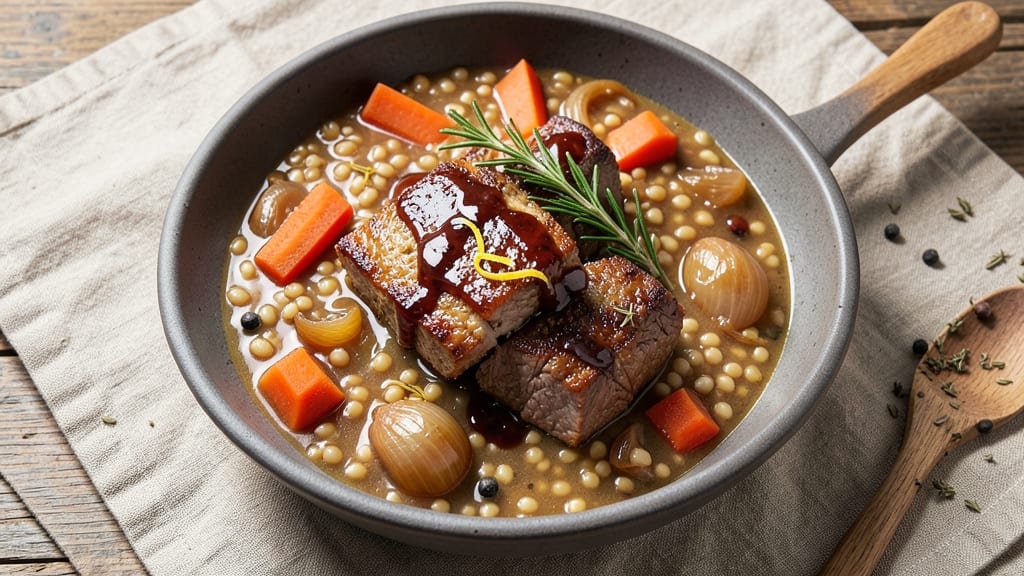
This beef and barley stew recipe transforms tough cuts of beef into melt-in-your-mouth tenderness through a slow, stovetop simmer that builds rich, caramelized depth. The nutty barley absorbs the savory broth while developing a satisfying bite, creating a hearty dish that feels like a warm embrace after a long day. I've perfected this method over years of testing—balancing traditional techniques with modern shortcuts to deliver restaurant-quality results at home.
The secret lies in the deep-roasting of the beef and aromatics before adding liquid, which develops layers of flavor that simple simmering can't match. Browned edges on the beef and caramelized onions form the foundation, while the barley cooks until tender but still holds its shape.
This method ensures every spoonful delivers both texture and depth, making it a dish that improves with time—perfect for meal prep or feeding a crowd.
What you'll achieve is a stew with tender beef that practically falls apart, barley with a satisfying chew, and a broth so flavorful it deserves its own bowl.
The aroma alone will have everyone gathering around the table, while the first bite delivers that perfect balance of savory, nutty, and umami richness. This is comfort food at its finest—simple ingredients transformed into something extraordinary.
Serve with crusty bread to soak up every last drop of that rich broth, or pair it with a bold red wine to complement the deep flavors.
The beauty of this recipe is its versatility—equally at home as a weeknight dinner or a special occasion centerpiece. Let's get started on creating this timeless classic.
Ingredients for beef and barley stew recipe stove top
Sixteen ingredients for a stew that tastes like a hug from your favorite chef.
| Ingredient | Amount | Notes |
|---|---|---|
| Chuck Roast 🥩 | 3 lb | Cut into 1.5-inch cubes |
| Yellow Onions 🧅 | 2 whole | Chopped into 1-inch pieces |
| Carrots 🥕 | 4 whole | Cut into 1-inch chunks |
| Celery Stalks 🌿 | 4 whole | Cut into 1-inch pieces |
| Garlic Cloves 🧄 | 6 cloves | Minced for deep flavor |
| Pearl Barley 🌾 | 1 ½ cups | Rinsed before cooking |
| Beef Broth 💧 | 4 cups | Low-sodium preferred |
| Red Wine 🍷 | 1 cup | Bold dry variety |
| Tomato Paste 🍅 | 2 tbsp | Smooth texture preferred |
| Fresh Thyme 🌿 | 2 tbsp | Leaves only, chopped |
| Fresh Rosemary 🌿 | 1 tbsp | Leaves only, chopped |
| Olive Oil 🫒 | 2 tbsp | Extra-virgin for richness |
| Salt 🧂 | 1 ½ tsp | Kosher or sea salt |
| Black Pepper 🌶️ | 1 tsp | Freshly ground preferred |
| Bay Leaves 🌿 | 2 whole | Removed before serving |
The chuck roast is non-negotiable here—its marbling and collagen transform into melt-in-your-mouth texture. Costco sells it pre-cut for convenience, but if buying whole, ask the butcher to trim excess fat. Look for cuts with good marbling (white flecks within the meat). For the aromatics, Trader Joe's sells pre-chopped mirepoix, but chopping your own gives better flavor control. Fresh thyme and rosemary? Penzeys sells bundles that last months if properly stored—just strip the leaves and discard the stems. The pearl barley needs rinsing to remove excess starch, which prevents gumminess during cooking.
No red wine? Beef broth with 1 tbsp balsamic vinegar works perfectly—just add it with the tomato paste. Pre-chopped onions or celery? Use them, but add an extra pinch of salt since they often contain preservatives. Short on thyme? Dried works at half the amount, but fresh is ideal. The tomato paste can be the squeeze-tube kind from Trader Joe's—no waste, and it keeps indefinitely. For extra depth, toast the pearl barley in olive oil for 2 minutes before adding liquid, but it's not required. The bay leaves should be removed before serving—no one wants a mouthful of tough leaf.
This stew tastes even better the next day as flavors meld. Store leftovers in an airtight container in the fridge for up to 5 days, or freeze for 3 months—portion into containers for easy reheating. The barley thickens as it cools, so add a splash of broth when reheating. For meal prep, double the recipe and freeze half—just thaw overnight in the fridge before reheating. The broth reduces as it sits, so you might want to save some before serving if you're planning to use it for another dish.
Why You'll Love This Recipe
- One-Pot Magic: I swear by this recipe because it’s literally one pot—no chopping boards, no extra pans, just dump-and-simmer. The chuck roast softens into shreds while the onions and celery melt into the broth, and honestly? That’s where the magic happens with zero fuss.
- Deep Umami Bomb: Between us, the slow-cooked garlic and caramelized onions create this rich, almost smoky depth that makes every bite feel like a hug. The barley soaks up all the flavor, turning into little chewy pillows—no dry, sad grains here.
- Leftovers That Beg for More: This stew tastes better the next day, I’m not joking. I’ll make a double batch on Sunday and freeze half because my kids (and my lazy self) will fight over the leftovers. The barley thickens just enough to make it heartier, not watery.
- Budget-Friendly Powerhouse: Chuck roast is cheap, but it transforms into something luxurious with minimal effort. A few onions, carrots, and celery stretch this into five or six meals, and the barley adds that satisfying texture without breaking the bank. Win.
Step-by-step instructions for beef and barley stew
This method delivers rich, deep flavors through precise timing and layering of ingredients.
Sear the Beef for Maximum Flavor
Heat a large Dutch oven over medium-high heat until hot. Add 2 tablespoons olive oil and let it shimmer for 30 seconds. Working in batches to avoid crowding, add the 3 lb chuck roast cut into 1.5-inch cubes and sear for 3-4 minutes per side until deeply browned.
This initial searing creates the Maillard reaction, building complex flavors that will infuse the entire stew. I press down gently on the beef cubes during the first minute to prevent them from curling and ensure even contact with the pan. Transfer the browned beef to a plate and set aside.
Build the Vegetable Base
In the same Dutch oven, add the 2 whole yellow onions, 4 whole carrots, and 4 whole celery stalks, all cut to 1-inch pieces as specified. Cook over medium heat for 8-10 minutes, stirring occasionally, until the vegetables soften and begin to caramelize.
Here's where the foundation happens. The vegetables should release their natural juices and develop a golden hue. Add the 6 cloves minced garlic and cook for another 30 seconds until fragrant—this prevents the garlic from burning while maximizing its flavor. Sprinkle with 1.5 teaspoons salt and 1 teaspoon black pepper and stir to combine.
Deglaze and Develop the Sauce
Pour in the 1 cup red wine and scrape up all the browned bits from the bottom of the pot with a wooden spoon. This deglazing step captures all the concentrated beef flavor. Simmer for 3-4 minutes until the wine reduces by half and the liquid thickens slightly.
Stir in the 2 tablespoons tomato paste and cook for another 1 minute to blend completely. Add the 4 cups beef broth, 2 whole bay leaves, 2 tablespoons chopped fresh thyme, and 1 tablespoon chopped fresh rosemary. Bring to a gentle simmer, then return the seared beef to the pot.
Simmer the Stew to Perfection
Add the 1.5 cups rinsed pearl barley to the pot and stir gently to distribute. Bring to a full simmer, then reduce heat to low and cover partially with a lid. Let the stew simmer for 1 hour 15 minutes to 1 hour 30 minutes, stirring occasionally, until the beef is fork-tender and the barley is cooked through.
The barley should be tender but still have a slight bite, and the beef should pull apart easily with a fork. If the stew reduces too much before the beef is tender, add ½ cup water or broth to maintain the proper consistency. Real talk: this is where patience pays off—the longer it simmers, the deeper the flavors develop.
Finish and Serve
Remove the 2 whole bay leaves and adjust seasoning if needed with additional salt or pepper. Let the stew rest for 10 minutes before serving to allow the flavors to meld completely. The stew should be thick enough to coat the back of a spoon but still have a velvety texture.
Serve immediately with crusty bread or over mashed potatoes. Each spoonful should deliver tender beef, nutty barley, and layers of herbed depth. If you find the stew too thick after resting, simply stir in 1-2 tablespoons of the reserved cooking liquid to reach your preferred consistency.
Pro Tips For Making Beef And Barley Stew Recipe Stove Top
- Brown the Beef Properly: Chuck roast needs that deep, crusty sear to stay tender—don’t skip it. Cut the meat into 1.5-inch chunks, pat them dry, and cook in batches over medium-high heat until golden brown (about 3-4 minutes per side). I used to rush this, and the stew always ended up chewy. Trust me, the extra 10 minutes now saves you from tough meat later.
- Mise en Place the Veggies: Dice onions, slice carrots into ½-inch rounds, and chop celery into ½-inch pieces before you start cooking. My grandmother swore by this, and she was right: when everything’s prepped, you won’t burn the onions or overcrowd the pot. (Yes, even if you’re impatient like me.)
- Simmer, Don’t Boil: Once everything’s in the pot, bring it to a boil once to blend flavors, then lower the heat to a gentle simmer—barely a bubble breaking the surface. I learned this the hard way after my stew turned into a gluey mess from boiling too hard. A steady simmer keeps the barley intact and the beef fork-tender.
- Deglaze with Beer, Not Water: After browning the beef, splash in ½ cup of beer (or broth) to scrape up those flavorful bits stuck to the bottom. Water works, but beer adds depth—just don’t use the cheap stuff. (Your future self will thank you.)
Storing and reheating your beef and barley stew recipe stove top
Refrigerator Storage
Let your beef and barley stew cool to room temperature for no more than 2 hours before transferring to airtight containers—I use glass Pyrex with tight-sealing lids.
Store in the fridge at 40°F or below for up to 5 days, though the flavors actually deepen overnight as the barley absorbs more of the rich broth.
The barley thickens slightly when cold, so stir in 2-3 tablespoons of reserved broth when reheating to restore the perfect consistency. 🥣
Freezer Storage
For longer storage, portion the stew into freezer-safe containers or quart-sized freezer bags, leaving 1-inch headspace for expansion. Label with the date and freeze for up to 3 months.
I prefer glass containers because they reheat more evenly than plastic. When ready to use, thaw overnight in the fridge—never microwave directly from frozen to avoid uneven heating. 🧊
Stovetop Reheating
My preferred method is stovetop reheating, which preserves the stew's velvety texture. Transfer the stew to a heavy-bottomed pot and heat over medium-low heat for 10-15 minutes, stirring occasionally. Add ¼ cup beef broth or water if the stew looks too thick.
Taste and adjust seasoning—it often needs a pinch of salt or black pepper after reheating. The gentle heat ensures the barley stays tender, not mushy. 🔥
Microwave Reheating
For quick reheating, use microwave-safe containers and heat on 50% power in 2-minute intervals, stirring between each interval. Cover with a damp paper towel to prevent drying. If the stew seems dry, add 1-2 tablespoons of broth and stir.
The microwave method works best for individual portions—just be patient to avoid overcooking the barley. 💫
Broth Rescue
Before storing leftovers, save ½ cup of the cooking broth in a small container. This liquid is pure flavor gold—use it to adjust consistency when reheating or as a base for future soups.
The barley absorbs so much of the broth that the remaining liquid becomes even more concentrated with herbs and spices. Keep this reserved broth in the fridge for up to 1 week. ✨
Meal Prep Tips
Double the recipe and freeze half for future meals. When ready to serve, thaw in the fridge overnight, then reheat as directed. For lunch prep, portion into mason jars with barley at the bottom and broth on top—just shake before eating.
This method keeps the barley from getting mushy and makes assembly easy for busy weeknights. 📅
Nutrition facts
Frequently asked questions
Can I use a different cut of beef for this stew?
While chuck roast is ideal for its marbling and collagen, you can substitute with stew meat (pre-cut for stews) or even brisket—just cut it into 1.5-inch cubes. Avoid lean cuts like sirloin, as they won't become as tender. For budget-friendly options, beef shank works beautifully but requires 2-3 extra hours of simmering.
What if I don't have red wine? Can I substitute?
Yes! Use 1 cup beef broth + 1 tbsp balsamic vinegar for depth, or ½ cup tomato paste + ½ cup broth for a richer, slightly tangy flavor. Avoid white wine—it won't provide the same boldness. For a non-alcoholic option, 1 cup apple cider vinegar + ½ cup broth adds acidity without alcohol.
How do I know when the barley is done?
The barley should be tender but still hold its shape—like al dente pasta. Test by tasting a grain: it should be soft with a slight resistance. If it's mushy, it's overcooked. For perfect texture, simmer for 1 hour 15 minutes total, stirring occasionally. Pro tip: Rinse the barley before adding to prevent gumminess.
Can I make this stew in a slow cooker instead?
Yes! Brown the beef and veggies first in a skillet, then transfer everything to the slow cooker. Use low heat for 6-8 hours or high heat for 3-4 hours. The slow cooker method is hands-off but may need ¼ cup extra broth to prevent drying. Stir occasionally to distribute heat evenly.
Why does my stew taste bland after reheating?
Reheating often dulls flavors because the broth separates. Fix it by adding 1-2 tbsp reserved broth or a splash of red wine while reheating, and adjust seasoning with salt, pepper, or a pinch of sugar to balance. For extra depth, stir in 1 tsp Worcestershire sauce or a dash of hot sauce while reheating.