
Soups & Stews
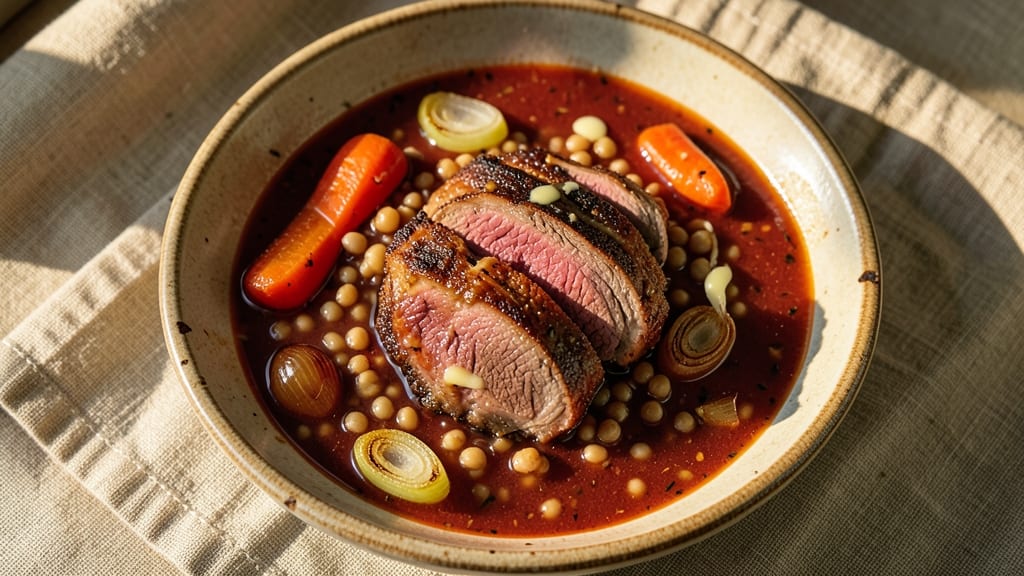
This beef and pearl barley stew recipe delivers the kind of slow-simmered comfort that transforms tough cuts into melt-in-your-mouth tenderness. The nutty depth of pearl barley absorbs rich beef flavors while creating a naturally thick, hearty broth—no thickening agents required. I developed this version after years of experimenting with stews that either fell apart or tasted too thin, and this is the one that finally checks every box.
The secret lies in two key techniques: browning the beef in batches to develop deep flavor, and simmering low and slow for hours to let the barley soften just enough to hold its shape while soaking up all that savory goodness.
This isn't your grandmother's stew—it's restaurant-quality with a home-cooked soul, perfect for chilly evenings when you crave something substantial that warms you from the inside out.
By the time you're done, you'll have a pot of golden-brown stew where tender beef chunks float in a velvety broth, each bite offering perfect balance between meaty richness and barley's satisfying chew.
The aroma alone will have everyone gathering around your table, and the leftovers—if there are any—taste even better the next day as flavors meld further.
Pair with crusty bread for soaking up every last drop, or serve alongside roasted root vegetables for a complete meal. The beauty of this recipe is its flexibility—it's hearty enough for a family dinner but elegant enough for company. Let's get cooking!
Ingredients for beef and pearl barley stew
Six hearty ingredients build the base—beef, barley, and aromatics that transform into restaurant-quality comfort.
| Ingredient | Amount | Notes |
|---|---|---|
| Chuck Roast 🥩 | 2 ½ lb | Well-marbled for flavor |
| Pearl Barley 🌾 | 1 ½ cups | Uncooked, rinsed well |
| Yellow Onion 🧅 | 1 whole | Diced, medium size |
| Carrots 🥕 | 3 medium | Peeled, cut into chunks |
| Garlic Cloves 🧄 | 4 cloves | Peeled, smashed slightly |
| Beef Broth 💧 | 6 cups | Low-sodium preferred |
| Dry Red Wine 🍷 | 1 cup | Bold variety like Cabernet |
| Tomato Paste 🍅 | 2 tbsp | Smooth, not chunky |
| Fresh Thyme 🌿 | 2 sprigs | Leaves only, stems removed |
| Bay Leaves 🍃 | 2 whole | Dried, standard size |
| Allspice Berries 🌶️ | 4 whole | Crushed lightly |
| Salt 🧂 | 1 ½ tsp | Kosher or sea salt |
| Black Pepper 🌶️ | 1 tsp | Freshly ground preferred |
| Olive Oil 🫒 | 2 tbsp | For browning beef |
The chuck roast is your flavor anchor—look for good marbling at the butcher counter or pre-cut section. Costco and Kroger usually have it pre-cubed, which saves time, but if you're buying a whole roast, ask for the chuck section. Pearl barley needs no soaking, but rinsing removes excess starch so it doesn't get gummy. For the wine, any bold red works—Cabernet, Merlot, whatever's open. The tomato paste? Grab the smooth kind from the canned goods aisle, not the chunky. Thyme and bay leaves are pantry staples, but if yours smell musty, toss them—fresh is always better.
No red wine? Beef broth with a splash of balsamic works just as well. Short on thyme? Dried at one-third the amount gets you close. The carrots can be baby carrots if that's what's in the fridge, but peeling and chunking makes them cook faster. Allspice berries are non-negotiable here—they add that warm, earthy depth. If you can't find them, cinnamon plus cloves at half the amount mimics it. The beef broth should be low-sodium unless you're adding extra salt later. And trust me on the kosher salt—it dissolves better than table salt.
This stew gets better overnight, so make a double batch if you can. Store in the fridge for 4-5 days or freeze for 3 months—the flavors deepen with time. I like to portion mine into containers so lunches are sorted for the week. The barley holds up beautifully to reheating, though you might need to add a splash of broth if it's too thick. Leftovers taste even better the next day, honestly.
Why You'll Love This Recipe
- One-Pot Magic: I swear by this recipe because it’s actually one-pot—no extra bowls or pans to wash. Just toss everything in, let it simmer, and the chuck roast practically melts into tender perfection while the barley softens right in the broth. (Yes, even if you’re the kind of cook who burns water.)
- Deep Umami Love: That chuck roast? It gets so tender it falls apart at the touch of a fork, and the barley soaks up all the rich, savory broth—like a cozy hug in a bowl. Honestly, the way the garlic and onions caramelize at the bottom? Pure flavor gold.
- Meal Prep MVP: This stew tastes better the next day, which means I make a double batch on Sundays and reheat portions all week. My kids grab it straight from the fridge for lunch, and my partner takes it to work—no sad leftovers here.
- Budget Beef Boost: A chuck roast is cheap, but it feeds like a steak—juicy, hearty, and way more impressive than takeout. Plus, barley’s a pantry staple, so you’re not breaking the bank for fancy ingredients. Dinner solved, wallet happy.
Step-by-step instructions for beef and pearl barley stew
Let's create a hearty stew that balances tender beef with nutty barley and deep, aromatic flavors.
Brown the Chuck Roast for Maximum Flavor
Heat a large Dutch oven over medium-high heat and add the 2 tablespoons olive oil. Once hot, carefully place the 2.5 lb chuck roast in the pot, working in batches if needed to avoid crowding. Let it brown undisturbed for 5-7 minutes per side until deep golden brown with crispy edges. This step develops that rich, meaty flavor that forms the stew's foundation.
As it browns, you'll see beautiful caramelized crusts forming. If the pan gets too crowded, remove some pieces to a plate and continue browning. Don't rush this - patience here means better flavor later. Once properly browned, remove the roast and set it aside on a plate.
Sauté Vegetables and Aromatics
In the same Dutch oven, add the 1 whole yellow onion and 3 medium carrots cut into chunks. Cook for 5-7 minutes until the onions soften and begin to caramelize slightly. Add the 4 cloves garlic cloves (smashed) and cook for another 30 seconds until fragrant.
Here's where the magic happens - you want those onions to develop some color. If they're sticking too much, add a splash of beef broth to deglaze. The vegetables should be tender but still hold their shape. This forms the flavor base that will infuse into the stew.
Build the Flavor Foundation
Return the browned chuck roast to the pot. Stir in the 2 tablespoons tomato paste and cook for 1 minute to toast the edges slightly. Pour in the 1 cup dry red wine and scrape up any browned bits from the bottom - this is called deglazing and captures all that meaty flavor.
Let the wine simmer for 2-3 minutes until it reduces by about half. Add the 6 cups beef broth, 1.5 teaspoons salt, and 1 teaspoon black pepper. Bring to a gentle boil, then reduce heat to maintain a simmer - you're looking for small bubbles with occasional gentle rises.
Add Barley and Spices for Depth
Add the 1.5 cups pearl barley (rinsed), 2 sprigs fresh thyme, 2 whole bay leaves, and 4 whole allspice berries (lightly crushed). Stir gently to combine. The barley should be fully submerged - if not, add a little more broth. The spices will infuse the stew with their distinctive flavors while the barley absorbs the rich liquid.
Return the chuck roast to the pot, making sure it's fully submerged. Cover and let it simmer gently for 1.5 hours. This slow cooking time is crucial - it breaks down the tough beef fibers while allowing the barley to absorb all the flavorful liquid.
Finish and Adjust Seasoning
After 1.5 hours, check the doneness of the beef. It should be fork-tender, falling apart easily when pierced with a fork. If needed, continue simmering for another 30-60 minutes until fully tender. Remove the bay leaves and thyme sprigs - they've done their job.
Taste the stew and adjust seasoning if needed. You might need a bit more salt, especially if you used low-sodium broth. The stew should be rich and flavorful with a perfect balance of meaty, nutty, and slightly tangy notes from the wine. Serve hot with crusty bread to soak up all that delicious liquid.
Pro Tips For Making Beef And Pearl Barley Stew
- SEAR THE CHUCK FIRST: That roast won’t develop depth of flavor if you just toss it in cold. Pat it very dry with paper towels, then hit it with high heat in a heavy pot—you’re aiming for a deep brown crust before you even think about adding liquid. I used to rush this, and the stew always tasted flat until I learned to let the meat brown properly.
- SOAK THE BARLEY 30 MINUTES: Pearl barley’s the stubborn one here—skip soaking and it’ll stay rock-hard no matter how long you simmer. Toss it in cold water for 30 minutes before adding to the pot, then drain. This isn’t just about texture; it cuts cooking time by 20 minutes and makes the barley actually tender, not mushy.
- DON’T CROWD THE ONIONS: Thinly sliced onions pile up fast, and if they’re packed in, they’ll steam instead of caramelize. Work in batches—sauté half until golden, pull them out, then add the rest. The first batch will be sweet and jammy, which is where the real flavor lives. (Yes, even if you’re impatient like me.)
- ADD CARROTS LATE: Tossing carrots in at the start means they’ll turn to mush while the beef gets tender. Instead, wait until the roast’s halfway done—about 1.5 hours in—and add them with the garlic. They’ll soften just enough to be fork-tender without disappearing into the stew. Sounds weird, but it works.
Troubleshooting this dish
Meat Not Tenderizing
If your beef isn't becoming fork-tender after 2 hours, you're likely simmering at too high a temperature. The ideal range is 190-200°F internal temperature—use an instant-read thermometer to check.
I recommend adding 1 cup extra broth and covering with a lid to create a steam bath. This gentle environment helps break down collagen without toughening the meat further. 🌡️
Barley Too Mushy
Overcooked barley loses its satisfying bite and turns to mush. To prevent this, remove the stew from heat when the beef reaches 200°F internal temperature, then let it rest 15-20 minutes off the heat.
The residual heat will finish cooking the barley without overdoing it. If you're worried about doneness, check the barley at 1 hour—it should be tender but still hold its shape.
Broth Too Thin
A watery stew usually means insufficient reduction time. After adding all ingredients, simmer uncovered for 10-15 minutes to evaporate excess liquid. For extra thickness, mash 2-3 barley grains with a fork and stir back in—the released starch naturally thickens the broth.
If you're short on time, add 1 tablespoon cornstarch mixed with 2 tablespoons water as a last resort.
Bland Flavor Profile
Lackluster taste often comes from skipping the browning step or using low-quality broth. Always brown the beef in batches for maximum Maillard reaction, and use a homemade or high-quality store-bought broth (like Pacific Foods or Kitchen Basics).
For an instant boost, add 1 teaspoon fish sauce or ½ teaspoon smoked paprika during the final 30 minutes of cooking.
Barley Not Absorbing Liquid
If your barley stays hard and the broth remains thin, you likely added it too late. Barley needs at least 45 minutes of simmering to soften properly. For better absorption, add the barley 30 minutes before the beef reaches doneness.
If the broth is still thin, reduce heat to low and simmer uncovered for 10 minutes to thicken naturally.
Allspice Too Strong
Whole allspice berries can dominate if overused. To mellow their flavor, remove them after 1 hour of simmering. For a more balanced taste, toast the berries in a dry pan for 30 seconds before adding to the stew.
If you accidentally used too much, add 1 teaspoon honey or brown sugar to balance the spice with subtle sweetness.
Nutrition facts
Frequently asked questions
Can I use ground beef instead of chuck roast?
Ground beef works differently—it cooks much faster and won't develop the same rich, tender texture. For this recipe, stick with chuck roast or another tough cut like short ribs. If you're set on ground beef, use it for a quick 30-minute beef barley soup instead, adding extra broth to compensate for the faster cooking time.
How do I store leftovers?
Store in an airtight container in the fridge for 4-5 days or freeze for 3 months. The flavors actually improve overnight! When reheating, add a splash of broth to prevent drying out. Leftovers make fantastic lunches—just portion into containers for easy grab-and-go meals.
What if I don't have red wine?
No problem! Substitute with 1 cup beef broth plus 1 tablespoon balsamic vinegar for depth. Alternatively, use ½ cup apple cider vinegar for tanginess. The key is balancing acidity—just avoid skipping the liquid entirely, as it helps tenderize the beef.
Can I make this stew in a slow cooker?
Brown the beef first, then transfer everything to a 6-quart slow cooker. Cook on low for 7-8 hours or high for 4-5 hours. The slow cooker's gentle heat works perfectly for tenderizing the beef and softening the barley. Just check the barley at 4 hours to avoid mushiness.
Why does the barley need rinsing?
Rinsing removes excess starch that can make the barley gummy or gluey. Pearl barley naturally contains surface starch, and skipping this step often results in a stew that's too thick or pasty. Give it a quick rinse under cold water before adding to the pot—it takes 30 seconds and makes a huge difference!