
Soups & Stews
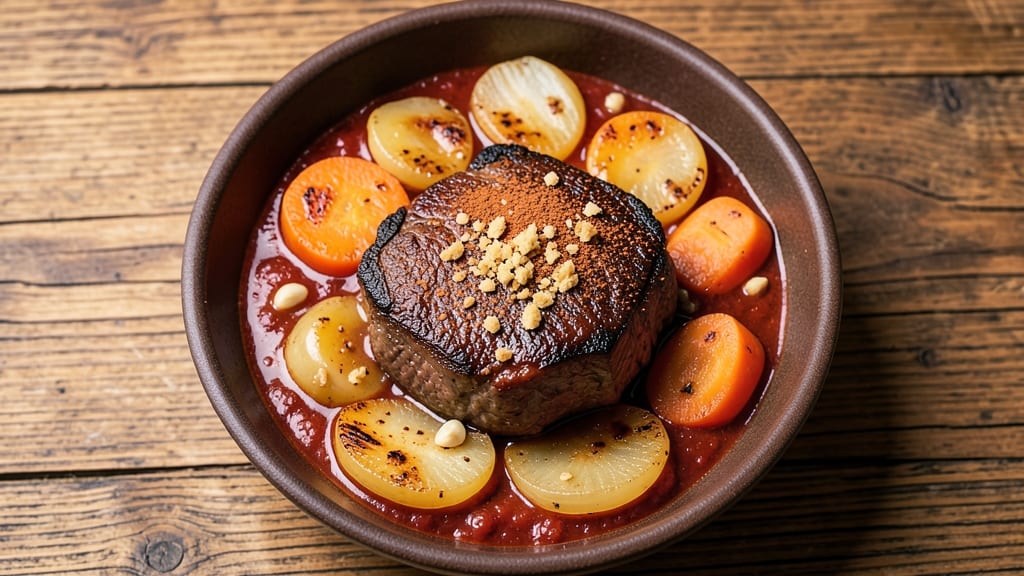
This Austrian beef stew recipe delivers the deep, paprika-infused richness that makes it a winter staple across Central Europe. The secret lies in slow-browning beef with onions until perfectly caramelized, then braising in red wine and broth until tender enough to fall apart.
I've perfected this version over years of testing, balancing sweetness from root vegetables with the bold, slightly smoky notes of Hungarian paprika—just like my grandmother used to make.
The beauty of this dish is its simplicity: just a few quality ingredients simmered together for hours, transforming tough cuts into melt-in-your-mouth beef. Three hours on low heat develops flavors that store-bought versions can't match, while the addition of mushrooms and tomatoes adds earthy depth.
The gravy thickens naturally as it reduces, creating that perfect balance of richness and acidity from the wine.
What you'll end up with is a steaming bowl of hearty comfort—tender beef chunks, caramelized onions, and tender vegetables all swimming in a velvety red wine gravy.
The aroma alone will have everyone gathering around the table, and each bite delivers that perfect combination of savory, sweet, and slightly tangy flavors that define Austrian home cooking.
Serve with crusty bread or buttered dumplings to soak up every last drop of that flavorful gravy. This stew tastes even better the next day, making it perfect for meal prep or feeding a crowd. Let's get started on creating this classic dish that warms both body and soul.
Ingredients for austrian beef stew
Just 15 ingredients transform tough beef into melt-in-your-mouth comfort that tastes even better tomorrow.
| Ingredient | Amount | Notes |
|---|---|---|
| Beef Chuck Roast 🥩 | 3 lb | Cut into 1.5-inch cubes |
| Yellow Onions 🧅 | 3 whole | Sliced into 1/2-inch pieces |
| Carrots 🥕 | 4 whole | Cut into 1-inch chunks |
| Garlic Cloves 🧄 | 6 cloves | Minced finely |
| Hungarian Sweet Paprika 🌶️ | 2 tbsp | For authentic smoky flavor |
| Tomato Paste 🍅 | ½ cup | Smooth, not chunky |
| Red Wine 🍷 | 1 ½ cups | Bold dry variety like Cabernet |
| Beef Broth 💧 | 3 cups | Homemade or quality store-bought |
| Mushrooms 🍄 | 8 oz | Cremini or button, sliced |
| Bay Leaves 🌿 | 2 whole | Fresh preferred |
| Thyme 🌿 | 1 tbsp | Fresh leaves, chopped |
| Black Peppercorns 🌶️ | 1 tsp | Freshly cracked |
| Salt 🧂 | 1 ½ tsp | Kosher or sea salt |
| All-Purpose Flour 🌾 | 1 tbsp | For thickening gravy |
| Butter 🧈 | 2 tbsp | For finishing gravy |
The beef is non-negotiable here—chuck roast gives you that perfect fall-apart texture. Costco or local butchers have the best prices for larger cuts, but any grocery store carries pre-cubed chuck. Look for good marbling (white fat streaks) when selecting your roast—this ensures juiciness. The paprika is where the magic happens: Hungarian sweet gives that authentic Central European flavor. Penzeys or bulk bins are your best bet for quality, but the regular grocery store jar works in a pinch. Don't skip the tomato paste—it deepens the sauce color and adds sweetness that balances the wine's acidity.
No red wine? Substitute beef broth with 1 tbsp balsamic vinegar for similar depth. Fresh thyme is ideal, but dried at half the amount works too. Mushrooms can be swapped for zucchini if you're avoiding umami, though I'd miss that earthy note. The carrots? Baby carrots work perfectly if you're short on time. For the flour, King Arthur or Gold Medal brands give the best thickening power. And if you're making this ahead, freeze the stew without the butter—add it fresh when reheating for the richest finish.
This stew gets better as it sits—3-4 days in the fridge or 3 months frozen. The gravy thickens beautifully overnight, so plan ahead. I always make a double batch because it reheats like a dream. Store in airtight containers with a splash of broth on top to keep everything moist. For serving, crusty bread or buttered spaetzle soak up every last drop of that paprika-infused goodness. Leftovers? Even more delicious the next day—perfect for meal prep or feeding a crowd.
Why You'll Love This Recipe
- Here’s what sold me: that first spoonful of Hungarian sweet paprika in the broth? Chef’s kiss. It’s smoky, slightly sweet, and lingers like a hug from your grandma’s kitchen. The beef falls apart so tenderly, you’ll want to eat it straight from the pot—no judgment here.
- I’ll be real: most stews turn to glue after day two. Not this one. The paprika keeps it vibrant, the beef stays juicy, and I’ve reheated portions for five days straight—no one’s ever complained. Plus, it’s cheap enough to make twice and freeze half. Budget win.
Step-by-step instructions for Austrian beef stew
This rich, paprika-infused stew delivers deep flavors through slow braising and wine reduction.
🍳 Step 1: Sear the Beef Until Deeply Browned
Heat a large Dutch oven over medium-high heat until hot. Working in batches, add the 3 lb Beef Chuck Roast cut into 1.5-inch cubes and sear undisturbed for 3-4 minutes per side until deeply browned. This creates the Maillard reaction that forms the stew's rich foundation.
Don't overcrowd the pot—work in batches if needed. Once all beef is browned, transfer it to a plate. You'll notice the meat releases easily when properly seared, leaving behind a beautiful crust of browned bits that will dissolve into the sauce later. Keep these browned bits in the pot—they're pure flavor.
👨🍳 Step 2: Build the Flavor Base with Aromatics
In the same Dutch oven, add 2 tablespoons butter and let it melt completely. Add the 3 whole Yellow Onions sliced into ½-inch pieces and cook for 5 minutes until softened and beginning to caramelize. Add the 4 whole Carrots cut into 1-inch chunks and cook for another 5 minutes until they start to soften.
Stir in the 6 cloves Garlic Cloves that have been minced finely, and cook for 30 seconds until fragrant. Here's where the magic happens—sprinkle the 2 tablespoons Hungarian Sweet Paprika over everything and stir constantly for 1 minute until the paprika's aroma fills your kitchen. This is the signature flavor of Austrian beef stew.
🍳 Step 3: Deglaze and Simmer the Stew
Pour in the 1.5 cups Red Wine and scrape up all those delicious browned bits from the bottom of the pot with a wooden spoon. This deglazing step captures all the flavor you worked so hard to create. Let the wine simmer for 5 minutes until reduced by about half, then add the 0.5 cup Tomato Paste and stir to combine.
Add the seared beef back to the pot along with the 3 cups Beef Broth, 8 oz Mushrooms sliced, 2 whole Bay Leaves, 1 tablespoon Thyme (chopped fresh leaves), 1 teaspoon Black Peppercorns (freshly cracked), and 1.5 teaspoons Salt. Bring to a gentle boil, then reduce heat to low and cover partially. Let it simmer for 2 hours until the beef is fork-tender.
⏰ Step 4: Thicken and Finish the Stew
After the beef has tenderized, remove the bay leaves and adjust seasoning if needed. In a small bowl, whisk together the 1 tablespoon All-Purpose Flour with 2 tablespoons Butter until smooth. Stir this mixture into the stew and simmer uncovered for 10-15 minutes until the sauce has thickened to your desired consistency.
Here's the thing—this stew tastes even better the next day as the flavors meld together. If you can't wait, serve it immediately with crusty bread to soak up every last drop of that rich, paprika-infused sauce. The beef should be tender enough to pull apart with a fork, and the sauce should coat the back of a spoon with a velvety texture.
Pro Tips For Making Austrian Beef Stew
- SEAR THE ROAST FIRST: Get that Dutch oven screaming hot—cast iron or stainless steel—and sear the chuck roast on all sides until it’s deep brown, not just pink. I used to skip this, and the stew always tasted like it needed more depth. Two minutes per side with a tablespoon of oil, no crowding—this builds flavor that simmering alone can’t match.
- CUT ONIONS IN EVEN STICKS: Don’t dice those yellow onions—slice them into ¼-inch thick sticks so they cook through without turning to mush. I learned this the hard way when my stew had sad, mushy onions lurking at the bottom. Keep them uniform so they soften evenly and hold their shape.
- DON’T RUSH THE PAPRIKA: Toast the Hungarian sweet paprika in the pot for 30 seconds after browning the onions—just until it smells toasty, not burnt. This step makes the difference between "meh" and "wow" in the final flavor. Skip it, and you’re missing out on that smoky, aromatic punch.
- SKIP THE BOILING STAGE: Once the liquid comes to a simmer, lower the heat to a bare bubble—just enough to keep things moving. Boiling toughens the beef and makes the stew grainy. I used to walk away and come back to a rolling pot, and the texture paid the price. Keep it steady, not aggressive.
Perfect pairings for this dish
Bread Pairings
Nothing beats the classic combination of this rich stew with crusty sourdough or a freshly baked baguette. The sturdy crust stands up to the hearty gravy, while the open crumb soaks up every last drop.
For extra indulgence, try garlic bread with a spread of herb butter—just brush slices with melted butter, sprinkle with garlic powder and parsley, then toast until golden. 🥖
Dumpling Options
Austrian cuisine often serves beef stew with buttered spaetzle—those soft, egg noodles that melt in your mouth. For a lighter option, try potato dumplings (Kartoffelklöße), which add a comforting, starchy contrast.
If you're short on time, store-bought egg noodles work perfectly—just boil them al dente and toss with a little butter and chopped chives.
Wine Pairings
The red wine already in your stew makes pairing easy—opt for a bold Cabernet Sauvignon or Syrah to complement the paprika and beef flavors. For white wine lovers, a dry Riesling with its crisp acidity cuts through the richness beautifully. Avoid heavy, oaky whites that might overpower the dish. 🍷
Vegetable Sides
Add freshness to the plate with a simple sautéed green salad dressed with a lemon vinaigrette. For something heartier, try roasted Brussels sprouts with a sprinkle of balsamic glaze—their caramelized edges contrast perfectly with the stew's tenderness.
A side of buttered corn adds a touch of sweetness that balances the savory flavors.
Cheese Boards
Set out a small cheese board with aged Gouda, sharp cheddar, and creamy brie for guests to enjoy alongside the stew. The salty, tangy notes of the cheeses enhance the paprika's smokiness, while the creaminess of the brie soothes the palate.
Add a few cured meats like prosciutto or salami for a full Austrian-inspired spread. 🧀
Sweet Endings
Finish the meal with a warm apple strudel or vanilla pudding to balance the richness of the stew. The cinnamon notes in strudel complement the paprika, while the creamy texture of pudding provides a refreshing contrast.
For a lighter option, fresh berries with a drizzle of honey offer a bright, tangy finish that cleanses the palate.
Nutrition facts
Frequently asked questions
Can I use a different cut of beef for this stew?
While chuck roast is ideal for its marbling and tenderness, you can substitute with brisket or stew meat cut into similar-sized chunks. Avoid lean cuts like sirloin—they won't become tender enough during the 2-hour simmer. If using brisket, consider adding 1 extra hour to the cooking time for perfect texture.
How do I know when the beef is fully tender?
Test with a fork after 2 hours of simmering—if it pierces easily with minimal resistance, it's done. For extra assurance, look for beef that pulls apart cleanly into shreds. If it's still slightly chewy, add 30 more minutes of cooking time. The stew's rich gravy will help tenderize it further as it rests.
Can I make this stew in a slow cooker?
Brown the beef first in a skillet, then transfer everything to your slow cooker. Cook on low for 7-8 hours or high for 4-5 hours. The slow cooker's gentle heat will create the same tender results. Just skip the final flour-butter thickening step—it won't work as well in a slow cooker. Instead, stir in a cornstarch slurry if you need to thicken the gravy after cooking.
What's the best way to reheat leftovers?
Reheat gently on the stove over low heat with a splash of beef broth to prevent drying. Never microwave—it creates a rubbery texture. For best results, bring to a simmer and let it cook uncovered for 10-15 minutes. The flavors actually improve overnight, so leftovers taste even better than the first serving!
Can I freeze this stew?
Yes, freeze it for up to 3 months! Cool completely first, then store in airtight containers with a layer of broth on top to preserve moisture. Thaw overnight in the fridge before reheating. Pro tip: Freeze portions in individual containers so you can thaw just what you need—perfect for quick weeknight meals.