
Main Courses
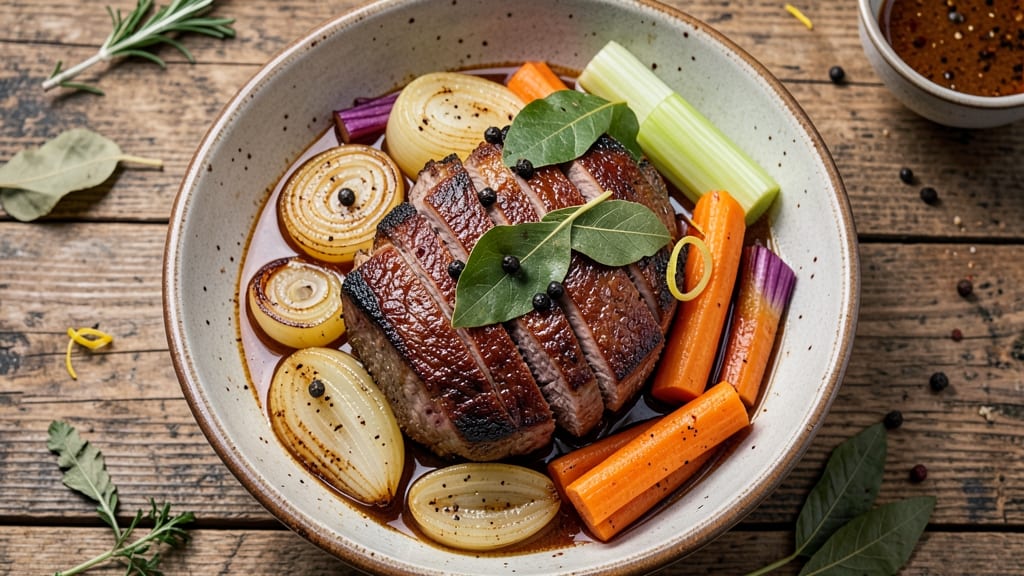
This authentic beef on weck recipe brings German-American tradition to your table with slow-braised beef, tender sauerkraut, and crispy bread crowns—just like your Oma used to make. The secret lies in the 24-hour brine, which transforms tough beef into melt-in-your-mouth perfection while building deep, savory flavor.
This isn’t just dinner; it’s a celebration of heritage, where every bite carries the warmth of family gatherings and Sunday feasts.
The magic happens in layers: a brined beef roast roasted to golden-brown tenderness, sauerkraut simmered until it’s just soft enough to hold its shape, and crispy bread crowns that add a satisfying crunch.
The brining process—equal parts salt, sugar, and spices—is non-negotiable for authenticity, ensuring the beef stays juicy and packed with flavor. This isn’t a shortcut dish; it’s a labor of love that rewards patience with restaurant-quality results at home.
What you’ll end up with is a hearty, comforting meal that feels like a hug on a plate—rich, savory, and perfectly balanced. The beef falls apart with the slightest fork pressure, the sauerkraut adds a tangy contrast, and the bread crowns provide the ideal textural finish.
Serve with a dollop of mustard-based gravy or a side of horseradish for that classic German kick. This is the kind of dish that turns ordinary weeknights into special occasions.
Perfect for family dinners, holiday feasts, or when you’re craving a meal that feels like home. The brining can be done the night before, so all you’ll need to focus on when the day arrives is roasting and simmering. Let’s get started on creating a dish that tastes like tradition.
Ingredients for authentic beef on weck
Sixteen ingredients for a dish that feels like home—where brining transforms tough beef into melt-in-your-mouth perfection.
| Ingredient | Amount | Notes |
|---|---|---|
| Beef Chuck Roast 🥩 | 4 lb | Center-cut for even cooking |
| Yellow Onions 🧅 | 2 whole | Medium size, sliced into wedges |
| Carrots 🥕 | 4 whole | Medium size, peeled and halved |
| Celery Stalks 🥬 | 4 whole | Trimmed, cut into 2-inch pieces |
| Fresh Bay Leaves 🌿 | 2 whole | Dried if fresh unavailable |
| Black Peppercorns 🌶️ | 1 tbsp | Crushed, not ground |
| Allspice Berries 🌶️ | 4 whole | Lightly crushed |
| Cloves 🌿 | 4 whole | Whole, lightly crushed |
| Salt 🧂 | 1 ½ cups | Diamond Crystal kosher salt |
| Granulated Sugar 🍚 | 1 ½ cups | White sugar preferred |
| Fresh Sauerkraut 🥬 | 2 cups | Unsweetened, packed |
| German Mustard 🍯 | ½ cup | Dijon-style preferred |
| Bread Dough 🍞 | 2 cups | Store-bought or homemade |
| Sesame Seeds 🌾 | 2 tbsp | For bread crowns |
| Olive Oil 🫒 | ¼ cup | For bread brushing |
The beef roast is the heart of this dish, and chuck roast is non-negotiable—it’s got the connective tissue for that signature fall-apart tenderness. Costco or Whole Foods usually carry the best cuts, but your local butcher can trim it to size if needed. Look for good marbling and avoid anything with a gamey smell. The brining mix—salt, sugar, and spices—is where the magic happens. Use Diamond Crystal kosher salt (it dissolves better than table salt), and if you can’t find allspice berries, a pinch of ground allspice will work in a pinch. For the vegetables, organic carrots and celery from the farmers market have the best flavor, but store-bought will do. The bay leaves? Fresh if you’ve got them, dried if not—just double the amount.
No fresh sauerkraut? Store-bought unsweetened is fine, but avoid the sweetened kind—it’ll throw off the balance. Running low on mustard? Dijon plus a splash of apple cider vinegar gets you close. The bread dough can be store-bought (like Pillsbury dough) or homemade—just make sure it’s good and sticky. For the bread crowns, sesame seeds are traditional, but poppy seeds or everything bagel seasoning work too. The olive oil for brushing? Any good-quality extra-virgin will do—just don’t skimp on the brushing. And if you’re feeling fancy, a sprinkle of coarse sea salt on the bread crowns before baking adds that restaurant touch.
The brined beef stays fresh for 3 days in the fridge, but it’s best used within 24 hours. Sauerkraut keeps for weeks in the fridge once opened, so buy extra if you’re hosting. The bread dough can be prepped a day ahead—just store it in the fridge until ready to shape. Once assembled, the whole dish reheats beautifully—just cover it with foil and warm in the oven for 20 minutes at 350°F. Leftovers? They’re even better the next day, so plan accordingly. This is the kind of meal that tastes better as the flavors meld overnight.
Why You'll Love This Recipe
- One-Pot Magic: I swear by this—just toss the beef, onions, carrots, and celery into a Dutch oven with broth, add a couple of bay leaves, and let it slow-cook. No chopping like a fine chef, no fussing over layers. The veggies soften into the meat, and honestly? That’s where the real flavor hides.
- Deep Umami Bomb: The beef chuck roast gets so tender it practically melts, while the onions caramelize just enough to add that sweet, savory punch. Between us, the bay leaves? They’re the secret—they infuse the whole pot with this earthy warmth that makes it taste like a Sunday dinner, even if it’s a Tuesday.
- Leftovers That Save Me: This recipe makes way more than I need, and that’s perfect. The beef stays juicy for days, and I can slice it for sandwiches, toss it into salads, or even freeze half for when I’m too tired to cook. My freezer’s full of these little lifesavers.
- Budget-Friendly Feast: A chuck roast is cheap, and the veggies stretch the meal without breaking the bank. I’ve fed six people for under $20, and everyone leaves happy—no one’s picking at their plate or asking for takeout. That’s a win in my book.
Step-by-step instructions for authentic beef on weck
This German classic delivers deep, savory flavors and satisfying texture through precise technique.
Prepare the Spiced Brine and Season the Beef
In a large mixing bowl, combine the 1.5 cups salt, 1.5 cups granulated sugar, 1 tbsp crushed black peppercorns, 4 lightly crushed allspice berries, and 4 lightly crushed cloves. Mix thoroughly until the salt and sugar dissolve completely, creating a coarse, aromatic brine.
Place the 4 lb beef chuck roast in a large resealable plastic bag and pour the spice mixture over it. Massage the brine into the meat, ensuring it coats every surface. This step is crucial—it infuses flavor deep into the beef and helps tenderize it during the long braise. Seal the bag and refrigerate for at least 12 hours, turning occasionally to ensure even coating.
Sear and Layer the Braising Ingredients
Remove the beef from the brine, letting any excess liquid drip off. Pat it dry with paper towels—this ensures a proper sear. Heat 0.25 cup olive oil in a large Dutch oven over medium-high heat. Once shimmering, sear the beef on all sides until deeply browned, about 5-7 minutes per side. Remove the beef and set it aside.
In the same Dutch oven, add the 2 whole yellow onions (sliced into wedges), 4 whole carrots (peeled and halved), and 4 whole celery stalks (cut into 2-inch pieces). Sear for 5 minutes until softened and lightly caramelized. Add the 2 whole fresh bay leaves and stir briefly to release their aroma. This aromatic base forms the flavor foundation for the braise.
Braise the Beef Low and Slow
Return the seared beef to the Dutch oven, placing it on top of the vegetables. Pour in enough water to come about halfway up the beef—roughly 4 cups. Bring to a gentle simmer over medium-low heat, then reduce to a bare bubble. Cover tightly with a lid and transfer to a 300°F oven for 3 hours. This low-and-slow approach ensures the beef becomes fork-tender without drying out.
After 3 hours, check the beef for tenderness. It should be easily pierced with a fork. If not, continue braising for another 30-60 minutes. The sauce should be rich and slightly reduced, with the vegetables softened but still holding their shape. This is where patience pays off—rushing leads to tough meat.
Finish with Sauerkraut and Mustard
Remove the beef from the Dutch oven and set it aside on a cutting board. Skim any excess fat from the surface of the braising liquid, then stir in the 2 cups fresh sauerkraut and 0.5 cup German mustard. Simmer uncovered over medium heat for 10-15 minutes, stirring occasionally, until the sauerkraut softens and the sauce thickens slightly. The mustard adds a tangy depth that balances the richness of the beef.
Return the beef to the Dutch oven and let it soak in the sauce for 10 minutes, allowing it to absorb the flavors. The beef should be fork-tender with a deep, caramelized crust. If the sauce is too thin, simmer it uncovered for another 5-10 minutes to reduce it to a glossy consistency. This step is essential for achieving that authentic, velvety texture.
Shape and Bake the Crispy Bread Crowns
While the beef finishes, preheat the oven to 375°F. Divide the 2 cups bread dough into 6 equal portions (about ⅓ cup each). Roll each portion into a 1-inch-thick oval and place it on a parchment-lined baking sheet. Brush the tops with a little olive oil and sprinkle with sesame seeds. Bake for 15-18 minutes until golden brown and crispy.
Slice the beef into ½-inch thick slices and serve immediately with the bread crowns on the side. The contrast of the tender, spiced beef with the crispy, sesame-topped bread is what makes this dish so satisfying. Each bite delivers layers of flavor—savory, tangy, and slightly sweet—all wrapped in a comforting, hearty package.
Pro Tips For Making Authentic Beef On Weck
- Sear the Chuck Hard: I learned this the hard way—skipping the deep sear means flavor gets lost in the slow cook. Get your Dutch oven screaming hot (5-7 minutes on high), then let that roast sit undisturbed for 4-5 minutes until it’s got a dark brown crust. The Maillard reaction here isn’t optional; it’s what turns bland beef into something worth braising.
- Slice Onions Like a Pro: Thin, even slices—no big chunks—so they cook through without turning to mush. I used to chop them haphazardly, and they’d either stay raw or dissolve into the broth. Aim for ⅛-inch slices, and don’t skip the quick sear in the same pot afterward. That’s where the sweetness comes from.
- Don’t Crowd the Pot: Toss in the carrots and celery first, then the onions in a single layer. If you pile everything in at once, the veggies steam instead of caramelizing, and the broth stays cloudy. Packing it tight also means the beef won’t develop that rich, browned fond at the bottom—where half the flavor lives.
- Use Two Bay Leaves: One feels like a token effort. Two—one tucked into the meat, one in the veggies—ensure that earthy aroma infuses everything evenly. I was skeptical until I tried it: the difference between "meh" and "this tastes like a German grandma’s kitchen" is that second leaf. Trust me on this.
Wine and beer pairings for these flavors
German Beer Pairings
This hearty dish pairs beautifully with classic German beers that complement its rich, savory flavors. A dark bock like Paulaner Salvator (7% ABV) stands out with its malty sweetness and roasted notes, cutting through the beef’s richness while enhancing the sauerkraut’s tang.
For a lighter option, try a Helles lager such as Augustiner Helles (5.5% ABV)—its crisp, clean finish balances the dish’s depth without overpowering it. 🍺
Red Wine Alternatives
If beer isn’t your preference, a German Spätburgunder (Pinot Noir) from the Mosel or Baden regions (like Dr. Loosen Blue Slate) offers a perfect match. Its bright acidity and red fruit notes harmonize with the beef’s caramelized crust and the sauerkraut’s tang.
For something bolder, a Syrah with earthy undertones (such as Dr. J. Lohr Seven Hills) stands up to the dish’s heartiness. 🍷
Mustard-Based Gravy Pairing
The dish’s mustard-infused sauce calls for a pairing that mirrors its bold, tangy profile. A German Riesling Kabinett (off-dry) from the Rheingau (like Joh. Jos. Prüm) adds a citrusy contrast that cleanses the palate between rich bites.
Alternatively, a Belgian witbier (such as Hoegaarden) brings a refreshing, slightly spiced brightness that complements the mustard’s kick. 🍯
Non-Alcoholic Options
For a non-alcoholic choice, a sparkling apple cider (like Martinelli’s) with its crisp acidity and hint of sweetness mirrors the dish’s balance of savory and tangy flavors.
Alternatively, a ginger beer (such as Feather’s) adds a spicy lift that pairs surprisingly well with the beef’s depth and the bread crowns’ crunch. 🍎
Regional German Pairings
In its homeland, Beef on Weck is often served with Rheinischer Altbier (a dark, malty ale from Düsseldorf) or Kölsch (a light, crisp beer from Cologne). These regional styles reflect the dish’s German roots—Altbier’s roasted malt notes echo the beef’s caramelization, while Kölsch’s brightness cuts through the richness.
For a true taste of tradition, seek out these local brews. 🏰
Nutrition facts
Frequently asked questions
What makes the brining process so important for authentic beef on weck?
The 24-hour brine is the secret to tender, flavorful beef. The mix of salt, sugar, and spices (like allspice and cloves) penetrates deep into the meat, breaking down tough fibers while adding complex flavors. Skipping this step results in dry, bland beef—it’s non-negotiable for authenticity!
Can I use a different cut of beef instead of chuck roast?
Chuck roast is ideal because its connective tissue dissolves during braising, creating melt-in-your-mouth texture. You could use a flank steak or brisket, but they won’t yield the same fall-apart tenderness. For best results, stick with chuck—it’s what traditional recipes call for!
How do I know when the beef is fully tender?
After 3 hours of braising, pierce the beef with a fork—if it slides in easily with no resistance, it’s ready. If not, add another 30-60 minutes. The sauce should also coat the back of a spoon and be slightly thickened. Patience here makes all the difference!
What’s the best way to reheat leftovers?
Cover the dish with foil and warm in a 300°F oven for 20-30 minutes to preserve moisture. Avoid microwaving—it turns the beef rubbery. Leftovers actually taste better the next day as flavors meld!
Can I make the bread crowns ahead of time?
Yes! Shape them up to 24 hours ahead, wrap tightly in plastic, and refrigerate. Bake straight from the fridge (add 2-3 extra minutes at 375°F). They’ll stay crispy if reheated briefly in the oven. Perfect for stress-free serving!