
Main Courses
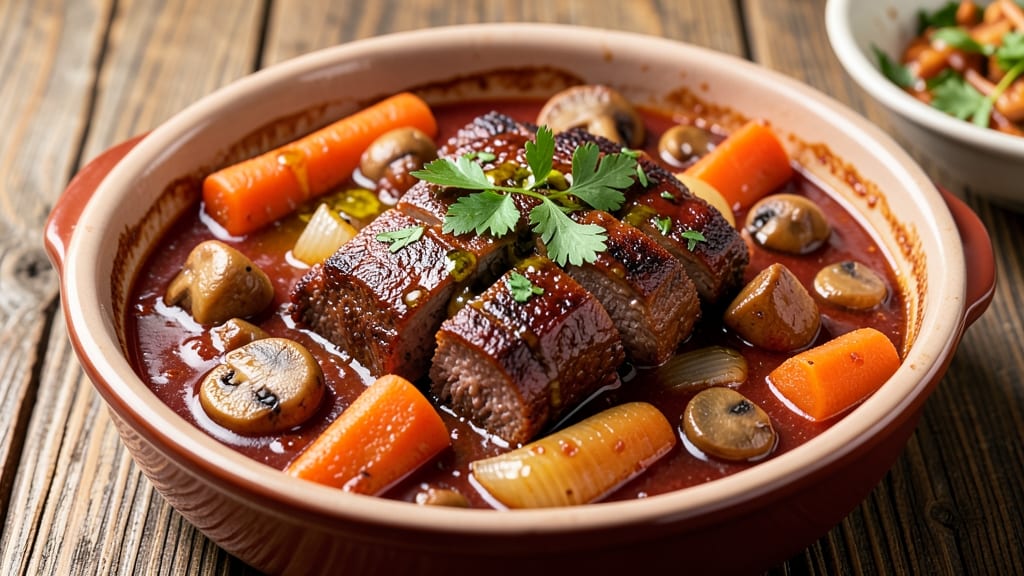
This authentic beef ragu recipe transforms simple ingredients into a rich, velvety braise that tastes like a home-cooked Italian masterpiece. The secret lies in slow simmering—where beef, red wine, and mushrooms meld into a deeply flavorful sauce that clings to every strand of pasta or spoonful of polenta.
I’ve perfected this method over years of testing, ensuring the balance of acidity, umami, and tenderness that defines classic ragu.
The process begins with browning beef chuck in batches for maximum flavor, then deglazing with red wine to create a fragrant base. Mushrooms and aromatics deepen the sauce, while tomatoes add brightness without overpowering.
The key is patience—slow cooking for at least 3 hours breaks down the meat into fork-tender perfection, while the sauce reduces to a thick, glossy consistency. This isn’t just a dish; it’s a labor of love that rewards with restaurant-quality results.
What you’ll end up with is a deep red wine braise so rich and complex it feels like a hug in a bowl. The beef is tender enough to melt, the mushrooms add earthy depth, and the wine’s acidity cuts through the richness for every bite.
Serve it over al dente pappardelle, creamy polenta, or crusty bread to soak up every last drop of that luxurious sauce. This is comfort food at its finest—authentic, hearty, and impossible to resist.
Leftovers taste even better the next day, making it ideal for meal prep or feeding a crowd. The beauty of ragu lies in its versatility: use it as a pasta sauce, a filling for lasagna, or a standalone dish with a sprinkle of parmesan.
Let’s get cooking—your table is about to get an upgrade.
Ingredients for authentic beef ragu
Sixteen ingredients for a ragu that tastes like Nonna's kitchen—rich, slow-cooked, and full of Italian soul.
| Ingredient | Amount | Notes |
|---|---|---|
| Beef Chuck Roast 🥩 | 2 ½ lb | Cut into 1-inch cubes, trimmed of fat |
| Dry Red Wine 🍷 | 1 ½ cups | Bold variety like Cabernet Sauvignon |
| Creamy Mushrooms 🍄 | 16 oz | Mixed variety, sliced (8 oz cremini, 8 oz shiitake) |
| Tomato Paste 🍅 | ½ cup | San Marzano preferred, no water added |
| Onion 🧅 | 1 whole | Yellow or red, finely diced |
| Carrot 🥕 | 2 whole | Medium, peeled and chopped |
| Celery Stalks 🌿 | 3 whole | Trimmed, chopped (soffritto base) |
| Garlic Cloves 🧄 | 6 cloves | Peeled, smashed (not minced) |
| Beef Broth 💧 | 2 cups | Homemade or high-quality store-bought |
| Olive Oil 🫒 | ¼ cup | Extra-virgin, for browning |
| Tomatoes 🍅 | 1 can | San Marzano crushed, 28 oz |
| Fresh Rosemary 🌿 | ¼ cup | Chopped, plus sprigs for garnish |
| Fresh Thyme 🌿 | ¼ cup | Leaves only, stems removed |
| Salt 🧂 | 2 tsp | Diamond Crystal kosher, adjust to taste |
| Black Peppercorns 🌶️ | 1 tsp | Freshly cracked, coarse grind |
The beef is non-negotiable here—chuck roast gives you that melt-in-your-mouth texture. Grab it from the butcher counter if possible; pre-cubed from the grocery store works too, just trim any big fat chunks. Costco or Whole Foods often carry excellent cuts. For the mushrooms, shiitake adds depth while cremini keeps it classic. Buy them fresh if you can—they hold up better than pre-sliced. The red wine? Cabernet Sauvignon or Chianti work best; whatever's open in your fridge will do in a pinch. Just avoid anything too sweet.
No red wine? Beef broth with 2 tbsp balsamic vinegar mimics the acidity. Mushrooms too expensive? Substitute with extra onions and carrots—they'll add sweetness to balance the richness. Fresh herbs wilt fast, so dried thyme at one-third the amount works if needed. The tomato paste is your secret weapon—San Marzano is worth the splurge—but any quality paste will work. For the soffritto (onion-carrot-celery), chop everything uniformly so it cooks evenly. No food processor? A sharp knife and patience will get you there.
This ragu tastes even better the next day—3-4 days in the fridge or 3 months frozen. Portion it into containers before freezing for easy reheating. The sauce thickens as it cools, so add a splash of broth when reheating. Garnish with fresh rosemary before serving—it adds that final touch of authenticity. Leftovers make killer pasta the next night or stuffed into lasagna layers. Trust me, you'll want to make this twice.
Why You'll Love This Recipe
- Slow-Simmer Magic: I swear by that first hour of hands-off cooking—just the beef and wine bubbling until it’s fall-apart tender. No stirring, no stress, just the rich flavors melding into something deep and satisfying.
- Wine-Infused Richness: That splash of dry red wine? It’s not just for show—it cuts through the richness while adding layers of earthy depth. The mushrooms soak it up like a sponge, turning every bite into a little flavor explosion.
- Leftovers That Shine: Between us, this ragu gets better the next day. I double the batch on Sundays, freeze half, and pull it out for lazy weeknights when I’m too tired to cook. (Yes, even on a Tuesday night.)
- Budget-Friendly Luxury: Beef chuck roast is affordable, and a little goes a long way—especially when you stretch it with onions, tomato paste, and mushrooms. It’s the kind of meal that feels fancy without breaking the bank.
Step-by-step instructions for authentic beef ragu
This is how you build deep, rich flavor—slow, patient work that pays off with every forkful.
Sear the Beef Until Deeply Browned
Heat the 0.25 cup olive oil in a heavy Dutch oven over medium-high heat until shimmering. Pat the 2.5 lb beef chuck roast completely dry with paper towels—this ensures maximum browning. Working in batches if needed, add the beef cubes and sear undisturbed for 3-4 minutes per side until deeply browned with a crust forming.
Don't rush this step. The Maillard reaction happening here creates the foundation of flavor. If the pan gets too crowded, reduce heat slightly to prevent steaming. Once browned, transfer the beef to a plate and set aside. You'll want to keep those beautiful browned bits in the pan for the sauce.
Build the Soffritto Base
In the same Dutch oven, add the 1 whole onion, 2 whole carrot, and 3 whole celery stalks all chopped. Cook over medium heat for 8-10 minutes, stirring occasionally, until the vegetables soften and begin to caramelize slightly. Add the 6 cloves garlic cloves and cook for another 30 seconds until fragrant.
This aromatic base, called soffritto, forms the flavor foundation of your ragu. The slow cooking allows the vegetables to break down and release their natural sweetness. If the vegetables start to stick, add a splash of dry red wine to deglaze and scrape up those flavorful browned bits from the bottom of the pan.
Deglaze with Wine and Add Mushrooms
Pour in the 1.5 cups dry red wine and scrape vigorously with a wooden spoon to release all the browned bits from the bottom of the pan. Let the wine simmer for 3-4 minutes until reduced by half. Add the 16 oz creamy mushrooms and cook for 5-6 minutes until they release their moisture and begin to soften.
The wine reduction intensifies the flavor while the mushrooms add their umami richness. Here's the thing—don't skip the wine reduction. It's what transforms a simple braise into an authentic ragu. If you're using a particularly tannic wine, you might want to strain it first to avoid bitterness in your sauce.
Simmer with Tomatoes and Herbs
Stir in the 0.5 cup tomato paste, 1 can tomatoes, 2 cups beef broth, 0.25 cup fresh rosemary, 0.25 cup fresh thyme, 2 tsp salt, and 1 tsp black peppercorns. Return the beef to the pot, making sure it's well-coated in the sauce. Bring to a gentle simmer, then reduce heat to medium-low and cover partially.
Now comes the waiting game. Simmer for 2-2.5 hours, stirring occasionally, until the beef is fork-tender and the sauce has thickened. The key here is patience—this is where all the flavors meld together. If the sauce gets too thick, add a splash of water or broth to maintain the right consistency. You're aiming for a sauce that coats the back of a spoon but still flows easily.
Rest and Serve
Once the beef is tender and the sauce has reached your desired consistency, remove the pot from heat and let the ragu rest for 15-20 minutes. This resting period allows the flavors to fully develop and the sauce to thicken slightly. Taste and adjust seasoning if needed—you might want to add a pinch more salt or a splash of wine to balance the flavors.
Serve the beef ragu over al dente pappardelle or fresh egg noodles, spooning generous amounts of the rich sauce over the top. Garnish with additional chopped fresh rosemary for a pop of color and freshness. The ragu should be deeply flavorful with a perfect balance of wine, tomato, and herb notes, and the beef should be melt-in-your-mouth tender.
Pro Tips For Making Authentic Beef Ragu
- SEAR THE CHUCK FIRST: That beef chuck won’t render fat properly if it’s just simmered—crank the heat to medium-high and let it brown deeply for 8-10 minutes. I learned this the hard way when my ragu tasted bland because the meat barely got a crust. Use 2 tablespoons of oil, enough to coat the pan but not drown it.
- DEGLaze WITH WINE, NOT WATER: After searing, don’t rush the wine—let it bubble away for 3-4 minutes until it’s reduced by half. I used to add water to speed it up, but the ragu lost that rich, concentrated depth. The alcohol burns off, leaving behind layers of flavor that water can’t match.
- SAUTE MUSHROOMS UNTIL DRY: Creamy mushrooms are key, but they’ll turn soggy if you skip this step. Cook them on medium heat until all moisture evaporates—about 8-10 minutes—before adding them to the sauce. Sounds tedious, but it guarantees they’ll stay tender without turning to mush.
- LOW AND SLOW FOR 3 HOURS: Resist the urge to speed this up—ragu needs time to develop. Cover the pot and simmer at 170°F (75°C) for at least 3 hours, stirring occasionally. I’ve tried cutting it to 2 hours, and the meat stays tough. Patience here makes the difference between good and unforgettable.
Best sauces and condiments for this authentic beef ragu
Wine Reduction Magic
The heart of authentic ragu lies in that wine reduction—where 1.5 cups bold red wine (like Cabernet Sauvignon) simmers down to a concentrated, flavor-packed essence. I always let it reduce by half before adding mushrooms, as this step intensifies the wine's depth and cuts through the richness.
For extra depth, strain the wine first if it's particularly tannic, but don't skip this step entirely—it's what transforms a simple braise into a restaurant-worthy ragu. 🍷
Mushroom Umami Boost
The 16 oz mixed mushrooms (cremini and shiitake) are non-negotiable for that earthy, savory depth. Cook them until they release their moisture and soften slightly—this ensures their flavors meld seamlessly into the sauce.
If you're short on time, a quick 5-minute sauté with a pinch of salt will do the trick, but don't rush it. The mushrooms should be tender but still hold their shape, adding texture and umami that elevates the entire dish.
Tomato Paste Foundation
The 0.5 cup San Marzano tomato paste is your secret weapon—it thickens the sauce and adds a subtle sweetness that balances the wine's acidity. Stir it in early, right after the wine reduction, so it cooks slowly and develops a deep, caramelized flavor.
If you're using a lower-quality paste, add 1 tbsp sugar to mimic the natural sweetness of San Marzano. This step is where the sauce starts to take shape, so don't skip it!
Herb and Spice Layering
Fresh rosemary and thyme are the finishing touches that tie everything together. Add them with the tomatoes and broth, but don't overdo it—0.25 cup each is plenty. If you're using dried herbs, reduce to 1 tbsp each and add them later in the cooking process to preserve their flavor.
The herbs infuse the sauce with aromatic notes that make every bite feel like a taste of Italy. A sprinkle of fresh rosemary on top just before serving adds that final pop of color and freshness. 🌿
Broth for Balance
The 2 cups beef broth is what keeps the sauce from becoming too thick or one-dimensional. It adds depth and helps dissolve any fond (browned bits) left in the pot.
If your broth is saltier than average, reduce the added salt to 1.5 tsp instead of 2 tsp. The broth should be high-quality—homemade or a store-bought brand like Knox or Pacific Foods—to ensure the best flavor. This is where the sauce's richness and complexity really come together.
Finishing Touches
Before serving, taste and adjust the seasoning—you might need a splash more wine to balance the flavors or a pinch of salt to tie everything together.
A drizzle of extra-virgin olive oil just before serving adds a silky finish, while a sprinkle of grated Parmesan (if you're not serving it separately) elevates the dish to another level. These final touches are what make your ragu feel truly authentic and restaurant-worthy. 💡
Nutrition facts
Frequently asked questions
Can I use ground beef instead of chuck roast for this ragu?
While ground beef works in a pinch, it won't give you the same tender, melt-in-your-mouth texture that chuck roast provides. For authentic results, stick with chuck roast—it's designed to break down beautifully during slow cooking. If you're set on ground beef, use a leaner cut like 80/20 ground chuck and cook it just until browned before adding the wine.
How do I know when the beef is fully tender?
The beef should be fork-tender with no resistance when pierced—it should practically fall apart. Test it after 2 hours of simmering, then continue cooking until the sauce thickens. Another trick: Press a piece between your fingers—if it crumbles easily, it's ready. Never rush this step; the longer it cooks, the more flavorful it becomes.
What's the best way to reheat leftover ragu?
Reheat gently in a saucepan over low heat with a splash of beef broth or water to prevent drying out. For best results, cover and simmer for 10-15 minutes, stirring occasionally. Avoid microwaving—it can turn the sauce rubbery. If the sauce thickens too much, add a little more liquid while reheating. Leftovers taste even better the next day!
Can I make this ragu in a slow cooker?
Brown the beef first in a skillet, then transfer everything to a 6-quart slow cooker. Cook on low for 6-7 hours or high for 4-5 hours. The slow cooker method is perfect for hands-off prep, though you'll need to add a little extra broth (about 1 cup) since slow cooking evaporates more liquid. The texture will be slightly different but still delicious.
Why does my ragu taste too acidic?
This usually happens when the wine or tomatoes overpower the dish. Balance it by adding a pinch of sugar (to cut acidity) or a splash of heavy cream (to mellow flavors). For extra depth, stir in a pat of butter at the end—it adds richness and smooths out harsh notes. If the wine was particularly tannic, straining it before using can also help prevent bitterness.