
Soups & Stews
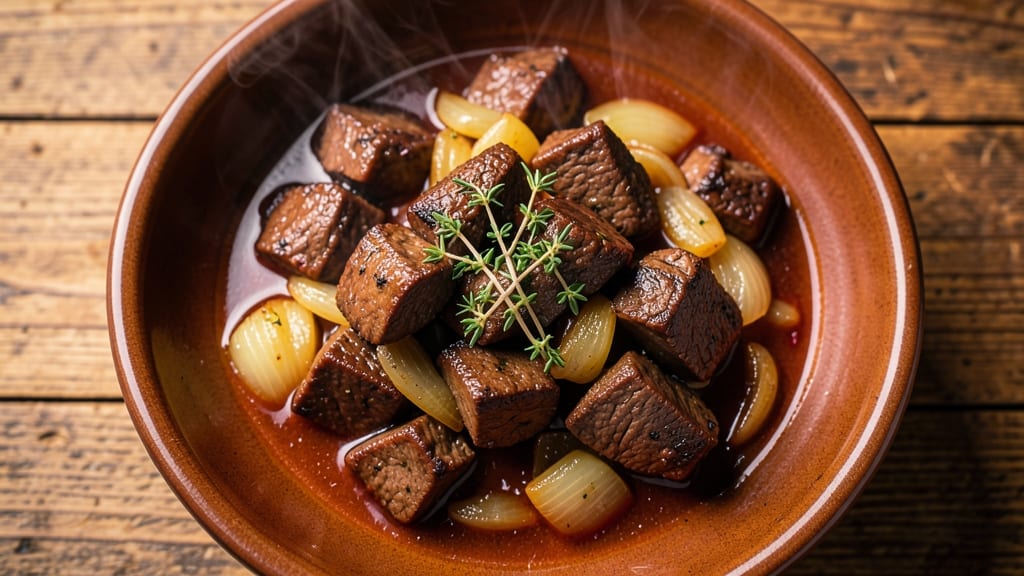
This beef and onion stew recipe transforms tough cuts into melt-in-your-mouth perfection through a deep-red wine braise and caramelized fond. The secret lies in slow cooking—where rich beef, sweet onions, and aromatic herbs meld into a velvety sauce that clings to every bite.
I’ve perfected this method over years of testing, ensuring deep flavor without heavy cream or complicated techniques.
The process starts with browning the beef in batches—never crowding the pan—to develop a flavorful crust. Deglazing with red wine captures those precious browned bits (fond) that form the stew’s soul. As it simmers, the onions caramelize into sweetness, while thyme and bay leaves infuse the broth with earthy warmth.
The result? A hearty, restaurant-quality stew that tastes even better the next day.
This recipe delivers foolproof results whether you use a Dutch oven, slow cooker, or Instant Pot. The wine-infused sauce balances richness with acidity, while the tender beef and caramelized onions create a texture that’s both comforting and sophisticated.
Serve with crusty bread to soak up every last drop of that deep, aromatic broth.
For modern adaptations, the slow cooker version requires minimal effort—just brown the beef, transfer everything to the pot, and let it work its magic. The Instant Pot version cuts cooking time by half while preserving the stew’s depth.
Either way, you’ll end up with a dish that’s perfect for chilly evenings or family gatherings, where every spoonful feels like a hug.
Ingredients for beef and onion stew
Pantry staples plus a few key ingredients for rich, slow-cooked comfort.
| Ingredient | Amount | Notes |
|---|---|---|
| Chuck Roast 🥩 | 2 ½ lb | Cut into 1.5-inch cubes |
| Yellow Onions 🧅 | 3 whole | Peeled, cut into wedges |
| Red Wine 🍷 | 1 ½ cups | Bold, dry variety like Cabernet |
| Beef Broth 💧 | 2 cups | Low-sodium preferred |
| Tomato Paste 🍅 | 1 tbsp | Squeeze tube works best |
| Fresh Thyme 🌿 | 1 tbsp | Leaves only, chopped |
| Bay Leaves 🌿 | 2 whole | Remove before serving |
| Garlic Cloves 🧄 | 4 cloves | Peeled, smashed |
| Olive Oil 🫒 | 2 tbsp | Extra-virgin preferred |
| All-Purpose Flour 🌾 | 1 tbsp | For thickening |
| Salt 🧂 | 1 ½ tsp | Kosher or sea salt |
| Black Pepper 🌶️ | 1 tsp | Freshly ground |
| Worcestershire Sauce 🍶 | 1 tbsp | Vegan version if needed |
| Fresh Parsley 🌿 | ¼ cup | Chopped, for garnish |
The chuck roast is your secret weapon here—Costco or butcher sections have the best cuts, but any grocery store beef department works. Look for good marbling and ask for it cubed if you're not up for chopping. Yellow onions should be firm and dry-skin—avoid any with sprouting tops. The red wine? Grab whatever bold, dry bottle you've got open—no need for fancy labels. Fresh thyme and bay leaves make all the difference, but dried will work in a pinch (use half the amount).
No red wine? Beef broth with a splash of balsamic gets you close. Fresh thyme is ideal but dried works at one-third the amount. If tomato paste feels like overkill for one tablespoon, those squeeze tubes at Trader Joe's are perfect—no waste, keeps for months. The onions can be baby carrots if that's what's in the fridge, but yellow onions caramelize better. Worcestershire sauce? Annie's or Lea & Perrins are the gold standards, but any brand works.
This stew tastes even better the next day—honestly, it's a great make-ahead dish. Keeps 4-5 days in the fridge, freezes for 3 months. I always double the batch so we have leftovers for lunches. The fond (browned bits) is the soul of the dish—don't rush the browning step. For serving, fresh parsley brightens it up, but skip it if you're short on time.
Why You'll Love This Recipe
- Foolproof Slow Cook: I swear by this method—dump everything in, walk away, and come back to melt-in-your-mouth beef. The chuck roast practically falls apart, and the onions caramelize right in the pot with zero effort.
- Rich Without Effort: That red wine and tomato paste combo? It’s the secret weapon. Deep, savory, and just a hint of sweetness—no fancy techniques, just pure flavor from the pantry.
- Weeknight & Potluck Star: Same recipe works for a rushed Tuesday dinner or a crowd at Thanksgiving. Serve it over mashed potatoes or crusty bread, and suddenly you’re the hero of any meal.
- Budget-Friendly Leftovers: Chuck roast stretches for days, and the broth keeps getting better. I make double batches—freezer-friendly, wallet-friendly, and always a hit when I’m too tired to cook.
Step-by-step instructions for deep-red wine braised beef
This rich stew builds flavor through slow cooking and caramelization—here's exactly how to make it shine.
Sear the Chuck Roast for Maximum Flavor
Heat a large Dutch oven over medium-high heat until hot. Add 1 tablespoon of the olive oil and let it shimmer for 30 seconds. Working in batches to avoid crowding, add the chuck roast cubes and sear for 2-3 minutes per side until deeply browned. This step creates the fond that forms the stew's flavor base.
Don't skip this—proper searing builds layers of caramelization that dissolve into the sauce. If the pan gets too crowded, reduce heat slightly to prevent steaming. Transfer the browned meat to a plate and set aside.
Caramelize the Onions and Build the Base
In the same Dutch oven, add the remaining 1 tablespoon olive oil and yellow onion wedges. Cook over medium heat for 10-12 minutes, stirring occasionally, until the onions are deeply golden and sweet-smelling. This caramelization is what gives the stew its rich depth of flavor.
Add the garlic cloves and cook for 30 seconds until fragrant. Stir in the tomato paste and cook for another 1 minute to deepen the color. This forms the flavor foundation for the entire dish.
Deglaze and Simmer the Stew
Pour in the red wine and scrape up all the browned bits from the bottom of the pot with a wooden spoon. This deglazing step captures all the flavor you worked so hard to create. Bring to a simmer and cook for 5 minutes until the wine reduces by half.
Sprinkle the all-purpose flour over the mixture and stir vigorously for 1 minute to cook off the raw flour taste. Pour in the beef broth, add the bay leaves, fresh thyme, salt, black pepper, and Worcestershire sauce. Return the beef to the pot, making sure it's mostly submerged in the liquid.
Braise Until Tender and Rich
Bring the stew to a gentle boil, then reduce heat to low, cover, and simmer for 2.5-3 hours. The stew should bubble gently—if it boils too vigorously, reduce the heat further. This slow cooking breaks down the tough muscle fibers, creating melt-in-your-mouth beef.
After 2 hours, check the consistency. If it's too thin, uncover and simmer for 15-20 minutes to reduce slightly. The stew should coat the back of a spoon but still be saucy enough to spoon over potatoes or crusty bread.
Finish and Serve with Fresh Herbs
Remove the bay leaves and discard. Taste and adjust seasoning if needed—this is where you can really make the stew your own. For a final touch, stir in the fresh parsley and let the stew sit off the heat for 10 minutes to allow flavors to meld.
Serve immediately with crusty bread or over mashed potatoes. The beef should be fork-tender and falling apart, with a rich, velvety sauce that coats every bite. This stew tastes even better the next day, so make extra if you can!
Pro Tips For Making Beef And Onion Stew
- Brown the Roast Thoroughly: I learned this the hard way—skipping the deep, caramelized crust means flavorless stew. Use a heavy pot and let the chuck roast sit undisturbed for 4-5 minutes per side until it’s dark brown, almost black in spots. That’s where the depth comes from, not just the wine or broth.
- Slice Onions Paper-Thin: Thin, even slices melt into the stew without turning to mush. Use a mandoline if you’re impatient like me, or take your time with a sharp knife—aim for ⅛-inch thickness. Thicker slices stay stubbornly chewy, and you’ll end up with a soup instead of a stew.
- Deglaze with Wine Immediately: After removing the roast, pour in that red wine right away while the fond is still hot. Let it bubble for 2-3 minutes before scraping up those browned bits—this extracts way more flavor than a lazy splash later. If you wait, you’re leaving money (and taste) on the bottom of the pan.
- Simmer Low and Slow: This isn’t a race. After adding broth and tomato paste, reduce heat to a gentle simmer—you should barely see bubbles. High heat turns onions mushy and broth cloudy. Two hours at 180°F (or until fork-tender) beats 45 minutes at a rolling boil every time. Patience here makes all the difference.
Regional styles of this recipe
French Classic
This version stays true to the classic French bœuf bourguignon but simplifies it for home cooks. Use dry Cabernet Sauvignon instead of Burgundy wine—it’s more accessible and still delivers bold flavor. Add 1 cup pearl onions (peeled) along with the yellow onions for extra texture.
I like to finish with 1 tbsp Dijon mustard stirred in during the last 15 minutes of cooking for a subtle tang. 🍷
British Pub-Style
For a heartier, more rustic take, swap the red wine for 2 cups beef broth and add 1 tbsp tomato paste plus 1 tsp Worcestershire sauce upfront. Include 1 large carrot (diced) and 1 parsnip (diced) with the onions.
The British version often includes 1 tsp smoked paprika for depth, and I’ve found ale (like Guinness) works beautifully as a partial wine substitute—just reduce it by half. 🍺
Spanish Cocido
Transform this into a Spanish-inspired cocido by adding 1 cup chickpeas (rinsed) and 1 small potato (cubed) during the final 45 minutes of cooking. Use 1 cup white wine (like Albariño) instead of red, and add 1 tsp smoked paprika and ½ tsp cinnamon for warmth.
The Spanish version often includes 1 bay leaf plus 1 sprig of rosemary, and I love finishing with 1 tbsp sherry vinegar for brightness. 🌶️
Italian Spezzatino
Give it an Italian twist by using 1 cup San Marzano tomatoes (crushed) instead of tomato paste, and add 4 oz pancetta (diced) to brown with the onions. Include 1 tsp dried oregano and ½ tsp fennel seeds for an Italian touch.
The Italian version often features 1 cup whole tomatoes (san marzano) blended into the sauce at the end. I like to finish with fresh basil instead of parsley for a brighter note. 🌿
Modern Slow Cooker
For a hands-off version, brown the beef in a skillet first, then transfer everything to a 6-quart slow cooker. Cook on LOW for 8 hours or HIGH for 5 hours. The slow cooker version benefits from 1 extra cup of broth to prevent drying out.
I often add 1 tsp onion powder and 1 tsp garlic powder to boost flavor since the slow cooker lacks the Maillard reaction from searing. 🔥
Instant Pot Adaptation
Use the SAUTE function to brown the beef in the Instant Pot, then add all ingredients and cook on HIGH pressure for 45 minutes. Release pressure naturally, then adjust consistency with 1-2 tbsp cornstarch slurry if needed.
The Instant Pot version cooks faster but still delivers deep flavor. I like adding 1 tsp smoked salt for a modern twist, and it’s perfect for weeknight dinners. ⏱️
Nutrition facts
Frequently asked questions
Why does my stew taste bland after simmering?
Bland stew often means the liquid wasn't reduced enough or the beef didn't develop enough flavor. Always sear the beef in batches for maximum browning, and reduce the sauce uncovered for 15-20 minutes at the end. A splash of red wine or 1 tsp balsamic vinegar at the finish can also add depth.
Can I use ground beef instead of chuck roast?
Yes, but the texture will be different—ground beef cooks much faster and won't give the same tender, fork-shredded result. If you must use it, brown thoroughly and simmer for only 1-1.5 hours to avoid drying out. For best results, stick with chuck roast or brisket for that classic stew texture.
How do I fix a stew that's too watery?
Remove the lid and simmer uncovered for 10-15 minutes to reduce the liquid. If it's still too thin, make a slurry with 1 tbsp cornstarch and 2 tbsp cold water, stir it in, and cook for another 2-3 minutes until thickened. Never add flour directly to a hot liquid—it clumps!
What's the best wine substitute if I don't have red wine?
Use 2 cups beef broth plus 1 tbsp balsamic vinegar or 1 tbsp soy sauce for depth. For a non-alcoholic version, try 1 cup apple cider plus 1 cup beef broth. The key is acidity and richness—never skip the umami boost from Worcestershire sauce.
Can I make this stew in a slow cooker or Instant Pot?
For the slow cooker, brown the beef first, then transfer everything to the pot and cook on LOW for 8 hours or HIGH for 5 hours. For the Instant Pot, brown the beef, add all ingredients, and cook on HIGH pressure for 45 minutes. Both methods work, but the stovetop version gives the deepest caramelization.