
Soups & Stews
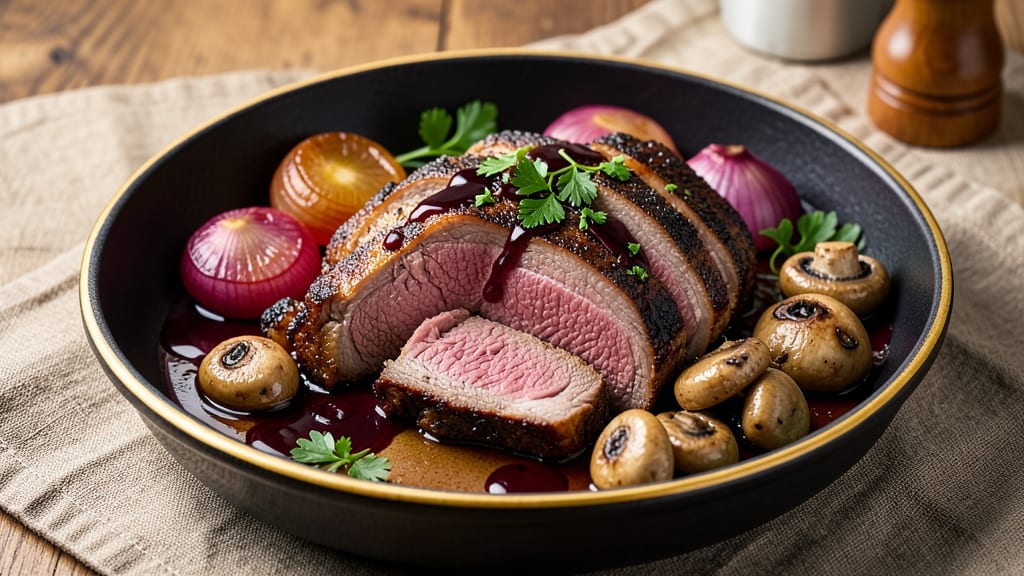
This beef and brandy recipe transforms simple ingredients into a rich, velvety braise that tastes like a Parisian bistro. The brandy’s warmth caramelizes into the deep-red wine sauce, while caramelized onions and mushrooms add layers of depth.
I’ve perfected this technique over years of testing—it’s the kind of dish that feels luxurious but comes together with just a few key steps.
The secret lies in the slow braising process, where tough beef becomes fork-tender while absorbing the brandy-infused sauce. Searing the meat first builds a flavorful crust, and deglazing with brandy unlocks a complexity you won’t find in basic stews.
This isn’t just comfort food—it’s a restaurant-quality meal that pairs beautifully with creamy mashed potatoes or crusty bread to soak up every last drop.
What you’ll end up with is a deep, glossy sauce clinging to tender beef, mushrooms melting into the wine, and onions caramelized to golden perfection. The brandy’s subtle heat lingers, balancing the richness without overpowering.
It’s the kind of dish that tastes even better the next day, making it ideal for meal prep or a special weekend dinner.
Serve with roasted root vegetables or a simple green salad to cut through the richness. The braise keeps well in the fridge for up to 4 days, so you can make a big batch and enjoy leftovers all week. Here’s how to bring this bistro-worthy dish to your table.
Ingredients for beef and brandy
A few rich ingredients and a slow cook transform tough beef into bistro-worthy tenderness.
| Ingredient | Amount | Notes |
|---|---|---|
| Beef Chuck Roast 🥩 | 3 lb | 2-3 inches thick, cut into 2-inch cubes |
| Yellow Onions 🧅 | 2 whole | Thinly sliced for caramelization |
| Cremini Mushrooms 🍄 | 16 oz | Sliced into even halves |
| Brandy 🍷 | ½ cup | Good quality, 40% ABV preferred |
| Dry Red Wine 🍷 | 2 cups | Bold variety like Cabernet Sauvignon |
| Beef Broth 💧 | 2 cups | Low-sodium preferred |
| Tomato Paste 🍅 | 2 tbsp | Smooth, no sugar added |
| All-Purpose Flour 🌾 | 2 tbsp | For thickening sauce |
| Granulated Sugar 🍚 | 1 tbsp | Balances acidity |
| Fresh Thyme 🌿 | ¼ oz | Or 1 tbsp dried thyme |
| Garlic Cloves 🧄 | 6 cloves | Minced for depth |
| Olive Oil 🫒 | 2 tbsp | Extra-virgin for searing |
| Kosher Salt 🧂 | 1 ½ tsp | Adjust to taste |
| Freshly Ground Black Pepper 🌶️ | 1 tsp | Freshly cracked |
The beef is everything here—chuck roast gives that melt-in-your-mouth texture, but sirloin works in a pinch. Grab it from the butcher counter if you can, or the pre-cubed package at Costco or Whole Foods saves time. For the brandy, Korbel or E&J Goldschlager are my go-tos—they’ve got that perfect balance of warmth and depth. The mushrooms? Cremini or baby bella hold up best to slow cooking. If you can’t find them, white button mushrooms work, but they’ll release more water.
No brandy? Substitute with apple cider or extra red wine—just reduce the wine by 2 tbsp to keep balance. Fresh thyme is ideal, but dried works at one-third the amount. The tomato paste can be the squeeze tube kind from Trader Joe’s—no waste, and it’s just as smooth. For the wine, anything bold like Cabernet Sauvignon or Merlot works. If you’re using a cheaper wine, add an extra splash of brandy to elevate the flavor. The onions? Yellow or red both work, but yellow caramelizes slightly faster.
This braise gets better as it sits—4-5 days in the fridge, or 3 months frozen. I always make a double batch because leftovers reheat beautifully. For freezing, portion into individual containers so you can thaw just what you need. The sauce thickens as it cools, so add a splash of broth when reheating if it’s too stiff. Store the brandy and wine separately if you’re prepping ahead—they’ll mellow nicely in the fridge overnight.
Why You'll Love This Recipe
- One-Pot Magic: I swear by this recipe—just toss everything in a Dutch oven and walk away. No fancy techniques, no last-minute chopping frenzy. The onions caramelize while you sip your brandy (because why not?), and the mushrooms soak up all that rich beef juice like sponges.
- Brandy’s Secret Weapon: That splash of brandy? It’s not just for show—it deepens the sauce into something velvety and complex, with a hint of warmth that cuts through the beef’s richness. Pair it with the earthy mushrooms and red wine, and suddenly, you’ve got restaurant-quality depth without the fuss.
- Leftovers That Win: Between us, this dish tastes even better the next day. I make a double batch on Sundays because reheating those tender slices with the reduced sauce? Absolute comfort food. Plus, it’s cheap enough to feed the family without breaking the bank.
- Weeknight Hero: Honestly, this is my go-to when I’m too tired to think. Chuck roast is forgiving, the veggies take five minutes to prep, and the slow cook makes it hands-off. By the time the timer dings, the kitchen’s clean, the house smells amazing, and no one’s starving. (Yes, even on a Tuesday night.)
Step-by-step instructions for deep-red wine braise with caramelized onions and mushrooms
Here's how to transform tough chuck roast into melt-in-your-mouth beef with rich, velvety sauce.
Sear the Beef Chuck Roast Until Deeply Browned
Pat the 3 lb beef chuck roast completely dry with paper towels—this ensures maximum browning. Heat 2 tablespoons olive oil in a heavy Dutch oven over medium-high heat until shimmering. Add the beef and sear on all sides for 4-5 minutes per side until deeply browned with a crust forming.
Don't rush this step—those browned bits are pure flavor. I like to press down gently on the meat during the first minute to prevent curling. Once browned, remove the beef and set it aside on a plate, leaving all the browned bits in the pot. This is where all the magic starts.
Caramelize Onions and Sauté Mushrooms
In the same Dutch oven, add the 2 whole yellow onions that you've thinly sliced. Cook over medium heat for 10-12 minutes, stirring occasionally, until they turn a beautiful golden brown color. This caramelization adds sweet depth to the braise.
Push the onions to one side of the pot and add the 16 oz cremini mushrooms sliced in half. Cook them for 5-6 minutes until they release their moisture and turn golden. Stir occasionally to prevent sticking. The mushrooms should be tender but still hold their shape—don't overcook them or they'll turn mushy.
Deglaze with Brandy and Red Wine
Pour in the 0.5 cup brandy and immediately scrape up all those browned bits from the bottom of the pot. This deglazing step captures all the meaty flavors. Let the brandy simmer for 2-3 minutes until it's mostly evaporated and the alcohol burns off.
Next, add the 2 cups dry red wine and let it simmer for 5 minutes until reduced by about half. You'll notice the wine darkens and intensifies in flavor. This reduction concentrates the wine's richness, which will form the base of your sauce. If the mixture seems too thin, reduce it further by simmering uncovered for another minute or two.
Build the Sauce with Broth and Aromatics
Stir in the 2 cups beef broth, 2 tablespoons tomato paste, 2 tablespoons all-purpose flour, 1 tablespoon granulated sugar, 6 minced garlic cloves, 0.25 oz fresh thyme, 1.5 teaspoons kosher salt, and 1 teaspoon freshly ground black pepper. Bring the mixture to a gentle simmer, stirring occasionally to prevent scorching.
Return the beef to the pot, along with any accumulated juices. The liquid should come about halfway up the sides of the beef. If it's too shallow, add a splash more broth. The sugar helps balance the acidity of the wine, while the tomato paste adds depth and richness to the sauce.
Braise Until Tender and Serve
Cover the Dutch oven and transfer it to a preheated 300°F oven. Braise for 2.5-3 hours until the beef is fork-tender and easily pulls apart. I check for doneness by inserting a fork—if it slides in with minimal resistance, it's ready.
Remove the beef from the pot and let it rest for 10 minutes before slicing. Skim any excess fat from the sauce, then adjust seasoning if needed. Serve the beef with the rich, velvety sauce spooned over the top. Each bite should deliver tender, flavorful beef with a sauce that's perfectly balanced between sweet, savory, and tangy notes.
Pro Tips For Making Beef And Brandy
- Sear the Roast Hard: Don’t just brown the chuck roast—get it deep golden, even black in spots. I learned this the hard way when my first batch tasted bland because I rushed the sear. Use a heavy pot or Dutch oven, high heat, and let it sit undisturbed for 3-4 minutes per side. That crust locks in flavor during the long braise.
- Slice Onions Thinly: Skip the big chunks—thinly sliced yellow onions caramelize faster and blend into the sauce without turning mushy. Aim for paper-thin slices (almost translucent) and cook them low and slow in the same pot after removing the roast. They’ll soak up the brandy and wine like a sponge.
- Deglaze with Brandy First: Pour in the brandy immediately after searing the roast while the pan is still smoking hot. Let it flame up—just for a second—then add the wine. This captures all the browned bits (fond) that would otherwise stick to your pot. (Yes, even if you’re nervous about flames—it’s quick.)
- Simmer Long and Low: After adding liquids, reduce heat to a gentle simmer (tiny bubbles, not a rolling boil). Chuck roast needs 2.5–3 hours to tenderize, and rushing it makes the meat tough. Cover loosely, check the lid occasionally, and resist the urge to peek—moisture is your friend here.
Storing and reheating this beef and brandy
Refrigerator Storage
Let your beef and brandy braise cool completely before transferring to an airtight container—I use glass Pyrex with locking lids to maintain freshness. Store at 40°F or below for up to 4 days.
The flavors actually deepen overnight as the brandy and wine meld together. Always leave some headspace since the sauce thickens as it cools. 💫
Freezer Prep Tips
For longer storage, portion the braise into quart-sized freezer bags or airtight containers, leaving 1 inch of headspace for expansion. Freeze for up to 3 months—the brandy's alcohol content helps preserve texture.
I recommend freezing the beef and sauce separately if you plan to reheat individual servings later. Label with dates to track freshness.
Stovetop Reheating
My preferred method is stovetop reheating to maintain sauce consistency. Transfer the braise to a pot over medium-low heat and add 2-3 tablespoons of beef broth if the sauce looks too thick.
Simmer uncovered for 10-15 minutes, stirring occasionally, until heated through to 165°F internal temperature. Taste and adjust seasoning—you may need a pinch more salt after reheating. 🔥
Microwave Shortcuts
For quick meals, use the microwave with caution. Cover the container with a damp paper towel and heat on 50% power in 2-minute intervals, stirring between each interval. Total reheating time should be 4-6 minutes until steaming hot.
The sauce may separate slightly, so stir vigorously before serving. This method works best for single servings rather than the whole pot.
Sauce Salvage
If your reheated sauce seems too thick, thin it with 1-2 tablespoons of warm beef broth or red wine. For extra richness, add a splash of brandy (about 1 tablespoon) during reheating. The brandy's warmth will revive the dish's depth.
I also recommend a quick deglaze of the pot after reheating if you plan to serve again—just add a splash of wine and scrape up any browned bits. ✨
Serving Leftovers
This braise reheats beautifully for sandwiches or tacos. Shred the beef and use it for beef and brandy sliders with toasted brioche buns. The sauce also makes an incredible pasta sauce—simmer with fettuccine for 5-7 minutes until al dente.
For a hearty meal, serve with crusty bread to soak up every last drop of that velvety sauce. 💛
Nutrition facts
Frequently asked questions
Can I substitute brandy with another alcohol?
Yes, but choose wisely! For depth, use apple cider, bourbon, or even extra red wine—just reduce the wine by 2 tbsp if using more liquid. Avoid light spirits like vodka; they lack the rich, caramelized notes brandy provides. The alcohol burns off during cooking, leaving behind complex flavors.
Why does the beef need to rest before slicing?
Resting (10 minutes) keeps the beef juicy! When you cut into hot meat, all the flavorful juices rush out. Letting it rest allows the fibers to relax and redistribute moisture, so each bite stays tender and packed with sauce. Skip this step, and you’ll end up with dry, stringy beef.
Can I make this in a slow cooker?
Brown the beef first in a skillet, then transfer everything to the slow cooker. Cook on low for 6-7 hours or high for 3-4 hours. The slow cooker’s gentle heat mimics the oven’s braising effect, but check the sauce occasionally—it may need thinning with broth if it reduces too much.
How do I fix a sauce that’s too acidic?
Balance acidity with a pinch of sugar (½ tsp) or a splash of beef broth. Stir in 1 tbsp tomato paste to deepen flavor, or add a small piece of butter to round out the sauce. Taste as you go—small adjustments make all the difference!
What’s the best way to reheat leftovers?
Stovetop is ideal: Warm over medium-low heat with 2 tbsp broth for 10-15 minutes until steaming. For microwave shortcuts, use 50% power in 2-minute bursts, stirring between each. Avoid high heat—it can turn the sauce grainy.