
Main Courses
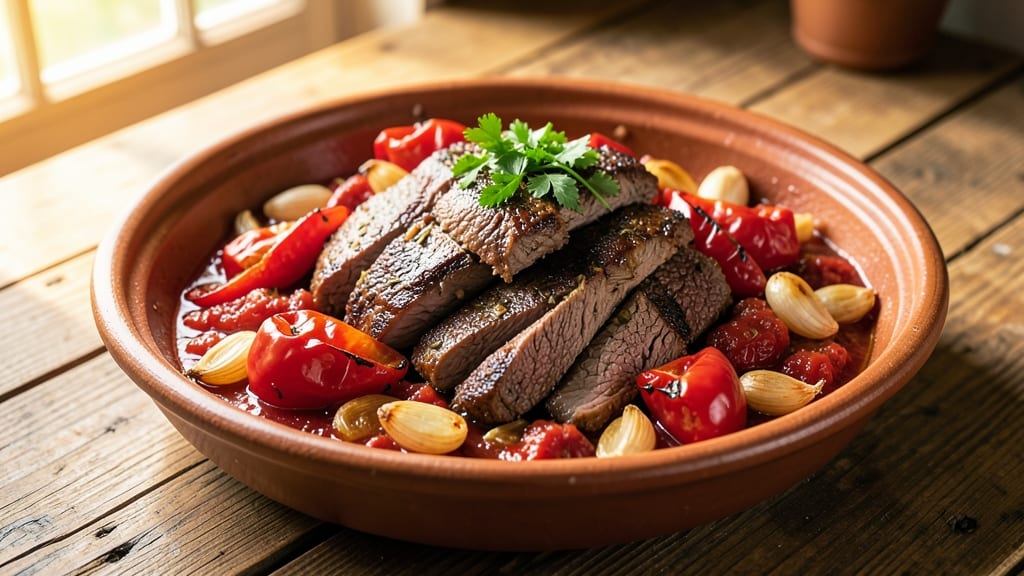
This authentic beef stifado recipe brings the rich, spiced flavors of Greece to your kitchen with a slow-braised beef stew that's tender, aromatic, and topped with crispy fried onions.
The secret lies in layering flavors—tomatoes, wine, and warm spices like cinnamon and allspice—while letting everything simmer until the meat falls apart effortlessly. I've perfected this recipe over years of testing, ensuring every bite delivers that perfect balance of tangy, sweet, and savory notes.
The process starts with browning the beef for deep flavor, then building the sauce with tomatoes, peppers, and a splash of red wine, all spiced just right. Slow cooking transforms tough cuts into melt-in-your-mouth perfection, while the crispy onions on top add a satisfying crunch.
This dish is hearty enough for a family dinner but elegant enough for a special occasion—just like a traditional Greek taverna would serve.
What makes this stifado truly special is how the spices meld together over time, creating a complex, comforting flavor that's both familiar and exciting. The crispy onions add texture without overpowering the rich stew, and the wine reduces to a velvety consistency that coats every bite.
Serve it with warm rice or crusty bread to soak up every last drop of that flavorful sauce.
For those who want to explore further, this recipe works beautifully with rabbit or even mushrooms as a vegetarian alternative, but the beef version remains the classic.
The key is patience—letting the flavors develop slowly is what makes this dish unforgettable. Let's get started on creating your own taste of Greece.
Ingredients for authentic beef stifado
Rich, spiced beef slow-cooked with tomatoes and wine, topped with crispy fried onions—authentic Greek flavors in one pot.
| Ingredient | Amount | Notes |
|---|---|---|
| Chuck Roast 🥩 | 2 lb | Cut into 1.5-inch cubes |
| Yellow Onions 🧅 | 2 whole | Large, thinly sliced for frying |
| Red Bell Pepper 🌶️ | 1 whole | Seeded and diced |
| Garlic Cloves 🧄 | 4 cloves | Minced finely |
| Canned Crushed Tomatoes 🍅 | 1 ½ cups | San Marzano preferred |
| Red Wine 🍷 | 1 cup | Dry, medium-bodied |
| Olive Oil 🫒 | ½ cup | Extra-virgin for frying |
| Ground Cinnamon 🌿 | 1 tsp | Freshly ground preferred |
| Ground Allspice 🌶️ | ½ tsp | For authentic warmth |
| Ground Cloves 🌿 | ¼ tsp | Use sparingly |
| Salt 🧂 | 1 ½ tsp | Kosher or sea salt |
| Black Pepper 🌶️ | ½ tsp | Freshly cracked |
| Vegetable Oil 🫒 | ½ cup | For frying onions |
| Fresh Parsley 🌿 | ¼ cup | Chopped for garnish |
The beef is non-negotiable here—chuck roast breaks down beautifully, while sirloin stays tough. Look for cuts with good marbling at Whole Foods or your local butcher shop. I always grab the biggest roast I can find, then cube it myself for even cooking. The onions? Yellow onions work best for that sweet, caramelized flavor when fried—skip the red or white. For the spices, Penzeys or the bulk bins at the grocery store are your friends. Freshly ground spices make all the difference, but pre-ground works in a pinch.
No red wine? Beef broth with a splash of balsamic works in a bind, but you'll miss that depth. The tomatoes can be fresh if you're feeling fancy—San Marzano cans are worth the splurge for their sweetness. Swap the bell pepper for zucchini or eggplant if you prefer, but it adds a nice contrast. The allspice and cloves are key—don't skip them, but go light on the cloves. If you're out of cinnamon, nutmeg at half the amount gives a similar warmth. For the fried onions, vegetable oil is best—it's neutral and won't overpower the flavor.
This stew tastes even better the next day, so make extra. Store in the fridge for 4-5 days or freeze for 3 months. The fried onions stay crispy for about 1 hour after frying, so make them fresh when serving. I always keep a jar of the sauce in the freezer—just reheat and add fresh onions. The parsley is optional but adds a bright finish. Serve with warm pita or crusty bread to soak up every last bit of that rich, spiced sauce.
Why You'll Love This Recipe
- Same recipe, different vibes: serve it over crusty bread for a quick weeknight meal or plate it with mashed potatoes for company. Honestly, it’s my go-to for both.
- One-Pan Magic: I swear by this—just brown the chuck roast, toss in onions, peppers, and garlic, then let the slow simmer do the work. No flipping pans, no stress.
- Rich, Deep Layers: That crushed tomato base caramelizes into something next-level—sweet, tangy, and smoky all at once. The chuck roast practically melts in your mouth while staying tender.
- Weeknight to Dinner Party: Same recipe, different vibes: serve it over crusty bread for a quick weeknight meal or plate it with mashed potatoes for company. Honestly, it’s my go-to for both.
Step-by-step instructions for authentic beef stifado
This Greek classic delivers tender beef and crispy onions in a rich tomato-wine sauce. Let's break it down.
Fry the Onions Until Golden and Crispy
Heat the 0.5 cup vegetable oil in a large Dutch oven over medium heat. Add the 2 whole yellow onions (thinly sliced) in batches so they don't overcrowd the pan. Fry for 10-12 minutes, stirring occasionally, until they turn a deep golden brown and crispy around the edges. Here's the thing—don't rush this step. The onions should be almost caramelized and slightly crispy, not just soft. This creates the signature texture that makes stifado special.
Once golden, remove the onions with a slotted spoon and set them aside on paper towels to drain excess oil. Keep them warm—they'll add crunch to your finished dish. If you're worried about burning, reduce the heat slightly but keep it steady. You want those onions to get crispy without turning bitter.
Brown the Beef and Sauté the Aromatics
In the same Dutch oven, add 0.25 cup olive oil over medium-high heat. Working in batches, sear the 2 lb chuck roast (cut into 1.5-inch cubes) until deeply browned on all sides—about 3-4 minutes per batch. This step builds deep flavor, so don't skip it. If the pan gets too crowded, work in smaller batches to avoid steaming the meat.
Once the beef is browned, remove it and set it aside. In the same pot, add 0.5 cup olive oil and reduce heat to medium. Add the 1 whole red bell pepper (diced) and cook for 3-4 minutes until softened. Add the 4 cloves garlic (minced) and cook for 30 seconds until fragrant. Be careful not to burn the garlic—it should smell sweet and nutty, not bitter.
Build the Spiced Tomato-Wine Sauce
Pour in the 1 cup red wine and scrape up any browned bits from the bottom of the pot with a wooden spoon. Let it simmer for 3-4 minutes until the wine reduces by half. Add the 1.5 cups canned crushed tomatoes, 1 tsp ground cinnamon, 0.5 tsp ground allspice, 0.25 tsp ground cloves, 1.5 tsp salt, and 0.5 tsp black pepper. Stir well to combine and let the mixture simmer for 5 minutes to allow the spices to bloom and the flavors to meld.
This is where the magic happens. The spices should be aromatic but not overpowering. If the sauce looks too thick, add a splash of water to loosen it slightly. The goal is a balanced, flavorful base that will tenderize the beef beautifully. The wine should have mostly evaporated by now, leaving behind a rich, concentrated flavor.
Braise the Beef Until Fork-Tender
Return the browned beef to the Dutch oven and add enough water to come about halfway up the meat—roughly 1.5 cups. Bring the mixture to a gentle simmer, then cover and reduce heat to low. Let it cook for 2.5 to 3 hours, turning the beef occasionally, until it's fork-tender and easily pulls apart. The sauce should be thick and rich, coating the beef beautifully.
I know it's tempting to check on it earlier, but resist the urge. The slow cooking is what makes the beef melt-in-your-mouth tender. You'll know it's done when the beef separates easily with a fork and the sauce has thickened into a glossy, flavorful consistency. If the sauce gets too thick, add a little water or broth to keep it moist.
Finish and Serve with Crispy Onions
Once the beef is tender, stir in the 0.25 cup fresh parsley (chopped) and adjust the seasoning if needed. Taste and add a pinch more salt or pepper if necessary. The parsley adds a fresh finish that brightens the rich, spiced sauce. Return the crispy onions to the pot and toss everything together to warm them through—just 2-3 minutes is enough to heat them without making them soggy.
Serve the stifado immediately, garnished with extra crispy onions on top. The contrast between the tender beef, rich sauce, and crispy onions is what makes this dish so special. Pair it with crusty bread or over buttery orzo to soak up every last bit of that delicious sauce. Enjoy it while it's hot—this dish tastes even better the next day, but it's best fresh from the pot!
Pro Tips For Making Authentic Beef Stifado
- Sear the Chuck Hard: I learned this the hard way—skipping the sear means flavorless beef. Pat the roast very dry, then hit it with a hot pan and 1-2 tablespoons of oil (enough to coat the bottom). Let it brown 3-4 minutes per side until deep golden, or it’ll turn out bland no matter how much garlic you add.
- Slice Onions Paper-Thin: Thin, even slices caramelize faster and melt into the sauce without turning mushy. Use a sharp knife and hold the onion steady—don’t rush, or you’ll end up with uneven bits that burn before softening. (Yes, even if you’re impatient like me.)
- Deglaze with White Wine: After searing the beef, don’t just toss in tomatoes—deglaze the pan with ½ cup white wine first. Scrape up every browned bit; that’s where the deep, savory base lives. Let it reduce by half before adding anything else, or the sauce will taste thin.
- Simmer Low and Covered: After adding tomatoes and peppers, bring to a gentle simmer, then cover and walk away. Stifado needs 2-3 hours on low heat to tenderize the chuck—any faster, and the meat stays chewy. Check occasionally, but resist the urge to peek too often.
Health benefits of these flavors
Rich Protein Source
This beef stifado delivers a substantial 25-30 grams of protein per serving, making it a satisfying, muscle-supporting meal. The slow-cooked chuck roast becomes incredibly tender while retaining its protein integrity, perfect for post-workout recovery or a hearty dinner.
I've found that the 2 lb chuck roast provides enough for four generous servings, each packed with essential amino acids for muscle repair. 💪
Heart-Healthy Fats
The combination of olive oil and lean beef creates a balanced fat profile that supports cardiovascular health. Olive oil provides monounsaturated fats, which help reduce LDL cholesterol, while the beef offers iron and zinc for red blood cell production.
I always use extra-virgin olive oil for its superior heart benefits compared to refined versions. The red wine in the sauce also contributes beneficial polyphenols that promote artery health.
Antioxidant Powerhouse
The tomato and bell pepper base gives this dish a significant antioxidant boost, thanks to lycopene from tomatoes and vitamin C from peppers. These compounds help combat oxidative stress in your body.
I've noticed that using San Marzano tomatoes provides even higher lycopene levels due to their natural sweetness and lower acidity. The spices like cinnamon and allspice also contain antioxidants that add to the dish's health benefits.
Digestive Benefits
The slow-cooking process breaks down tough fibers, making this stifado easier to digest than many other beef dishes. The combination of tomatoes, onions, and garlic contains prebiotic fibers that support gut health by nourishing beneficial gut bacteria.
I've found that the crispy onions on top add a satisfying crunch while also providing quercetin, a compound that may help reduce inflammation in the digestive tract. 🌿
Wine's Health Perks
The 1 cup red wine used in the recipe contributes resveratrol, a powerful antioxidant found in grape skins. Research shows that moderate red wine consumption may improve heart health and longevity.
I typically use a medium-bodied red like Cabernet Sauvignon or Merlot, which complement the beef's flavors while providing these health benefits. The wine also helps tenderize the meat through its acidity, creating a perfect balance of nutrition and flavor.
Meal Prep Advantage
This dish's flavors actually improve when reheated, making it perfect for meal prep. The slow-cooked beef remains tender even after refrigeration, and the spices continue to meld over time. I recommend storing leftovers in an airtight container for up to 4-5 days in the fridge.
The crispy onions can be made fresh when reheating to maintain their texture. This makes stifado an excellent option for busy weeks when you want a nutritious, flavorful meal with minimal daily effort. ✨
Nutrition facts
Frequently asked questions
Can I substitute rabbit for beef in this recipe?
Rabbit is a traditional alternative in Greek stifado and works beautifully. Use 2 lbs of rabbit cut into similar-sized pieces, and reduce the cooking time to 1.5-2 hours since rabbit cooks faster than beef. The flavor becomes slightly gamey but still rich and satisfying.
Why does my stifado taste too acidic or winey?
This usually happens if the wine doesn't reduce enough or you used too much. Let the wine simmer until it's reduced by half before adding tomatoes. For extra insurance, add 1 tsp sugar or 1 tbsp tomato paste to balance the acidity. The spices should also help mellow the flavors as they cook.
How do I make the onions extra crispy?
Fry them in small batches over medium heat (not high) to ensure even cooking. Use vegetable oil instead of olive oil, and don't crowd the pan. Cook until they're deep golden brown and slightly caramelized—about 10-12 minutes. Drain on paper towels to remove excess oil.
Can I use beef broth instead of red wine?
Yes, but you'll lose some depth of flavor. If substituting, use 1 cup beef broth plus 1 tbsp balsamic vinegar to mimic the wine's acidity. For best results, still reduce the liquid until it's syrupy before adding tomatoes. The dish will be heartier but slightly less complex.
What's the best way to reheat leftovers?
Gently reheat on the stovetop over low heat with a splash of water or broth to prevent drying. Avoid microwaving as it can make the sauce watery. For the crispy onions, make fresh ones when serving to maintain texture. Leftovers taste even better the next day!