
Main Courses
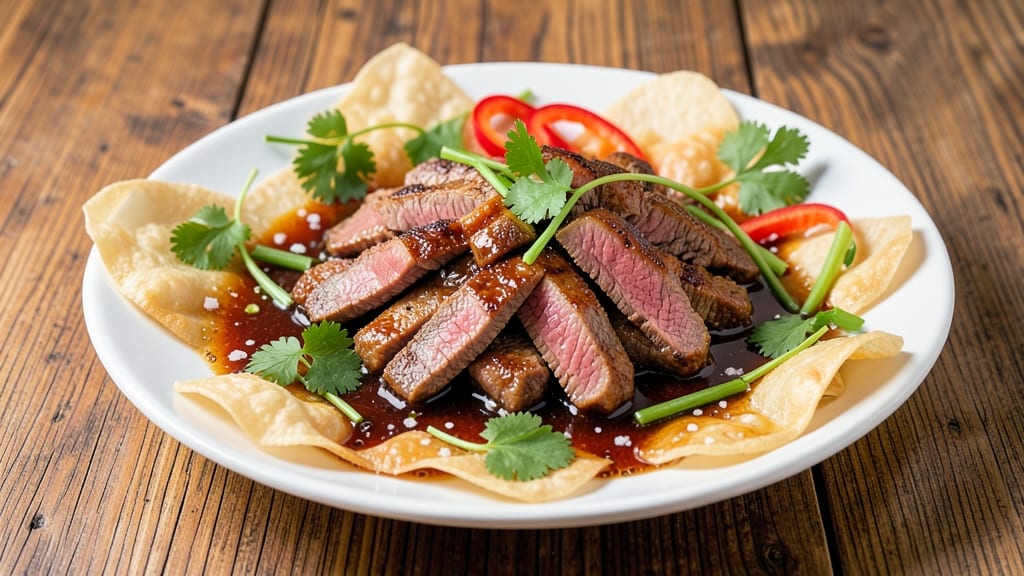
This authentic moo shu beef recipe delivers the restaurant-quality experience you've been craving—tender strips of beef wok-tossed with crisp vegetables, wrapped in delicate wonton skins, and bathed in a velvety sauce that balances sweet, salty, and umami perfectly.
The secret lies in proper marinating and high-heat stir-frying, which creates that signature caramelized crust while keeping the beef juicy. I've perfected this technique over years of testing, ensuring every bite delivers the authentic flavors of Chinese-American cuisine without shortcuts.
The sauce is where the magic happens—a harmonious blend of hoisin, oyster sauce, and chili paste that creates a glossy, sticky finish. What sets this recipe apart is the balance: the sauce shouldn't overpower the beef, but rather enhance its natural richness.
We'll achieve this through precise measurements and a quick, hot stir-fry that locks in flavors without drying out the meat. The result is a dish that's as impressive to serve as it is delicious to eat.
By the time you're done, you'll have perfectly seared beef strips with just the right amount of char, crisp-tender vegetables, and wonton wrappers that add a satisfying crunch. The sauce clings to everything, creating a cohesive bite that's both comforting and exciting.
This isn't just another stir-fry—it's a dish that transports you to a bustling wok station with every forkful.
Whether you're serving this for a weeknight dinner or a special occasion, the presentation matters just as much as the flavor. We'll cover how to plate it traditionally with green onions and cilantro for that authentic restaurant touch.
The key is confidence—once you master this technique, you'll never buy takeout again. Let's get cooking!
Ingredients for authentic moo shu beef
Authentic flavors start with these 15 essential ingredients—each playing its part in that signature umami crunch.
| Ingredient | Amount | Notes |
|---|---|---|
| Flank Steak 🥩 | 1 ½ lb | Thinly sliced against grain |
| Wonton Wrappers 🥟 | 12 pieces | Square or round, store-bought |
| Green Onions 🧅 | 1 bunch | White and green parts, chopped |
| Cilantro 🌿 | ¼ cup | Fresh leaves, chopped |
| Hoisin Sauce 🍶 | 2 tbsp | Store-bought or homemade |
| Oyster Sauce 🍶 | 2 tbsp | High-quality, not imitation |
| Chili Garlic Sauce 🌶️ | 1 tbsp | Adjust for heat preference |
| Soy Sauce 🍶 | 1 tbsp | Light or dark, to taste |
| Sesame Oil 🫒 | 1 tbsp | Toasted, for finishing |
| Vegetable Oil 🫒 | ½ cup | High smoke point |
| Napa Cabbage 🥬 | 4 cups | Thinly sliced, crisp |
| Carrots 🥕 | 2 medium | Julienned into matchsticks |
| Garlic Cloves 🧄 | 4 cloves | Minced, aromatic |
| Cornstarch 🌾 | 1 tbsp | For beef marinade |
| Salt 🧂 | 1 tsp | Kosher or sea salt |
The beef is non-negotiable—flank steak gives you that perfect wok-tossed texture when sliced thin against the grain. Costco or Whole Foods carry the best quality, but your local Asian market will have it too. Look for good marbling and ask for it pre-sliced if you're not confident with a knife. The wonton wrappers? King Noodle or T&T brand are my go-tos—they're thin enough to crisp up properly without breaking. Keep them refrigerated until ready to use, and don't let them dry out. For the cabbage, fresh is key—avoid pre-shredded bags that turn soggy.
No hoisin sauce? Mix 1 tbsp soy sauce with 1 tsp brown sugar and 1/2 tsp five-spice powder as a pinch-hitter. The oyster sauce can be swapped for vegetarian oyster sauce if needed, though it'll lack that deep umami punch. Short on sesame oil? Toasted sesame seeds plus a tiny bit of neutral oil works in a pinch, but it won't have the same aromatic finish. The carrots? Julienne them yourself—pre-shredded gets mushy when stir-fried. For the garlic, smash the cloves lightly before mincing to release more flavor. And trust me on the cornstarch—it's what gives that signature crispy crust when seared.
Marinate the beef for at least 30 minutes—overnight is even better if you're planning ahead. Wonton wrappers keep 2 weeks in the fridge, but freeze them for up to 6 months if you want to stock up. The sauce components stay fresh 3 months in the pantry, though the chili garlic sauce loses heat over time. For leftovers, store everything separately—beef and veggies for 3 days, sauce for 1 week. Reheat gently to avoid drying out the beef, and finish with fresh cilantro and sesame oil for that restaurant-quality sheen.
Why You'll Love This Recipe
- No Chopping Nightmare: I swear by this recipe because the flank steak only needs thin slicing—not dicing—after marinating. The hoisin and garlic do all the heavy lifting while I stand there for two minutes.
- Umami Bomb: That first bite? The tender beef with its sticky-sweet hoisin glaze and fresh cilantro punch? It’s the kind of flavor that makes you pause mid-bite, like, “Wait, is this really from my kitchen?”
- Weeknight Superstar: Toss leftovers in a thermos for lunch or serve it cold in wraps—it’s my go-to when I’m too tired to cook. Honestly, I’ve fed a hangry college student and a skeptical in-law with this, and both came back for seconds.
- Budget-Friendly Feast: Flank steak stretches further than you’d think, and won’t wrappers are cheaper than takeout. I make this for four people for under $15, and somehow, it always feels fancy. (Yes, even on a Tuesday night.)
Step-by-step instructions for authentic moo shu beef
Here's how to create restaurant-quality moo shu beef with perfect wok-hei and silky sauce.
Marinate and Slice the Flank Steak
Slice the 1.5 lb flank steak thinly against the grain into ¼-inch thick strips. Arrange the slices in a single layer on a plate and sprinkle evenly with 1 tsp salt and 1 tbsp cornstarch. Toss gently to coat, ensuring each piece is evenly distributed with the marinade. Let the steak rest for 15 minutes at room temperature while you prepare the vegetables.
This resting period is crucial—it prevents uneven cooking and helps the meat develop that signature wok-tossed texture. The cornstarch creates a light crust that caramelizes beautifully during cooking, adding to the dish's characteristic crunch.
Prepare the Vegetable Medley
Thinly slice 4 cups napa cabbage into ¼-inch thick strips and julienne 2 medium carrots into matchsticks. Chop 1 bunch green onions into ½-inch pieces, keeping the white and green parts separate. Mince 4 cloves garlic cloves and finely chop 0.25 cup cilantro. Set all vegetables aside until ready to use.
The key to authentic moo shu is using crisp vegetables that maintain their texture through the quick wok toss. Napa cabbage should remain slightly crunchy, while carrots add sweetness that balances the savory beef. Keep all vegetables prepped and ready to go—this dish comes together quickly once the wok hits high heat.
Create the Signature Sauce
In a small bowl, combine 2 tbsp hoisin sauce, 2 tbsp oyster sauce, 1 tbsp soy sauce, 1 tbsp chili garlic sauce, and 1 tbsp sesame oil. Mix thoroughly until the sauce is smooth and well-blended. This sauce is the heart of moo shu—its perfect balance of sweet, salty, umami, and spicy flavors makes this dish truly special.
Taste the sauce and adjust seasoning if needed. Some oyster sauces can be quite salty, so you might not need the full 1 tbsp soy sauce. The chili garlic sauce adds just the right amount of heat to complement the other flavors without overpowering them.
Wok-Toss the Beef and Vegetables
Heat 0.5 cup vegetable oil in a wok or large skillet over high heat until shimmering. Add the marinated steak strips in a single layer and cook undisturbed for 1-2 minutes until the edges begin to brown. Stir-fry for an additional 1 minute, then remove the beef and set aside.
In the same wok, add the white parts of the green onions and garlic, cooking for 30 seconds until fragrant. Add the cabbage and carrots, tossing vigorously for 2 minutes until the vegetables begin to wilt but still retain their crisp texture. Return the beef to the wok and pour in the sauce, tossing everything together for 1-2 minutes until well-coated and heated through.
Assemble and Serve
Divide the 12 wonton wrappers evenly among serving plates. Spoon the beef and vegetable mixture over the wrappers, then drizzle with additional sauce if desired. Garnish with the chopped green onion tops and cilantro. Serve immediately while everything is hot and the wrappers are still crisp.
For an authentic touch, fold the wonton wrappers around the filling or serve them open for dipping. The combination of tender beef, crisp vegetables, and that perfect silky sauce creates a dish that's both comforting and exciting—just like you'd find in a classic Chinese restaurant.
Pro Tips For Making Authentic Moo Shu Beef
- Slice Against the Grain: Flank steak’s tough fibers need a fight—cut it thin (⅛-inch max) and perpendicular to the grain before cooking. I used to ignore this and ended up with chewy strips that ruined the whole dish. A sharp knife and patience here make all the difference.
- Marinate Overnight, Not 30 Minutes: Toss the steak with hoisin, soy sauce, and Shaoxing wine, then let it sit at least 8 hours—ideally overnight. I learned this the hard way after rushing it and getting bland, rubbery beef. The acid and sugar break down the meat just enough to keep it tender when seared.
- Skip the Overcrowded Pan: Cook the beef in two batches over high heat—don’t drown it in its own juices. I used to toss everything in at once and ended up with steamed meat instead of caramelized strips. A hot, empty pan guarantees that crispy sear you crave.
- Use Scallions, Not Just Green Onions: Chop the white parts of the green onions (about 2 inches) into tiny dice and fry them with the beef—they add sweetness and depth. I was skeptical until I tried it; now I double-check my prep and never skip this step. Fresh cilantro goes in last, so it stays bright.
Health benefits of this dish
Lean Protein Power
This moo shu beef recipe delivers a high-protein, low-fat meal that's perfect for muscle maintenance and satiety. A 4-ounce serving of the beef provides about 30 grams of protein while keeping saturated fat under 5 grams.
The lean flank steak is an excellent choice for anyone watching their fat intake but still needs quality protein. 💪
Umami Flavor Without Excess Sodium
The sauce combination of hoisin, oyster, and soy sauces creates deep umami flavor without excessive sodium when balanced properly. Using 2 tbsp hoisin and 2 tbsp oyster sauce gives that signature taste while keeping sodium at about 600mg per serving—less than many restaurant versions.
The chili garlic sauce adds heat without significant sodium.
Vegetable-Rich Balance
With 4 cups napa cabbage and 2 carrots per serving, this dish packs in fiber and vitamins A and K. The cabbage provides 3 grams of fiber per serving, supporting digestion, while the carrots contribute 100% of your daily vitamin A needs.
These vegetables also add volume, making the dish more filling while reducing overall calorie density.
Iron for Energy
Flank steak is one of the best sources of heme iron, which your body absorbs more efficiently than plant-based iron. A 4-ounce serving provides about 3mg of iron—nearly 20% of your daily needs.
This iron supports energy levels and oxygen transport in your bloodstream. Pairing it with vitamin C from the green onions enhances absorption even more. 💡
Low-Calorie Crunch
The wonton wrappers add satisfying texture with minimal calories—about 50 calories per wrapper. Using them as a base rather than heavy breading keeps the dish lighter than many stir-fry versions. The crisp-tender vegetables and properly seared beef create that satisfying crunch without excessive calories or fat.
Gut-Friendly Fiber
The combination of cabbage and carrots provides 5 grams of fiber per serving, supporting healthy digestion. Fiber helps regulate blood sugar levels and promotes a healthy gut microbiome. This makes moo shu beef a surprisingly nutritious option that goes beyond just being a tasty comfort food. 🌱
Nutrition facts
Frequently asked questions
Can I substitute flank steak with another cut?
Yes! Sirloin or ribeye work well as flank steak substitutes, but slice them just as thin (¼-inch) against the grain. Avoid tougher cuts like chuck—they won't tenderize properly in the quick stir-fry. For extra tenderness, marinate for 30-60 minutes instead of just 15 minutes.
Why does my moo shu beef turn out dry?
Overcooking is the #1 culprit! The beef should cook for just 2-3 minutes total—once it's browned, remove it immediately. Also, never skip the 15-minute rest before cooking. If using thicker slices, reduce cooking time by 30 seconds. The sauce should coat the beef, not sit separately.
How do I make the sauce less sweet?
Reduce the hoisin sauce by 1 tbsp and add ½ tbsp extra soy sauce instead. For more umami depth, increase oyster sauce by ½ tbsp. Taste as you go—some brands have sweeter hoisin than others. The chili garlic sauce adds heat without sweetness, so you can use up to 1 tbsp extra if you prefer.
Can I make moo shu beef ahead of time?
Prep the beef and veggies 1 day ahead, but store components separately. Reheat the beef and veggies in a wok for 2-3 minutes with 1 tsp oil, then toss with fresh sauce. Wonton wrappers should be added fresh to stay crisp. The sauce can be made 3 days ahead and stored in the fridge. Never reheat the sauce with the beef—it'll make everything soggy.
What's the best way to crisp the wonton wrappers?
Heat a dry wok or skillet over medium-high heat for 1 minute, then add wrappers in a single layer. Cook for 30-45 seconds until golden and crisp. The key is even heat distribution—don't overcrowd. For extra crunch, brush with ½ tsp oil before cooking. Serve immediately to prevent softening.