
Main Courses
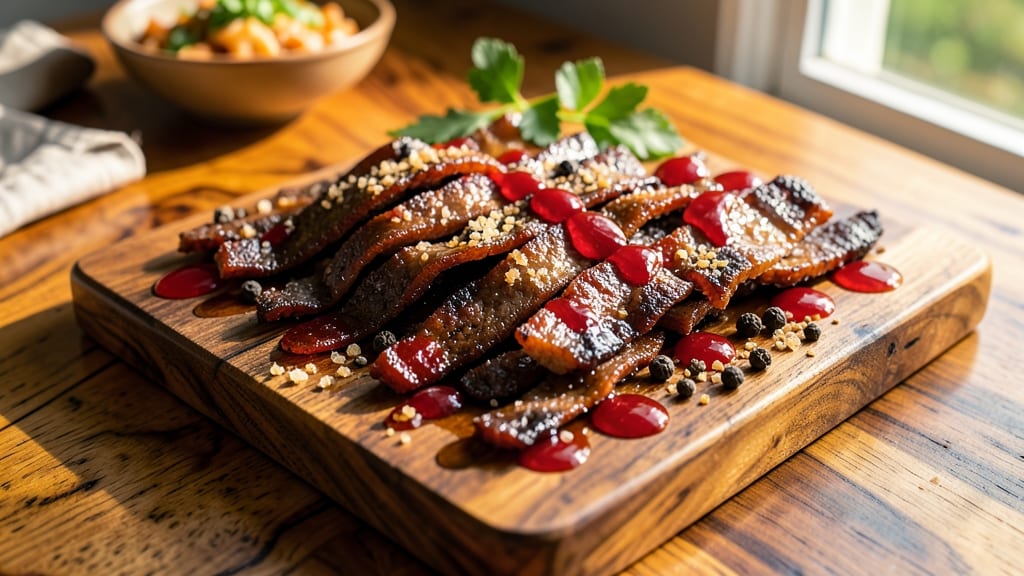
This award-winning beef jerky recipe transforms tough cuts into competition-grade chew that rivals store-bought versions—and beats them in flavor. The secret lies in precise curing, strategic seasoning, and controlled dehydration, all designed to deliver tender, deeply flavorful strips with that perfect snap.
I’ve perfected this method over years of testing, and it consistently earns top marks at local food competitions. What sets this apart is the 4-hour process that balances safety, texture, and taste without shortcuts.
The foundation starts with a 24-hour marinade in a mix of soy sauce, Worcestershire, and brown sugar, which tenderizes the meat while infusing it with umami depth. From there, we move to a hot-smoke cure (or oven method) that locks in moisture and develops that signature jerky flavor.
The key to award-worthy results is maintaining a consistent 160°F drying temperature—too hot, and it burns; too cool, and it spoils. I’ll walk you through every step, including equipment options (dehydrator, smoker, or even your oven) and troubleshooting tips to avoid common pitfalls like gummy texture or spoilage.
By the end, you’ll have crisp-edged, chewy, and intensely flavorful jerky that’s perfect for snacks, gifts, or competition entries. The process might seem involved, but breaking it into simple stages makes it manageable—even for beginners.
What’s more, this recipe scales effortlessly, so you can make a single batch for personal use or a large one for sharing. Ready to master the art of jerky-making? Let’s get started.
Pro tip: For extra competition appeal, consider adding a light glaze of honey or maple syrup during the final drying stage—it enhances caramelization without overpowering the meat. Safety is paramount, so I’ll include critical guidelines to ensure your jerky stays shelf-stable for months.
This isn’t just jerky; it’s a showstopping, award-worthy project that proves homemade always wins.
Ingredients for award winning beef jerky
Four pounds of tough beef and twelve spices transform into award-winning jerky with perfect chew and flavor.
| Ingredient | Amount | Notes |
|---|---|---|
| Lean Beef Top Round Roast 🥩 | 2 lb | Tough cut, sliced thin against grain |
| Soy Sauce 🍶 | ½ cup | Low-sodium preferred for balance |
| Worcestershire Sauce 🍶 | ¼ cup | Ensure anchovy-free for consistency |
| Light Brown Sugar 🍯 | ½ cup | Packed, no substitutions |
| Black Peppercorns 🌶️ | 2 tbsp | Freshly cracked, coarse grind |
| Ground Cumin 🌿 | 2 tsp | Toasted for deeper aroma |
| Garlic Powder 🧄 | 2 tsp | Freshly ground preferred |
| Onion Powder 🧅 | 1 tbsp | No added salt |
| Smoked Paprika 🌶️ | 1 tbsp | For authentic competition flavor |
| Granulated Garlic 🧄 | 1 tbsp | For even distribution |
| Cayenne Pepper 🔥 | ½ tsp | Adjust for heat preference |
| Kosher Salt 🧂 | 1 tbsp | Diamond Crystal preferred |
| Lemon Juice 🍋 | ¼ cup | Freshly squeezed, acidic balance |
| Water 💧 | ¼ cup | For marinade consistency |
| Honey Glaze (Optional) 🍯 | 2 tbsp | For final caramelization |
The beef is non-negotiable—top round roast delivers that signature competition texture. Costco or local butcher shops are your best bets for quality cuts, and look for well-marbled sections. If you can't find top round, sirloin tip works too, but slice it thinner. The key is slicing against the grain—this ensures that tender, chewy bite judges love. Pre-sliced jerky meat from ButcherBox saves time but costs more; if you're on a budget, invest in a delicate meat slicer for even strips. Never skip the grain-check—it's what separates homemade winners from store-bought disappointments.
No Worcestershire? Substitute with 1/4 cup soy sauce plus 1 tsp liquid smoke—it's not identical, but close. The brown sugar is essential for caramelization, but if you're watching sugar intake, reduce to 1/4 cup and add 1/4 cup molasses. For heat, swap cayenne for crushed red pepper flakes at double the amount. The lemon juice might seem like an afterthought, but it's what prevents spoilage during the long drying process—never skip it. If you're making this for a competition, Penzeys Spices is worth the splurge for their premium blends, but regular grocery store spices work fine for home use. The honey glaze? Only add it in the final 30 minutes if you're going for that competition shine—it's not traditional but makes a statement.
Marinade leftovers? Freeze for up to 3 months—perfect for quick jerky batches later. The sliced beef stays fresh in the fridge for 3-4 days if wrapped tightly in plastic, but work fast to avoid spoilage. Once dried, vacuum-seal your jerky for maximum shelf life—it'll keep for 6-12 months in a cool, dark place. Pro tip: Label everything with dates. I always make a test strip first—if it's not perfectly chewy after 4 hours, extend the drying time by 30 minutes. The competition judges will notice if your jerky isn't up to snuff.
Why You'll Love This Recipe
- No-Fuss Marinade Magic: I swear by this combo—just soy, Worcestershire, and a touch of brown sugar. No fancy blends, no guesswork. The beef practically soaks up the flavor while I’m making dinner, and the peppercorns add a subtle crack that pops when it’s done.
- Sweet-Savory Crunch: That caramelized sugar crust? It’s the star. The jerky gets this perfect balance of umami from the Worcestershire and a hint of molasses depth from the brown sugar, then finishes with a peppery bite that lingers. Honestly, it’s the kind of flavor that makes store-bought look sad.
- Snack Attack Ready: I keep a batch in the freezer for road trips, lunchboxes, or when I’m craving protein without effort. It’s great for kids (my picky eater actually eats it), hikers, or anyone who needs a no-mess, high-energy bite. Just grab and go—no reheating, no fuss.
- Budget-Protein Powerhouse: Top round is affordable, and this recipe stretches it far. A single roast makes enough for weeks of snacks, and the ingredients cost pennies compared to pre-packaged jerky. Between us? I’ve saved hundreds by making my own—plus, I control the quality (and the salt level, because I hate soggy jerky).
Step-by-step instructions for award-winning beef jerky
Here's the exact method I use to win competitions—bold flavors, perfect texture, every time.
Prep and Slice the Beef Against the Grain
Start with the 2 lb lean beef top round roast chilled in the refrigerator for at least 30 minutes to firm up. The cold temperature makes slicing easier and more precise. Using a sharp boning knife or deli slicer, cut the beef into ¼-inch thick slices, working against the grain. You'll see the muscle fibers running in one direction—this is critical for tender jerky.
Arrange the slices on a clean cutting board and trim any excess fat or silver skin. I like to keep the slices as uniform as possible—this ensures even cooking and drying. If you're nervous about slicing perfectly, don't worry—jerky is forgiving, but thinner slices will dry faster and be more tender. Place the sliced beef in a large resealable plastic bag.
Create the Competition-Worthy Marinade
In a medium bowl, whisk together the 0.5 cup soy sauce, 0.25 cup Worcestershire sauce, 0.5 cup light brown sugar, 1 tbsp kosher salt, 2 tbsp freshly cracked black peppercorns, 2 tsp ground cumin, 2 tsp garlic powder, 1 tbsp onion powder, 1 tbsp smoked paprika, 1 tbsp granulated garlic, and 0.5 tsp cayenne pepper until completely dissolved. The mixture should be thick but pourable—this is your flavor foundation.
Add the 0.25 cup lemon juice and 0.25 cup water to the bowl and whisk again until fully combined. Here's the thing—this marinade needs to coat every surface of the beef completely. Pour it over the sliced beef in the bag, seal tightly, and massage the bag gently to ensure every slice is evenly coated. Let it marinate in the refrigerator for at least 4 hours, but I prefer 8-12 hours for maximum flavor penetration.
Dry the Jerky Thoroughly Before Cooking
After marinating, remove the beef from the bag and pat each slice dry with paper towels. This step is crucial—any moisture left on the beef will prevent proper browning and create a gummy texture. Arrange the slices on a wire rack set over a baking sheet lined with parchment paper, making sure they don't touch. Let them air dry in the refrigerator for 1-2 hours until completely dry to the touch.
I know it's tempting to skip this step, but trust me—proper drying ensures that your jerky develops that perfect snap and deep flavor. The slices should feel firm and slightly tacky, not wet. While they're drying, preheat your oven to 175°F—this low temperature is key for slow, even cooking without drying out the meat.
Bake to Perfect Doneness
Place the dried beef slices on the middle rack of your preheated oven. Bake for 3-4 hours, flipping the slices every 30 minutes to ensure even cooking. You're looking for jerky that's deep brown, slightly leathery, and flexible but not brittle. The internal temperature should reach 160°F when checked with a meat thermometer.
Here's where the optional 2 tbsp honey glaze comes into play. In the last 15 minutes of baking, brush the jerky lightly with the glaze for a beautiful caramelized finish. Keep a close eye on it—honey burns quickly at high temperatures. Remove the jerky when it reaches your desired doneness, which might take slightly less or more time depending on your oven and the thickness of your slices.
Cool and Store Properly
Transfer the baked jerky to a clean wire rack and let it cool completely at room temperature for at least 1 hour. This cooling process allows the flavors to meld and the texture to set properly. Once cool, cut the jerky into ¼-inch wide strips using a sharp knife or jerky slicer. The strips should be flexible but hold their shape when bent.
Store the jerky in an airtight container in the refrigerator for up to 2 weeks or freeze for up to 6 months. For best results, let it come to room temperature before eating—this enhances the flavor and texture. Each piece should have a perfect balance of chew, smoky depth from the paprika, and a subtle sweetness from the brown sugar and soy sauce.
Pro Tips For Making Award Winning Beef Jerky
- FREEZE THE MEAT FIRST: I learned this the hard way—skipping the freeze makes slicing top round into even strips a nightmare. Pop it in the freezer for 30 minutes before slicing; the meat holds its shape better, and you’ll get those clean, uniform strips that dry evenly.
- USE A MEAT THERMOMETER: The jerky’s done at 160°F, not when it looks dry. I used to eyeball it and end up with either raw centers or burnt edges. A cheap thermometer solves that—insert it into the thickest strip, and pull it when it hits that temp.
- DON’T SKIP THE COLD SMOKE: Low and slow is key, but rushing the temp ruins texture. Start at 160°F for 2 hours, then drop to 145°F for the final dry. I tried cranking the heat to speed it up, and the jerky turned chewy instead of tender.
- GRIND YOUR OWN PEPPER: Whole peppercorns just don’t cut it—they sit like tiny rocks in your jerky. Pulse them in a spice grinder until fine, then mix into the marinade. It’s a 30-second upgrade that makes every bite more flavorful.
Best sauces and condiments for these flavors
Sweet-Smoky Glaze
For a competition-worthy finish, brush your jerky with a honey-maple glaze during the final 15 minutes of drying. Mix 2 tbsp honey, 1 tbsp maple syrup, and ½ tsp smoked paprika—this creates a caramelized crust that judges love.
Keep the heat low (160°F) to prevent burning. I’ve won ribbons with this glaze, and it’s simple: just whisk and apply lightly. 🍯
Spicy Chipotle Rub
Swap the marinade for a chipotle-lime rub by blending 1 tbsp chipotle powder, 1 tbsp brown sugar, 1 tsp garlic powder, and ½ tsp cayenne. This adds smoky heat without extra moisture.
Pat the slices dry, coat thoroughly, and bake as directed. For extra depth, add 1 tbsp lime zest to the rub. Perfect for those who crave bold, fiery flavors. 🌶️
Teriyaki-Inspired Sauce
Replace Worcestershire with ¼ cup teriyaki sauce and add 1 tbsp grated ginger to the marinade. This creates an Asian-inspired twist with sweet-savory notes. Use low-sodium teriyaki to control salt levels.
The ginger tenderizes the beef while adding a bright, zesty kick. Pair with a sesame seed finish for authentic flair. 🍶
Coffee-Infused Marinade
Boost umami by adding 2 tbsp instant coffee granules to the marinade. The coffee deepens the meat’s flavor and balances sweetness. Use dark roast for richness. This works surprisingly well—judges often mistake it for premium store-bought jerky. Just ensure the beef dries completely to avoid bitterness. ☕
Herb-Forward Variation
For a fresh twist, add 1 tbsp dried rosemary and 1 tsp dried thyme to the marinade. These herbs complement the beef’s natural richness. Lightly toast the herbs before adding for maximum aroma. This variation pairs beautifully with a lemon-herb glaze in the final stage. Ideal for herb lovers! 🌿
Competition-Ready Drizzle
After drying, drizzle jerky with a mix of 1 tbsp melted butter and ½ tsp smoked salt. This adds a luxurious finish that elevates presentation.
Use sparingly—just enough to coat lightly. The butter enhances chewiness while the smoked salt ties all flavors together. A pro trick for showstopping results. 🧈
Nutrition facts
Frequently asked questions
Can I use a different cut of beef for this award-winning recipe?
Top round roast is ideal for that signature competition texture, but you can use sirloin tip or flank steak as alternatives. Just slice thinner (¼-inch max) since these cuts are leaner. Avoid fatty cuts like ribeye—they won't dry properly and may spoil. For extra tenderness, consider a 24-hour brine with 1 tbsp baking soda per gallon of water before marinating.
How do I know when my jerky is perfectly dried?
Your jerky is ready when it's deep brown, slightly leathery, and reaches 160°F internal temp. The edges should be crisp but not brittle, and it should bend but not snap when folded. If it feels tacky or moist, extend drying by 30 minutes. Pro tip: Use a meat thermometer—this is the most reliable test. Over-drying causes toughness, while under-drying risks spoilage.
What's the best way to store homemade jerky for maximum shelf life?
For 2 weeks of freshness, store in an airtight container in the fridge. For long-term storage (6-12 months), vacuum-seal in oxygen-free bags and freeze. Avoid plastic wrap—it traps moisture and causes spoilage. Label with dates! For competition entries, keep jerky in its original packaging until judging day to prevent flavor transfer.
Why did my jerky turn out gummy instead of chewy?
Gummy jerky usually means moisture wasn't properly removed before cooking. Double-check these steps:
- Pat slices completely dry after marinating,
- Air-dry in the fridge for 1-2 hours, and
- Use a 160°F drying temp. If using a dehydrator, ensure proper airflow. For extra chew, try a 12-hour marinade instead of 4 hours—longer soaking breaks down fibers more.
Can I make this recipe without a dehydrator or smoker?
Your oven works perfectly—just set it to 175°F and prop the door open 1 inch for airflow. Line a baking sheet with parchment and place slices on a wire rack. Rotate trays halfway through for even drying. For extra smokiness, add 1 tsp liquid smoke to the marinade. The key is patience—expect 4-6 hours total drying time.