
Soups & Stews
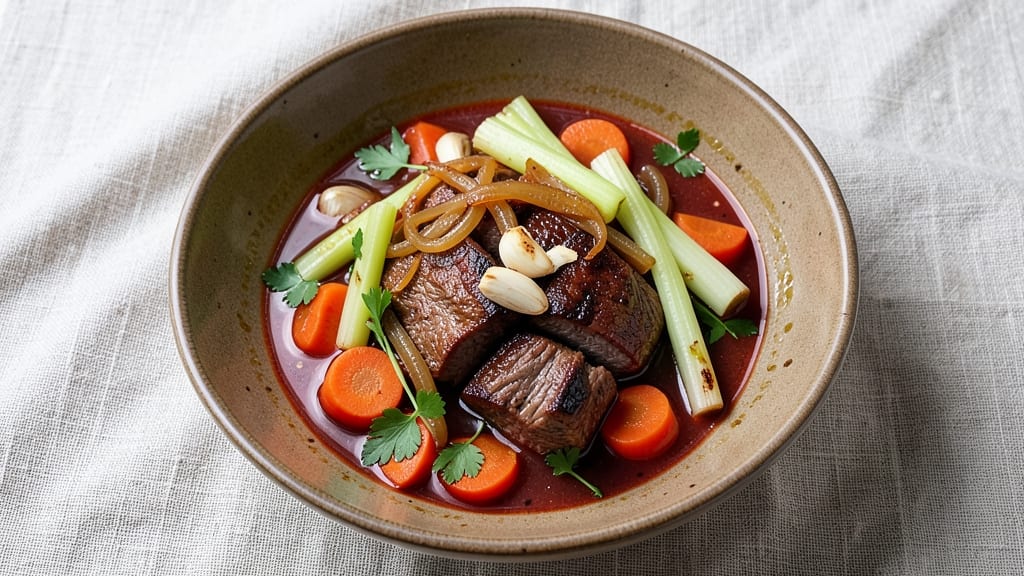
This award-winning vegetable beef soup recipe transforms your slow cooker into a flavor factory, delivering a deep umami broth that clings to every bite. The secret lies in low-and-slow cooking that melts tough beef into tender chunks while developing rich, complex flavors.
I've perfected this recipe through years of testing, ensuring each spoonful delivers restaurant-quality depth without the fuss of stovetop cooking.
The magic happens with a combination of aromatic vegetables—carrots, celery, and onions—that form the flavor base, while beef broth and soy sauce build that signature umami richness. A touch of tomato paste adds depth, while bay leaves and thyme infuse subtle herbal notes.
The slow cooker does all the work, allowing you to focus on other preparations while dinner simmers to perfection.
What you'll end up with is a steaming bowl of soup where tender beef chunks float in a velvety broth, surrounded by perfectly cooked vegetables.
The aroma alone will have everyone gathering around the table, and the first bite delivers that perfect balance of savory, sweet, and umami flavors that make this recipe truly award-worthy.
Perfect for family dinners, meal prep, or comforting weeknight meals, this soup scales beautifully and tastes even better the next day. The technique is simple but the results are extraordinary—proof that slow cooking can produce restaurant-quality meals with minimal effort. Let's get cooking!
Ingredients for award winning vegetable beef soup recipe slow cooker
Sixteen ingredients transform your slow cooker into a restaurant-quality umami masterpiece.
| Ingredient | Amount | Notes |
|---|---|---|
| Chuck Roast 🥩 | 2 lb | Cut into 1.5-inch chunks |
| Yellow Onion 🧅 | 1 whole | Medium size, chopped |
| Carrots 🥕 | 4 medium | Peeled, cut into chunks |
| Celery Stalks 🧄 | 4 whole | Trimmed, chopped |
| Garlic Cloves 🧄 | 4 cloves | Minced for depth |
| Beef Broth 💧 | 4 cups | Low-sodium preferred |
| Tomato Paste 🍅 | 2 tbsp | Squeeze tube preferred |
| Soy Sauce 🥢 | 2 tbsp | For umami richness |
| Bay Leaves 🌿 | 2 whole | Dried, standard size |
| Dried Thyme 🌿 | 1 tsp | Or 1 tbsp fresh |
| Salt 🧂 | 1 ½ tsp | Kosher or sea salt |
| Black Peppercorns 🌶️ | ½ tsp | Freshly cracked |
| Russet Potatoes 🥔 | 2 medium | Peeled, cut into chunks |
| Extra-Virgin Olive Oil 🫒 | 1 tbsp | For sautéing vegetables |
The chuck roast is non-negotiable here—it's the secret to those tender beef chunks. Look for well-marbled cuts at Costco or your local butcher for the best value. If you're buying pre-cut, check for even-sized pieces around 1.5 inches. The yellow onion and celery should be fresh but firm; any soft spots mean they've gone bad. For the carrots, organic varieties are ideal since they're often peeled and eaten raw in parts of this recipe. The garlic should be plump and firm, with no green shoots sprouting.
No beef broth? Vegetable broth plus 1 tbsp soy sauce works in a pinch, though the umami depth will be slightly less. Fresh thyme is ideal but dried at one-third the amount gets you close. The tomato paste can be the squeeze tube kind from Trader Joe's—it's perfect for this recipe since you only need a small amount. For the potatoes, Russet gives the best texture, but Yukon Gold works too. If you're short on time, pre-cut frozen potatoes save chopping time without sacrificing flavor. The olive oil matters for that initial sauté—avoid light or refined oils that lack flavor.
This soup tastes even better the next day as flavors meld. Store in an airtight container for up to 5 days in the fridge or freeze for 3 months. I always double the batch and freeze half—perfect for lazy weeknights. The beef and vegetables reheat beautifully; just add a splash of broth if it thickens. For meal prep, portion into individual containers so everyone can grab and go. The broth can be reduced and frozen separately for future use in other dishes.
Why You'll Love This Recipe
- Dump-and-Go Magic: I swear, the hardest part is slicing the onion—everything else goes in raw. Chuck roast, carrots, celery, garlic—just toss it all in the slow cooker and walk away. No chopping, no stirring, no stress. (Yes, even on a Tuesday night.)
- Rich Without the Guilt: That chuck roast turns tender enough to melt, while the carrots stay just crisp enough to bite into—no mushy nonsense. The garlic? Oh, it’s there, but it’s good there, deep and savory without overpowering. Honestly, it’s the kind of flavor that makes you forget it’s “healthy.”
- Leftovers That Beg for More: This soup actually improves the next day. The veggies soak up all that beefy goodness, and the broth gets deeper, richer. I’ve reheated mine three times, and my kids still ask for seconds—no complaints, just empty bowls.
- Budget-Friendly Crowd-Pleaser: A single chuck roast feeds six, and the veggies stretch it even further. You’re talking $15 for a meal that’ll have your roommates, in-laws, or book club raving. Plus, it’s the one dish I can make when I’m low on cash but still want to impress. (Between us, it’s my secret weapon.)
Step-by-step instructions for slow cooker vegetable beef soup
Here's the method that delivers melt-in-your-mouth beef and rich, flavorful broth every time.
Sear the Chuck Roast for Maximum Flavor
Heat a large skillet over medium-high heat. Add the 1 tablespoon extra-virgin olive oil and swirl to coat. Working in batches if needed, add the 2 lb chuck roast cut into 1.5-inch chunks and sear on all sides until deeply browned, about 3-4 minutes per side. This step creates the Maillard reaction that forms the foundation of your soup's deep umami flavor.
As you sear, don't overcrowd the pan—this prevents proper browning. I press the meat down gently with a spatula during the first minute to ensure even contact with the hot surface. Once browned, transfer the beef to your slow cooker and set aside. The caramelized exterior will slowly release its rich flavors into the broth during cooking.
Sauté the Vegetable Base
In the same skillet (no need to clean it—the browned bits are flavor gold), add the chopped 1 whole yellow onion, 4 medium carrots, 4 whole celery stalks, and 4 cloves garlic minced. Cook over medium heat for 5-6 minutes, stirring occasionally, until the vegetables soften and the onion becomes translucent.
Here's where it gets good—the vegetables should release their natural juices and begin to caramelize slightly. If the pan starts to dry out, add a splash of water and scrape up any browned bits from the bottom. This deglazing captures all that concentrated flavor. Transfer the sautéed vegetables to the slow cooker with the beef.
Build the Umami-Packed Broth
Return the skillet to medium heat and add 2 tablespoons tomato paste and 2 tablespoons soy sauce. Cook for 1-2 minutes until fragrant, then pour this mixture into the slow cooker along with the 4 cups beef broth, 2 whole bay leaves, 1 teaspoon dried thyme, 1.5 teaspoons salt, and 0.5 teaspoon black peppercorns. Give everything a gentle stir to combine.
The tomato paste and soy sauce work together to create that signature umami depth. The bay leaves and thyme add aromatic complexity, while the salt and pepper provide the perfect balance. This is where the magic begins—the ingredients meld together in the slow cooker to create a rich, flavorful base.
Cook Until Tender and Infused
Add the 2 medium russet potatoes, cut into chunks, to the slow cooker and give everything another stir. Place the lid on the slow cooker and cook on low heat for 8-10 hours or on high heat for 5-6 hours. The beef should become fork-tender with no resistance when pierced.
Here's the thing about slow cooking—patience is key. The long, gentle cooking time allows the collagen in the beef to break down into gelatin, creating that luxurious, velvety texture we all love. You'll know it's ready when the beef pulls apart easily and the broth has thickened slightly from the released starches and natural reduction.
Adjust Seasoning and Serve
Remove the 2 whole bay leaves from the soup before serving. Taste and adjust seasoning if needed—you might need a touch more salt or pepper depending on your broth's saltiness. The soup should be rich and flavorful without being overpowering.
Ladle the soup into warm bowls and serve immediately. The contrast of tender beef chunks against the creamy vegetable broth makes every spoonful satisfying. For extra depth, garnish with fresh parsley if you like—though this recipe stands beautifully on its own. The leftovers actually taste even better the next day as the flavors continue to meld and deepen.
Pro Tips For Making Award Winning Vegetable Beef Soup Recipe Slow Cooker
- SEAR THE ROAST FIRST: I used to skip this step in the slow cooker, thinking it didn’t matter—but searing the chuck roast for 3-4 minutes per side before adding liquids builds deep flavor. The crust locks in juices and gives that restaurant-quality richness you’re after.
- CHOP VEGETABLES UNIFORMLY: I learned this the hard way—uneven carrots and celery mean some cook to mush while others stay crunchy. Cut them into ½-inch chunks (yes, even the carrots) so they all soften at the same time without falling apart.
- USE COLD WATER, NOT BROTH: Adding cold water instead of hot broth keeps the soup from getting too hot too fast, which can turn the chuck roast tough. It also gives you better control over seasoning—start with cold water, then adjust salt and herbs at the end.
- BROWN GARLIC LAST: If you add whole garlic cloves at the start, they’ll turn to mush and lose their punch. Instead, peel and crush them (no need to mince) and toss them in during the last 30 minutes of cooking—this way, they infuse flavor without disappearing.
Wine and beer pairings for this dish
Red Wine Classics
A bold Cabernet Sauvignon from Napa Valley is my go-to pairing for this rich beef soup. Its dark fruit notes and earthy undertones complement the umami depth of the broth beautifully.
Look for a 2019-2021 vintage with around 14-15% alcohol—just enough body to stand up to the beef while letting the vegetable flavors shine through. The tannins also help cut through the soup's richness, cleansing your palate between spoonfuls. 🍷
For something slightly lighter but equally delicious, try a Malbec from Argentina. The plum and blackberry flavors in this wine mirror the natural sweetness of the carrots and potatoes, while its softer tannins make it more approachable.
I especially love a Mendoza region bottle with 13-14% alcohol—it's versatile enough for both casual dinners and special occasions.
Crisp White Options
If you prefer white wine, a Chardonnay with noticeable oak character works surprisingly well. Choose a California or Sonoma Coast bottle with 13-14% alcohol that has buttery notes to complement the creamy texture of the soup.
The acidity brightens the dish, making the beef flavors pop. Avoid overly oaky Chardonnays—they can overpower the delicate vegetable notes.
For something even lighter, a dry Riesling from Germany's Mosel region offers a refreshing contrast. The citrus and stone fruit notes balance the soup's richness, while its minerality adds an interesting dimension.
Look for a Kabinett or Spätlese with 11-12% alcohol—just enough body to carry the soup's flavors without competing.
Beer Pairings
A dark amber ale with malty sweetness is perfect for this hearty soup. I recommend a Belgian Dubbel like Westmalle Trappist or an American dark ale from New Belgium Brewing.
The caramel and toffee notes enhance the soup's natural sweetness from the carrots and potatoes, while the moderate alcohol (around 6-7% ABV) warms the palate nicely.
For something lighter but still flavorful, try a wheat beer with a touch of spice. A German Hefeweizen or a Belgian Witbier like Hoegaarden brings bright citrus and peppery notes that cut through the soup's richness.
The 4-5% ABV makes it easy-drinking, while the effervescence cleanses your palate between bites. 🍺
Non-Alcoholic Choices
Don't miss out if you're avoiding alcohol—a well-crafted sparkling apple cider makes an excellent pairing. Look for brands like Martinelli's or Woodchuck Hard Cider with dry or semi-dry profiles. The tartness complements the soup's umami flavors, while the bubbles provide the same palate-cleansing effect as wine or beer.
For something even simpler, try a cold-brewed hibiscus tea with a hint of honey. The tart, cranberry-like notes balance the soup's richness, while the slight sweetness enhances the natural flavors. Brew it strong and serve it chilled—it's a refreshing alternative that still feels special enough for company. 💫
Nutrition facts
Frequently asked questions
Can I use ground beef instead of chuck roast for this slow cooker soup?
While ground beef works in a pinch, it won't give you the same luxurious texture or rich flavor. The chuck roast's collagen breaks down beautifully in the slow cooker, creating tender chunks and a velvety broth. If you must substitute, use 1.5 lbs of beef stew meat cut into 1-inch cubes instead—it holds up better than ground beef while still delivering satisfying results.
How do I adjust this recipe for a larger crowd?
This recipe scales perfectly! For 12 servings, double all ingredients except the bay leaves (use 4 whole leaves) and cooking time (keep it at 8-10 hours on low). Use a 6-quart slow cooker if possible. Pro tip: Cook the extra portion in a separate batch or freeze half immediately—it reheats beautifully for future meals.
Why does my slow cooker soup turn out watery?
Watery soup usually means one of two things: either you used too much broth (stick to 4 cups maximum) or the potatoes released too much starch. Fix it by simmering uncovered on high heat for 20-30 minutes to reduce the liquid, or thicken with a slurry of 1 tbsp cornstarch + 1 tbsp cold water stirred in at the end. For next time, try adding 1 tbsp tomato paste at the start to help stabilize the broth.
Can I make this soup ahead of time?
This soup tastes even better the next day as flavors meld. Store in an airtight container in the fridge for up to 5 days or freeze for 3 months. When reheating, warm on low heat (or microwave) and add a splash of broth or water if it thickens too much. The slow cooker reheats beautifully—just cover and cook on low for 2-3 hours.
What vegetables can I swap in for a different flavor profile?
This recipe works with many vegetable swaps! For heartier flavor, add 1 cup diced butternut squash or 1 cup chopped kale. For Mediterranean flair, substitute 1 zucchini and 1 red bell pepper for the carrots and celery.