
Side Dishes
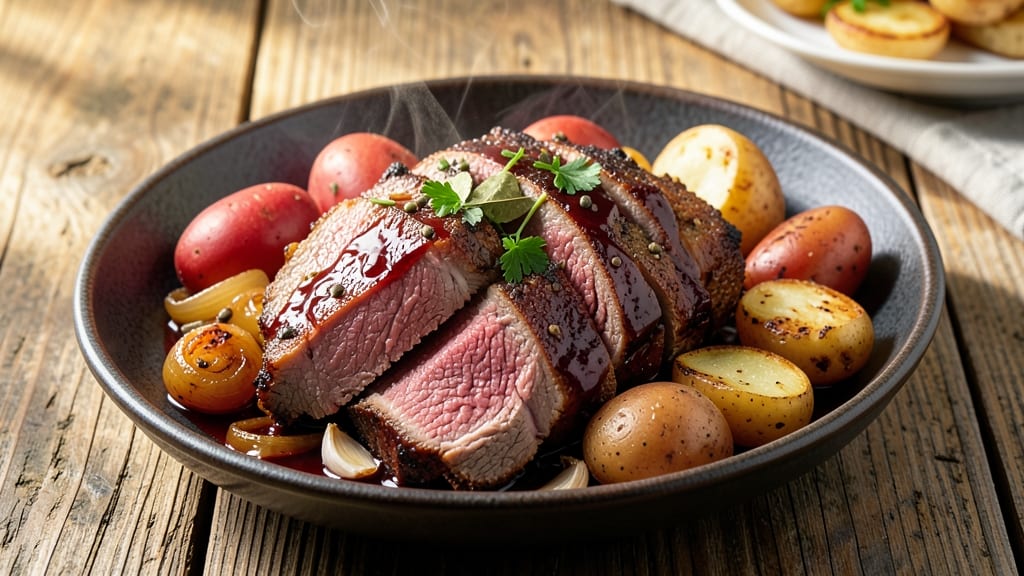
This awesome corned beef recipe transforms a simple brisket into a showstopping centerpiece with crispy potato crowns that steal the show. The secret lies in slow-cooking the beef until it's fork-tender while building deep, smoky flavors from a carefully balanced spice blend.
I've perfected this method over years of holiday tables—where every bite gets rave reviews—and the crispy potato topping adds a restaurant-worthy finish that transforms a classic into something extraordinary.
The magic starts with a foolproof brining process that ensures the beef stays moist and flavorful, followed by slow cooking that develops rich, caramelized edges. What sets this apart is the crispy potato crowns baked alongside, creating golden, flaky layers that contrast perfectly with the tender beef.
This isn't your typical corned beef—it's a plated masterpiece that looks as impressive as it tastes, making it ideal for special occasions or when you want to impress without fuss.
By the time you serve this dish, you'll have perfectly tender beef with a deep, savory flavor profile and those crispy potato crowns that add texture and visual appeal. The combination of slow-cooked richness and crispy topping creates a balance that's both comforting and exciting.
Serve with a tangy mustard sauce or pickled vegetables for the full experience—this is the kind of meal that turns dinner into an event.
Whether you're preparing for a holiday feast or a weekend celebration, this recipe delivers restaurant-quality results with minimal effort. The slow cooking means you can focus on other preparations while the oven does the work, and the crispy potato topping adds a touch of elegance that elevates the dish.
Let's get started on creating a corned beef masterpiece that will have everyone asking for the recipe.
Ingredients for awesome corned beef
Six ingredients transform brisket into a showstopper with crispy potato crowns—restaurant quality at home.
| Ingredient | Amount | Notes |
|---|---|---|
| Beef Brisket 🥩 | 4 lb | Flat cut, 1-inch thick slices |
| Yellow Onions 🧅 | 2 large | Sliced into 1/4-inch rounds |
| Garlic Cloves 🧄 | 8 cloves | Minced for brining |
| Russet Potatoes 🥔 | 4 large | For crispy crowns |
| Bay Leaves 🍃 | 4 whole | Dried, for brining |
| Mustard Seeds 🌶️ | 2 tsp | Whole, for depth |
| Black Peppercorns 🌶️ | 1 tbsp | Crushed, for heat |
| Ground Cloves 🌶️ | 1 tsp | For warmth |
| Salt 🧂 | 2 cups | Kosher, for brining |
| Apple Cider Vinegar 🍎 | 1 cup | For tangy brining |
| Water 💧 | 4 cups | For brining solution |
| Unsalted Butter 🧈 | ½ cup | For potato crowns |
| Heavy Cream 🥛 | ¼ cup | For potato crowns |
| Dijon Mustard 🍯 | 1 tbsp | For potato crowns |
| Fresh Parsley 🌿 | ¼ cup | Chopped, for garnish |
The brisket is non-negotiable here—flat cut, 1-inch thick slices from Costco or Whole Foods give the best texture. Look for good marbling, not lean cuts. Trader Joe's often has pre-sliced brisket if you're short on time, but nothing beats a whole pack for flavor. The potatoes? Russets are your friends—their high starch content is what creates those golden, crispy crowns. I always grab the biggest ones I can find, about 4 large potatoes, because size matters for that dramatic presentation.
No fresh parsley? Dried parsley at half the amount works in a pinch, but fresh is ideal for garnish. The apple cider vinegar can be swapped for white vinegar if needed, but Bragg's or Mott's add a nice depth. For the potato crowns, if you can't find heavy cream, full-fat coconut milk gives a similar richness. The butter must be unsalted—Plugrá or Land O'Lakes are reliable choices. And if you're worried about the brining time, don't be—this recipe accounts for it, and the results are worth the wait.
Brined beef keeps in the fridge for 3 days before cooking, so plan ahead. The potato crowns are best made fresh but can be prepped a day ahead—just store them uncovered on a wire rack. Once cooked, the entire dish reheats beautifully—350°F for 20 minutes brings everything back to life. Leftovers? Store the beef and potatoes separately—they reheat differently. The beef stays tender for 4 days in the fridge, while the potato crowns are best eaten within 2 days for maximum crisp.
Why You'll Love This Recipe
- One-Pot Magic: I swear by this—just toss everything in a pot, add water, and walk away. The brisket and potatoes soften together while the onions caramelize right into the broth. No chopping boards, no extra pans, just hands-off perfection.
- Deep, Savory Crunch: That crispy skin on the brisket? The way the garlic and bay leaves linger in every bite? It’s the kind of flavor that makes you pause mid-chew. Honestly, the potatoes soak up all the goodness until they’re buttery and fluffy—no extra seasoning needed.
- Leftovers That Shine: Between us, this dish begs for seconds, which means you’ll have meals for days. Reheat the brisket in a skillet for crispy edges, or mash the potatoes into hash the next morning. My freezer’s always stocked with these—zero waste, maximum convenience.
- Budget-Friendly Feast: A single brisket feeds a crowd for next to nothing. The potatoes stretch the meal, and the onions/garlic add depth without costing extra. I’ll be real: this is how I feed my family for under $15 and still have leftovers. Solid math for a dish this satisfying.
Step-by-step instructions for spiced brisket with crispy potato crowns
Here's how to transform a simple brisket into showstopping corned beef with perfectly crispy potato crowns.
Prepare the Brine for Maximum Flavor
In a large stockpot, combine the 4 cups water, 1 cup apple cider vinegar, 2 cups salt, 4 whole bay leaves, 2 tsp mustard seeds, 1 tbsp crushed black peppercorns, and 1 tsp ground cloves. Bring to a simmer over medium-high heat until the salt fully dissolves. You'll see the solution turn cloudy and smell intensely aromatic—this is where all the magic begins.
While the brine simmers, place the 4 lb beef brisket in a large zip-top bag. Pour the hot brine over the meat, making sure it's completely submerged. Seal the bag and massage the brisket gently to distribute the seasoning. Here's the thing—let it brine in the refrigerator for at least 12 hours (I prefer 24 hours for maximum tenderness). The longer it soaks, the deeper the flavor penetration and the more tender the meat becomes.
Create the Potato Crowns with Perfect Texture
While the brisket brines, prepare the potatoes. Cut the 4 large russet potatoes in half lengthwise and scoop out the centers, leaving a ½-inch thick shell. You'll have about 1 cup of potato flesh removed—save this for another use or mash it with 0.25 cup heavy cream and 1 tbsp Dijon mustard for a creamy side dish.
Preheat your oven to 425°F. In a small bowl, mix together 0.5 cup unsalted butter, 0.25 cup heavy cream, and 1 tbsp Dijon mustard. Brush this mixture generously over the potato shells, getting into all the crevices. Place them on a parchment-lined baking sheet and bake for 25-30 minutes until the edges are deep golden brown and the centers are tender when pierced with a fork. Here's where crispy meets creamy—don't skip the butter mixture, it's what makes these crowns irresistible.
Cook the Brisket to Fork-Tender Perfection
Remove the brisket from the brine, rinse it briefly under cold water, and pat it completely dry with paper towels. This step is crucial—wet meat steams instead of searing. Place the brisket in a Dutch oven, fat-side up, and cover with water. Bring to a boil over high heat, then immediately reduce to a gentle simmer. Here's the key: cook for 3 hours uncovered, then add the 2 large sliced yellow onions and 8 minced garlic cloves, cover, and cook for another 2 hours. The meat should be fork-tender with a rich, spiced broth.
Real talk: the brisket will be tender at 200°F internal temperature, but the broth should be deeply flavorful. If it's not, simmer uncovered for another 15-20 minutes to reduce it slightly. This is where patience pays off—rushing leads to tough meat and weak flavor.
Rest and Slice for Maximum Juiciness
Transfer the brisket to a cutting board and let it rest for 15-20 minutes before slicing. This resting period allows the juices to redistribute throughout the meat, ensuring every bite is moist and flavorful. While it rests, skim any excess fat from the cooking liquid and reduce it over medium heat until it's thick enough to coat the back of a spoon. This becomes your delicious gravy—simply whisk in 0.25 cup heavy cream and season with salt and pepper to taste.
Slice the brisket against the grain into ¼-inch thick pieces. The meat should pull apart easily with a fork, and each slice should be generously coated with that spiced, aromatic gravy. The contrast of tender brisket with crispy potato crowns is what makes this dish truly special—don't overlook the importance of proper slicing and resting.
Pro Tips For Making Awesome Corned Beef
- Sear the Brisket First: I learned this the hard way—skipping the sear means flavor gets lost in the slow cook. Heat a heavy pot until smoking hot, then sear the brisket on all sides for 3-4 minutes per side. The crust locks in juices and adds depth that just simmering can’t match.
- Peel Potatoes Last: Russets break down fast in liquid, so peel them right before adding to the pot. If you peel too early, they’ll turn to mush—especially if you’re cooking for more than 2 hours. Keep them whole with skins on until the very end for structure.
- Don’t Crowd the Potatoes: Tossing potatoes in like they’re going to a buffet? Bad move. Overpacking them means uneven cooking and soggy results. Layer them loosely in the pot so they can float and crisp slightly on the edges—aim for a single layer or two at most.
- Add Garlic Late: Whole garlic cloves can turn bitter if cooked too long, and minced garlic burns in seconds. Tuck 3-4 unpeeled cloves into the brisket’s fat cap before the final hour, or stir in minced garlic only in the last 15 minutes. The difference is noticeable.
Essential equipment for perfect results
Dutch Oven Essentials
A Dutch oven is your secret weapon for this recipe—I swear by my Le Creuset 6-quart for even heat distribution and durability. The deep sides prevent spills while cooking the brisket, and it doubles as a serving dish for that impressive presentation.
If you don't have one, a heavy-bottomed stainless steel pot (like All-Clad) works too, but avoid nonstick—it can't handle the high heat needed for crispy edges. 🔥
Precision Thermometer
Never guess the temperature again—use a meat thermometer with a probe that reaches the center of the brisket. My go-to is the Thermoworks Smoke because it's durable and accurate to ±1°F.
Insert it horizontally into the thickest part of the brisket to monitor internal temp. The brisket is perfect at 200°F, but the thermometer helps you avoid overcooking while ensuring it's tender.
Potato Crown Tools
For those crispy potato crowns, you'll need a sharp chef's knife (I use a Wüsthof) and a mandoline for even slices if you're feeling fancy. A wire cooling rack is also essential—it keeps the crowns crispy by allowing air circulation while they bake.
Pro tip: Line your baking sheet with parchment paper for easy cleanup and even browning. 💫
Brining Bag
Use a large zip-top gallon bag (like Hefty) for the brining process—it's sturdy enough to hold the brisket and lets you massage the brine into the meat. If you're worried about leaks, double-bag it.
For extra security, place the bag in a large bowl to catch any potential spills. This step is non-negotiable for tender, flavorful beef.
Resting Rack
A wire cooling rack isn't just for potatoes—it's perfect for resting the brisket after cooking. Elevating the meat allows air to circulate, keeping it warm while juices redistribute.
I place mine on a large baking sheet to catch any drippings. This small investment makes a huge difference in keeping your corned beef moist and delicious. 💡
Nutrition facts
Frequently asked questions
Why does the recipe call for brining the beef for 24 hours?
The 24-hour brine is key for two reasons: it ensures the beef stays fork-tender and infuses it with deep, spiced flavor. The salt and spices penetrate the meat completely, creating that signature corned beef taste. For best results, don't skip this step—even 12 hours won't give the same level of tenderness or flavor.
Can I make the potato crowns ahead of time?
Yes! Prep the potato shells 1 day ahead by brushing them with the butter-cream mixture and storing them uncovered on a wire rack. Bake them fresh before serving to maintain crispiness, but they'll stay fresh in the fridge for up to 24 hours. Pro tip: Reheat at 400°F for 5-10 minutes to restore crispiness.
What's the best way to reheat leftover corned beef?
Reheat the beef in a covered pot with ¼ cup broth or water over low heat until warmed through (165°F). For the potato crowns, pop them in a 400°F oven for 5-10 minutes to restore crispiness. Never microwave—it turns the beef rubbery and the potatoes soggy.
Can I substitute the brisket with another cut of beef?
While brisket is ideal, you can use chuck roast or short ribs in a pinch. These cuts have more fat and connective tissue, which breaks down during the long cook, but they won't be as tender as brisket. For best results, increase cooking time by 30-60 minutes and monitor internal temperature closely.
How do I make the potato crowns extra crispy?
For maximum crispiness, bake the potato crowns on the middle rack of your oven and rotate the baking sheet halfway through. Use a wire rack instead of a baking sheet to allow air circulation, and brush with extra butter-cream mixture before baking. If they soften when reheating, broil for 2-3 minutes at the end.