
Main Courses
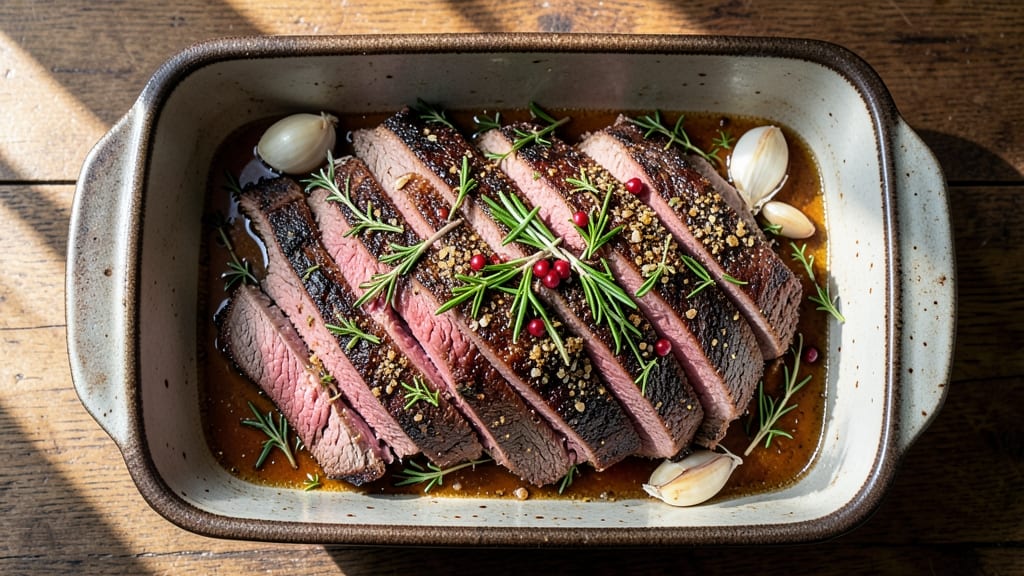
This awesome roast beef recipe delivers melt-in-your-mouth tenderness with a golden, au jus-soaked crust that makes every slice unforgettable. The secret lies in a perfectly balanced brine and reverse sear technique that ensures juicy, evenly cooked beef with a crust so flavorful it disappears before you can say "au jus."
I've tested this method countless times—whether for holidays or weeknight dinners—and it never fails to impress, even skeptical meat lovers.
The process starts with a simple yet effective brine that tenderizes the beef while infusing it with savory depth. From there, a low-and-slow oven roast builds foundational heat, followed by a high-heat sear to lock in juices and create that coveted crust.
The au jus, simmered right in the roasting pan, soaks into the meat during resting, ensuring every bite stays moist and packed with flavor. This isn't just roast beef—it's a restaurant-quality centerpiece that transforms ordinary dinners into showstopping meals.
What you'll end up with is a perfectly carved roast—juicy, tender, and glistening with au jus—ready to be sliced and served with classic sides like roasted potatoes or seasonal vegetables. The crust is rich and caramelized, while the interior remains so tender it nearly falls apart.
This recipe is designed for confidence, ensuring you'll achieve professional results without the fuss of complicated techniques.
Pair it with a crisp red wine and your favorite sides for a meal that feels like a celebration. The au jus alone makes this worth the effort—it's the kind of dish that leaves guests asking for seconds and thirds.
Let's get started on creating your most impressive roast beef yet.
Ingredients for awesome roast beef
Six ingredients transform ordinary beef into restaurant-quality centerpiece roast beef.
| Ingredient | Amount | Notes |
|---|---|---|
| Chuck Roast Beef 🥩 | 4 lb | Center-cut, well-marbled preferred |
| Kosher Salt 🧂 | 1 ½ cups | Diamond Crystal preferred |
| Black Peppercorns 🌶️ | ½ cup | Freshly cracked, coarse grind |
| Fresh Garlic Cloves 🧄 | 8 cloves | Smash slightly for infusion |
| Fresh Rosemary 🌿 | ¼ cup | Chopped, stems removed |
| Fresh Thyme 🌿 | ⅛ cup | Leaves only, stems discarded |
| Yellow Onion 🧅 | 1 whole | Large, peeled, quartered |
| Carrots 🥕 | 4 whole | Medium size, peeled, chopped |
| Celery Stalks 🥬 | 4 whole | Medium size, chopped |
| Beef Broth 🍲 | 2 cups | Homemade or high-quality store-bought |
| Red Wine 🍷 | 1 cup | Dry, bold variety like Cabernet |
| Olive Oil 🫒 | ¼ cup | Extra-virgin for richness |
| All-Purpose Flour 🌾 | 2 tbsp | For dusting roasting pan |
| Unsalted Butter 🧈 | 4 tbsp | Cold, cubed for searing |
The beef choice matters—chuck roast is the gold standard for roasts, offering perfect marbling and tenderness. Costco or Whole Foods carry excellent center-cut options, but any well-marbled chuck will work. Look for bright red color and visible fat flecks. If you're buying a whole roast, trim excess fat to 1/4-inch thickness—this renders beautifully during cooking. The kosher salt is non-negotiable here; Diamond Crystal dissolves more easily than table salt, creating a better brine. Freshly cracked peppercorns add depth that pre-ground can't match—grind your own if possible, or buy whole peppercorns from Penzeys for maximum flavor.
No fresh rosemary or thyme? Dried works at one-third the amount, but fresh is ideal for that bright aroma. The onion, carrots, and celery form the aromatic base—don't skip them, even if you're using store-bought broth. For the wine, any dry red works (Cabernet, Merlot, whatever's open), but avoid sweet varieties. The beef broth should be rich and homemade if possible, but Swanson or Pacific Foods brands are solid backups. Need to substitute the red wine? Extra beef broth plus 1 tbsp balsamic vinegar mimics the depth. The olive oil should be extra-virgin—cheap oil will make the crust taste flat.
Prep the beef and aromatics 12 hours ahead for best results—the brine needs time to work its magic. Store the beef in a sealed container with the brine mixture in the fridge. The carrots and celery can be prepped and kept in a sealed bag for 5 days. The roast itself keeps beautifully—3-4 days in the fridge, 3 months frozen. For leftovers, slice against the grain and reheat with a splash of beef broth to restore moisture. The au jus freezes perfectly for future use—just thaw and reheat gently. Portion into individual containers for easy lunches.
Why You'll Love This Recipe
- Hands-Off Cooking: I swear by this recipe when I’m too tired to babysit the oven—just rub the chuck roast with salt, peppercorns, crushed garlic, and rosemary sprigs, then let it slow-roast while I answer emails or watch a show. The crust gets perfectly caramelized without a single flip.
- Herb-Packed Magic: Between us, rosemary and garlic aren’t just garnishes—they infuse every bite with that deep, savory punch. The peppercorns add a subtle crack, and the chuck stays juicy despite the long cook time. (Yes, even my garlic-averse husband asks for seconds.)
- Leftovers That Shine: This roast practically begs to be repurposed—sliced for sandwiches, diced into pasta, or shredded for tacos. I make a double batch on Sundays because the flavor only gets better the next day, and my kids fight over the scraps.
- Budget-Friendly Feast: A chuck roast stretches across meals without breaking the bank, and the ingredients? Salt, pepper, garlic, rosemary—stuff I already have. Honestly, it’s the kind of recipe that makes me feel like I’m feeding a crowd without stressing over grocery bills.
Step-by-step instructions for au jus-soaked crust roast beef
Here's how to transform a simple chuck roast into a showstopping centerpiece with deep flavor and irresistible crust.
Create the Dry Rub and Prep the Roast
In a medium bowl, combine the 1.5 cups kosher salt and 0.5 cup freshly cracked black peppercorns. Add the 8 smashed garlic cloves, 0.25 cup chopped fresh rosemary, and 0.125 cup fresh thyme leaves. Mix thoroughly with clean hands until the herbs are evenly distributed and the salt forms a coarse, clinging paste.
Pat the 4 lb chuck roast beef completely dry with paper towels—this is non-negotiable for crispy crust. Generously coat all sides with the herb-salt mixture, pressing firmly so the rub adheres. Place the seasoned roast on a wire rack set over a rimmed baking sheet and refrigerate uncovered for 24 hours. This dry-brining step ensures maximum flavor penetration and creates that coveted crust.
Sear the Roast and Build the Vegetable Base
Remove the roast from the refrigerator 1 hour before cooking to bring it to room temperature. Preheat your oven to 325°F. In a large Dutch oven, heat 0.25 cup olive oil over medium-high heat until shimmering. Add the 4 tbsp cold cubed unsalted butter and let it foam for 1 minute before adding the roast.
Sear the roast on all sides for 4-5 minutes per side until deeply browned. Remove and set aside. In the same Dutch oven, add the 1 whole quartered yellow onion, 4 chopped carrots, and 4 chopped celery stalks. Sauté for 8-10 minutes until the vegetables soften and begin to caramelize. This aromatic base forms the flavor foundation for your au jus.
Roast and Develop the Au Jus
Return the seared roast to the Dutch oven with the vegetables. Pour in the 1 cup red wine and scrape up any browned bits from the bottom—this is where all the flavor hides. Add the 2 cups beef broth and bring to a gentle simmer. Cover tightly with a lid or foil and transfer to the preheated 325°F oven.
Roast for 3 hours, then carefully remove the roast and place it on a cutting board. Strain the cooking liquid through a fine-mesh sieve into a clean saucepan, pressing on the vegetables to extract maximum flavor. Return the strained liquid to the Dutch oven and simmer over medium heat for 10-15 minutes until reduced by half and slightly thickened. This concentrated au jus will soak into the crust during resting.
Rest and Serve with Maximum Flavor Impact
Let the roast rest for 30 minutes before slicing. During this time, brush the roast generously with the reduced au jus—this creates that signature soaked crust where every bite delivers maximum flavor. For presentation, arrange slices on a platter and drizzle with additional au jus. The crust should be dark mahogany with visible herb flecks, while the meat remains tender and juicy.
Serve immediately with the roasted vegetables and au jus spooned over the top. The contrast between the crispy crust and tender meat, combined with the rich au jus, makes this roast a true showstopper. Leftovers? Reheat slices in the au jus for the same incredible flavor experience.
Pro Tips For Making Awesome Roast Beef
- CRANK THE HEAT FIRST: Chuck roast needs that initial sear to lock in flavor, so don’t be shy—get your pan screaming hot (450°F+) before adding the meat. I used to take it easy, and the results were always less rich. High heat for 2-3 minutes per side, then dial it back.
- SMASH THOSE GARLIC CLOVES: Fresh garlic makes all the difference, but don’t just chop it—smash the whole cloves with the flat side of your knife first. This releases more flavor and blends better into the crust. (Yes, it looks messy, but your roast won’t taste like you skipped the garlic.)
- DON’T SKIP THE ROSEMARY SPRINKLE: After searing, scatter those fresh rosemary sprigs directly on the meat while it rests. The steam from the hot roast softens the needles, so they infuse flavor instead of just sitting there. (I learned this after burning my tongue on a dry sprig—now I trim them first.)
- REST IT UNDER FOIL: Let that roast sit for 10 minutes under foil before slicing—don’t cut into it like a hungry kid. The residual heat keeps it juicy, and the foil traps moisture better than a plate. (I know, I know, but trust the process.)
Best sauces and condiments for this dish
Classic Horseradish Cream
This tangy, slightly spicy sauce is a must-have for roast beef—it cuts through the richness beautifully. Mix ½ cup sour cream with 2 tbsp prepared horseradish (like Gourmet Garden brand), 1 tbsp Dijon mustard, and 1 tsp lemon juice.
Thin with 1 tsp warm beef broth if needed. Spread on slices before serving for a bright, zesty contrast to the deep beef flavors. 🌶️
Red Wine Reduction
Use the leftover au jus from your roast to create an elegant sauce. Simmer 1 cup au jus in a saucepan until reduced by half (10-15 minutes). Finish with 1 tbsp cold butter for a glossy, velvety texture.
Drizzle over sliced beef or use as a dipping sauce. The wine notes complement the roast perfectly, making every bite feel like a restaurant experience.
Garlic-Herb Butter
For a simple yet luxurious touch, melt ½ cup unsalted butter with 2 minced garlic cloves, 1 tbsp chopped fresh parsley, and ½ tsp black pepper. Brush generously over sliced beef right before serving.
The garlic and herbs amplify the roast's natural flavors while adding a rich, buttery finish. This sauce is foolproof and always a crowd-pleaser.
Spiced Mustard Glaze
Create a sweet-spicy glaze by combining ¼ cup whole-grain mustard, 2 tbsp honey, 1 tbsp apple cider vinegar, and ½ tsp smoked paprika. Simmer for 3-4 minutes until slightly thickened.
Drizzle over sliced beef or use as a dipping sauce. The balance of sweet, tangy, and smoky flavors elevates the dish to new heights.
Au Jus Upgrade
Take your au jus to the next level by adding 1 tbsp cornstarch mixed with 2 tbsp cold water to thicken it slightly. For extra depth, stir in 1 tsp Worcestershire sauce and ½ tsp black pepper.
This upgraded sauce adds complexity and pairs perfectly with the roast's crust. Serve warm alongside the beef for a cohesive, restaurant-quality meal.
Nutrition facts
Frequently asked questions
Can I use a different cut of beef for this recipe?
While chuck roast is ideal for its marbling and tenderness, you can substitute with top round or sirloin tip roast for leaner options. For best results, increase the brining time to 48 hours to compensate for less fat. Avoid tough cuts like flank steak—they won't yield the same melt-in-your-mouth texture.
Why does the recipe call for dry-brining instead of wet-brining?
Dry-brining creates a crispy, flavorful crust while keeping the interior juicy—wet brining can make the crust soggy. The 24-hour dry brine allows the salt to penetrate deeply, enhancing tenderness without adding excess moisture. This method is perfect for achieving that restaurant-quality crust you see in the recipe.
How do I know when the roast is fully cooked?
Use a meat thermometer! Insert it into the thickest part of the roast—it should read 145°F for medium-rare or 160°F for medium. Let it rest 30 minutes before slicing, during which time it will rise to 150°F (safe internal temp). Never rely on color alone—beef can look cooked before reaching safe temperatures.
Can I make this roast ahead of time?
Cook the roast 1-2 days ahead and refrigerate it uncovered. Reheat slices in the au jus for 10 minutes at 350°F to restore moisture. The flavors actually improve as the au jus soaks deeper into the crust. For serving, simply reheat and drizzle with fresh au jus. Perfect for meal prep!
What's the best way to slice roast beef?
Slice against the grain at a 45-degree angle for maximum tenderness. Use a sharp carving knife and cut through the roast's natural muscle fibers. For even slices, wrap the roast in plastic wrap and chill for 15 minutes before slicing. Serve immediately with extra au jus for that restaurant-quality presentation.