
Sauces & Condiments
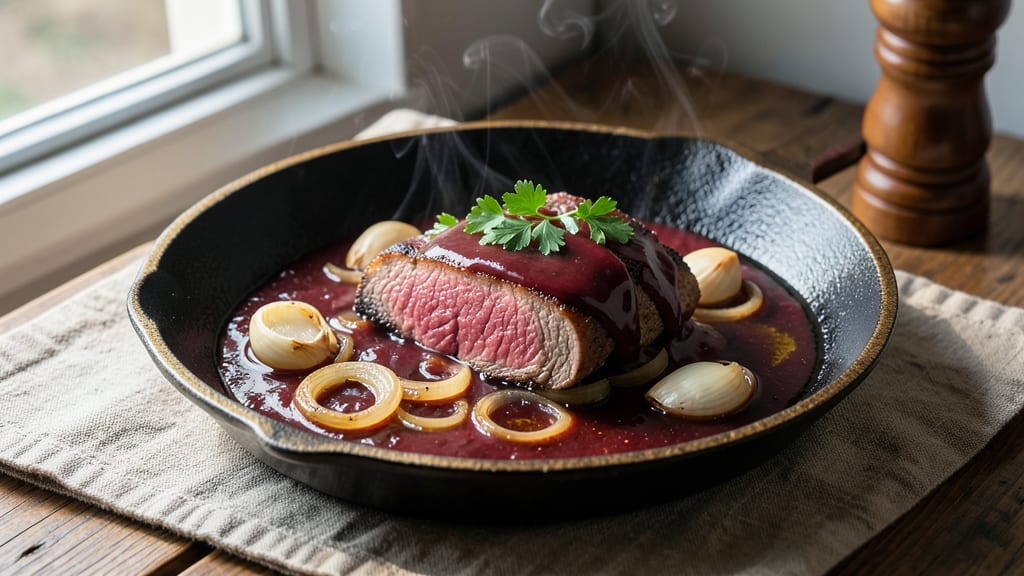
This beef au jus sauce recipe unlocks the deep, savory essence of braised beef in every spoonful—transforming simple pan drippings into a velvety, restaurant-worthy sauce.
The secret lies in reducing rich beef broth, red wine, and aromatic vegetables until they develop a concentrated, umami-packed depth that clings to roasted meats or steaks like a second skin.
I've perfected this technique over years of testing, ensuring the sauce remains silky-smooth without relying on excessive gelatin or cornstarch.
The foundation begins with a flavorful base of beef broth, red wine, and a bouquet of aromatics—carrots, celery, and onions—that infuse the liquid with complex, layered taste. As the mixture simmers, it reduces dramatically, intensifying the flavors while naturally thickening just enough to coat the back of a spoon.
This isn't your typical thin gravy; it's a glossy, golden sauce with a velvety mouthfeel that balances acidity, sweetness, and meaty richness in perfect harmony.
What makes this au jus sauce truly special is its versatility—drizzle it over perfectly roasted beef, use it as a dipping sauce for crusty bread, or serve it alongside steak frites for an instant elevation.
The sauce's natural depth comes from the slow reduction process, which caramelizes the natural sugars in the vegetables and deepens the wine's flavor without overpowering the dish. It's the kind of sauce that turns a simple weeknight dinner into something memorable.
For an extra touch of elegance, finish with a sprinkle of fresh parsley or a swirl of melted butter, but the real magic happens in the reduction. Let the sauce work its way into every bite, creating a connection between the meat and the table that's impossible to ignore.
This isn't just a sauce—it's the heart of the meal.
Ingredients for beef au jus sauce
Eleven ingredients blend into a sauce that transforms humble braising liquids into velvety perfection.
| Ingredient | Amount | Notes |
|---|---|---|
| Beef Broth 🥩 | 4 cups | High-quality, homemade preferred |
| Red Wine 🍷 | 1 cup | Bold, dry variety like Cabernet Sauvignon |
| Yellow Onion 🧅 | 1 whole | Medium size, chopped |
| Carrot 🥕 | 2 whole | Medium size, chopped |
| Celery Stalks 🧄 | 2 whole | Medium size, chopped |
| Garlic Cloves 🧄 | 4 cloves | Peeled, minced |
| Tomato Paste 🍅 | 1 tbsp | Smooth, not chunky |
| Dried Thyme 🌿 | 1 tsp | Or 1 tbsp fresh thyme |
| Black Peppercorns 🌶️ | 10 whole | Freshly cracked |
| Salt 🧂 | 1 tsp | Kosher or sea salt |
| Unsalted Butter 🧈 | 2 tbsp | Cold, cubed for finishing |
| Fresh Parsley 🌿 | ¼ cup | Chopped, for garnish |
The beef broth is non-negotiable—homemade or high-quality store-bought makes all the difference. I always grab Kirkland Signature from Costco for its deep, meaty flavor. For the red wine, Cabernet Sauvignon or Merlot works best—avoid sweet varieties. The aromatic vegetables (onion, carrot, celery) form the flavor base, so don't skimp. Freshly chopped releases more flavor than pre-minced. Garlic should be minced, not powdered—the difference is noticeable.
No red wine? Dry white wine or beef broth with 1 tbsp balsamic vinegar works in a pinch. Fresh thyme is ideal, but dried at one-third the amount suffices. For tomato paste, Trader Joe's squeeze tubes are perfect—they're convenient and last months. The black peppercorns should be freshly cracked for maximum aroma. If you're using pre-minced garlic, add an extra clove since it lacks the freshness of minced cloves.
Store the finished sauce in an airtight container in the fridge for up to 5 days. For longer storage, freeze in ice cube trays—perfect for single servings. The sauce thickens as it cools, so reheat gently on low heat, stirring occasionally. A swirl of cold butter just before serving adds luxurious richness. Garnish with parsley right before serving to keep it vibrant.
Why You'll Love This Recipe
- Pantry Magic: I swear by this—no specialty ingredients, just broth, wine, and the holy trinity of onion, carrot, celery. The kind of sauce that makes me feel like a chef even when I’m just chopping while watching The Great British Bake Off.
- Deep Umami Love: That slow simmer of beef broth and red wine? It’s like a flavor bomb. The wine adds richness without overpowering, and the carrot and celery sweeten just enough to balance the savory depth. Honestly, I’ll take this over store-bought jus any day.
- Weeknight Wonder: This isn’t just for fancy dinners—it’s my go-to for roast beef, grilled steaks, or even mashed potatoes. I make a big batch on Sundays so I can toss it into leftovers or drizzle it over sandwiches all week. (Yes, even on a Tuesday night.)
- Budget-Friendly Luxury: A bottle of wine and a few veggies stretch farther than you’d think. The sauce freezes like a dream, so I make extra and save it for when I’m craving something restaurant-worthy without the price tag. My wallet thanks me.
Step-by-step instructions for beef au jus sauce
Master this classic technique to transform simple braising liquids into a velvety, aromatic sauce.
Sauté the Vegetable Base
Heat a large Dutch oven over medium heat and add the chopped yellow onion, carrot, and celery stalks. Cook for 8-10 minutes until the vegetables soften and begin to caramelize slightly, developing deep, sweet flavors. Stir occasionally to prevent burning—this foundational step builds the sauce's complexity.
When the vegetables are tender, add the minced garlic cloves and cook for an additional 30 seconds until fragrant. The garlic should sizzle gently without browning. This quick cooking preserves its bright flavor rather than allowing it to turn bitter. Remove the vegetable mixture from the pot and set it aside temporarily—we'll return to it later.
Build the Sauce Foundation
Return the Dutch oven to the stove over medium heat and add the 1 tablespoon tomato paste. Stir to coat the bottom of the pot, creating a rich, umami base. Cook for 2 minutes until the tomato paste darkens slightly and releases its concentrated flavors.
Pour in the 1 cup red wine and scrape up any browned bits from the bottom of the pot with a wooden spoon. These flavorful bits, called fond, are essential for a deep, complex sauce. Let the wine simmer for 3-4 minutes until reduced by half, intensifying its flavor and alcohol content.
Simmer the Broth and Seasonings
Add the 4 cups beef broth, 1 teaspoon dried thyme, 10 whole black peppercorns, and 1 teaspoon salt to the pot. Return the sautéed vegetable mixture to the pot and bring everything to a gentle simmer. The sauce should bubble softly—never a rolling boil, which can make the sauce cloudy.
Simmer uncovered for 30-40 minutes until the sauce reduces slightly and the flavors meld together. Skim off any foam or impurities that rise to the surface with a spoon. This step allows the sauce to develop its characteristic depth and richness, transforming simple ingredients into something extraordinary.
Finish with Butter and Garnish
Reduce the heat to low and stir in the 2 tablespoons cold unsalted butter, one tablespoon at a time. The butter should melt into the sauce, creating a silky, velvety texture. This step is crucial for balancing the acidity of the wine and adding a luxurious finish. Taste the sauce and adjust the seasoning if needed—you may need a bit more salt or pepper to achieve the perfect balance.
Strain the sauce through a fine-mesh sieve into a clean saucepan to remove any vegetable pieces or peppercorns. Return the sauce to the stove and keep it warm over low heat. Garnish with the 0.25 cup chopped fresh parsley just before serving to add a pop of color and freshness. Serve immediately alongside roasted beef or use it to deglaze a pan for a quick sauce.
Pro Tips For Making Beef Au Jus Sauce
- Sweat, Don’t Burn: The onions, carrots, and celery should glisten like wet stones—not char like a campfire. Cook them over medium heat for 8–10 minutes, stirring occasionally, until they’re soft enough to collapse under a fork. I learned this the hard way: once, I rushed them and ended up with bitter, ashy bits that ruined the whole sauce.
- Use Dry Wine: That half-empty bottle of red wine you’ve been saving? Drain it first. Residual sediment makes your au jus cloudy and gritty. Pour the wine into a clean bowl, then carefully ladle it into the pot, leaving the sediment behind. It’s a 30-second step that makes a real difference in clarity and smoothness.
- Simmer, Don’t Boil: Once the wine and broth come together, lower the heat to a gentle simmer—tiny bubbles at the edges, not a rolling boil. Boiling burns off alcohol and concentrates flavors into harshness. I was skeptical until I tried it: the sauce stays rich, balanced, and actually tastes like wine, not vinegar.
- Strain for Smoothness: Skip the strainer? You’ll regret it. After simmering, strain the sauce through a fine-mesh sieve to remove any vegetable bits. It’s not the prettiest method, but it’s the tastiest—no surprises when you drizzle it over your steak. (Yes, even if you’re impatient like me.)
Perfect pairings for this recipe
Classic Pairings
Serve this beef au jus sauce alongside roasted beef tenderloin or prime rib—it's the perfect finishing touch that soaks into every bite. The sauce's rich depth complements the meat's natural flavors without overpowering them.
I always drizzle it over steak frites for a bistro-style experience that feels restaurant-worthy at home. 🥩
For a rustic touch, pair it with crusty baguette slices for dipping. The buttery bread contrasts beautifully with the sauce's acidity and umami. If you're serving a beef Wellington, use the au jus as a dipping sauce for the sides—it adds elegance without complicating the main dish.
Wine Pairings
A bold Cabernet Sauvignon or Merlot mirrors the sauce's depth, enhancing its wine notes while balancing the beef's richness. For a lighter option, try a Pinot Noir—its bright acidity cuts through the sauce's velvety texture.
I love opening a bottle of Château Margaux alongside my au jus for a luxurious dining experience. 🍷
If you prefer white wine, a Chardonnay with oak notes stands up to the sauce's complexity. Avoid sweet wines—they’ll clash with the sauce's acidity and overpower its savory profile.
Beer Pairings
A dark lager like Guinness or Samuel Adams Black Lager complements the sauce's depth with its malty sweetness. The beer's roasted notes harmonize with the caramelized vegetables in the au jus. For a lighter option, a Belgian-style witbier adds a refreshing citrus contrast. 🍺
Craft beer lovers should try a stout with chocolate undertones—it pairs surprisingly well with the sauce's umami richness. Avoid hoppy IPAs, which can overwhelm the delicate balance of flavors.
Unexpected Twists
Use the au jus as a marinade for grilled mushrooms or seared scallops—the sauce's acidity tenderizes while adding depth. I’ve also drizzled it over mashed potatoes for a creamy, savory twist that feels indulgent. 🍄
For a modern take, mix the au jus with crème fraîche or sour cream to create a dip for beef sliders or charcuterie boards. The tangy cream balances the sauce's richness perfectly.
Nutrition facts
Frequently asked questions
Can I make this beef au jus sauce without red wine?
Yes! Replace the 1 cup red wine with 1 cup dry white wine or 1 cup beef broth + 1 tablespoon balsamic vinegar for similar acidity. The sauce will still develop depth, though the wine adds a subtle fruitiness that's hard to replicate. For a non-alcoholic version, use 2 cups beef broth + 1 tablespoon vinegar.
How do I prevent the sauce from getting cloudy?
Cloudiness usually happens from boiling too vigorously or stirring too much. Keep the heat at a gentle simmer (small bubbles, not rolling) and avoid stirring constantly. Skim off any foam that forms on top, and strain the sauce through a fine-mesh sieve before serving for a crystal-clear finish.
Can I make this sauce ahead of time?
This sauce actually tastes better the next day as the flavors deepen. Store it in an airtight container in the fridge for up to 5 days. Reheat gently over low heat, stirring occasionally. For longer storage, freeze in ice cube trays—perfect for single servings. Just add a splash of water when reheating.
Why is my sauce too thin? How can I thicken it?
If your sauce is too thin, it likely didn't reduce enough. For a natural thickener, simmer uncovered for 10-15 extra minutes to evaporate more liquid. If you need immediate thickening, whisk in 1 tablespoon cornstarch mixed with 1 tablespoon cold water and simmer for 2 minutes until it reaches your desired consistency.
What's the best way to use leftover au jus?
Leftover au jus is incredibly versatile! Use it as a dipping sauce for steak frites, drizzle over grilled vegetables, or reduce it further to make a glaze for roasted potatoes. For a quick upgrade, stir in 1 tablespoon Dijon mustard or 1 teaspoon Worcestershire sauce to add extra layers of flavor.