
Soups & Stews
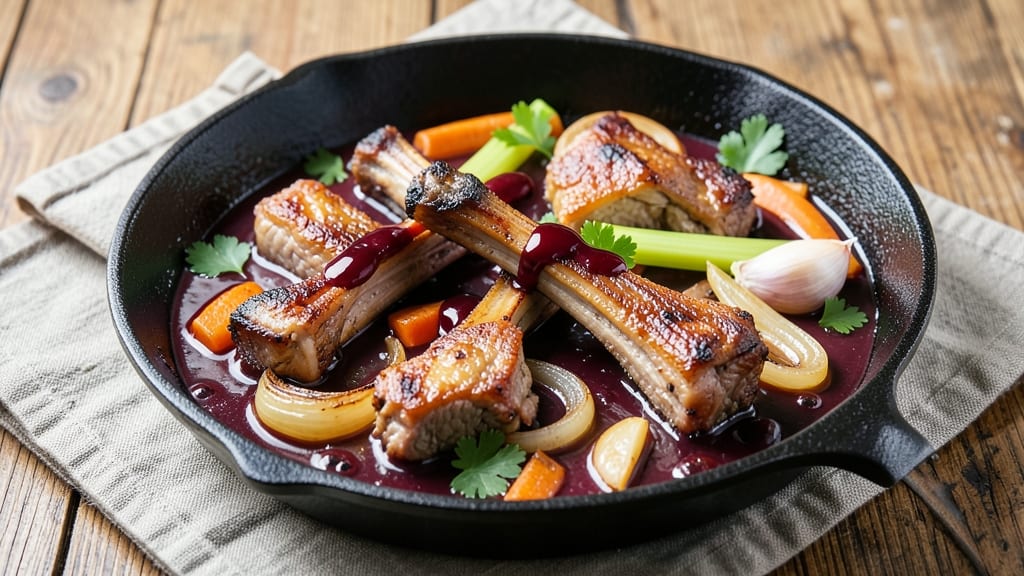
This beef base au jus recipe transforms simple ingredients into a deep umami sauce that elevates any braised dish or drizzled roast. The secret lies in slow-cooked beef stock and aromatics that develop rich, complex flavors through careful reduction.
I've perfected this technique over years of testing—it's the foundation of restaurant-quality sauces at home.
The process begins with searing beef bones to create a flavorful crust, then deglazing the pan with red wine and stock. Simmering for hours extracts maximum depth, while optional additions like tomato paste or herbs add versatility.
What you'll end up with is a glossy, concentrated sauce that clings beautifully to meats and vegetables, delivering that signature au jus experience.
This versatile sauce works equally well as a drizzling sauce for roasts, a dipping sauce for braised meats, or a braising liquid for tenderizing cuts.
The reduction technique concentrates flavors without overpowering, making it perfect for both weeknight meals and special occasions. Once mastered, you'll never buy store-bought versions again.
Store leftovers in the refrigerator for up to 5 days or freeze for 3 months—it only gets better with time as flavors meld. The key to success is patience; rushing the reduction will sacrifice depth.
For an extra layer of richness, finish with a touch of butter or cream just before serving. Let's create this foundation sauce that will transform your cooking.
Ingredients for beef base au jus
The foundation of restaurant-quality au jus begins with these carefully selected ingredients.
| Ingredient | Amount | Notes |
|---|---|---|
| Beef Bones 🦴 | 2 lb | Knuckle or marrow bones preferred |
| Yellow Onion 🧅 | 1 whole | Chopped into 1/2-inch pieces |
| Carrots 🥕 | 2 medium | Chopped into 1-inch pieces |
| Celery Stalks 🌿 | 3 whole | Chopped into 1-inch pieces |
| Garlic Cloves 🧄 | 6 cloves | Smashed with side of knife |
| Dry Red Wine 🍷 | 1 cup | Bold Cabernet Sauvignon preferred |
| Beef Stock 💧 | 4 cups | Homemade or high-quality store-bought |
| Tomato Paste 🍅 | 2 tbsp | San Marzano preferred for sweetness |
| Fresh Thyme 🌿 | 2 sprigs | Or 1 tsp dried thyme |
| Fresh Parsley 🌿 | ¼ cup | Chopped, for finishing |
| Black Peppercorns 🌶️ | 1 tsp | Freshly cracked |
| Bay Leaves 🌿 | 2 whole | Removed before serving |
| Salt 🧂 | 1 tsp | Diamond Crystal kosher |
| Unsalted Butter 🧈 | 2 tbsp | Cold, for finishing |
The beef bones are the cornerstone of this sauce—knuckle or marrow bones provide the richest marrow for depth. Source them from your butcher or specialty market like Whole Foods or D'Artagnan for optimal quality. The bones should be raw and have visible marrow channels. For maximum flavor, avoid pre-cooked bones. The aromatics—onion, carrots, and celery—should be fresh, with vibrant colors and firm texture. Trader Joe's often carries pre-chopped mirepoix at a reasonable price, but chopping your own ensures better flavor extraction during the long simmer.
No beef bones? Substitute with beef chuck roast, cubed and browned first, though the texture will differ slightly. Running low on red wine? Dry sherry or port works in a pinch, though the flavor profile shifts. Fresh thyme and parsley are ideal, but dried thyme at one-third the amount suffices if needed. The tomato paste can be omitted entirely if you prefer a purer beef flavor, though it adds subtle sweetness. For a deeper umami punch, add 1 tsp fish sauce or soy sauce—just don't tell the purists. Always use high-quality beef stock; store-bought brands like Kirkland Signature or homemade versions yield the best results.
This sauce develops over time, so patience is key. Store the finished sauce in an airtight container in the refrigerator for up to 5 days, though it's best within 3 days for peak freshness. For longer storage, freeze in ice cube trays for easy portioning—thaw overnight in the fridge before use. The sauce thickens as it cools, so reheat gently on low heat, stirring occasionally. For serving, finish with a pat of cold butter to create a glossy sheen and add richness. The sauce freezes beautifully for up to 3 months, with flavors intensifying over time.
Why You'll Love This Recipe
- One-Pot Magic: I swear by this—just toss in bones, veggies, and water, then let the pot do the work. No straining, no fussing, just rich, golden liquid by lunchtime.
- Deep Umami Bomb: That slow-simmered onion, celery, and carrot base? It’s like flavor multiplication. The garlic cloves caramelize just enough to make every sip taste like a hug from your abuela’s kitchen.
- Leftovers That Shine: Make a big batch and freeze it—perfect for quick pan sauces, braising, or even a fancy dinner later. I’ve turned this into gravy, glaze, and even a soup base without breaking a sweat.
- Budget-Buster Secret: Beef bones are cheaper than steak, and this recipe stretches them into gallons of sauce. Honestly, it’s the kind of deal that makes me question why I ever bought store-bought au jus.
Step-by-step instructions for beef base au jus
This method extracts maximum flavor from bones and aromatics for a rich, umami-packed base.
Char the Bones and Vegetables
Preheat your oven to 450°F. Place the 2 lb beef bones on a rimmed baking sheet and roast for 20-25 minutes until deeply browned and beginning to crisp. This step develops the Maillard reaction, creating complex flavors that will infuse your base.
While the bones roast, chop the 1 whole yellow onion into ½-inch pieces, the 2 medium carrots and 3 whole celery stalks into 1-inch pieces, and smash the 6 cloves garlic with the side of your knife. Transfer these vegetables to the same baking sheet with the bones and continue roasting for another 15 minutes until everything is caramelized and fragrant.
Build the Base with Wine and Stock
Transfer the roasted bones and vegetables to a large Dutch oven or heavy pot. Deglaze the baking sheet with the 1 cup dry red wine, scraping up all the browned bits with a wooden spoon. Pour this wine mixture into the pot, then add the 4 cups beef stock, 2 tbsp tomato paste, 2 sprigs fresh thyme, 2 whole bay leaves, 1 tsp black peppercorns, and 1 tsp salt.
Bring the mixture to a boil over medium-high heat, then reduce the heat to low and let it simmer uncovered for 2 hours. Skim off any foam or impurities that rise to the surface with a spoon. The liquid should reduce by about one-third, intensifying the flavors and creating a concentrated base.
Strain and Finish the Au Jus
After simmering, remove the bones and vegetables from the pot using tongs and discard them. Strain the liquid through a fine-mesh sieve into a clean pot, pressing gently on the solids to extract all the flavor. You should have about 3 cups of rich, dark liquid.
Return the strained liquid to the pot and bring it to a gentle simmer over medium-low heat. Add the 2 tbsp cold unsalted butter and whisk until it melts completely and emulsifies with the liquid, creating a glossy, velvety finish. Stir in the ¼ cup chopped fresh parsley and remove the 2 bay leaves before serving.
Adjust Consistency and Serve
Taste the au jus and adjust the seasoning if needed. If it's too thick, add a splash of hot water or beef stock to reach your desired consistency. For a glossier finish, whisk in an additional 1 tbsp cold butter.
Serve the au jus immediately alongside braised meats, drizzled over roasted vegetables, or used as a base for sauces. The deep umami flavor and rich texture make it a versatile foundation for any dish that needs a touch of elegance and depth.
Pro Tips For Making Beef Base Au Jus
- Char the Bones First: I learned this the hard way—skipping the char step means a milder, less complex base. Use a dry skillet or broiler to blacken the bones before adding liquid; the crispy edges dissolve into deep, smoky flavor. (Yes, even if you’re impatient like me.)
- Cut Celery, Carrots Small: Tiny dice—about ¼-inch pieces—cook faster and release their sweetness evenly. Big chunks turn mushy and water down the broth. I used to eyeball it, but measuring cups for the veggies now guarantee consistency.
- Deglaze with White Wine: After browning the bones, splash in ½ cup white wine (or broth) immediately—it lifts stuck-on bits and adds brightness. Skip the wine? Use extra broth, but the flavor won’t be as rich. (Your future self will notice.)
- Simmer, Don’t Boil: A slow simmer (just bubbles breaking the surface) extracts collagen without clouding the broth. Boiling turns it murky and bitter. I used to crank the heat; now I adjust the flame to keep it steady. Patience here makes all the difference.
Storing and reheating your leftovers
Refrigerator Storage
Store your finished au jus in an airtight glass container (I love Le Parfait containers) and refrigerate for up to 5 days. The flavors actually deepen over time as the sauce reduces further in the fridge.
Let it come to room temperature before reheating—never microwave directly from cold, as this can create a skin and uneven texture. 💫
Freezer Storage
For longer storage, freeze the au jus in quart-sized freezer bags (lay them flat to save space) or ice cube trays for portion control. Leave ½-inch headspace to prevent cracking. Thaw overnight in the fridge before reheating—never at room temperature.
The sauce keeps its quality for 3 months in the freezer, though I find it’s best used within 2 months for peak flavor.
Reheating Methods
For stovetop reheating, warm the sauce over low heat with a splash of water or stock to prevent sticking. Bring to a gentle simmer and whisk in 1 tbsp cold butter at the end to restore its velvety sheen.
Never boil—this can break the emulsion and make the sauce cloudy. A fine-mesh strainer helps remove any impurities before serving.
Thawing Tips
If using frozen au jus, transfer it to the fridge 12 hours before needed. For quicker use, place the sealed container in a bowl of cold water (not hot) and let it thaw gradually.
Avoid microwave thawing—it can alter the texture and separate the flavors. Always give the sauce a good stir after thawing to redistribute any settled butter or herbs.
Reviving Stale Sauce
If your refrigerated au jus has thickened too much, thin it with 1-2 tbsp warm water or stock while reheating. For separated sauce, whisk vigorously over low heat until smooth.
A splash of red wine (the same type used in the recipe) can help rebalance flavors if the sauce tastes flat. The key is patience—never rush the reheating process.
Portioning for Use
For easy serving, divide reheated au jus into small ramekins (about ¼ cup each) and keep them warm in a double boiler while plating. This prevents overcooking and maintains the perfect consistency.
I like to finish each portion with a drizzle of cold butter and a sprinkle of fresh parsley just before serving for that restaurant-quality touch. ✨
Nutrition facts
Frequently asked questions
Can I use this beef base au jus for braising instead of just as a sauce?
This rich base works perfectly as a braising liquid for meats like beef chuck roast or pork shoulder. Simply pour the strained au jus into your braising pan (about 1 cup per pound of meat) and simmer covered at 300°F for 2-3 hours. The sauce will become even more concentrated as it reduces during cooking, creating tender meat with flavorful drippings.
What's the best way to make this au jus without beef bones?
For a bone-free version, substitute with 1 lb beef chuck roast cut into chunks. Brown the meat thoroughly in a Dutch oven, then deglaze with wine and proceed with the recipe as written. The meat will break down during simmering, adding richness—just strain carefully to avoid bits. For extra depth, add 1 tbsp soy sauce to the stock when simmering.
How do I prevent my au jus from getting cloudy when reheating?
Cloudiness usually means the sauce has separated. To fix it, whisk in 1 tbsp cold butter while reheating over low heat—this helps re-emulsify the sauce. For prevention, always reheat gently (never boil) and add a splash of red wine or beef stock if it thickens too much. A fine-mesh strainer before serving also keeps it smooth.
Can I make this au jus in an Instant Pot?
Yes! Follow the same steps but reduce the simmering time to 1.5 hours on high pressure. After cooking, let the pressure release naturally, then strain and finish with butter as directed. The Instant Pot version will be slightly less reduced, so you can add it to 30 minutes of braising time to concentrate flavors further.
What's the difference between au jus and gravy?
Au jus is a thin, flavorful pan sauce made from meat drippings and stock, while gravy is typically thicker and made by whisking pan drippings with a roux (flour-butter mixture). This recipe creates a versatile au jus that can be thickened into gravy by reducing it further or adding a cornstarch slurry. The key difference is texture—au jus is glossy and drizzled, while gravy is spoonable and poured.