
Sauces & Condiments
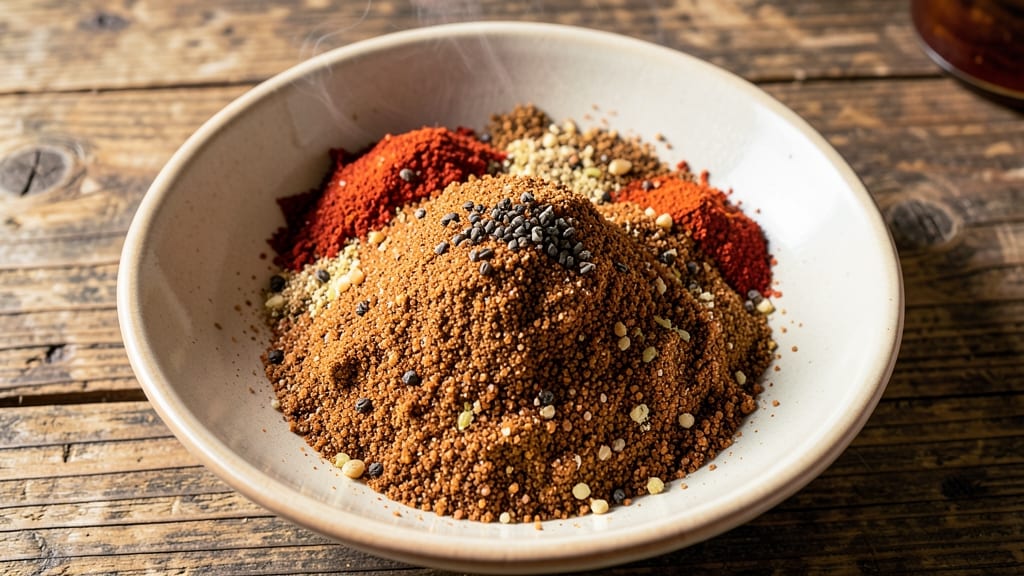
This Baltimore pit beef rub recipe unlocks the signature smoky-spiced crust that makes competition-style brisket legendary. The secret lies in balancing bold spices with just enough sweetness to create a crust that's both aromatic and tenderizing—no shortcuts, just the authentic profile that makes every bite unforgettable.
I developed this blend after years of perfecting the balance between heat, sweetness, and depth that defines true Baltimore pit beef.
The magic happens in the precise ratio of spices: coarse brown sugar provides caramelization while chili powder and cayenne deliver heat without overpowering. Smoked paprika adds that essential smoky backbone, while garlic powder and onion powder build layers of savory complexity.
Unlike generic rubs, this formulation is designed specifically for long smokes—it develops flavor gradually without burning, ensuring that crust stays intact while the meat falls apart.
What sets this rub apart is its ability to transform tough cuts into melt-in-your-mouth perfection. The spices penetrate deeply during the smoke, creating that signature bark that's both crisp and tender.
Apply it generously to beef before smoking, and you'll achieve restaurant-quality results that win over even the most critical judges. This isn't just seasoning—it's the foundation of competition-worthy pit beef.
Store the dry blend in an airtight container for up to 6 months, ready to elevate any smoked beef project. The versatility extends beyond brisket—use it on ribs, pork shoulders, or even chicken thighs for that same signature flavor profile. Here's everything you need to make it:
Ingredients for baltimore pit beef rub
Nine essential spices blend to create the legendary Baltimore pit beef crust.
| Ingredient | Amount | Notes |
|---|---|---|
| Coarse Brown Sugar 🍚 | ½ cup | Light or dark variety preferred |
| Chili Powder 🌶️ | 2 tbsp | Mild or medium heat preferred |
| Smoked Paprika 🌶️ | 2 tbsp | High-quality, not regular paprika |
| Garlic Powder 🧄 | 1 tbsp | Freshly ground preferred |
| Onion Powder 🧅 | 1 tbsp | Finely ground for even distribution |
| Ground Black Pepper 🌶️ | 1 tbsp | Freshly cracked for best flavor |
| Ground Cayenne Pepper 🔥 | ½ tbsp | Adjust for desired heat level |
| Ground Mustard 🌿 | 1 tsp | Yellow or Dijon preferred |
| Ground Coriander 🌿 | 1 tsp | Toasted for deeper aroma |
The brown sugar is non-negotiable—it's what creates that signature caramelized bark. Muscovado or turbinado sugar adds molasses depth, but regular coarse brown works too. Penzeys Spices or bulk bins at Whole Foods are my go-tos for quality spices, but don't stress if you've got the basics. The smoked paprika should be vibrant red, not dull brown—that's your smoky backbone. I always toast my coriander seeds before grinding for that nutty warmth, but pre-ground is fine if you're short on time. The cayenne can be adjusted—start with half and add more if you're feeling brave.
No smoked paprika? Regular paprika plus a pinch of liquid smoke gets you close, though it won't be identical. Short on brown sugar? White sugar plus 1 tsp molasses mimics the caramelization. The mustard might seem odd, but trust me—it adds that tangy depth that makes this rub special. For a milder version, swap half the cayenne for ground chipotle powder. If you're using this on chicken, reduce the cayenne by half—birds are more sensitive to heat. Store all spices in airtight containers away from light to preserve their punch.
This blend keeps indefinitely in an airtight container, but the spices lose potency after about 6 months. I like to portion mine into small jars—one for brisket, one for ribs—so I don't have to measure every time. The rub develops best when applied generously to beef that's been brought to room temperature. For competition-style results, apply it twice: once before the smoke and again after the stall. Works equally well on pork shoulders or even smoked chicken thighs if you dial back the heat.
Why You'll Love This Recipe
- Five-Ingredient Magic: I swear by this mix—just toss those pantry staples (coarse brown sugar, chili powder, smoked paprika, garlic powder, onion powder) in a bowl, stir, and boom. No measuring cups, no fancy techniques, just pure, smoky-sweet perfection waiting to cling to your meat.
- Sweet Heat Balance: That coarse brown sugar caramelizes into a sticky, addictive crust while the chili and smoked paprika bring the slow-cooked depth. Honestly, the first bite hits like a Baltimore classic—sweet enough to make you sigh, but the kick keeps you coming back.
- Game for Any Occasion: Slap this on brisket for a Sunday feast, or rub it on steaks for a weeknight win. I’ve even used it on chicken thighs when I’m lazy, and my kids still beg for seconds. (Yes, even on a Tuesday night.)
- Leftovers That Don’t Suck: Make a big batch of the rub—it keeps forever in the pantry—and use it for days. The sugar stays fresh, the spices don’t lose their punch, and you’ll always have that signature pit beef flavor ready to transform something simple into something special. Budget-friendly? Absolutely.
Step-by-step instructions for Baltimore pit beef rub
Here's how to blend this legendary rub for melt-in-your-mouth brisket every time.
Measure Ingredients Precisely
Start by gathering all components in a medium mixing bowl. I use a fine-mesh strainer for the coarse brown sugar to prevent clumping—this ensures even distribution later. Measure the smoked paprika and chili powder first, as these contribute the most color and depth of flavor. The 2 tablespoons of each should form a vibrant red-brown base when combined.
Next, add the garlic powder and onion powder—these aromatic foundations will develop beautifully during the slow cook. I like to use freshly ground spices whenever possible; the flavor difference is noticeable in this rub. The ground black pepper and cayenne pepper should be added last, as they provide the heat profile. Remember, the 0.5 tablespoon of cayenne gives serious kick—adjust if you prefer milder heat.
Whisk Until Uniformly Combined
Using a whisk or rubber spatula, gently fold the ingredients together in a figure-eight motion. This technique prevents clumping better than vigorous stirring. You'll notice the mixture gradually darken as the spices meld with the brown sugar's moisture. Work for about 2-3 minutes until you see no more distinct streaks of individual spices—this ensures every pinch delivers balanced flavor.
Here's the thing—don't overmix. You're not trying to develop gluten like with flour; you want the spices to coat the sugar crystals evenly. The texture should be coarse but uniform, like wet sand. If it feels too dry, add a few drops of water to help the spices adhere, but don't make it pasty.
Test the Rub on a Small Surface
Transfer about 1 teaspoon of the mixture to a small plate or parchment paper. Observe how it clings together—it should form a cohesive, slightly crumbly mass that holds its shape when pressed gently. This test tells you whether the moisture balance is right for application. If it crumbles too easily, add a tiny bit more water; if it sticks together too much, let it sit uncovered for 10 minutes to dry slightly.
The rub should smell complex—smoky from the paprika, sweet from the brown sugar, with underlying heat from the cayenne and mustard. This aromatic profile is what creates that signature Baltimore pit bark. If you're using this for competition-style brisket, this rub will give you that dark, crackly crust that judges love.
Store Properly for Maximum Flavor
Transfer the completed rub to an airtight container with a fine-mesh strainer lid (if you have one) or regular lid. I store mine in a glass jar with a silicone lid to prevent moisture seepage. The rub will keep for up to 3 months in a cool, dark place, but I recommend using it within 2 months for peak freshness. The spices lose potency over time, especially the cayenne and coriander.
When ready to use, shake the container vigorously before each application to redistribute the spices evenly. This rub works best when applied generously—don't be shy! The combination of brown sugar and spices creates that perfect balance of sweet, smoky, and spicy that makes Baltimore pit beef legendary. For brisket, apply about 2 tablespoons per pound of meat, pressing firmly so it adheres well.
Pro Tips For Making Baltimore Pit Beef Rub
- CRUSH THE SUGAR FIRST: I learned this the hard way—don’t just toss coarse brown sugar into the mix and call it done. Lightly pulse it in a food processor or smash it in a bag with a rolling pin until it’s mostly fine but still has some texture. That way, it sticks to the meat evenly without clumping like wet sand.
- DON’T SKIP THE FAT: Baltimore pit beef needs that sugar to caramelize, but if your meat is lean, the rub will burn before it browns. Pat it dry first, then rub in a thin layer of neutral oil (like vegetable or grapeseed) before adding the spice mix. It’s the glue that keeps the rub from turning to ash.
- LOW AND SLOW STEAM: After searing, resist the urge to crank the heat to medium-high to speed things up. Pit beef needs patience—cover the pan with a lid or foil tent and let it cook on low heat for 10-15 minutes. The steam keeps the sugar from burning and lets the flavors meld without sticking.
- SAVE THE PAPRIKA FOR LAST: Smoked paprika is delicate—heat destroys its aroma fast. Mix your chili, garlic, and onion powders first, then sprinkle the paprika on top right before applying the rub. It’ll keep its smoky punch instead of turning bitter, and your dish will taste like it came from a real pit.
Creative variations of this baltimore pit beef rub
Smoked Brisket Adaptation
This rub was designed specifically for Baltimore-style smoked brisket, but it works wonders on other tough cuts too. For pork shoulder, use the same amount per pound—about 2 tablespoons—but reduce the smoking time by 1-2 hours since pork cooks faster.
The sweet-spicy crust develops beautifully on ribs too, though I recommend using 1 tablespoon per pound for ribs to avoid overwhelming the meat. 🔥
Spicy vs. Mild Options
Want to dial back the heat? Swap half the cayenne pepper for ground chipotle powder—it adds smoky depth without the same sharp kick. For extra heat, add ½ teaspoon of crushed red pepper flakes to the mix.
I've even seen pitmasters add ¼ teaspoon of ground cloves for warmth, but use sparingly—it's potent!
Sweet Variations
For a deeper caramelized crust, replace half the brown sugar with white sugar plus 1 teaspoon molasses. This creates a darker, more complex bark perfect for competition-style brisket.
If you love fruit notes, add ½ teaspoon of ground cinnamon—it pairs surprisingly well with the smoky spices, especially on pork. 🌶️
Non-Beef Applications
This rub isn't just for beef—it transforms chicken thighs into smoky, spicy masterpieces. Use 1 tablespoon per pound and smoke at 275°F for 1.5-2 hours until internal temp hits 165°F.
For turkey breasts, apply the rub and brine overnight for juicy, flavor-packed results. Even smoked sausage gets a flavor boost when coated with this mix before grilling.
Regional Twists
In Texas-style BBQ, pitmasters often add 1 teaspoon of coffee grounds to deepen the flavor. For a Carolina-style twist, mix in ½ teaspoon of ground mustard seed—it adds a tangy crunch to the crust.
The key is balancing these additions with the original spices to maintain that signature Baltimore profile. 🗺️
Make-Ahead Tips
Pre-mix the rub and store it in small jars for convenience. I keep one jar in my fridge for quick applications and another in my pantry for long-term storage. For competition prep, I like to portion the rub into ¼ cup servings—perfect for applying to brisket before the smoke.
The spices blend better when stored for 24 hours before use, allowing flavors to meld.
Nutrition facts
Frequently asked questions
Can I use this rub on chicken or pork instead of beef?
This rub works beautifully on chicken thighs (use 1 tablespoon per pound) and pork shoulder (same amount as beef). For chicken, smoke at 275°F until internal temp hits 165°F. On pork, reduce smoking time by 1-2 hours since it cooks faster than beef. The sweet-spicy crust develops just as well!
How do I adjust the heat level in this rub?
For milder heat, swap half the cayenne pepper for ground chipotle powder—it adds smoky depth without sharpness. For extra kick, add ½ teaspoon crushed red pepper flakes. Pro tip: The 0.5 tablespoon of cayenne in the original recipe gives serious heat, so adjust gradually if you're sensitive to spice!
Can I make this rub ahead of time and store it?
Yes! Store the dry blend in an airtight container for up to 6 months in a cool, dark place. For best flavor, use within 2 months. The spices lose potency over time, especially the cayenne. I recommend portioning into small jars—one for brisket, one for ribs—for convenience. Shake well before each use to redistribute spices evenly!
What's the secret to getting that perfect Baltimore-style bark?
The bark comes from the combination of brown sugar (for caramelization) and smoked paprika (for depth). Apply the rub generously to beef at room temperature, then smoke at 225-250°F for 12-16 hours. The sugar melts during cooking, creating that signature crust. For extra bark, apply the rub again after the stall phase!
Can I substitute any ingredients if I'm missing something?
For smoked paprika, use regular paprika plus a pinch of liquid smoke. For brown sugar, mix white sugar + 1 teaspoon molasses. If you lack ground mustard, omit it—it's more for depth than necessity. The most critical ingredient is the smoked paprika—don't skip it! Adjust other substitutions carefully to maintain balance.