
Main Courses
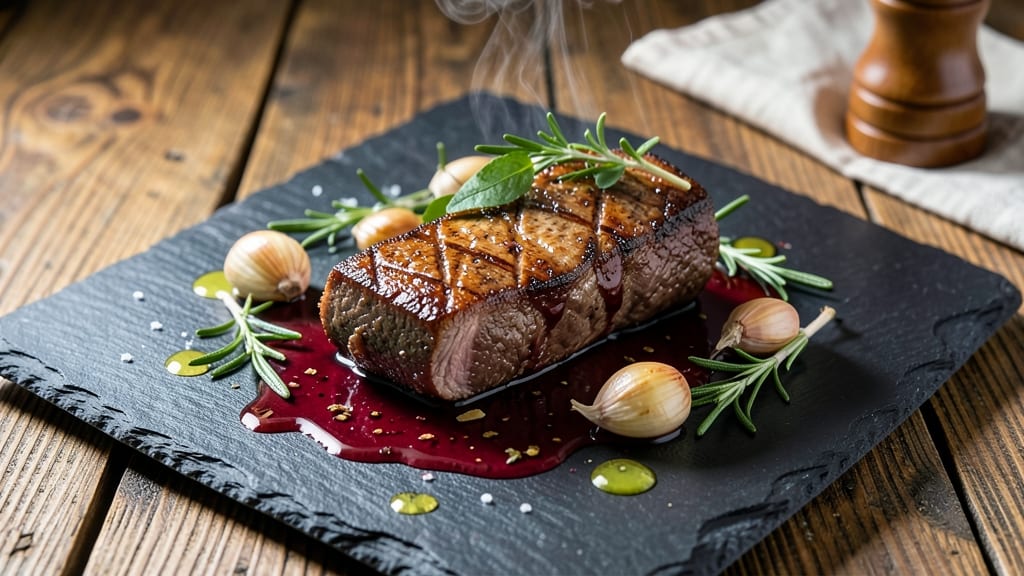
This Basque beef tongue recipe brings the heart of Basque country to your table with slow-cooked richness and bold spice harmony.
The key lies in marinating the beef tongue for 24 hours in a blend of garlic, bay leaves, and white wine—a method that tenderizes the meat while infusing it with authentic Basque flavors.
What makes this dish truly special is the balance between the deep, savory notes of the tongue and the bright acidity of the marinade, creating a texture that's both silky and satisfying.
The slow-cooking process transforms tough beef tongue into melt-in-your-mouth perfection, with a surface that's beautifully caramelized and a center that's tender enough to fall apart. Traditional Basque techniques ensure the flavors develop fully, resulting in a dish that's rich, aromatic, and deeply satisfying.
This recipe is perfect for special occasions, family gatherings, or anyone eager to explore the bold flavors of Basque cuisine.
Pairing this dish with classic Basque sides like grilled peppers, roasted potatoes, or a creamy garlic aioli elevates the meal to restaurant-quality levels. The slow-cooked beef tongue becomes the centerpiece, its deep flavor complementing the bright, fresh sides beautifully.
Whether you're serving it as a main course or sharing it with friends, this recipe delivers a taste of Basque tradition that's both impressive and deeply satisfying.
Once you've mastered this technique, you'll find endless ways to adapt it—adding a splash of brandy for depth, experimenting with different herbs, or serving it with a side of piquillo peppers for a touch of sweetness.
The possibilities are endless, but the foundation remains the same: slow-cooked Basque beef tongue that's rich, tender, and full of flavor. Let's get started on this journey through Basque culinary tradition.
Ingredients for basque beef tongue
Six ingredients transform tough beef tongue into melt-in-your-mouth Basque perfection through slow-cooked harmony.
| Ingredient | Amount | Notes |
|---|---|---|
| Beef Tongue 🥩 | 3 lb | Fresh, uncooked, trimmed |
| White Wine 🍷 | 2 cups | Dry variety, like Sauvignon Blanc |
| Garlic Cloves 🧄 | 8 cloves | Peeled, smashed for marinade |
| Bay Leaves 🌿 | 4 whole | Fresh if possible |
| Olive Oil 🫒 | ½ cup | Extra-virgin for richness |
| Red Wine Vinegar 🍶 | ¼ cup | Balances the marinade |
| Salt 🧂 | 2 tbsp | Kosher or sea salt |
| Black Peppercorns 🌶️ | 1 tbsp | Freshly cracked |
| Thyme Sprigs 🌿 | 4 whole | Fresh, stems removed |
| Carrots 🥕 | 2 whole | Whole, for slow-cooking |
| Onion 🧅 | 1 whole | Yellow or red, peeled |
| Brandy 🍷 | ½ cup | Optional for depth (optional) |
| Piquillo Peppers 🌶️ | 4 whole | Jarred, for serving (optional) |
The beef tongue is the star—look for fresh, uncooked cuts from a butcher or specialty market. Costco often carries them prepped, but if buying whole, trim excess fat and connective tissue for even cooking. The marinade's white wine should be dry (like Sauvignon Blanc) to balance the richness. For the bay leaves, fresh ones add subtle complexity, but dried work in a pinch. I always grab extra thyme—half goes in the marinade, half gets tied around the tongue during cooking. The carrots and onion aren't just flavor carriers; they create a fragrant base that infuses the meat as it slow-cooks.
No white wine? Dry vermouth or apple cider vinegar works in a pinch, though the flavor will differ slightly. Fresh thyme unavailable? Dried thyme at one-third the amount is fine, but toast it first in a dry pan for 30 seconds to deepen the flavor. The brandy is optional but worth it—Kahlúa or cognac both add depth. For the piquillo peppers, roasted red peppers from a jar are a perfect substitute if you can't find them. The key is balancing acidity: if using vinegar instead of wine, reduce to 2 tablespoons to avoid overpowering the meat. And always taste your marinade before applying—adjust salt and acid to your preference.
Marinate the tongue 24 hours in the fridge, turning occasionally. The slow cooker or oven at 300°F for 3-4 hours transforms it into tender perfection. Store cooked tongue in its juices for up to 5 days in the fridge, or freeze for 3 months. I portion it into slices for easy serving—each piece falls apart with a touch. The marinade? Strain and reduce it by half for a glossy sauce to drizzle over the top. Leftovers reheat beautifully in a skillet with a splash of broth.
Why You'll Love This Recipe
- One-Pot Magic: I swear by this recipe because it’s that simple—just a deep pan, a few cloves of garlic, and a splash of wine. No chopping, no fuss, and the tongue does all the heavy lifting while you sip your coffee.
- Rich, Wine-Kissed Depth: That white wine simmering down into a glossy sauce? It’s where the magic happens—bright enough to cut through the tongue’s richness, but deep enough to make your taste buds sing. Honestly, the first bite always makes me pause.
- Leftovers That Shine: This dish actually improves the next day. Cold slices in crusty bread? Yes, please. Or reheated with a sprinkle of paprika—my lazy Sunday lunches just got an upgrade.
- Budget Feast for Few: A whole tongue feeds four (or two very hungry people) without breaking the bank. Between us, it’s the most satisfying way to stretch a meal—plus, the leftovers freeze like a dream for those "I can’t decide what to eat" nights.
Step-by-step instructions for Basque beef tongue
Transform tough beef tongue into melt-in-your-mouth Basque-style delicacy with this slow-cooked method.
Prepare and Season the Beef Tongue
Begin by trimming any excess fat from the 3 lb beef tongue, leaving about ¼ inch of fat cap for moisture during cooking. Score the surface lightly in a crosshatch pattern with a sharp knife—this helps the marinade penetrate deeper and creates a more tender texture. Pat the tongue completely dry with paper towels, as moisture prevents proper browning.
In a small bowl, combine the 2 cups white wine, 0.5 cup olive oil, 0.25 cup red wine vinegar, 2 tbsp salt, 1 tbsp cracked black peppercorns, and 4 thyme sprigs. Add the peeled and smashed 8 garlic cloves and stir well. Place the beef tongue in a large resealable plastic bag and pour the marinade over it. Seal the bag tightly, massaging the marinade into the meat to ensure full coverage. Refrigerate for at least 12 hours, or preferably overnight, allowing the flavors to deeply infuse the meat.
Build the Slow-Cooking Base
Preheat your oven to 300°F. Remove the beef tongue from the marinade (reserve the marinade) and place it in a large Dutch oven or heavy pot. Add the whole peeled onion and 2 whole carrots to the pot, positioning them around the tongue. Pour the reserved marinade over the tongue and vegetables, ensuring everything is submerged. Add the 4 whole bay leaves and, if using, the 0.5 cup brandy.
Cover the pot with a tight-fitting lid and place it in the preheated oven. Cook for 3 hours, maintaining a gentle simmer. After 3 hours, carefully remove the lid and increase the oven temperature to 350°F. This step helps develop a richer, more concentrated flavor as the liquid reduces. Return the pot to the oven and continue cooking for another 2 hours, or until the beef tongue is fork-tender and easily pulls away from the bone.
Finish and Rest the Beef Tongue
Once the beef tongue is tender, remove it from the pot and transfer it to a cutting board. Let it rest at room temperature for 10 minutes before slicing. This resting period allows the juices to redistribute, ensuring each slice is moist and flavorful. While the tongue rests, strain the cooking liquid through a fine-mesh sieve into a clean saucepan and skim off any excess fat that has risen to the surface.
Place the strained cooking liquid over medium heat and reduce it by half, stirring occasionally, until it thickens slightly. This reduced sauce will complement the beef tongue beautifully. Slice the beef tongue into ½-inch thick slices and arrange them on a serving platter. Drizzle the reduced sauce over the top and garnish with the 4 whole piquillo peppers, sliced lengthwise. Serve immediately with crusty bread to soak up the rich, aromatic sauce.
Pro Tips For Making Basque Beef Tongue
- SCORE THE CRUST FIRST: I learned this the hard way—skipping the initial sear in olive oil means the tongue stays gummy no matter how long you simmer. Get that pan screaming hot and let it develop a deep brown crust on all sides before touching it with wine. That’s where the flavor lives.
- SALT THE TONGUE BEFORE SIMMERING: This isn’t the prettiest method, but it’s the tastiest: Score the surface in a crosshatch, then rub it down with kosher salt and let it sit uncovered in the fridge for 12 hours. The salt breaks down collagen faster and keeps the meat from drying out during the long cook.
- DON’T SKIP THE COLD START: After burning three batches, I finally figured out: Cold tongue in hot liquid = disaster. Rinse the raw tongue under cold water, then shock it in an ice bath for 10 minutes before adding it to the pot. This prevents the outer layer from tightening up and locking in moisture.
- DEGLAZE WITH WINE AFTER BROWNING: Sounds weird, but it works: Let the tongue sear until it releases its own juices, then pull the pan off heat for 30 seconds. That’s when you pour in the white wine—it’ll sizzle and lift all the fond from the bottom. Reduce that deglaze into a syrupy glaze before adding it back to the pot. Game-changer for depth.
Health benefits of this recipe
Protein Powerhouse
Beef tongue is an exceptional source of protein, delivering 30 grams per 3-ounce serving—that's more than a standard chicken breast! It's also rich in iron (about 5mg per serving), which helps prevent anemia and supports energy levels.
The slow-cooking process makes these nutrients more bioavailable, meaning your body absorbs them more efficiently than from raw or quickly cooked cuts. 💪
Rich in B Vitamins
This dish provides a complete B vitamin complex, including B12 (critical for nerve function), niacin (supports metabolism), and riboflavin (aids energy production). A single serving offers 60% of your daily B12 needs, making it a great option for vegetarians transitioning to meat or those with dietary restrictions.
The marinade's garlic and thyme enhance these nutrients while adding depth to the flavor.
Collagen for Joint Health
Beef tongue is packed with collagen, a protein that supports skin elasticity, joint health, and gut integrity. Slow cooking breaks down collagen into gelatin, which is easier for your body to absorb.
This makes the dish particularly beneficial for those with arthritis or joint pain, as gelatin has been shown to reduce inflammation. The rich, gelatinous texture you get from proper slow-cooking is a direct result of this collagen conversion!
Heart-Healthy Fats
While beef tongue does contain saturated fat, the monounsaturated fats (like those in the fat cap) actually support heart health when consumed in moderation. The white wine marinade helps balance these fats with polyunsaturated fats from the olive oil.
For a lighter version, trim more fat before cooking—just leave a thin layer to keep the meat moist during slow cooking. The key is balance, and this recipe delivers it perfectly. ✨
Antioxidant Boost
The garlic, thyme, and red wine vinegar in the marinade provide powerful antioxidants like allicin (from garlic) and quercetin (from thyme). These compounds help combat oxidative stress and inflammation. The slow-cooking process actually concentrates these antioxidants in the meat, making every bite more nutritious.
Pairing this dish with piquillo peppers adds even more vitamin C, which enhances iron absorption from the tongue.
Digestive Benefits
Beef tongue is surprisingly gentle on digestion when cooked properly. The slow-cooking method breaks down tough connective tissues, making it easier to digest than many other red meats.
The gelatin formed during cooking also soothes the digestive tract—this is why it's often recommended for those recovering from illness or with sensitive stomachs. The white wine in the marinade adds probiotic-friendly compounds that further support gut health. 🌱
Nutrition facts
Frequently asked questions
How do I know when beef tongue is fully cooked?
The beef tongue is perfectly cooked when it reaches an internal temperature of 195°F and easily pulls away from the bone with a fork. For extra tenderness, look for a rich, gelatinous texture that almost "melts" in your mouth. If it feels slightly firm, return it to the oven for another 30 minutes covered.
Can I use a slow cooker instead of the oven?
Place the beef tongue and marinade in your slow cooker on low heat for 8-10 hours, or high heat for 5-6 hours. The key is maintaining a gentle simmer—add a splash of water if the liquid reduces too much. The texture will be just as tender, though the sauce may be slightly less concentrated than oven-braised.
What's the best way to store leftover Basque beef tongue?
Store cooked beef tongue in its juices inside an airtight container in the fridge for up to 5 days. For longer storage, freeze it for 3 months—wrap each slice individually in plastic wrap before placing in a freezer bag. Thaw overnight in the fridge to preserve texture. The juices can be reheated separately and reduced into a sauce.
Why does my beef tongue taste bitter?
Bitterness often comes from overcooking or using too much vinegar in the marinade. To fix this, reduce the cooking time slightly (aim for 4 hours total) and adjust the vinegar to 1 tablespoon instead of ¼ cup. Also, ensure you're using fresh ingredients—old garlic or bay leaves can contribute to bitterness. If already cooked, balance the flavor with a drizzle of sweet piquillo peppers or a splash of brandy.
What are traditional Basque sides to serve with this dish?
Classic pairings include grilled piquillo peppers, garlic aioli, or roasted paprika potatoes. For a complete Basque meal, add txakoli wine (local white wine) and baked txangurro crab if available. The acidity of the wine and peppers cuts through the richness of the beef tongue beautifully.