
Soups & Stews
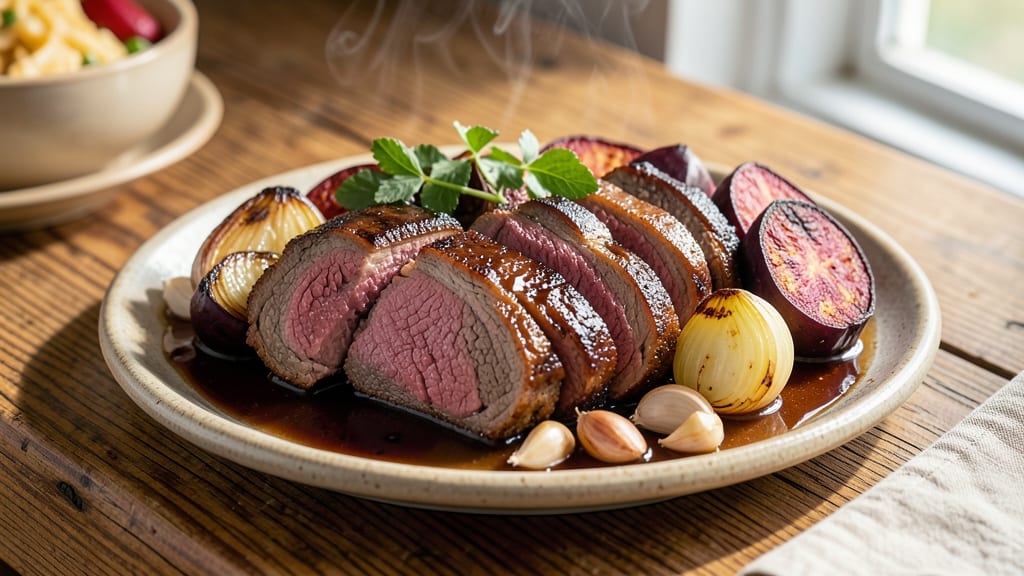
This beef and beets recipe transforms humble ingredients into a restaurant-worthy dish where tender beef and naturally sweet beets create perfect harmony. The secret lies in slow-braising the beef until fork-tender while roasting the beets until caramelized—both techniques unlocking deep, complex flavors that balance earthy sweetness with rich savory notes.
What makes this recipe special is how the components work together: the beef develops a deep, meaty character from slow cooking, while the beets caramelize into sweet, jammy perfection.
A touch of balsamic vinegar at the end ties everything together, cutting through the richness while enhancing the natural sweetness of the beets.
By the time you serve this dish, you'll have tender beef that falls apart easily and beets so sweet and tender they melt in your mouth. The sauce—rich from the beef's natural juices and brightened by the beets—coats every bite, creating a dish that's both comforting and sophisticated.
The best part? This recipe comes together in one pot, making cleanup effortless while delivering professional-quality results. Perfect for a cozy weeknight dinner or an impressive meal for guests, this beef and beets dish proves that simple ingredients can create something truly special.
Ingredients for beef and beets
Transform humble ingredients into a restaurant-worthy masterpiece with these carefully chosen components.
| Ingredient | Amount | Notes |
|---|---|---|
| Chuck Roast 🥩 | 2 lb | Well-marbled for tenderness |
| Medium Beets 🍠 | 4 whole | Organic preferred, trimmed |
| Yellow Onion 🧅 | 1 whole | Yellow or red variety |
| Garlic Cloves 🧄 | 6 cloves | Freshly minced for aroma |
| Balsamic Vinegar 🍷 | ¼ cup | Aged for depth of flavor |
| Beef Broth 💧 | 2 cups | Homemade or quality store-bought |
| Dry Red Wine 🍷 | ½ cup | Cabernet Sauvignon or Merlot |
| Olive Oil 🫒 | ½ cup | Extra-virgin for richness |
| Fresh Thyme 🌿 | ¼ cup | Leaves only, stems removed |
| Fresh Rosemary 🌿 | 1 tbsp | Chopped, fresh preferred |
| Salt 🧂 | 1 ½ tsp | Diamond Crystal preferred |
| Ground Black Pepper 🌶️ | 1 tsp | Freshly cracked preferred |
| Tomato Paste 🍅 | 1 tbsp | San Marzano preferred |
| Honey 🍯 | 1 tbsp | For balancing acidity |
The chuck roast is your secret weapon—its marbling ensures that fork-tender texture you crave. Costco or Whole Foods carry excellent cuts, but even the regular grocery store's chuck roast works if it's well-marbled. Look for bright red color and visible fat streaks. For the beets, organic is ideal—they're earthier and hold their shape better during roasting. If you can't find organic, regular beets work, just scrub them well. The balsamic vinegar? Aged balsamic from Italy adds that luxurious sweetness without overpowering. I always grab a bottle from Trader Joe's—their aged balsamic is perfect for this dish.
No aged balsamic? Red wine vinegar plus a teaspoon of sugar gets you close. Fresh thyme is ideal, but dried works at one-third the amount. For the red wine, any bold dry red will do—whatever's open in your fridge. The tomato paste can be from a squeeze tube if you're lazy (no judgment), but San Marzano canned is worth the splurge for its sweetness. Beets too tough after roasting? Parboil them for 10 minutes first—it keeps them tender. And if you're feeling fancy, swap the honey for a touch of maple syrup for a different depth of sweetness.
This dish tastes even better the next day as the flavors meld. Store leftovers in an airtight container in the fridge for up to 5 days. For longer storage, freeze portions for 3 months. The beets can be roasted ahead of time and reheated gently with a splash of broth. The braised beef keeps beautifully too—just reheat with a little extra broth to loosen the sauce. I always make a double batch because it's that good, and the leftovers make fantastic sandwiches or tacos the next day.
Why You'll Love This Recipe
- One-Pot Magic: I swear by this when I’m too tired to wash a second pan. Chuck roast and beets braise together—no flipping, no fuss—just layer everything in one deep skillet, cover, and let it work. The onions caramelize right alongside, and by the time the meat pulls apart, the kitchen’s basically clean.
- Sweet-Savory Balance: That balsamic glaze? It’s the MVP. The beets add earthy sweetness while the vinegar cuts through the richness of the beef, making every bite feel like a hug for your taste buds. Honestly, the first time I tasted it, I thought, “Why didn’t I do this sooner?”
- Leftovers That Shine: This dish actually improves the next day. The flavors meld into something deeper, and the beets soften just enough to make them melt-in-your-mouth tender. I pack it for lunches—no sad, dry sandwiches here. Just reheat, slice, and serve with crusty bread. (Yes, even on a Tuesday night.)
- Budget-Friendly Feast: Chuck roast is cheap, beets last forever, and a single onion plus garlic won’t break the bank. Here’s what sold me—you’re feeding four for the price of two takeout meals, and it’s way more impressive. Plus, the leftovers stretch into salads, wraps, or even breakfast hash. My wallet and my family thank me.
Step-by-step instructions for beef and beets braised to perfection
Here's how to transform humble chuck roast and earthy beets into a showstopping dish bursting with savory-sweet harmony.
Prepare the Beets for Maximum Flavor
Preheat your oven to 375°F. Scrub the 4 whole medium beets clean with a vegetable brush, removing any dirt or loose skin. Wrap each beet individually in aluminum foil and place them on a baking sheet. Roast for 45-50 minutes until they're tender when pierced with a knife. You'll know they're done when the foil steams slightly and the beets yield easily.
While they roast, peel the beets under cool running water to remove the skin—it slips off effortlessly when hot. Chop the peeled beets into ½-inch cubes and set aside. This roasting technique concentrates their natural sweetness while keeping them tender, not mushy.
Sear the Chuck Roast for Deep Flavor
Pat the 2 lb chuck roast dry with paper towels—this is crucial for developing that beautiful crust. Season both sides generously with 1.5 tsp salt and 1 tsp ground black pepper. Heat 0.25 cup olive oil in a large Dutch oven over medium-high heat until shimmering.
Sear the roast for 4-5 minutes per side until it develops a deep brown crust. Don't rush this step—patience here builds incredible flavor. Remove the roast and set it aside on a plate. You'll notice the surface will be richly caramelized, setting the stage for the braising liquid to work its magic.
Build the Braising Liquid
In the same Dutch oven, reduce heat to medium and add 1 whole yellow onion, chopped into ½-inch pieces, and 6 cloves garlic cloves, minced. Sauté for 3-4 minutes until the onions soften and become translucent. Add 1 tbsp tomato paste and cook for another 1 minute, stirring constantly to prevent burning.
Deglaze the pot with 0.5 cup dry red wine, scraping up all those flavorful browned bits from the bottom. Let it simmer for 2 minutes until the alcohol smell dissipates. Add 2 cups beef broth, 0.25 cup balsamic vinegar, 0.25 cup fresh thyme leaves, and 1 tbsp chopped fresh rosemary. Bring to a gentle simmer and return the roast to the pot.
Braise Until Fork-Tender
Cover the Dutch oven and transfer to a 325°F oven for 2.5-3 hours. The roast is done when it reaches 203°F internally and a fork slides in like butter. This low-and-slow process transforms the tough chuck into melt-in-your-mouth tenderness while infusing it with the aromatic braising liquid.
About 30 minutes before the roast is done, stir in the 1 tbsp honey and the chopped roasted beets. The honey will bloom beautifully in the warm liquid, balancing the acidity from the balsamic while enhancing the beets' natural sweetness. The beets should absorb all those rich flavors while maintaining their texture.
Rest and Serve with Confidence
Remove the roast from the pot and let it rest on a cutting board for 15 minutes before slicing. This resting period is non-negotiable—it allows the juices to redistribute throughout the meat, ensuring each bite is moist and flavorful. Meanwhile, skim any excess fat from the braising liquid and adjust seasoning if needed.
Slice the roast against the grain into ¼-inch thick pieces and arrange it on a platter. Ladle the beets and braising liquid over the top, creating a stunning presentation. The result should be a harmonious marriage of tender beef, sweet beets, and a rich, aromatic sauce that coats every bite. Serve immediately with crusty bread to soak up all that delicious liquid.
Pro Tips For Making Beef And Beets
- SEAR THE CHUCK ROAST FIRST: I learned this the hard way—skipping the sear means flavorless beef. Pat the roast dry, hit it with high heat in a Dutch oven for 3-4 minutes per side until deep brown. That crust locks in juices and carries the balsamic reduction’s tang all the way through.
- PEEL BEETS AFTER COOKING: Raw beets stain everything—your hands, cutting board, even your soul. Roast them whole (wrapped in foil at 400°F for 45-50 minutes) first, then peel while still warm. The skins slide off like a guilty conscience after a bad date.
- DEGLAZE WITH BALSAMIC + BROTH: Don’t just splash water in that hot pan after searing the onions and garlic—you’ll dilute the flavor. Use ¼ cup balsamic vinegar first, let it bubble for 30 seconds, then add 1 cup beef broth. That’s where the magic sauce starts, and it won’t taste like sad, watered-down gravy.
- REST THE BEETS UNDERWRAP: Cut those roasted beets too soon, and they’ll turn to mush before you even slice them. Transfer them to a plate, loosely tent with foil, and let them sit for 10 minutes. Warm, not hot—just like a good apology, they’ll be easier to handle.
Essential equipment for this recipe
Dutch Oven Essentials
A heavy-duty Dutch oven is the star of this recipe—it distributes heat evenly and locks in moisture during braising. I swear by the Le Creuset Signature Dutch Oven (5.5-quart) for its durable cast iron and enamel coating, but a Lodge Pre-Seasoned Cast Iron Dutch Oven works perfectly too.
The deep sides prevent spills, and the tight lid ensures the beef cooks low-and-slow without drying out. 🔥
Precision Thermometer
Never guess your beef's doneness again—an instant-read meat thermometer is non-negotiable. The ThermoWorks Smoke or Meater models are my top picks for their fast, accurate readings.
Insert the probe into the thickest part of the roast to monitor the 203°F internal temperature—this ensures your beef is fork-tender without being mushy.
Vegetable Brush
A stainless steel vegetable brush makes scrubbing beets effortless, removing dirt and loose skin without damaging their delicate texture. I use the OXO Good Grips Vegetable Brush—it’s gentle on produce and easy to clean.
Pro tip: Soak stubborn beets in cold water for 5 minutes before brushing to loosen dirt. 🍠
Aluminum Foil
Heavy-duty aluminum foil (like Reynolds Wrap) is key for roasting the beets—it traps steam and concentrates their natural sweetness. Wrap each beet individually to prevent them from sticking to the pan. For extra crispiness, leave a small opening in the foil to allow steam to escape slightly.
Cutting Board & Knife
A sharp chef’s knife (like the Wüsthof Classic 8-inch) and a cutting board (I prefer Teak or Bamboo) are essential for chopping onions, garlic, and beets efficiently.
Slice the roast against the grain with a slicing knife (such as the Dexter-Russell) for tender, uniform pieces that melt in your mouth.
Measuring Tools
Precision matters when balancing flavors—use a stainless steel measuring cup (like OXO Stainless Steel) for liquids and a spice scoop (such as Penzeys Spice Scoop) for herbs.
A digital kitchen scale ensures accurate measurements for salt and honey, which are critical for balancing the dish’s acidity and sweetness. ✨
Nutrition facts
Frequently asked questions
Can I substitute another cut of beef for chuck roast?
Yes, but with adjustments! For best results, use brisket or short ribs—both braise beautifully. Avoid lean cuts like sirloin, as they'll dry out. If using brisket, increase braising time to 3-4 hours to ensure tenderness. Short ribs may need 2.5-3 hours depending on size.
How do I make the beets sweeter naturally?
Roasting enhances their natural sweetness, but you can boost it further! Add 1 tbsp brown sugar or 1 tsp cinnamon when roasting. For extra depth, toss the chopped beets with 1 tsp balsamic vinegar and ½ tsp honey before adding them to the braise. The acidity helps caramelize their sugars faster.
Can I make this dish in a slow cooker?
Sear the beef first, then transfer everything to a 6-quart slow cooker on low for 6-8 hours. Add the beets and honey during the last 1-2 hours to prevent them from turning mushy. The slow cooker's gentle heat keeps the beef tender while letting flavors meld beautifully.
Why did my beets turn mushy?
Overcooking or cutting them too small are the usual culprits. Roast beets until tender but still firm (they'll soften further when braised). Cut them into ½-inch cubes max, and add them to the braise only 30 minutes before serving. If they're already mushy, strain the braising liquid and serve the beets separately as a sweet glaze.
What's the best way to reheat leftovers?
Reheat gently in the braising liquid over low heat for 10-15 minutes until warmed through. For crispier beets, add a splash of water or broth. Never microwave—it makes the beef tough. Leftovers taste even better the next day as flavors deepen! Store in an airtight container for up to 5 days.