
Soups & Stews
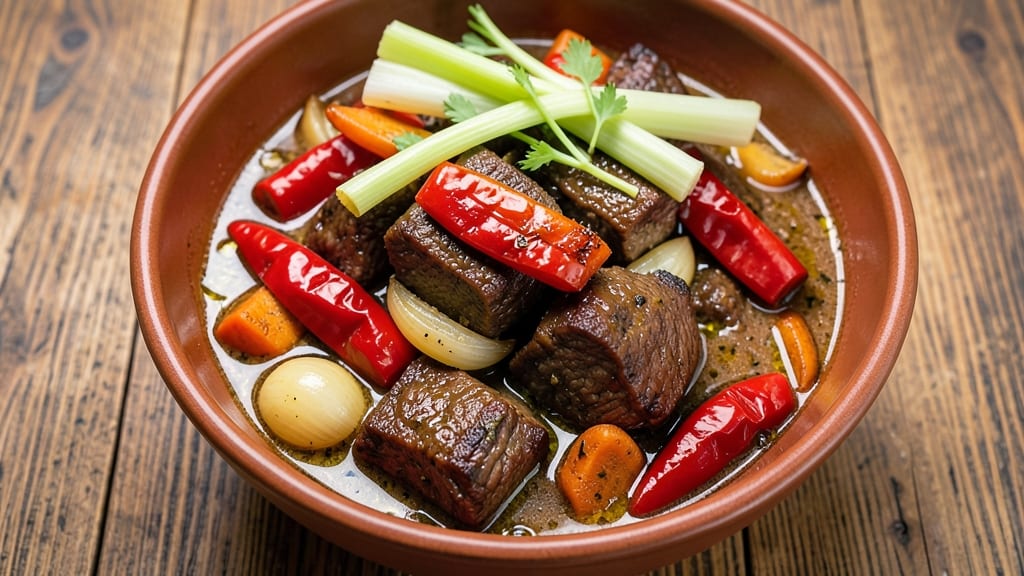
This beef and pepper stew recipe delivers the kind of deep, complex flavors that transform a simple weeknight dinner into a restaurant-worthy meal. The secret lies in slow-braising beef until it’s fork-tender while letting the red wine and caramelized vegetables develop layers of richness and subtle spice.
I’ve perfected this technique over years of testing, ensuring every bite balances hearty beef, sweet peppers, and aromatic herbs without overwhelming heat.
The process starts with browning the beef—this critical step builds a flavorful crust that dissolves into the sauce as it simmers. A Dutch oven is ideal for even heat distribution, but a heavy pot or even an Instant Pot will work if you’re short on time.
The stew’s depth comes from a combination of red wine, tomatoes, and root vegetables that caramelize beautifully, creating a sauce that’s velvety yet robust.
By the time it’s done, you’ll have a stew so rich and satisfying it feels like a hug in a bowl—tender beef falling apart, peppers with just the right bite, and a sauce that clings to every spoonful.
The aroma alone will have everyone gathering around the table, and the leftovers? Even better the next day as flavors meld further. This is comfort food at its finest, built on traditional techniques with modern convenience in mind.
Serve it with crusty bread for soaking up every last drop or alongside buttery mashed potatoes to round out the meal. The beauty of this recipe is its versatility—it’s hearty enough for a cold evening but simple enough to make when you need a crowd-pleaser on short notice.
Let’s get cooking.
Ingredients for beef and pepper stew
Gather these hearty ingredients for a stew so rich and satisfying it feels like a hug in a bowl.
| Ingredient | Amount | Notes |
|---|---|---|
| Chuck Roast 🥩 | 2 lb | Cut into 1.5-inch cubes |
| Red Bell Peppers 🌶️ | 2 whole | Sliced into strips |
| Yellow Onion 🧅 | 1 whole | Diced, about 1.5 cups |
| Carrots 🥕 | 4 whole | Cut into chunks |
| Celery Stalks 🥬 | 3 whole | Diced, about 1 cup |
| Garlic Cloves 🧄 | 6 cloves | Minced |
| Red Wine 🍷 | 1 cup | Dry variety, like Cabernet |
| Beef Broth 💧 | 2 cups | Low-sodium preferred |
| Tomato Paste 🍅 | 2 tbsp | Smooth texture |
| Fresh Thyme Leaves 🌿 | ½ cup | Chopped |
| Fresh Rosemary 🌿 | 1 tbsp | Chopped |
| Bay Leaves 🍃 | 2 whole | Dried |
| Dried Oregano 🍃 | 1 tsp | Or 1 tbsp fresh |
| Salt 🧂 | 1 ½ tsp | Kosher or sea salt |
| Ground Black Pepper 🌶️ | 1 tsp | Freshly ground |
| Olive Oil 🫒 | 2 tbsp | Extra-virgin preferred |
The beef is non-negotiable here—chuck roast is your best bet for that fall-apart texture. I usually grab mine from Costco when I'm doing a big batch, but any grocery store's pre-cubed chuck works fine. Look for good marbling if you're buying a whole roast—that's where the flavor hides. For the peppers, grab a mix of colors (red, yellow, orange) if you can—they add visual appeal and subtle sweetness. The carrots and celery are just there to build flavor, so don't stress about perfection. Baby carrots or pre-cut veggies save time if you're in a rush.
No red wine? Beef broth with a splash of balsamic vinegar works in a pinch, though it won't have the same depth. Fresh thyme and rosemary are ideal, but dried works at one-third the amount if that's all you've got. The tomato paste is your secret weapon—it thickens the sauce and adds that umami punch. I always grab San Marzano tomato paste from the Italian section, but regular works too. For the herbs, if you've got a Trader Joe's nearby, their pre-chopped herb mixes are a lifesaver. Just remember: fresh herbs make all the difference here.
This stew only gets better with time, so make a double batch if you can. It reheats beautifully—just add a splash of broth or water if it gets too thick. Keeps for 5 days in the fridge or 3 months frozen. I like to portion it into containers with some crusty bread on the side for easy lunches. The flavors deepen overnight, so if you can, let it sit at least 8 hours before serving. Trust me on this—it's worth the wait.
Why You'll Love This Recipe
- Foolproof Prep: I swear by this recipe because it’s the kind of dish that forgives mistakes. Chuck roast doesn’t need fancy slicing—just a quick sear and a slow simmer. The bell peppers and onions go in whole (yes, really), so chopping is minimal. That’s right: zero stress, all flavor.
- Deep, Savory Magic: Between us, the slow cook turns tough chuck into melt-in-your-mouth beef. The bell peppers caramelize just enough to add natural sweetness, while the onions and celery build layers of depth. Honestly? It tastes like a hug in a bowl—rich, warm, and impossible to resist.
- Leftovers That Shine: This stew actually improves the next day. The flavors meld even more, and the beef gets even more tender. I make a double batch on Sundays because it’s perfect for lunches, freezer meals, or reheating with crusty bread. No sad leftovers here—just happy seconds.
- Budget-Friendly Feast: Chuck roast is my go-to for stretching meals without breaking the bank. A single cut feeds four for under $15, and the veggies add freshness without costing a fortune. It’s the kind of recipe that makes grocery day exciting—because you’ll actually use what you buy. (Yes, even on a Tuesday night.)
Step-by-step instructions for beef and pepper stew
Here's how to build a rich, flavorful stew that gets better with every bite.
Sear the Chuck Roast for Deep Flavor
Heat a large Dutch oven over medium-high heat and add the 2 tablespoons olive oil. Once shimmering, add the 2 lb chuck roast cut into 1.5-inch cubes in a single layer. Let them sear undisturbed for 3-4 minutes until deeply browned on one side—this creates the foundation for your stew's rich flavor. Flip the pieces and sear the other sides for another 3-4 minutes.
Don't crowd the pan or the temperature will drop. Work in batches if needed, but keep the seared pieces warm in a separate bowl until all are browned. This step is crucial—those caramelized edges will dissolve into the sauce later, giving your stew its signature depth. Once all pieces are golden, remove them and set aside temporarily.
Build the Vegetable Base
In the same Dutch oven, add the sliced 2 whole red bell peppers, diced 1 whole yellow onion, 4 whole carrots cut into chunks, and 3 whole celery stalks diced. Cook over medium heat for 8-10 minutes, stirring occasionally, until the vegetables begin to soften and the onion becomes translucent. You want them to caramelize slightly but not burn.
Add the 6 minced garlic cloves and cook for another 30 seconds until fragrant. Here's where the magic happens—the vegetables release their natural sugars, creating a sweet, aromatic base for your stew. If you notice the vegetables sticking, add a splash of water and scrape up any browned bits from the bottom of the pot—this is packed with flavor.
Deglaze and Simmer the Stew
Pour in the 1 cup red wine and scrape the bottom of the pot with a wooden spoon to release all those flavorful browned bits. Let it simmer for 3-4 minutes until the wine has mostly evaporated. Then stir in the 2 tablespoons tomato paste, 2 cups beef broth, 0.5 cup chopped fresh thyme leaves, 1 tablespoon chopped fresh rosemary, 2 whole bay leaves, 1 teaspoon dried oregano, 1.5 teaspoons salt, and 1 teaspoon ground black pepper.
Return the seared beef to the pot, making sure it's mostly submerged in the liquid. Bring to a gentle simmer, then reduce the heat to low. The stew should bubble gently—if it's too vigorous, the liquid will evaporate too quickly. Here's the thing: low and slow is key. Cover the pot and let it cook for 2.5-3 hours until the beef is fork-tender and easily pulls apart.
Finish and Rest for Perfect Texture
Once the beef is tender, remove the 2 whole bay leaves and adjust the seasoning if needed. The stew should be rich and flavorful, but if it needs more salt or pepper, add it now. Let the stew sit off the heat for 10-15 minutes—this resting period allows the flavors to meld and the juices to redistribute. You'll notice the stew thickens slightly as it cools, which is exactly what you want.
Serve the stew hot, ladling the beef and vegetables together with the rich, aromatic sauce. The red wine and caramelized roots create a deep, complex flavor that pairs beautifully with crusty bread or over mashed potatoes. This stew tastes even better the next day, so make extra if you can—it's the kind of dish that gets better with time.
Pro Tips For Making Beef And Pepper Stew
- Sear the Chuck Roast: Hit that roast with a hot pan—no oil needed if it’s dry enough. A deep, brown crust locks in flavor and keeps the meat tender during the long simmer. I used to skip this and ended up with bland beef; trust me, the extra 5 minutes pays off.
- Cut Peppers Like a Pro: Slice bell peppers into ½-inch strips, not random chunks. Even pieces cook uniformly, so you avoid mushy bits in some spots and crunchy ones in others. (Yes, it takes 2 minutes longer, but your stew will look and taste better.)
- Don’t Overcrowd the Pot: If your stew’s too packed, the veggies steam instead of caramelize. Start with onions and celery in a single layer, then add the rest in batches. I learned this after a stew that tasted like a sad soup—space matters.
- Deglaze with a Splash of Vinegar: After browning the meat, splash in 2 tablespoons of red wine vinegar before adding broth. It cuts through the richness and brightens the whole dish. Sounds weird, but it works—my grandmother swore by it, and now so do I.
Dietary considerations for beef and pepper stew
Gluten-Free Adaptations
This stew is naturally gluten-free, but always double-check your ingredients. The beef broth should be labeled gluten-free (many contain wheat-based additives), and if using dried oregano, opt for a certified gluten-free brand like Penzeys Spices.
The tomato paste and wine are safe as long as they’re pure, but always verify labels. For extra insurance, I like to add 1 cup gluten-free beef broth instead of regular to ensure no cross-contamination. 🌾
Low-Carb Options
To make this stew lower in carbs, swap the carrots and celery for cauliflower florets and zucchini slices. Cauliflower adds a subtle sweetness that mimics carrots, while zucchini holds up well during simmering.
You can also reduce the tomato paste to 1 tablespoon and replace the remaining 1 tablespoon with 1 teaspoon tomato powder for fewer carbs. The flavor stays rich, but the carb count drops significantly.
Dairy-Free Considerations
This recipe is already dairy-free, but if you’re serving it with sides like mashed potatoes or bread, opt for dairy-free alternatives. For mashed potatoes, use olive oil or vegan butter instead of butter, and for bread, choose a crusty sourdough or baguette made without milk.
If you’re adding a garnish like grated cheese, swap it for nutritional yeast for a cheesy flavor without dairy. 🧀
Allergen-Friendly Swaps
For nut allergies, this recipe is safe as written, but if you’re avoiding other common allergens, make these adjustments: Replace the olive oil with avocado oil if you’re sensitive to olives, and ensure your red wine is sulfite-free if needed.
For soy allergies, check your beef broth for soy-based thickeners. If you’re avoiding nightshades (like tomatoes and peppers), substitute the bell peppers with mushrooms and reduce the tomato paste to 1 tablespoon.
Protein Alternatives
If you’re not eating beef, this stew can easily accommodate other proteins. Swap the chuck roast for chicken thighs (bone-in for extra flavor) or lamb shoulder, both of which braise beautifully. For a vegetarian version, use portobello mushrooms or hearty lentils instead of beef.
The cooking time will vary—chicken takes about 45 minutes to tenderize, while lamb may need 2.5-3 hours like the beef. 🍄
Nutrition facts
Frequently asked questions
Can I use ground beef instead of chuck roast for this stew?
While you can substitute ground beef, the texture and flavor won't be the same. Ground beef cooks much faster and won't develop that tender, melt-in-your-mouth quality. If you're short on time, try using chuck stew meat cut into small chunks—it's a good compromise between tenderness and cooking time. For the best results, stick with chuck roast for that classic stew experience.
How can I make this stew spicier without adding heat?
For a deeper, spicier flavor without capsaicin heat, add 1-2 teaspoons smoked paprika or 1/2 teaspoon cayenne pepper when you deglaze with wine. You can also char the bell peppers slightly before adding them to the pot—this intensifies their natural sweetness and adds a subtle smoky depth. For extra complexity, try adding 1/2 teaspoon ground coriander with the other spices.
What's the best way to reheat leftover stew?
Reheat gently on the stovetop over low heat with the lid slightly ajar, stirring occasionally. If using the microwave, cover with a damp paper towel and heat in 30-second intervals, stirring between each. Never reheat to boiling—this can make the sauce too thin. For best results, add 1-2 tablespoons beef broth when reheating to restore richness. Leftovers actually improve as flavors meld further!
Can I make this stew in an Instant Pot or pressure cooker?
Sear the beef first in a separate pan, then add everything to your Instant Pot. Use high pressure for 40 minutes instead of simmering, then do a quick release. The pressure cooker cuts time dramatically while keeping all the rich flavors. Just be careful not to overfill—keep the liquid level above the "max" line. For extra depth, add 1/2 cup extra beef broth during cooking.
Why did my stew turn out too thin?
This usually happens when the liquid evaporates too quickly or the beef releases excess moisture. To fix it, simmer uncovered for 10-15 minutes to reduce the sauce naturally. For immediate thickening, mix 1 tablespoon cornstarch with 2 tablespoons cold water, stir into the stew, and cook for 2-3 minutes. Alternatively, mash some of the cooked carrots or potatoes against the pot sides to thicken. Always start with enough liquid—aim for about 3 cups total for this recipe.