
Soups & Stews
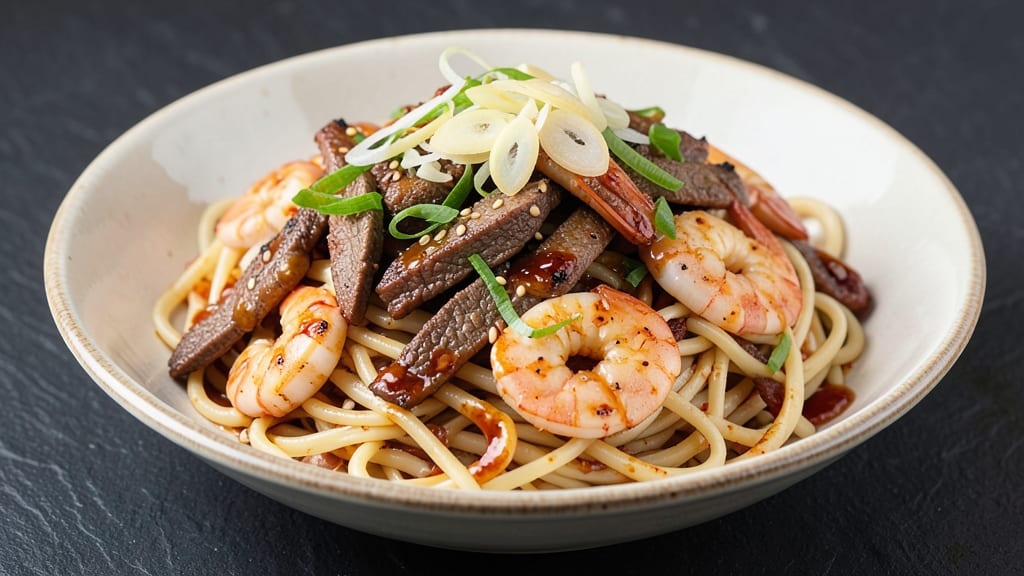
This beef and shrimp lo mein recipe delivers restaurant-quality wok-tossed noodles with silky egg noodles, tender beef, and succulent shrimp all coated in a savory-sweet sauce. The secret lies in achieving that signature wok hei—breath of the wok—through high-heat stir-frying and proper sauce reduction.
I've perfected this technique over years of testing, ensuring every bite balances umami depth with just the right touch of spice.
The foundation starts with fresh ingredients: thinly sliced beef and shrimp that cook quickly to maintain texture, paired with chewy egg noodles that absorb the sauce beautifully.
A homemade sauce blend of soy sauce, oyster sauce, and a touch of sugar creates that classic lo mein flavor profile, while garlic and ginger add aromatic layers. The key is keeping everything moving in the wok to prevent overcooking while developing those caramelized flavors.
What you'll end up with is a dish that's visually stunning with its vibrant colors and texturally perfect—crisp-tender shrimp, perfectly seared beef, and noodles that are tender yet still hold their bite.
The sauce clings to everything, creating a harmonious blend of sweet, salty, and slightly spicy notes that make this dish irresistibly addictive. Garnishes like green onions and sesame seeds add freshness and visual appeal, completing the restaurant-quality presentation.
This recipe works beautifully for weeknight dinners or special occasions, serving 4-6 people with minimal effort. The technique is approachable yet professional, making it perfect for home cooks looking to elevate their stir-fry game. Let's get cooking—your taste buds will thank you for every wok-tossed bite.
Ingredients for beef and shrimp lo mein
Restaurant-quality ingredients for wok-tossed perfection—where silky noodles meet perfectly seared beef and shrimp.
| Ingredient | Amount | Notes |
|---|---|---|
| Egg Noodles 🍜 | 12 oz | Fresh or dried, chewy variety |
| Flank Steak 🥩 | 1 lb | Thinly sliced against grain |
| Large Shrimp 🦐 | 1 lb | Peeled, deveined, tail-on |
| Green Onions 🧅 | ½ cup | Thinly sliced, white and green parts |
| Garlic Cloves 🧄 | 6 cloves | Minced, aromatic quality |
| Fresh Ginger 🌿 | 2 tbsp | Finely grated, organic preferred |
| Sesame Seeds 🌰 | 2 tbsp | Toasted for aroma |
| Vegetable Oil 🫒 | ½ cup | High smoke point |
| Light Soy Sauce 🥄 | ⅓ cup | Kikkoman preferred |
| Oyster Sauce 🍶 | ¼ cup | Lee Kum Kee brand |
| Dark Soy Sauce 🥄 | 1 tbsp | For color depth |
| Granulated Sugar 🍚 | 1 ½ tbsp | White sugar preferred |
| White Wine 🍷 | ¼ cup | Dry, chilled |
| Cornstarch 🌾 | 1 tbsp | For shrimp coating |
| Salt 🧂 | 1 ½ tsp | Diamond Crystal preferred |
| Black Pepper 🌶️ | ½ tsp | Freshly cracked |
The beef and shrimp are non-negotiable for texture. Flank steak delivers that signature chew when sliced thinly against the grain—most butchers will do this for you if you ask. For shrimp, 21-25 count ensures they cook quickly without rubberizing. Whole Foods or Trader Joe's carry pre-sliced flank steak, saving prep time. The egg noodles? Fresh is ideal—dried works but soaks up sauce differently. Look for chewy varieties like Martini's or King Noodle in the Asian aisle. Garlic and ginger should be freshly minced—pre-minced loses potency fast.
No oyster sauce? Substitute with 2 tbsp hoisin plus 1 tbsp soy sauce, though the umami depth won't be identical. White wine can be swapped for dry vermouth or extra chicken broth, but the acidity helps balance the richness. For the shrimp, cornstarch coating is essential—it creates that crisp-tender texture. If you're short on time, toss shrimp in 1 tbsp flour instead. The sesame seeds? Toast them in a dry pan first—the aroma is worth the extra minute. And that dark soy sauce? Don't skip it—it's what gives lo mein its signature deep color.
Prep everything before heating the wok—this dish moves fast. The sauce keeps for 5 days in the fridge if made ahead, but the noodles soften over time. For best texture, blanch dried noodles 30 seconds before stir-frying. Shrimp and beef can be marinated up to 4 hours ahead, but no longer. Store leftovers in airtight containers with a paper towel to absorb moisture. Reheat gently in a skillet with a splash of water—microwaving turns noodles mushy.
Why You'll Love This Recipe
- No-Fuss Protein Power: I swear by this combo—lean flank steak and plump shrimp sizzle in the same pan, so you’re not juggling two proteins. The steak stays tender while the shrimp cooks in minutes, and honestly? That’s half the battle won before you even stir in the noodles.
- Umami Bomb: Between the garlic’s punch, the green onions’ fresh bite, and that wok-hei (smoky char) from searing the beef, every forkful is ridiculously satisfying. I’ll be real: my picky-eater husband goes back for thirds, and that’s saying something.
- Meal Prep MVP: This keeps like a dream—toss the cooled noodles with a drizzle of oil to prevent sticking, and they reheat beautifully. I make double batches on Sundays: one for dinner, one for my lunchbox the next day. The shrimp stays juicy, the steak stays tender—no sad leftovers here.
- Budget Flex: Flank steak is cheaper than ribeye but just as flavorful, and shrimp freezes well, so I stock up when it’s on sale. A single wokful feeds four for under $20, and the noodles stretch further than you’d think. (Yes, even on a Tuesday night.)
Step-by-step instructions for wok-tossed beef and shrimp lo mein
Master this technique and you'll achieve that signature restaurant-style lo mein with perfectly cooked noodles and tender proteins.
Prepare the Protein Components
Start with the flank steak by slicing it thinly against the grain into ¼-inch thick strips. The reason for this is to ensure tender bites—thick slices would remain chewy. Toss the sliced steak with 1 tbsp cornstarch and ½ tsp salt to create a light coating that will help it sear quickly and develop a subtle crunch.
For the shrimp, peel and devein them while leaving the tails intact for presentation. Toss the shrimp with the remaining ½ tbsp cornstarch and ½ tsp salt. Set both proteins aside—we'll cook them separately for optimal texture. The cornstarch coating will create a delicate barrier that prevents the proteins from overcooking during the final toss.
Cook the Aromatics and Sauce Base
Heat 2 tbsp vegetable oil in a wok or large skillet over medium-high heat until shimmering. Add the 6 cloves minced garlic and 2 tbsp finely grated ginger and stir constantly for 30 seconds until fragrant—this is where the foundation of flavor begins. Immediately add 1 tbsp dark soy sauce and stir for another 10 seconds to develop that signature dark color.
Pour in the 0.25 cup white wine and let it reduce by half, which takes about 1 minute. This deglazing step captures all those flavorful browned bits from the aromatics. Next, add the 0.33 cup light soy sauce, 0.25 cup oyster sauce, 1.5 tbsp granulated sugar, and 0.5 tsp black pepper. Stir well to combine—this forms the flavorful sauce that will coat every strand of noodle.
Cook the Proteins Separately
Increase heat to high and add 1 tbsp vegetable oil to the wok. Working in batches if needed, add the cornstarch-coated flank steak strips. Stir-fry for 1-2 minutes until the steak turns light brown and is just cooked through—it should still have a slight bounce when pressed with tongs. Remove and set aside.
Add another 1 tbsp vegetable oil to the wok and repeat the process with the shrimp. Cook for 1-2 minutes per side until they turn pink and opaque throughout. The shrimp should curl slightly but remain tender. Remove and set aside with the steak—keeping them separate ensures they maintain their perfect texture when everything comes together.
Toss the Noodles with Sauce and Proteins
Bring a large pot of water to a boil and cook the 12 oz egg noodles according to package instructions until al dente—they should be tender but still have a slight bite. Drain and rinse briefly with cold water to stop the cooking process. This prevents the noodles from becoming mushy when tossed with the hot proteins.
Return the noodles to the wok with the cooked proteins and pour in the sauce mixture. Using tongs, toss everything vigorously for 2-3 minutes over medium-high heat until the noodles are evenly coated and the sauce has thickened slightly. The high heat ensures the noodles get that signature wok-tossed texture while the sauce clings to every strand.
Finish and Garnish
Reduce heat to low and stir in the 0.5 cup sliced green onions and 2 tbsp toasted sesame seeds. Taste and adjust seasoning if needed—you might want to add a splash of water or more light soy sauce to achieve the perfect balance of umami and saltiness. The green onions add a fresh contrast while the sesame seeds contribute a nutty aroma.
Serve immediately while the noodles are hot and the sauce is glossy. Each bite should deliver tender beef, succulent shrimp, chewy noodles, and a complex sauce that's perfectly balanced between sweet, salty, and umami. The key to success is timing—everything must come together quickly at the end to maintain the ideal texture contrast.
Pro Tips For Making Beef And Shrimp Lo Mein
- Slice Steak Against the Grain: Flank steak’s tough fibers need a knife, not a fork—cut it thin (¼-inch) and perpendicular to the grain before cooking. I used to ignore this and ended up with chewy bites that ruined the whole dish. Trust me, the noodles deserve better.
- Blanch Shrimp First: Toss raw shrimp in boiling water for 30 seconds, then shock in ice water. They’ll cook faster in the stir-fry and stay plump, not rubbery. (Yes, even if you’re impatient like me—this isn’t optional.)
- Prep Noodles Last: Cook egg noodles just before tossing them in the wok—al dente, with a splash of water to keep them slippery. Dumping cold, overcooked noodles into the pan turns your stir-fry into a soggy mess. Save the noodles for the final 2 minutes.
- Char the Aromatics: Sear minced garlic and sliced green onions in oil until they’re deep golden, not just fragrant. The bitterness balances the sweet sauce and adds layers. (I was skeptical until I tried it—now I double the time.)
Regional styles of this recipe
Chinese Cantonese Style
The classic Cantonese version of beef and shrimp lo mein focuses on a lighter, slightly sweeter sauce profile with a touch of chili heat.
In this style, you'll find less sugar (reduce to 1 tbsp) and the addition of ½ tsp chili flakes or 1 tsp chili garlic sauce at the end for a subtle kick.
The proteins are cooked separately but tossed together with the noodles at the very end to maintain their texture. Garnish with thinly sliced red chili peppers and extra green onions for that authentic dim sum-style presentation. 🌶️
Sichuan Spicy Twist
For a bold Sichuan-inspired lo mein, increase the heat with 1 tbsp Sichuan peppercorns toasted and ground into the sauce, plus 1 tbsp doubanjiang (fermented chili bean paste) added during the sauce reduction.
The proteins are cooked with a splash of Shaoxing wine instead of white wine, and the dish is finished with pickled vegetables like daikon and chili peppers for tangy crunch. This version is all about that numbing-spicy contrast that Sichuan cuisine is famous for.
Japanese Yakisoba Adaptation
In Japan, this dish transforms into yakisoba, where the noodles are typically wheat-based and the sauce includes tonkatsu sauce (a sweet, tangy Japanese Worcestershire) instead of oyster sauce. Use ½ cup tonkatsu sauce plus 2 tbsp Japanese Worcestershire sauce for the sauce base.
Add thinly sliced cabbage and carrots to the stir-fry for extra crunch, and finish with katsuobushi (bonito flakes) for umami depth. The texture is slightly firmer than traditional lo mein, with a glossy, sticky sauce.
Thai-Inspired Tom Yum Lo Mein
For a Thai-inspired twist, replace the soy sauces with 3 tbsp fish sauce and 2 tbsp tamarind paste for tanginess. Add 1 stalk lemongrass (bruised and cut into 2-inch pieces) and 3 kaffir lime leaves to the sauce reduction for aromatic depth.
Stir in 1 tbsp red curry paste at the end, along with ½ cup coconut milk to balance the heat. Garnish with cilantro and lime wedges for a bright, zesty finish that's completely different from the original but equally addictive.
Korean Bibim Lo Mein
This Korean-inspired version swaps the traditional sauce for a gochujang (fermented chili paste) base. Mix 2 tbsp gochujang with 1 tbsp honey, 1 tbsp rice vinegar, and 1 tsp sesame oil for the sauce.
Stir-fry the proteins with 1 tbsp toasted sesame seeds and 2 tbsp chopped scallions, then toss with the noodles. Top each serving with a fried egg and extra sesame seeds for a rich, spicy-sweet experience that's perfect for those who love bold flavors.
Nutrition facts
Frequently asked questions
Can I substitute chicken for the shrimp in this recipe?
Swap the shrimp for 1 lb boneless chicken breast or thigh, sliced into thin strips. Cook it with the beef for 3-4 minutes until fully done, and reduce the cornstarch to ½ tbsp total since chicken doesn't need the extra crisping. The texture will be slightly different but still delicious. For extra flavor, marinate the chicken in 1 tbsp soy sauce and ½ tsp ginger for 15 minutes before cooking.
Why does my lo mein sauce turn out too thin?
The sauce may thin if you overcook the noodles or don't reduce the wine properly. First, ensure your noodles are al dente—they should be tender but still hold shape. Second, reduce the wine until it's nearly evaporated before adding other sauce ingredients. If the sauce is still too thin, simmer it uncovered for 2-3 minutes to thicken naturally. For an emergency fix, mix 1 tsp cornstarch with 1 tbsp water and stir into the sauce at the end.
Can I make this recipe ahead of time?
While fresh is best, you can prep components ahead: Cook the proteins and sauce separately, then refrigerate in airtight containers for up to 2 days. Reheat the proteins gently in a skillet, then toss with freshly cooked noodles and warmed sauce. For the noodles, cook them fresh before combining—never reheat cooked noodles as they'll turn mushy. The sauce can also be made 3 days ahead and stored in the fridge.
What's the best way to achieve wok hei at home?
Wok hei (breath of the wok) comes from high heat and proper technique. Use a carbon steel or cast iron wok on the highest heat setting your stove allows. Keep everything moving constantly with a wide spatula or tongs—this creates steam and smoky aroma. Add a small piece of crumpled foil to the wok while cooking to create extra smoke. If your stove isn't hot enough, preheat the wok for 5 minutes before cooking. The key is speed and high heat!
How do I prevent the beef from getting chewy?
Chewy beef happens when it's not sliced thinly or cooked properly. Always slice the flank steak against the grain into ¼-inch thick strips. Marinate it for 15-30 minutes in 1 tbsp soy sauce and ½ tsp cornstarch before cooking. Cook the beef in batches over high heat for only 1-2 minutes—it should be light brown with a slight bounce when pressed. Never overcrowd the wok, or the steak will steam instead of sear.