
Soups & Stews
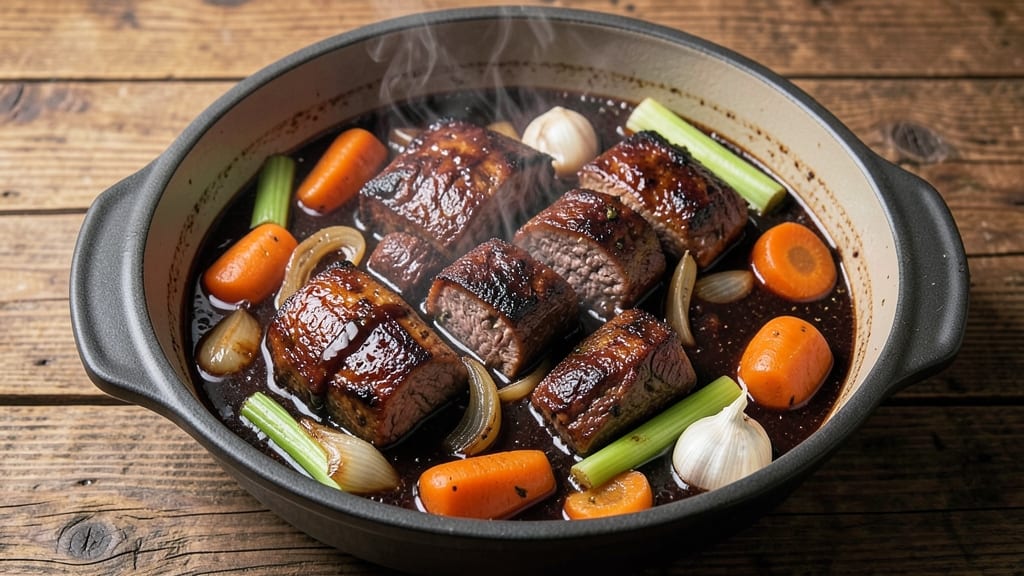
This beef and stout stew delivers deep malty richness that transforms tough cuts into melt-in-your-mouth perfection. The stout beer isn't just an ingredient—it's the soul of this dish, adding caramelized depth and a velvety body that makes every spoonful unforgettable.
I developed this recipe after years of experimenting with slow-cooked beef, and the stout makes all the difference in creating that signature hearty, comforting flavor.
The secret lies in the caramelized roots—onions, carrots, and celery—cooked low and slow until they're tender and sweet, forming the foundation for the stew. The beef, cut into chunks, braises until fork-tender while absorbing the stout's maltiness and the aromatic spices.
This isn't just a stew; it's a restaurant-quality dish that tastes like a cozy pub meal, brought home to your kitchen.
By the time it's done, you'll have a stew with rich, dark hues and a sauce so velvety it coats every bite. The stout's bitterness balances the sweetness of the caramelized vegetables, while the beef falls apart at the touch of a fork.
Serve it with crusty bread to soak up every last drop of that malty, savory goodness—this is the kind of dish that turns a simple dinner into an experience.
Pair it with a hoppy IPA or a bold red wine to complement the stew's depth, and you've got a meal that's perfect for chilly evenings or gatherings.
The stout's complexity shines through, making this more than just a stew—it's a flavor-packed centerpiece that will have everyone asking for seconds. Let's get cooking!
Ingredients for beef and stout stew
Here’s what you need to craft a stew with deep malty richness and caramelized roots—no shortcuts, just pub-quality flavor.
| Ingredient | Amount | Notes |
|---|---|---|
| Chuck Roast Beef 🥩 | 3 lb | Cut into 1.5-inch chunks, trimmed of fat |
| Dark Stout Beer 🍺 | 2 cups | Guinness or similar malty stout |
| Yellow Onions 🧅 | 2 whole | Cut into 1-inch chunks |
| Carrots 🥕 | 4 whole | Cut into 1-inch chunks, peeled |
| Celery Stalks 🌿 | 4 whole | Cut into 1-inch chunks, tough strings removed |
| Garlic Cloves 🧄 | 6 cloves | Crushed, not minced |
| Tomato Paste 🍅 | ½ cup | High-quality, no sugar added |
| Beef Stock 💧 | 2 cups | Homemade or high-quality store-bought |
| Thyme Sprigs 🌿 | 2 whole | Fresh, stems removed |
| Bay Leaves 🌿 | 2 whole | Dried, standard size |
| Black Peppercorns 🌶️ | 1 tbsp | Crushed, not ground |
| Olive Oil 🫒 | 2 tbsp | Extra-virgin for richness |
| All-Purpose Flour 🌾 | 2 tbsp | For thickening, if needed |
| Salt 🧂 | 1 ½ tsp | Kosher or sea salt, adjust to taste |
| Worcestershire Sauce 🍶 | 1 tbsp | Vegan if needed |
The beef is non-negotiable here—chuck roast with good marbling is a must. Costco or local butchers often have the best quality, but the pre-cut beef section at Kroger works too. Look for chunks that are roughly the same size so they cook evenly. If you’re buying a whole roast, ask your butcher to cut it into 1.5-inch pieces—this saves time and ensures even cooking. The stout beer is the soul of this dish, so skip the light lagers—Guinness or a bold dark stout like Samuel Smith’s Oatmeal Stout will give you that unmistakable malty depth. If you’re worried about alcohol content, simmer the stew uncovered for the first 20 minutes to let it evaporate.
No dark stout? Substitute with equal parts beef stock and a splash of balsamic vinegar—it won’t be identical, but it’ll get you close. Fresh thyme is ideal, but dried thyme at one-third the amount works in a pinch. Worcestershire sauce adds umami, but if you’re avoiding it, soy sauce or a dash of fish sauce (if not vegetarian) will bridge the gap. The tomato paste is your flavor anchor—don’t skip the high-quality stuff. The squeeze tubes from Trader Joe’s are perfect for this. For the vegetables, baby carrots or pre-cut celery from the salad bar save time, but fresh is always better. If you’re short on time, frozen carrots work fine—just don’t thaw them first.
This stew tastes even better the next day, so make a double batch if you’re feeding a crowd. Store leftovers in an airtight container in the fridge for up to 5 days, or freeze for 3 months. The sauce thickens as it cools, so add a splash of beef stock if it’s too stiff when reheating. For serving, crusty bread is a must—sourdough or a good baguette soaks up every last drop of that malty, velvety sauce. If you’ve got extra stout, drizzle a little over the top before serving—trust me, it’s worth it.
Why You'll Love This Recipe
- Five-Ingredient Magic: I swear by this—just beef, beer, onions, carrots, and celery. That’s it. The stout beer does all the heavy lifting, so you don’t need a spice cabinet or fancy techniques. Honestly, it’s the kind of recipe where you can chop while watching a show and still end up with something restaurant-worthy.
- Rich Without Effort: Between us, the slow cooker (or Dutch oven) turns tough chuck roast into melt-in-your-mouth bites while the dark stout deepens into a caramelized, slightly bitter-sweet sauce. It’s the kind of flavor that makes you pause mid-sip of beer—wait, is the stew drinking me?—because it’s that good.
- Weeknight to Potluck: This stew is my go-to for lazy Mondays and holiday dinners. Serve it over mashed potatoes for a hearty weeknight meal, or ladle it into bread bowls for a crowd-pleasing appetizer. My daughter even sneaks seconds at school lunches—yes, even on a Tuesday.
- Budget Beef Boost: A chuck roast stretches farther than you’d think, especially when simmered with beer and veggies. The stout adds depth without breaking the bank, and leftovers? They’re even better the next day. I’ve fed six people for under $20, and no one complains about the taste—or the price.
Step-by-step instructions for beef and stout stew
Here's how to build a rich, deeply flavorful stew where malty beer and caramelized roots shine.
Sear the Beef for Deep Flavor
Heat a heavy Dutch oven over medium-high heat until very hot. Add the 2 tablespoons olive oil and swirl to coat the bottom. Working in batches to avoid crowding, add the 3 lb chuck roast beef cut into 1.5-inch chunks and sear for 2-3 minutes per side until deeply browned. This step creates the Maillard reaction that builds the stew's foundation.
Remove the beef with tongs and set aside. You want the pan to stay hot for the next step—don't let it cool down. The browned bits left behind will form the rich base of your sauce. If the pan gets too cool, wipe it clean with a paper towel before adding the vegetables.
Build the Flavor Base with Vegetables
In the same Dutch oven, add the 2 whole yellow onions, 4 whole carrots, and 4 whole celery stalks, all cut into 1-inch chunks. Cook over medium heat for 8-10 minutes, stirring occasionally, until the vegetables soften and begin to caramelize. You're looking for edges that turn golden brown while keeping some texture in the vegetables.
Add the 6 crushed garlic cloves and cook for 30 seconds until fragrant. Immediately stir in the 0.5 cup tomato paste and cook for another 2 minutes, stirring constantly. This creates a rich, slightly sweet base that will deepen the stew's complexity. The tomato paste also helps balance the bitterness of the dark stout beer.
Deglaze and Develop the Sauce
Pour in the 2 cups dark stout beer and scrape up all the browned bits from the bottom of the pot with a wooden spoon. This deglazing step captures all the concentrated flavor you've built. Let the mixture simmer for 5 minutes until the beer reduces by about half and the sauce begins to thicken slightly.
Add the 2 cups beef stock, 2 whole thyme sprigs, 2 whole bay leaves, 1 tablespoon crushed black peppercorns, and 1.5 teaspoons salt. Stir well to combine, then return the browned beef to the pot. Bring to a gentle simmer, then reduce heat to low to maintain a steady bubble.
Slow Cook to Tender Perfection
Cover the Dutch oven and let the stew simmer gently for 2.5-3 hours, stirring occasionally. The beef should become fork-tender and easily pull apart. If the stew reduces too much before the beef is tender, add ½ cup water or beef stock as needed to maintain the liquid level.
About 30 minutes before the stew is done, stir in the 1 tablespoon Worcestershire sauce. This adds a savory depth that complements the malty beer and caramelized vegetables. Taste and adjust seasoning with additional salt if needed. The stew should be richly seasoned but balanced.
Thicken and Finish with Flour
Remove the thyme sprigs and bay leaves from the stew. In a small bowl, whisk together the 2 tablespoons all-purpose flour with 2 tablespoons cold water to create a slurry. Slowly ladle the slurry into the stew while stirring constantly to prevent lumps from forming.
Simmer the stew uncovered for 10-15 minutes until it reaches your desired consistency. It should coat the back of a spoon but still be spoonable. If it thickens too much, add a splash of beef stock or water to loosen it. The final stew should be rich, velvety, and deeply flavorful with tender beef and caramelized vegetables.
Pro Tips For Making Beef And Stout Stew
- Brown the Roast Twice: I learned this the hard way—skipping the second sear leaves your chuck roast tough. After browning on all sides, flip it bone-side up, turn the heat to medium-high, and let it sit for 3-4 minutes until the edges darken. That extra crust makes all the difference when it braises in the stout.
- Slice Onions Like a Pro: Thin, even slices caramelize faster and blend into the stew instead of sitting as chunks. Cut the yellow onions into ⅛-inch half-moons—no need for perfect uniformity, but avoid thick slabs that stay crunchy. (Yes, even if you're impatient like me.)
- Deglaze with Cold Beer: Sounds weird, but it works: after browning the meat, pour in ½ cup of the stout cold to loosen the fond. Let it simmer for 2 minutes, then add the rest of the beer. The cold beer cuts through the fat better than warm, and you won’t end up with a gluey sauce.
- Don’t Rush the Simmer: Low and slow isn’t just a cliché—this stew needs 2.5 to 3 hours on low heat to break down the chuck properly. If you’re tempted to crank it up, resist. The beef will turn out shreddable and rich, not chewy. (Your future self will thank you.)
Serving suggestions for this dish
Crusty Bread Pairing
Nothing enhances this stew like a warm, crusty loaf of sourdough or baguette to soak up every last drop of that malty, velvety sauce. I love using a baguette from my local bakery—look for one with a crisp exterior and soft interior.
Cut it into thick slices and toast them in the oven at 375°F for 5-7 minutes until golden. The contrast between the warm bread and the rich stew is pure comfort food magic. 🥖
Roasted Root Vegetables
For a heartier plate, serve alongside roasted parsnips, sweet potatoes, or Brussels sprouts. Toss 2 cups chopped parsnips with 1 tbsp olive oil, ½ tsp smoked paprika, and ½ tsp salt, then roast at 400°F for 25-30 minutes until caramelized.
The natural sweetness complements the stew’s depth beautifully. I often roast them on the same sheet pan as the stew’s vegetables for easy cleanup.
Creamy Mashed Potatoes
If you prefer something smoother, creamy mashed potatoes are a classic match. Use 2 lbs Yukon Gold potatoes, boiled until tender, then mashed with ¼ cup butter, ½ cup warm milk, and ½ tsp salt.
Fold in a splash of the stew’s sauce for extra richness. The contrast of the smooth potatoes against the hearty stew is irresistible. 🥔
Simple Green Salad
A bright, tangy salad cuts through the stew’s richness. Toss 4 cups mixed greens (like arugula or spinach) with 1 tbsp balsamic vinaigrette (mix 2 tbsp olive oil, 1 tbsp balsamic vinegar, and ½ tsp Dijon mustard).
Add ¼ cup toasted walnuts for crunch. The acidity refreshes your palate between bites of stew.
Garnish Like a Pro
Elevate your presentation with a few finishing touches. Sprinkle with fresh parsley or thyme leaves right before serving for a pop of color. A drizzle of extra stout beer (just a teaspoon per bowl) adds a luxurious touch.
For a smoky note, top with a pinch of smoked sea salt. These small details make the dish feel restaurant-worthy. ✨
Nutrition facts
Frequently asked questions
Can I substitute dark stout with another beer?
Yes, but choose carefully! A porter or amber ale works in a pinch, though the flavor will be lighter. For best results, use a dry stout like Guinness or a robust ale—these provide the malty depth and body essential for this recipe. If you don't have any beer, beef stock + 1 tablespoon soy sauce mimics the umami, though it won't replicate the stout's caramel notes.
How do I make this stew ahead of time?
This stew tastes even better the next day! Cook it fully, then let it cool completely. Store in an airtight container in the fridge for up to 5 days or freeze for 3 months. Reheat gently on the stove over low heat, stirring occasionally, until warmed through. If it's too thick after refrigeration, add a splash of beef stock or water to loosen it.
What cut of beef works best for this recipe?
Chuck roast is ideal because its fat content keeps the stew moist and tender during slow cooking. If you can't find chuck, short ribs or brisket work well too. Avoid lean cuts like sirloin—they'll dry out. For best results, trim excess fat but leave some for flavor. Ask your butcher to cut the beef into 1.5-inch chunks for even cooking.
Can I make this recipe in an Instant Pot?
Sear the beef in a skillet first, then transfer it to the Instant Pot with all ingredients except the flour slurry. Cook on high pressure for 45 minutes, then release pressure naturally. Finish by adding the flour slurry and simmering on the stove for 10 minutes to thicken. The pressure cooker cuts the cooking time by about 2 hours while keeping the beef tender.
Why did my stew turn out too thin?
This usually happens if you didn't reduce the beer enough or if the beef released too much liquid. To fix it, whisk 1 tablespoon cornstarch with 2 tablespoons cold water and stir it into the stew. Simmer for 5 minutes until thickened. For prevention, always simmer the beer uncovered for 5 minutes before adding stock, and consider using a Dutch oven for better heat control.