
Soups & Stews
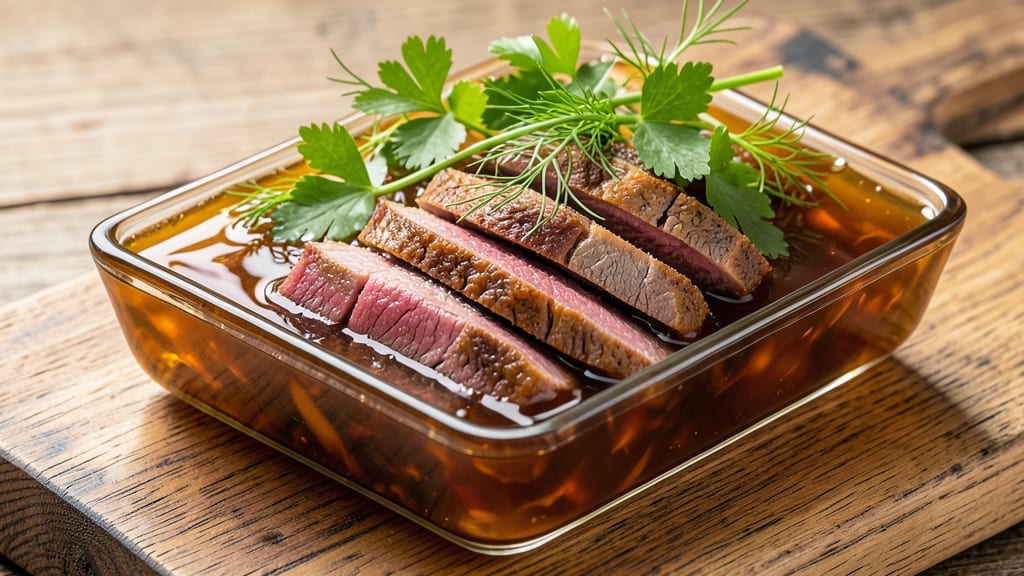
This beef aspic recipe transforms holiday tables into showstopping centerpieces with its elegant, wobbling perfection. 💛 The secret lies in slow-cooked beef stock and precise gelatin incorporation, creating a firm yet delicate texture that impresses guests while keeping food safe for days.
I’ve perfected this technique over years of holiday entertaining—where presentation matters as much as taste.
The foundation starts with a rich beef stock, simmered low and slow to extract maximum flavor. Gelatin is the game-changer here, transforming the broth into a silky, settable medium that holds its shape when chilled.
Proper cooling techniques (never rushing the process) ensure a clean break when sliced, revealing layers of savory beef and aromatic herbs beneath.
What you’ll achieve is a restaurant-quality centerpiece that’s equal parts functional and festive—ideal for holiday feasts or elegant gatherings. The aspic’s glossy sheen and firm structure make it perfect for slicing into elegant portions, while its rich beef flavor pairs beautifully with mustard, horseradish, or simple greens.
This isn’t just about aesthetics; it’s a foolproof way to repurpose leftover roast beef into something extraordinary. With minimal effort after initial cooking, you’ll have a dish that’s as impressive as it is practical—ready to elevate any meal. Let’s get started on creating your centerpiece masterpiece.
Ingredients for beef aspic
Six cups of rich stock and a few key ingredients create this showstopping holiday centerpiece.
| Ingredient | Amount | Notes |
|---|---|---|
| Beef Stock 🥩 | 6 cups | Homemade preferred, rich and flavorful |
| Unflavored Gelatin 🍬 | 2 ½ tbsp | Powdered, high-quality preferred |
| Cold Water 💧 | ½ cup | For blooming gelatin |
| Leftover Roast Beef 🥩 | 2 lb | Thinly sliced, chilled |
| Fresh Parsley 🌿 | ¼ cup | Chopped, for garnish |
| Fresh Dill 🌿 | 0.15 cup | Chopped, for garnish |
| Bay Leaves 🍃 | 2 whole | For stock infusion |
| Black Peppercorns 🌶️ | 1 tsp | Crushed, for stock infusion |
| Salt 🧂 | 2 tsp | Kosher or sea salt |
| Red Wine Vinegar 🍷 | 1 tbsp | For brightness |
| Mustard Sauce 🥬 | ¼ cup | For serving, optional |
| Horseradish Cream 🌿 | ¼ cup | For serving, optional |
| Plastic Wrap 📦 | 1 sheet | For shaping aspic |
| Ramekins or Loaf Pan 🍽️ | 1 piece | For shaping aspic |
The beef stock is the heart of this dish, so don’t skimp on quality. Homemade stock is ideal—simmer beef bones with bay leaves, peppercorns, and a splash of vinegar for depth. If using store-bought, opt for high-quality brands like Kettle & Fire or Pacific Foods, which are rich and flavorful. The gelatin needs to be unflavored powderchilled and thinly sliced—this ensures clean layers when setting the aspic.
No homemade stock? Beef bouillon cubes dissolved in water can work in a pinch, but you’ll lose some depth. Swap fresh herbs for dried at one-third the amount—just remember they’re more potent. Short on time? Pre-chopped frozen herbs thawed work fine, though texture will differ slightly. The mustard and horseradish are optional but add a bright, tangy contrast—great for slicing alongside the aspic. For shaping, ramekins or a loaf pan are ideal, but any shallow dish will do. Just avoid wide, flat containers—they won’t set properly.
This aspic keeps beautifully, making it perfect for prepping ahead. Once set, cover tightly with plastic wrap pressed directly on the surface to prevent a skin from forming. It’ll stay fresh in the fridge for up to 5 days, though the texture holds best within 3 days. For serving, slice with a hot, sharp knife—it’ll glide right through. Leftovers? Reheat gently in the microwave for 20 seconds, then serve chilled again. The flavors only get richer over time, so don’t hesitate to make extra.
Why You'll Love This Recipe
- Zero-Waste Hero: That leftover roast beef? It’s not trash—it’s aspic gold. I swear by this trick: instead of throwing out those cold cuts, they get a second life in a silky, parsley-flecked jelly that tastes like Sunday dinner. Honestly, my grocery bill dropped when I started doing this.
- Party Trick Ready: Slice it into squares, and suddenly you’ve got elegant appetizers for game day, potlucks, or impressing your in-laws. Between us, I’ve served this at weddings (yes, really) because it’s fancy-looking but takes less effort than a charcuterie board.
- Budget-Friendly Luxury: Gelatin is cheap, stock is free if you make it, and roast beef sales? Always. You’re basically turning scraps into something that feels gourmet without breaking the bank. My college self would’ve cried happy tears.
Step-by-step instructions for beef aspic recipe
Transform leftover roast beef into elegant holiday centerpieces with this foolproof aspic method.
👨🍳 Step 1: Bloom the Gelatin and Prepare the Stock Base
In a medium bowl, sprinkle the 2.5 tablespoons unflavored gelatin evenly over the 0.5 cup cold water. Let it sit for 5-7 minutes until it forms a gel-like consistency—this is called "blooming." Meanwhile, in a large saucepan, combine the 6 cups beef stock, 2 whole bay leaves, 1 teaspoon crushed black peppercorns, and 2 teaspoons salt. Bring to a gentle simmer over medium-low heat—never boil, as that can break down the gelatin later.
Here's the thing—this simmering step infuses the stock with deep, meaty flavor while keeping it clear. The bay leaves and peppercorns add subtle complexity that elevates the aspic beyond just being a clear beef block. Once simmering, remove the pan from heat and let it cool slightly for 5 minutes—it should reach about 160°F before adding the bloomed gelatin.
🍳 Step 2: Combine and Strain for Clarity
Whisk the bloomed gelatin into the warm stock until fully dissolved—2-3 minutes of constant stirring should do it. The mixture should look completely clear with no gelatin particles remaining. Return the pan to low heat and add the 1 tablespoon red wine vinegar, stirring gently. The vinegar brightens the flavor and helps prevent cloudiness in the final aspic.
Strain the mixture through a fine-mesh sieve into a clean bowl, pressing on the solids to extract every bit of liquid. This straining step is crucial—it removes any impurities that could make your aspic cloudy or grainy. Discard the solids and let the strained liquid cool to room temperature—about 30-45 minutes. You'll know it's ready when you can touch the surface without burning your fingers, but it's still slightly warm.
🥘 Step 3: Layer and Shape the Aspic
Line the ramekins or loaf pan with the plastic wrap, letting it hang over the edges for easy removal later. Arrange the 2 pounds thinly sliced leftover roast beef in the bottom of the container, pressing down gently to create an even layer. In a small bowl, mix the 0.25 cup chopped fresh parsley and 0.15 cup chopped fresh dill with a pinch of salt—this herb mixture adds freshness and visual appeal.
Spoon half of the cooled gelatin mixture over the beef, then sprinkle half of the herb mixture on top. Repeat with another layer of beef, then the remaining gelatin and herbs. The layers should be about 1 inch thick—this ensures even setting and a clean release when unmolding. Tap the container gently on the counter to remove any air bubbles that might have formed during layering.
⏰ Step 4: Chill and Set for Perfect Texture
Cover the container with plastic wrap and refrigerate for at least 6 hours, preferably overnight. This long chilling time is essential—it allows the gelatin to set completely, creating that firm yet jiggly texture we want. The aspic should be firm enough to hold its shape when gently shaken, but still have a slight give when pressed with a finger.
Don't rush this step. I've learned the hard way that cutting corners here leads to a wobbly, unsatisfying result. The ideal aspic should be clear with a deep reddish hue from the beef, and the herbs should be visible as distinct layers. Once fully set, run a warm knife around the edges to loosen it from the container before unmolding.
Pro Tips For Making Beef Aspic
- Bloom the Gelatin Right: Sprinkle the unflavored gelatin over cold water in a bowl first—don’t just toss it in. Let it sit for 5 minutes until it turns into a cloudy, jelly-like mass. I learned this the hard way after clumps ruined my aspic, and now it dissolves smoothly every time.
- Strain That Stock: Use a fine-mesh sieve or cheesecloth to strain your beef stock before mixing it with gelatin. Leftover bits of meat or fat can make your aspic grainy or cloudy—no one wants a murky, unappetizing result.
- Chill It Slowly: Let the aspic set in the fridge at an angle, not flat. This prevents a skin from forming on top while it cools, and the slanted edge makes slicing cleaner. I used to forget this and ended up with a rubbery top layer.
- Use Cold Meat: Shred or dice your leftover roast beef cold—not warm or room temp. Cold meat holds its shape better in the aspic, and it won’t melt into the broth like warm slices do. (Yes, even if you’re impatient like me.)
Best sauces and condiments for this dish
Classic Mustard Sauce
This aspic pairs beautifully with a homemade Dijon mustard sauce—just whisk together ¼ cup Dijon mustard, ¼ cup crème fraîche, 1 tablespoon red wine vinegar, and a pinch of salt.
The tangy, creamy contrast cuts through the rich beef flavor perfectly. I like to drizzle it over slices just before serving for that restaurant-quality touch. 🍽️
Horseradish Cream
For a zesty kick, prepare a simple horseradish cream by mixing ¼ cup mayonnaise, 2 tablespoons prepared horseradish, and 1 teaspoon lemon juice. The sharpness of the horseradish complements the aspic’s savory depth, while the creaminess balances the texture.
Serve it alongside or dollop it on top for an elegant garnish.
Herb-Infused Oil
Drizzle your aspic slices with herb-infused olive oil for a fresh, aromatic finish. Heat ¼ cup extra-virgin olive oil with 1 tablespoon chopped fresh tarragon and 1 tablespoon chopped fresh chives until fragrant. Strain and let cool before drizzling—this adds a bright, herbal note that elevates every bite.
Spicy Pepper Relish
Add a kick with a spicy pepper relish made from ½ cup diced roasted red peppers, 2 tablespoons chopped red onion, 1 tablespoon capers, and 1 teaspoon smoked paprika.
Mix with 2 tablespoons olive oil and a squeeze of lemon. The smoky-sweet heat contrasts beautifully with the aspic’s richness.
Balsamic Glaze
A drizzle of reduced balsamic glaze adds a sophisticated sweet-tart balance. Simmer ¼ cup balsamic vinegar in a small saucepan until reduced by half, then cool. The glossy, caramelized finish makes the aspic look even more elegant—perfect for holiday tables. ✨
Nutrition facts
Frequently asked questions
Can I use store-bought beef broth instead of homemade stock?
You can use store-bought beef broth in a pinch, but the flavor won't be as rich or deep. For best results, choose a high-quality brand like Kettle & Fire or Pacific Foods, which have more concentrated beef flavor. If using broth, add an extra 1 teaspoon of beef bouillon powder per cup to enhance the taste. Remember, homemade stock always yields the most flavorful aspic.
Why did my aspic turn cloudy instead of clear?
Cloudiness usually happens when the gelatin isn't fully dissolved or the stock wasn't strained properly. Always strain through a fine-mesh sieve and whisk the bloomed gelatin until completely clear. Also, avoid boiling the stock—keep it at a gentle simmer to prevent cloudiness. If it's already set cloudy, you can't fix it, so be extra careful during preparation next time.
How do I get clean slices from the aspic?
Use a hot, sharp knife that's been dipped in hot water and wiped dry. Run the knife around the edges of the container first to loosen it, then slice through the center. The heat helps the aspic release cleanly, and a sharp knife prevents tearing. Work quickly but gently to avoid shaking the aspic too much during slicing.
Can I make beef aspic without gelatin?
Traditional aspic requires gelatin for its signature set, but you can make a similar dish using agar-agar (a plant-based gelatin substitute). However, the texture will be firmer and less jiggly. For every 2.5 tablespoons of gelatin, use 1 tablespoon agar-agar—boil it with the stock instead of blooming it. The flavor will be very close, though the mouthfeel will differ slightly.
How long can I store leftover aspic?
Cover tightly with plastic wrap pressed directly on the surface to prevent drying. It'll stay fresh in the fridge for up to 5 days, though the texture holds best within 3 days. For longer storage, wrap it airtight and freeze for up to 3 months. Thaw overnight in the fridge before serving—never at room temperature.