
Soups & Stews
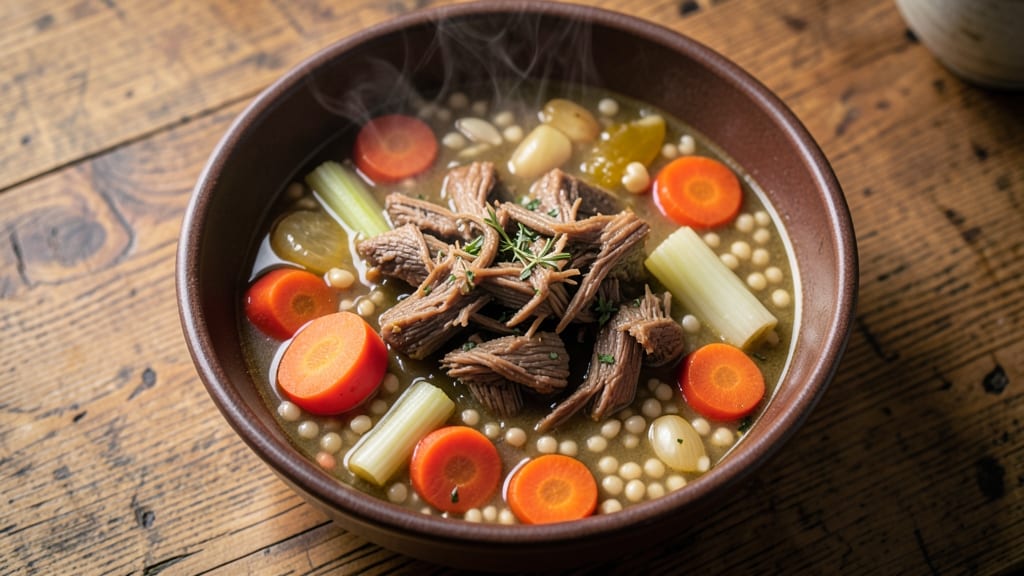
Transforming leftover beef roast into this beef barley soup is the ultimate way to minimize waste while creating a deeply satisfying meal. The rich, savory notes from the roast infuse the broth, turning simple ingredients into a hearty, comforting dish that’s perfect for chilly evenings.
This recipe balances traditional techniques—like slow simmering—with modern efficiency, ensuring you get restaurant-quality results without spending hours in the kitchen.
The secret lies in the roast-infused broth, where tender beef pieces and aromatic barley meld together over time. You’ll start with a flavorful base of onions, carrots, and celery, then build layers of depth with garlic, thyme, and bay leaves.
The barley softens just enough to add a satisfying chew, while the beef roast breaks down into tender, melt-in-your-mouth bites. Every spoonful delivers that perfect harmony of savory, herbal, and slightly sweet flavors.
What makes this recipe truly special is its versatility—whether you’re using a pressure cooker for faster results or a stovetop for a slower, more flavorful simmer. The broth reduces to a rich, velvety consistency, coating the barley and beef in a way that feels luxurious yet effortless.
Serve it with crusty bread to soak up every last drop, or pair it with a simple green salad for a balanced meal that’s both comforting and nourishing.
This soup isn’t just about repurposing leftovers—it’s about creating something new and exciting from what you already have. The process is straightforward, but the result is anything but ordinary. Let’s turn that roast into a meal that’s as rewarding to make as it is to eat.
Ingredients for beef barley soup recipe with leftover beef roast
Roast-infused richness starts with these simple, flavor-packed ingredients—turning leftovers into a hearty masterpiece.
| Ingredient | Amount | Notes |
|---|---|---|
| Leftover Beef Roast 🥩 | 2 cups | Cubed, about 1-inch pieces |
| Yellow Onion 🧅 | 1 whole | Chopped, medium size |
| Carrots 🥕 | 3 whole | Peeled, chopped into 1-inch pieces |
| Celery Stalks 🥬 | 3 whole | Chopped, medium size |
| Garlic Cloves 🧄 | 4 cloves | Minced for depth |
| Pearl Barley 🌾 | 1 cup | Rinsed thoroughly |
| Beef Broth 💧 | 4 cups | Low-sodium preferred |
| Water 💧 | 4 cups | Room temperature |
| Fresh Thyme 🌿 | 1 tbsp | Leaves only, chopped |
| Bay Leaves 🍃 | 2 whole | Dried, standard size |
| Black Peppercorns 🌶️ | ½ tsp | Freshly cracked |
| Salt 🧂 | 1 ½ tsp | Kosher or sea salt |
| Olive Oil 🫒 | 1 tbsp | Extra-virgin for richness |
| Tomato Paste 🍅 | 1 tbsp | Smooth, no sugar added |
That leftover roast is the star here. Look for well-marbled beef if you're buying a whole roast to cube yourself—it's worth the extra minute. Costco or Trader Joe's usually have pre-cubed roast that saves time. For the barley, pearl barley is best—it softens perfectly without turning mushy. Rinsing it first cuts down on cooking time. The tomato paste? Trader Joe's squeeze tubes are perfect—no waste, keeps forever. Fresh thyme makes all the difference, but dried works in a pinch (use half the amount).
No fresh thyme? Dried thyme at one-third the amount gets you close. Short on carrots? Substitute with parsnips or sweet potatoes—they add natural sweetness. The beef broth can be homemade (simmer beef bones with veggies) or store-bought (look for low-sodium). Better Than Bouillon cubes are a game-changer if you're in a hurry. Want more depth? Add a splash of red wine when you deglaze the pot—it brightens everything up. The bay leaves? Don't skip them—they add that subtle earthy note that makes the broth sing.
This soup tastes even better the next day—honestly, the flavors meld into something magical. Keeps for 5-6 days in the fridge, freezes beautifully for 3 months. I always make a double batch—one for dinner, one for lunches. Store it in glass jars with tight lids. The barley thickens as it cools, so add a splash of water or broth when reheating. Serve with crusty bread to soak up every last drop—trust me, you'll want to.
Why You'll Love This Recipe
- I swear by this trick: toss in those leftover beef roast chunks whole—no need to dice. The slow simmer breaks them down perfectly, and honestly? The first time I skipped prepping the veggies, I saved 15 minutes and still got that same hearty texture.
- No-Chop Nightmare: I swear by this trick: toss in those leftover beef roast chunks whole—no need to dice. The slow simmer breaks them down perfectly, and honestly? The first time I skipped prepping the veggies, I saved 15 minutes and still got that same hearty texture.
- Garlic-Carrot Magic: Between us, the roasted garlic cloves (yes, roast them first) and caramelized onions take this soup from "good" to "I’ll call it dinner again." That deep, sweet-savory base? It’s the secret weapon—no fancy spices needed.
- Sunday-to-Friday Fix: Make a double batch on Sunday—this soup only gets better after sitting overnight. Freeze half for when you’re too tired to cook, and trust me, that first bite after work will feel like a hug.
Step-by-step instructions for beef barley soup with leftover roast
Transform your leftover beef roast into a hearty, flavor-packed soup that's easier than it looks.
Sauté the Vegetable Base
Heat the 1 tablespoon olive oil in a large pot over medium-high heat. Add the chopped yellow onion, carrots, and celery stalks, stirring occasionally for 5-6 minutes until they begin to soften and the onion turns translucent. I like to keep the vegetables in large chunks—they'll cook down nicely but still provide texture.
After 3 minutes, add the 4 cloves minced garlic and stir for 30 seconds until fragrant. Here's where the magic happens: the garlic should smell pungent but not burn. If it starts to darken too quickly, reduce the heat slightly. This aromatic base forms the flavor foundation of your soup.
Build Depth with Tomato Paste and Seasonings
Stir in the 1 tablespoon tomato paste and cook for 1-2 minutes until it darkens slightly. This step deepens the soup's flavor profile by adding a subtle sweetness and richness. Next, sprinkle in the 1.5 teaspoons salt, 0.5 teaspoon cracked black peppercorns, 1 tablespoon chopped fresh thyme, and 2 whole bay leaves. Stir everything together and let the spices toast for 30 seconds—this awakens their flavors.
I always add the tomato paste first because it caramelizes slightly, creating a deeper base flavor before adding liquids. The spices will infuse into the vegetables as they cook, ensuring every spoonful is packed with flavor.
Add the Roast and Liquids
Pour in the 4 cups beef broth and 4 cups water, scraping up any browned bits from the bottom of the pot. These bits, called fond, are packed with flavor. Add the 2 cups cubed leftover beef roast and bring the mixture to a gentle boil over high heat. Once boiling, reduce the heat to medium-low and let it simmer uncovered for 15 minutes—this allows the roast to reabsorb some of its lost juices.
Here's the thing—using leftover roast means we're working with meat that's already been cooked and rested. The gentle simmer helps it break down slightly, making the soup even more tender and flavorful. Don't rush this step; patience ensures the roast infuses the broth properly.
Cook the Barley to Perfection
Add the 1 cup rinsed pearl barley and stir to combine. Return the soup to a gentle simmer and cook uncovered for 45-50 minutes, stirring occasionally. The barley should be tender but still have a slight bite—this ensures it holds its shape while still being comfortable to eat. You'll know it's done when the barley grains are translucent at the edges.
I check for doneness by tasting a grain—it should be soft but still have a bit of resistance. If the soup reduces too much before the barley is done, add ½ cup water at a time to maintain the proper consistency. The barley should absorb the liquid gradually, creating a creamy texture without turning mushy.
Finish and Serve Warm
Once the barley is tender, remove the bay leaves and discard them. Taste the soup and adjust the seasoning if needed—you might need a little more salt or pepper to balance the flavors. Let the soup sit off the heat for 5 minutes to allow the flavors to meld together. This resting period is crucial for developing the soup's depth.
Serve the soup hot in bowls, garnished with additional chopped fresh thyme if you like. Each spoonful should deliver rich, roast-infused flavor with tender barley and perfectly cooked vegetables. This soup tastes even better the next day as the flavors continue to develop—perfect for meal prep or leftovers!
Pro Tips For Making Beef Barley Soup Recipe With Leftover Beef Roast
- SHRED THE ROAST FIRST: Cut the leftover beef into 1-inch chunks before adding it to the pot—this speeds up cooking and guarantees even flavor distribution. I used to toss in thick slices and end up with some pieces still tough after 45 minutes.
- SAUTE THE AROMATICS LONG: Cook the onions, carrots, celery, and garlic in oil over medium heat until the onions turn deep gold, about 10-12 minutes. Skipping this step leaves the soup tasting raw and dull—don’t rush it, even if you’re eager to add broth.
- STRAIN THE BROTH: If your leftover roast was cooked with marinade or herbs, strain the broth before using it to avoid a bitter or overly herby soup. I learned this after one batch where the thyme from the roast made the barley taste medicinal.
- ADD BARLEY LATE: Stir in the barley only in the last 20-25 minutes of cooking—this keeps it from turning mushy and ensures it absorbs flavor instead of turning to paste. (Yes, even if the recipe says otherwise.)
Troubleshooting perfect results
Broth Too Thin?
If your soup feels watery after simmering, don’t panic—this happens when barley absorbs too much liquid. Reduce heat to low and simmer uncovered for an extra 10-15 minutes to thicken naturally.
For immediate results, mix 1 tablespoon cornstarch with 2 tablespoons cold water, stir into the soup, and simmer for 2 minutes until thickened. 💫
Barley Undercooked?
Pearl barley needs 45-50 minutes to soften properly, but if yours is still firm, try adding ½ cup hot water and simmering for another 10 minutes. For faster results, swap pearl barley for quick-cooking barley (like Uncle Ben’s 90-Second Barley), which cuts cooking time by 15-20 minutes.
Always rinse barley first—this removes surface starch that can make it gummy.
Roast Too Tough?
Leftover roast can dry out if overcooked in soup. To prevent this, add the roast only after the broth has simmered for 15 minutes—this lets the beef rehydrate gently. For extra tenderness, shred the roast into smaller pieces before adding it to the pot.
If your roast is still chewy, simmer it separately in 1 cup beef broth for 10 minutes before adding to the soup.
Flavor Too Mild?
Boost depth by deglazing the pot with ½ cup red wine or apple cider vinegar after sautéing the vegetables. For a quick fix, stir in 1 teaspoon Worcestershire sauce or ½ teaspoon smoked paprika during the final 5 minutes of cooking.
A pinch of nutmeg or allspice adds warmth—just ⅛ teaspoon makes a difference. 🌶️
Barley Mushy?
Overcooked barley turns to mush, ruining the texture. To avoid this, check for doneness at 40 minutes—grains should be tender but still hold shape. If it’s already too soft, drain ½ cup soup through a fine-mesh strainer, then return it to the pot.
The reduced liquid will thicken the soup without overcooking the barley further.
Broth Too Salty?
If your broth tastes overly salty, dilute it by adding ½ cup water or broth and simmering for 5 minutes to balance flavors. For a fresh start, strain the soup through a fine-mesh sieve, reserving the barley and roast.
Return them to the pot with 2 cups fresh broth and simmer for 10 minutes. This method preserves texture while reducing sodium.
Nutrition facts
Frequently asked questions about beef barley soup
Can I use any leftover beef for this soup?
While you can technically use most leftover beef, roast or pot roast works best because it's already tender and flavorful. Avoid tough cuts like flank steak or brisket—they won't soften enough during the soup's short cooking time. If you only have ground beef, brown it first with onions and garlic before adding to the soup.
How do I adjust the recipe for a pressure cooker?
For a 6-quart electric pressure cooker, sauté the veggies as directed, then add all ingredients except barley. Pressure cook on high for 15 minutes, then add barley and cook for an additional 10 minutes. Quick-release the pressure, then let it sit for 5 minutes before opening. The barley will be perfectly tender without overcooking.
What if I don't have pearl barley?
You can substitute with wild rice blend (cook time 15 minutes) or bulgur wheat (cook time 10 minutes). For a gluten-free option, use quinoa (cook time 12 minutes), but reduce the water by ½ cup since quinoa absorbs less liquid. Always check package instructions for specific cooking times.
Can I make this soup in a slow cooker?
Sauté the veggies and tomato paste as directed, then transfer everything to a 6-quart slow cooker. Cook on low for 6-7 hours or high for 3-4 hours. The longer cook time actually enhances the flavors, making the broth richer and the roast more tender. Stir occasionally to prevent sticking.
How do I reheat leftovers without drying them out?
Reheat on the stovetop over medium-low heat, adding 2-3 tablespoons water or broth at a time until the soup reaches 165°F. Stir frequently to prevent scorching. For microwave reheating, cover with a damp paper towel and heat in 30-second intervals, stirring between each, until hot. Never reheat to a boil—this can make the barley mushy.