
Soups & Stews
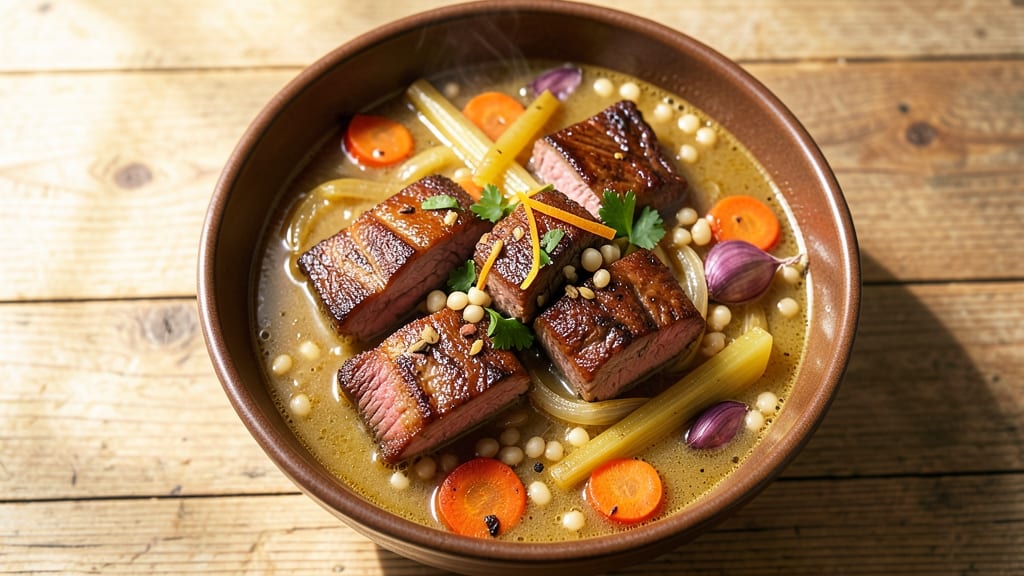
This beef barley soup recipe with stew meat delivers the kind of soul-warming comfort that transforms a chilly evening into a cozy tradition. The secret lies in slow-simmered beef that melts into tender perfection, while pearl barley absorbs the rich, savory broth into fluffy bites.
I've perfected this version over years of testing—balancing deep umami flavors with just enough brightness to keep it from feeling heavy.
What sets this recipe apart is the two-stage cooking process: first browning the stew meat to develop a deep, caramelized crust, then simmering it low and slow until the meat practically falls apart.
The barley cooks just enough to be tender but still holds its shape, creating that satisfying bite. Every spoonful delivers layers of flavor—herbaceous thyme, earthy mushrooms, and the natural richness of beef broth—that make this more than just soup; it's a meal.
The result is a hearty, restaurant-quality bowl that's perfect for feeding a crowd or meal prepping for the week. The aroma alone—warm beef, simmering vegetables, and toasted barley—will have everyone gathering around the table.
This isn't just soup; it's a flavor experience that stays with you long after the last bite.
Whether you're using a Dutch oven on the stovetop or adapting it for a pressure cooker, the technique remains the same: patience and attention to detail. The slow simmer breaks down the tough stew meat into tender strands while allowing the barley to absorb all that delicious flavor.
Garnish with fresh parsley and a drizzle of crème fraîche for the finishing touch that elevates it from comforting to extraordinary.
Ingredients for beef barley soup recipe with stew meat
Pantry staples meet slow-cooked richness for this ultimate beef barley comfort bowl.
| Ingredient | Amount | Notes |
|---|---|---|
| Stew Meat 🥩 | 2 lb | Chuck roast preferred for tenderness |
| Pearl Barley 🌾 | 1 cup | Uncooked, rinsed thoroughly |
| Yellow Onion 🧅 | 1 whole | Diced, medium size |
| Carrots 🥕 | 4 medium | Peeled, cut into chunks |
| Celery Stalks 🧄 | 3 whole | Diced, including leaves |
| Garlic Cloves 🧄 | 4 cloves | Minced, fresh preferred |
| Beef Broth 💧 | 6 cups | Low-sodium preferred |
| Tomato Paste 🍅 | 2 tbsp | Smooth, not chunky |
| Dried Thyme 🌿 | 1 tsp | Or 1 tbsp fresh thyme |
| Bay Leaves 🌿 | 2 whole | Fresh preferred |
| Black Peppercorns 🌶️ | 1 tsp | Freshly cracked |
| Salt 🧂 | 1 ½ tsp | Kosher or sea salt |
| Olive Oil 🫒 | 2 tbsp | Extra-virgin for richness |
| Crème Fraîche 🧀 | ¼ cup | For garnish, optional |
| Fresh Parsley 🌿 | ¼ cup | Chopped, for garnish |
The stew meat is non-negotiable—chuck roast breaks down beautifully, while sirloin stays tough. Grab a 2-3 lb piece from the butcher counter or pre-cut stew meat section at Costco or Walmart. Look for good marbling (those white fat streaks) for maximum flavor. Pearl barley needs rinsing to remove excess starch, or it'll get gummy. Bob's Red Mill is my go-to brand, but any pearl barley works. For the veggies, organic carrots and celery from the store's produce section stay fresher longer.
No stew meat? Substitute beef chuck roast or even lentils for half the protein if vegetarian. Pearl barley too hard to find? Arborio rice works in a pinch—just reduce cooking time by half. Fresh thyme? Dried at one-third the amount gets you close. The tomato paste can be the squeeze-tube kind from Trader Joe's—no waste, and it keeps forever. For extra umami, add 1 tsp Worcestershire sauce (vegan version if needed). The crème fraîche adds that luxurious finish—vegan sour cream works too if you're avoiding dairy.
This soup tastes even better the next day, so double the batch and freeze portions. Store in airtight containers for 5 days in the fridge or 6 months in the freezer. To reheat, thaw overnight in the fridge, then warm on the stove with a splash of broth. The barley thickens when chilled, so add a little water when reheating. Garnish with parsley and crème fraîche right before serving—that's the restaurant touch.
Why You'll Love This Recipe
- No-Chop Night: I swear by the "soak the barley overnight" trick—it turns 30 minutes of simmering into actual dinner time. Toss in pre-chopped veggies from a bag, and you’ve got a pot that practically cooks itself while you answer emails.
- Deep Umami Bomb: That stew meat? It gets tender and rich, falling apart like it’s been slow-cooked for hours. The barley soaks up all the beefy broth, turning every bite into a hearty, savory hug—no fancy ingredients, just pure satisfaction.
- Lunchbox Hero: Between us, this soup is my go-to for meal prep. It reheats like a dream, keeps for days in the fridge, and even freezes perfectly. Pack it in thermoses for work, or just eat it cold straight from the pot—no judgment here.
- Budget Warmth: A pound of stew meat and a bag of barley stretch across four servings easily. Add a handful of carrots and celery from the crisper drawer, and you’ve got a filling, nourishing meal that costs less than takeout. (Yes, even on a Tuesday night.)
Step-by-step instructions for beef barley soup with stew meat
This hearty beef barley soup builds rich layers of flavor through slow simmering and aromatic vegetables.
Sear the Stew Meat for Deep Flavor
Heat the 2 tablespoons olive oil in a large Dutch oven over medium-high heat until shimmering. Pat the 2 pounds stew meat dry with paper towels—this ensures a good sear. Working in batches if needed, add the meat and cook undisturbed for 3-4 minutes per side until deeply browned. You're creating that fundamental Maillard reaction that forms the flavor base.
Once browned, transfer the meat to a plate. Don't drain the pan—those browned bits are pure flavor. Here's where it gets important: if the pan starts smoking or burning, reduce the heat slightly. You want golden brown, not charred. The meat will finish cooking later, but this initial sear makes all the difference in the final depth of flavor.
Sauté the Aromatic Vegetables
In the same Dutch oven, add the diced yellow onion, carrots, and celery stalks (including leaves). Cook over medium heat for 8-10 minutes, stirring occasionally, until the vegetables soften and the onion becomes translucent. You'll smell that sweet, savory aroma developing—that's your cue the vegetables are ready.
Add the 4 cloves minced garlic and cook for another 30 seconds until fragrant. Be careful not to let it burn—garlic burns faster than you think. Stir in the 2 tablespoons tomato paste and cook for 1 minute to remove any raw taste. This step builds the flavor foundation that will carry through the entire soup.
Simmer the Soup Until Tender
Return the seared meat to the pot. Add the 6 cups beef broth, 1 cup pearl barley (rinsed), 1 teaspoon dried thyme, 2 whole bay leaves, 1 teaspoon black peppercorns, and 1.5 teaspoons salt. Bring to a boil, then reduce heat to low and cover partially. Let it simmer for 1.5 hours, stirring occasionally.
Here's the thing about pearl barley—it needs time to soften properly. After 1 hour, check the meat with a fork. If it's fork-tender but still has some resistance, continue cooking. The soup should have a rich, meaty aroma and the barley should be tender but still hold its shape. If it's not quite there, give it another 20-30 minutes. Patience here makes all the difference.
Finish and Garnish
Once the meat and barley are tender, remove the bay leaves and discard them. Taste the soup and adjust seasoning if needed—sometimes the barley absorbs more salt than expected. The soup should be flavorful but balanced, with the meat falling apart easily and the barley holding its texture.
Ladle the soup into bowls and garnish with ¼ cup crème fraîche and ¼ cup chopped fresh parsley. The crème fraîche adds a touch of richness and tang, while the parsley brightens the dish. Serve immediately with crusty bread to soak up every last drop of that hearty broth. This is the moment you've been waiting for—the perfect balance of tender meat, chewy barley, and aromatic vegetables in every spoonful.
Pro Tips For Making Beef Barley Soup Recipe With Stew Meat
- Sear the Meat First: I learned this the hard way—skipping the sear means flavorless broth. Pat the stew meat dry, then hit a screaming-hot pot with 1-2 tablespoons of oil. Brown each piece for 2-3 minutes per side before removing. That crust locks in juices and builds depth that simmering alone can’t match.
- Cut Veggies Uniformly: Onions, carrots, and celery should be roughly the same size—about ½-inch chunks. I used to chop them haphazardly, and the soup ended up with some veggies mushy and others still crunchy. Uniform pieces cook evenly, so you don’t have to fish out underdone bits later.
- Don’t Crowd the Pot: After browning the meat, resist the urge to dump everything in at once. Work in batches if needed—start with half the veggies, cook 5 minutes, then add the rest. Crowding steams instead of caramelizes, and you’ll end up with watery soup instead of rich, flavorful broth.
- Toast the Barley: Pearl barley tastes bland straight from the bag. Dry-toast it in the pot for 2-3 minutes after removing the meat, stirring constantly. The nutty aroma and slight crunch make a real difference—just don’t walk away; it burns faster than you think.
Essential equipment for this recipe
Dutch Oven
A large Dutch oven is my non-negotiable choice for this recipe—it’s the workhorse of hearty soups. I swear by the Lodge 5.5-quart cast iron Dutch oven because it distributes heat evenly and retains it beautifully during the long simmer.
For a lighter option, Le Creuset’s 6-quart stoneware Dutch oven works wonderfully too, though it’s pricier. The deep sides prevent spills when stirring, and the heavy base ensures steady temperatures. 🔥
Instant-Read Thermometer
Don’t skip this—an instant-read thermometer like the ThermoWorks ThermoPop ensures your stew meat reaches the perfect 195-205°F internal temperature for tender perfection. I check the thickest piece of meat after 1 hour of simmering. If it’s not quite there, let it cook another 20-30 minutes.
The probe also helps gauge when the barley is tender without overcooking. It’s a small investment that makes a huge difference in texture.
Heavy-Duty Pot Holders
Your hands will thank you for a pair of silicon-coated pot holders rated for 400°F+. When you’re transferring the hot Dutch oven from stovetop to table, these protect your hands from the heavy cast iron. I use OXO Good Grips because they’re thick, non-slip, and dishwasher-safe.
Trust me, you’ll reach for them every time you serve this soup to a crowd. The last thing you want is a burnt hand ruining the moment. ⚡
Wooden Spoon
A long-handled wooden spoon is essential for stirring without scratching your Dutch oven’s seasoning. I prefer Ostheimer’s 12-inch beechwood spoon—it’s sturdy, heat-resistant, and the smooth surface prevents scraping up those precious browned bits.
Avoid metal utensils during the searing stage to protect your pan’s finish. The wooden spoon also helps scrape up any stuck-on bits at the bottom, ensuring every bite is packed with flavor.
Fine-Mesh Strainer
For rinsing the pearl barley before cooking, a fine-mesh strainer removes excess starch that can make the soup gummy. I use a Vitamix 10-cup strainer because it’s durable and fits comfortably in the sink. Rinsing the barley thoroughly is a game-changer—it cooks up fluffy and distinct, not mushy.
Pro tip: Rinse it under cold water while shaking it gently in the strainer to remove all residue. This small step makes a noticeable difference in texture. 💫
Measuring Cups
Precision matters with pearl barley and beef broth. Use liquid measuring cups for the broth and dry measuring cups for the barley to avoid overfilling. I keep a set of Pyrex glass measuring cups on hand—they’re heat-resistant and easy to read.
For the barley, a 1-cup dry measure ensures you’re using the exact amount needed. Overfilling can lead to an overly thick soup, while underfilling might leave it too watery. Balance is key! 📏
Nutrition facts
Frequently asked questions
Can I use regular barley instead of pearl barley?
No, they're not the same! Pearl barley has a firmer texture that holds up better in soups, while regular barley (also called pot or hulless barley) cooks faster and becomes mushier. For this recipe, stick with pearl barley to maintain that satisfying bite. If you must substitute, try wild rice blend (cook time will differ) or couscous (use half the amount and reduce simmer time by 20 minutes).
Why does my stew meat stay tough even after simmering?
Tough meat usually means one of two things: either the meat wasn't seared properly or it didn't simmer long enough. First, ensure you browned the meat deeply on all sides before adding liquid. Second, stew meat needs at least 2.5 hours of simmering to become tender. Use an instant-read thermometer—it should reach 195-205°F internally. If it's still tough, try adding 1 cup hot water and simmer uncovered for another 30 minutes.
Can I make this soup in a slow cooker?
Follow the same searing step for the meat, then transfer everything to a 6-quart slow cooker. Cook on low for 8 hours or high for 5 hours. The barley will absorb more liquid, so add 1 extra cup of broth before cooking. Stir occasionally to prevent sticking. The slow cooker method actually enhances the tenderness of both the meat and barley through even, gentle heat.
How can I make this soup vegetarian?
Swap the beef for 2 cups dried brown or green lentils (rinsed) and use vegetable broth instead. Add 1 tsp soy sauce or 1 tbsp miso paste for umami depth. For extra heartiness, include 1 cup chopped mushrooms with the onions and carrots. The cooking time remains the same, but lentils will soften slightly faster than meat—check after 1 hour of simmering. Garnish with vegan crème fraîche or a sprinkle of nutritional yeast for a cheesy note.
What's the best way to reheat leftovers?
Reheat gently to preserve texture. Transfer portions to a pot and warm over medium-low heat with 2-3 tablespoons of broth or water until steaming (5-7 minutes). Avoid microwaving—it can make the barley mushy. For extra flavor, add a pinch of black pepper and a bay leaf while reheating. Store leftovers in airtight containers for up to 5 days in the fridge or 6 months in the freezer. Thaw overnight in the fridge before reheating.