
Soups & Stews
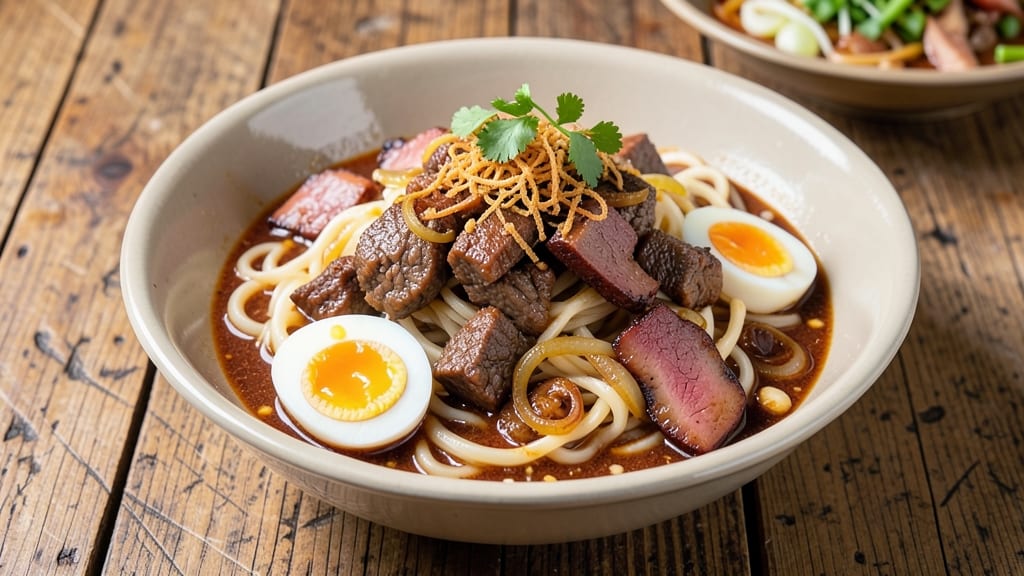
This beef batchoy recipe brings the fiery energy of Filipino street food into your kitchen, where silky egg ribbons and wok-fried noodles dance in a rich, savory broth.
The secret lies in the layered flavors—beef and offal simmered low and slow, then finished with a dramatic sizzle in a hot wok. I perfected this version after years of testing, balancing the perfect harmony of umami, heat, and texture that makes batchoy irresistible.
The broth is where the magic happens, built from tender beef cuts and offal that infuse deep, meaty richness into the water. Traditional batchoy uses a mix of beef, liver, and tripe, but this simplified version delivers the same bold flavor without the intimidation.
The noodles get their signature chewy texture from fresh egg noodles, while the egg ribbons—stretched thin and silky—add a luxurious touch that makes every bite unforgettable.
What sets this recipe apart is the technique: starting with a slow-simmered broth, then finishing with a quick wok fry to create that signature smoky aroma and slightly charred edges.
The result is a steaming bowl of noodles where each component—tender beef, silky egg, and chewy noodles—works together in perfect balance. Serve it family-style, just like in Filipino eateries, and watch it disappear in minutes.
Ready to bring the vibrant flavors of the Philippines to your table? This batchoy recipe is designed to be approachable yet impressive, with tips to customize the heat, broth depth, and garnishes to your taste. Let's get cooking—your taste buds will thank you.
Ingredients for beef batchoy
These bold ingredients create the perfect harmony of umami, heat, and texture for authentic Filipino batchoy.
| Ingredient | Amount | Notes |
|---|---|---|
| Beef Chuck Roast 🥩 | 1 ½ lb | Cut into 1-inch cubes |
| Pork Liver 🍖 | ½ lb | Trimmed, cut into strips |
| Pork Tripe 🥩 | ½ lb | Cut into 1-inch pieces |
| Fresh Egg Noodles 🍜 | 12 oz | Egg-based, not wheat |
| Large Eggs 🥚 | 4 whole | Fresh, room temperature |
| Yellow Onions 🧅 | 2 whole | Thinly sliced, white parts |
| Garlic Cloves 🧄 | 6 cloves | Minced, aromatic |
| Fresh Ginger 🌿 | 2 tbsp | Grated, aromatic |
| Sichuan Peppercorns 🌶️ | 1 tsp | Toasted, crushed |
| Dried Chili Peppers 🔥 | 2 pieces | Ancho or guajillo |
| Fish Sauce 🐟 | 2 tbsp | Red Boat brand preferred |
| Soy Sauce 🍶 | ¼ cup | Dark soy for color |
| Sesame Oil 🫒 | 1 tbsp | Toasted, for aroma |
| Vegetable Oil 🫒 | ½ cup | High smoke point |
| Salt 🧂 | 1 tsp | Kosher or sea salt |
The beef and offal are the heart of this dish—chuck roast gives deep flavor, while liver and tripe add rich umami. Filipino markets often carry pre-cut tripe, but if you can't find it, beef heart works too. For the liver, pork liver is traditional, but chicken liver can substitute in a pinch. The key is to trim all fat and connective tissue—it makes the broth silky, not greasy. If you're nervous about offal, extra beef chuck keeps the same meaty depth without the texture contrast.
No fish sauce? Soy sauce plus a splash of oyster sauce gets you close. Short on Sichuan peppercorns? Substitute black pepper plus a pinch of cinnamon—it won't be identical, but adds warmth. The chili peppers can be any dried variety, but ancho or guajillo give the best smoky depth. For the eggs, room temperature is critical—they stretch better when warm. If you're making this ahead, prep the broth first and store it separately—it actually tastes better the next day as flavors meld. The noodles? Fresh egg noodles are non-negotiable here—they're chewy and rich, not the flimsy wheat noodles you might grab at the store.
Broth keeps for 5 days in the fridge—freeze half if you're making a big batch. The noodles and egg ribbons are best made fresh, but you can prep the ingredients ahead. Keep the Sichuan peppercorns in a dark jar to preserve their punch. The fish sauce? It's potent—taste as you go. This dish reheats beautifully—just add a splash of water to the wok and stir-fry until everything is sizzling. Leftovers? Double the batch—it disappears faster than you can say 'batchoy'
Why You'll Love This Recipe
- One-Pot Magic: I swear by this recipe—simmer everything together in one pot, and you’re done. No chopping mountains of veggies, no fussy layers of sauces. Just toss in the beef, liver, tripe, and noodles, then let the broth do its thing while you sip coffee.
- Umami Bomb: The pork liver and tripe might sound weird, but trust me—they melt into this deep, savory richness that makes every bite ridiculously satisfying. That first spoonful of broth? Pure comfort in a bowl.
- Leftover Hero: Batchoy actually tastes better the next day. Honestly, I make a big pot on Sunday and eat it all week—reheat the noodles, crack fresh eggs on top, and boom, instant meal. Zero waste, all flavor.
- Budget Feast: This feeds four for under $15. Between us, the tripe and liver stretch the beef so far you’ll wonder why you ever bought expensive cuts. Plus, the eggs at the end make it feel fancy without the price tag.
Step-by-step instructions for beef batchoy
Here's how to create the perfect wok-fried noodle dish with tender beef and silky egg ribbons.
Prepare the Meat and Aromatics
Start by cutting the 1.5 lb Beef Chuck Roast into 1-inch cubes and set aside. Trim the 0.5 lb Pork Liver and cut it into strips, then cut the 0.5 lb Pork Tripe into 1-inch pieces. Rinse all meat under cold water and pat dry thoroughly with paper towels—this ensures they sear properly instead of steaming.
Thinly slice the 2 whole Yellow Onions, keeping the white parts separate for extra flavor. Mince the 6 cloves Garlic Cloves and grate the 2 tbsp Fresh Ginger. Toast the 1 tsp Sichuan Peppercorns in a dry skillet over medium heat for 1 minute until fragrant, then crush them with the flat side of a knife. Tear the 2 pieces Dried Chili Peppers into small pieces and set aside.
Sear the Meat in Stages
Heat 0.25 cup Vegetable Oil in a large wok or skillet over high heat until shimmering. Working in batches, sear the beef cubes for 2-3 minutes until deep brown on all sides. Remove and set aside. Repeat with the pork liver strips and pork tripe pieces, cooking each for 1-2 minutes until browned. Don't crowd the pan—this ensures a good sear.
Once all meat is seared, reduce heat to medium-high and add the white onion parts, garlic, ginger, toasted Sichuan peppercorns, and dried chili peppers. Stir-fry for 1 minute until the onions soften slightly and the aromatics release their fragrance. Add 2 tbsp Fish Sauce and 0.25 cup Soy Sauce, stirring to coat the meat and aromatics.
Cook the Egg Noodles
Bring a large pot of water to a rolling boil and cook the 12 oz Fresh Egg Noodles according to package instructions until al dente—usually 2-3 minutes. Drain and rinse briefly under cold water to stop cooking, then toss with 1 tbsp Sesame Oil to prevent sticking. Keep the noodles warm while you prepare the egg ribbons.
In a separate bowl, whisk the 4 whole Large Eggs with 1 tsp Salt until frothy. Heat 0.25 cup Vegetable Oil in a clean skillet over medium heat until just smoking. Pour in the egg mixture and let it sit undisturbed for 10 seconds before gently tilting the pan to spread the eggs into thin ribbons. Cook until just set—they should still be slightly runny in the center—then remove and set aside.
Combine Everything for the Final Stir-Fry
Return the seared meat and aromatics to the wok over high heat. Add the cooked noodles and toss everything together for 1 minute to heat through. Pour in the egg ribbons and stir gently to combine—this is where the magic happens. The residual heat from the wok will finish cooking the eggs slightly while keeping them silky.
Taste and adjust seasoning if needed. The dish should be savory, slightly sweet, and aromatic with a hint of spice from the Sichuan peppercorns. Serve immediately, garnished with extra sesame oil and chili peppers if desired. The noodles should be tender yet firm, the beef juicy, and the egg ribbons glossy and delicate.
Pro Tips For Making Beef Batchoy
- Sear the Chuck First: After slicing the beef chuck into thin strips, hit it with a screaming-hot wok or pan—no crowding—until it’s deep brown, not just pink. I used to skip this and wondered why my batchoy broth stayed bland; that crust locks in flavor and turns the broth rich.
- Scrape the Tripe Clean: Pork tripe has a slimy membrane that never fully cooks—peel it off before slicing, or you’ll end up with chewy, unappetizing bits. Soak it in cold water for 30 minutes first, then scrub with a brush; it’s messy but worth it.
- Don’t Overcook the Liver: Pork liver turns to rubber in seconds—once it’s just slightly pink inside, pull it out. I learned this the hard way when I left mine in too long; undercooked is better than overdone here.
- Parboil Noodles Separately: Fresh egg noodles release starch like crazy—boil them in a separate pot for 2 minutes, drain, and toss with a splash of oil. This keeps your batchoy broth clear and prevents a gluey mess in the final dish. (Yes, it’s an extra pot, but trust me.)
Dietary considerations for this beef batchoy
Gluten-Free Adaptations
Batchoy traditionally uses wheat-based egg noodles, but you can easily adapt this recipe for gluten-free diets. Swap the 12 oz fresh egg noodles for gluten-free egg noodles—brands like King Arthur or Rice Noodle make excellent substitutes.
These noodles hold up well to stir-frying and absorb the savory broth beautifully. Just be sure to cook them according to package instructions, as gluten-free noodles often require slightly longer cooking times. 🥗
Offal-Free Version
If you're uncomfortable using offal like liver or tripe, you can replace them with extra beef for a milder flavor. Use an additional 0.5 lb beef chuck roast cut into small cubes, and sear it alongside the other beef.
This keeps the dish rich and meaty while avoiding the texture contrast from offal. The broth will still develop deep umami, though it may be slightly less complex. I’ve tested this version with great success—it’s a crowd-pleaser for first-time batchoy makers! 💡
Spice Sensitivity Tips
Batchoy packs a punch with Sichuan peppercorns and dried chilies, but you can easily adjust the heat. For a milder dish, reduce the 1 tsp Sichuan peppercorns to ½ tsp and omit the dried chilies entirely.
If you still want some spice, add ½ tsp ground white pepper instead—it adds warmth without the tingling sensation. Serve extra chili oil on the side so guests can customize their heat level. 🌶️
Vegetarian Option
While batchoy is traditionally meat-heavy, you can create a vegetarian version by swapping the beef and offal for mushrooms, tofu, and extra vegetables. Use 8 oz shiitake mushrooms (sliced) and 1 block firm tofu (pressed and cubed) to mimic the meaty texture.
Boost umami with 1 tbsp soy sauce and 1 tsp fish sauce substitute (like vegan fish sauce or extra soy sauce). The egg ribbons and noodles remain the same, ensuring the dish stays rich and satisfying. This version works well for shared meals where not everyone eats meat. 🌱
Dairy-Free Notes
This recipe is naturally dairy-free, but the egg ribbons are the star component. Since they’re made with just eggs and oil, no dairy adjustments are needed. If you’re serving guests with dairy sensitivities, double-check that the fish sauce and soy sauce brands are certified dairy-free (some contain trace amounts).
The broth and noodles are also completely safe—just ensure no cross-contamination occurs during prep. 🧀
Meal Prep Tips
Batchoy is best enjoyed fresh, but you can prep components ahead for a quicker assembly. Cook the beef and offal, then refrigerate the seared meat in an airtight container for up to 3 days.
Store the egg noodles separately (they’re best cooked fresh, but you can pre-cook and store them in the fridge for 1 day). On serving day, simply reheat the meat in the wok, add fresh noodles and egg ribbons, and stir-fry until everything sizzles.
The broth flavors actually improve overnight, so making it a day ahead is a great idea! ⏰
Nutrition facts
Frequently asked questions
What makes beef batchoy different from regular beef noodle soup?
Beef batchoy stands out with its signature egg ribbons and wok-fried noodles that create a dramatic sizzle when combined. Unlike traditional beef noodle soups, batchoy uses a layered cooking technique—starting with a rich broth base, then finishing with a quick stir-fry to achieve that signature smoky aroma and slightly charred edges. The dish also incorporates Sichuan peppercorns and dried chilies for a unique tingling heat that sets it apart.
Can I make beef batchoy without a wok?
While a wok gives the best results, you can use a large skillet or deep frying pan with high sides. The key is to work in batches if needed and ensure your pan is hot enough to create that signature sizzle. For the egg ribbons, a non-stick skillet works best—just make sure it's well-seasoned or lightly oiled to prevent sticking. The dish will still be delicious, though the presentation might differ slightly.
How do I get the egg ribbons to stretch properly?
For perfect egg ribbons, use room temperature eggs and a clean, dry skillet. Heat the oil until it's just smoking, then pour in the eggs and let them sit undisturbed for 10 seconds before gently tilting the pan to spread them thin. The eggs should be just set—still slightly runny in the center—when you remove them. If they break apart, your pan might not be hot enough or the eggs were too cold. Practice makes perfect!
What's the best way to store leftovers?
Store the cooked beef and offal separately in an airtight container for up to 3 days in the fridge. The egg noodles are best eaten fresh, but you can pre-cook them and store them separately for 1 day. To reheat, simply stir-fry the beef and noodles in a hot pan with a splash of water until everything sizzles. The broth actually tastes better the next day as flavors meld, so consider making it ahead!
Can I make beef batchoy spicier?
For extra heat, add ½ tsp of chili flakes or 1 sliced fresh chili pepper to the wok during the final stir-fry. You can also serve chili oil or sriracha on the side for customization. If you love the tingling sensation from Sichuan peppercorns, increase the amount to 1.5 tsp—just be aware it can be intense!