
Soups & Stews
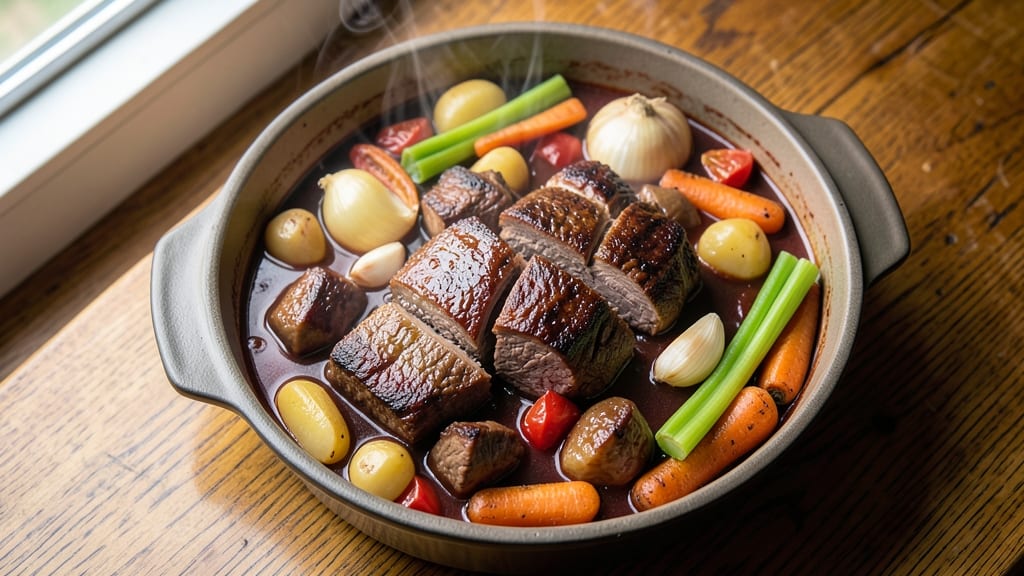
The 8-hour beef stew transforms tough cuts into melt-in-your-mouth perfection through slow, gentle cooking. This deep-red wine braise develops layers of flavor as caramelized roots and tender beef meld into a rich, velvety broth.
The key lies in patience—low heat, long simmering, and proper technique ensure every bite delivers restaurant-quality depth. What sets this recipe apart is the balance of techniques: searing beef for deep flavor, caramelizing onions and vegetables for sweetness, and using red wine to create a complex, aromatic base.
The 8-hour cook time breaks down collagen, turning connective tissue into silky richness while preserving the beef's natural tenderness. No shortcuts here—just time-honored methods that yield extraordinary results. By the final hour, your kitchen will fill with an intoxicating aroma of herbs, wine, and slow-roasted vegetables.
The stew thickens naturally as it simmers, creating a sauce that clings to each forkful of beef. Serve with crusty bread to soak up every last drop of that flavorful broth—this is comfort food at its finest.
Perfect for feeding a crowd or meal prepping for the week, this stew becomes even better as flavors develop. The versatility allows for variations like adding mushrooms or swapping wine for a tomato base, but the core technique remains the same: slow, steady cooking transforms simple ingredients into something extraordinary.
Ingredients for 8 hour beef stew
Sixteen ingredients transform into restaurant-quality beef stew after eight hours of slow cooking.
| Ingredient | Amount | Notes |
|---|---|---|
| Chuck Roast 🥩 | 3 lb | Trimmed of excess fat, cut into 1.5-inch cubes |
| Yellow Onions 🧅 | 2 whole | Peeled, cut into 1-inch chunks |
| Carrots 🥕 | 4 whole | Peeled, cut into 2-inch chunks |
| Celery Stalks 🌿 | 4 whole | Trimmed, cut into 1-inch pieces |
| Garlic Cloves 🧄 | 6 cloves | Peeled, smashed but not minced |
| Dry Red Wine 🍷 | 2 cups | Bold variety like Cabernet Sauvignon |
| Beef Broth 💧 | 4 cups | Homemade or high-quality store-bought |
| Tomato Paste 🍅 | ¼ cup | Smooth, not chunky |
| Fresh Thyme 🌿 | 2 tbsp | Leaves only, stems removed |
| Fresh Rosemary 🌿 | 1 tbsp | Chopped, woody stems discarded |
| Olive Oil 🫒 | ½ cup | Extra-virgin for richness |
| All-Purpose Flour 🌾 | 2 tbsp | For thickening, optional |
| Kosher Salt 🧂 | 2 tsp | Diamond Crystal preferred |
| Freshly Ground Black Pepper 🌶️ | 1 tsp | Coarsely cracked |
| Bay Leaves 🍃 | 2 whole | Dried, standard size |
The chuck roast is non-negotiable here—its high collagen content transforms into silky richness during the long braise. Look for well-marbled cuts at your local butcher or Costco's pre-cubed chuck, which saves time. For vegetables, organic carrots and celery from the grocery store's produce section work perfectly, but if you're feeling fancy, farmers market roots add extra sweetness. The garlic should be fresh, never jarred—Whole Foods or Trader Joe's carry excellent bulbs year-round. Red wine selection matters: Cabernet Sauvignon or Merlot provide the bold, tannic structure this dish needs, but any dry red will work in a pinch.
No red wine? Substitute with beef broth and 1 tbsp balsamic vinegar for depth. Fresh thyme unavailable? Dried thyme at one-third the amount suffices, though fresh is preferred. The tomato paste can be skipped entirely if you dislike its intensity, but it adds a subtle sweetness that balances the acidity. For a richer sauce, swap 1 cup of the broth for heavy cream in the final hour. Vegetable substitutions? Mushrooms or potatoes work beautifully—simply adjust cook times accordingly. The flour is optional but helps thicken the sauce if you prefer a more substantial consistency.
This stew tastes even better the next day as flavors meld further. Store in an airtight container in the refrigerator for up to 5 days or freeze for 3 months. For meal prep, portion into individual containers—each serving reheats beautifully with a splash of water or broth. The slow cooker method works equally well: brown the meat first, then transfer everything to the pot and cook on low for 8-10 hours. The aroma alone will have your kitchen smelling like a Parisian bistro by the final hour.
Why You'll Love This Recipe
- Set-and-Forget Magic: I dump everything in one pot—chuck roast, onions, carrots, celery, garlic—and walk away. Honestly, the hardest part is remembering it’s there when the timer dings.
- Deep, Rich Flavor: That 8-hour simmer? It turns tough chuck roast into melt-in-your-mouth perfection, while the onions caramelize into sweet, jammy pockets. (Yes, even on a Tuesday night.)
- Leftovers You’ll Crave: This stew tastes better the next day—my freezer is packed with portions I reheat for lunch. Between us, I’d rather eat this cold than takeout.
- Budget-Friendly Feast: A single chuck roast feeds six for under $20. Throw in some crusty bread, and you’ve got a week’s worth of dinners without breaking the bank.
Step-by-step instructions for deep-red wine braised beef stew
This method transforms tough chuck roast into melt-in-your-mouth beef through slow braising and caramelized aromatics.
Sear the Beef and Build the Flavor Base
Heat 0.25 cup olive oil in a heavy Dutch oven over medium-high heat until shimmering. Working in batches to avoid crowding, add the 3 lb chuck roast cubes and sear for 3-4 minutes per side until deeply browned. This step develops the Maillard reaction, creating rich, complex flavors that form the stew's foundation.
Remove the beef and set aside. In the same pot, add 0.25 cup olive oil and 2 tbsp all-purpose flour, stirring constantly for 1 minute to create a roux. This will help thicken the stew later. Immediately add the 2 whole yellow onions, 4 whole carrots, 4 whole celery stalks, and 6 cloves garlic cloves, stirring to coat in the roux. Cook for 5-6 minutes until the vegetables begin to soften and the mixture takes on a nutty aroma.
Deglaze and Develop the Wine Reduction
Pour in the 2 cups dry red wine and scrape up all the browned bits from the bottom of the pot using a wooden spoon. This deglazing step captures all the concentrated beef flavor that would otherwise be lost. Let the wine simmer for 5-6 minutes until reduced by half, until it reaches a syrupy consistency with deep, concentrated flavor.
Add the 0.25 cup tomato paste, 2 tbsp fresh thyme, 1 tbsp fresh rosemary, 2 tsp kosher salt, and 1 tsp freshly ground black pepper, stirring to combine. The tomato paste adds depth while the herbs and spices begin to infuse their aromatic qualities into the base. Stir in the 2 whole bay leaves and return the seared beef to the pot.
Braise Until Tender and Flavor-Infused
Pour in the 4 cups beef broth until the beef is just covered by about 1 inch of liquid. Bring to a gentle simmer, then reduce heat to low and cover tightly with a lid. Here's the critical part: braise for 8 hours in a 300°F oven or on the stovetop at low heat, maintaining a gentle simmer. The slow cooking breaks down collagen in the beef, transforming it into tender, fork-tender pieces.
Check the stew after 4 hours and add ½ cup hot water if the liquid level drops below 1 inch above the beef. This ensures the beef stays submerged and continues to cook evenly. The vegetables should be completely tender and the beef should pull apart easily with a fork when tested at the 8-hour mark.
Adjust Consistency and Finish
Remove the stew from heat and let it rest for 15 minutes to allow the flavors to meld. Skim off any excess fat that has risen to the surface with a spoon. Taste and adjust seasoning, adding more kosher salt or freshly ground black pepper if needed. The stew should be richly seasoned with a perfect balance of wine acidity and beefy depth.
For a thicker consistency, remove the beef and vegetables and simmer the liquid alone for 5-10 minutes to reduce further. Return everything to the pot and serve immediately, garnished with additional fresh thyme or rosemary if desired. The result should be a velvety stew with tender beef that falls apart at the touch and deeply caramelized vegetables infused with wine and herb flavors.
Pro Tips For Making 8 Hour Beef Stew
- SEAR THE CHUCK ROAST FIRST: I learned this the hard way—skipping the sear means flavorless broth. After browning the chuck roast in batches (yes, even if it’s messy), the crust releases into the stew all day, turning it from bland to deep. Use 2 tablespoons of oil per side, medium-high heat, and don’t crowd the pan.
- CUT VEGETABLES UNIFORMLY: Carrots and celery in random sizes mean some cook to mush while others stay crunchy. Chop everything into ½-inch chunks—onions, carrots, celery—so they soften at the same rate. (Pro move: Toss them in cold water after dicing to keep colors bright before cooking.)
- SKIP THE BOILING PHASE: After adding liquid, resist the urge to crank the heat. A gentle simmer (tiny bubbles, occasional skimming) keeps the stew from turning cloudy or splitting. If it’s too hot, the carrots will fall apart before the meat tenderizes—trust the 8-hour low-and-slow.
- ADD GARLIC LATE: Whole garlic cloves roasted in the stew for 8 hours? Boring. After 6 hours, peel and crush 3-4 cloves, then stir them in for the last 2 hours. This keeps the flavor bright and punchy instead of bitter. (Bonus: Save the remaining cloves for toasted bread.)
Health benefits of this recipe
Protein Powerhouse
This beef stew packs a protein punch with 3 pounds of chuck roast, delivering about 90 grams of high-quality protein per serving—perfect for muscle repair and satiety.
The slow cooking process preserves all amino acids while breaking down collagen into gelatin, which adds richness and supports gut health. 💪
Collagen-Rich Gelatin
The 8-hour braise transforms connective tissue into gelatin, a soluble protein that soothes joints and improves skin elasticity. Studies show gelatin from slow-cooked beef contains bioactive peptides that may reduce inflammation. This makes the stew especially beneficial for active individuals or those with joint concerns.
Heart-Healthy Fats
The marbled chuck roast contains monounsaturated fats that support cardiovascular health when consumed as part of a balanced diet. The red wine used in the recipe provides resveratrol, an antioxidant linked to heart benefits.
Just 2 cups of wine in the recipe contribute to these advantages without excessive alcohol content.
Fiber and Vegetable Benefits
The carrots, celery, and onions add dietary fiber (about 8 grams per serving) that aids digestion and helps stabilize blood sugar. These vegetables also provide vitamin C (from onions) and vitamin K (from carrots), supporting immune function and bone health.
The slow cooking preserves these nutrients better than quick cooking methods.
Low-Calorie Comfort
Despite its rich flavor, this stew is surprisingly moderate in calories—about 350-400 calories per serving when prepared with lean cuts. The beef broth keeps sodium in check while maintaining flavor, making it a satisfying option for those monitoring calorie intake without sacrificing taste.
The wine adds depth without significant calories.
Meal Prep Advantage
The stew's nutrient density makes it ideal for meal prep—each portion contains protein, fiber, and healthy fats to keep you full for hours. The slow-cooked vegetables retain their nutrients better than fresh salads, providing sustained energy. Plus, the leftovers taste even better the next day as flavors deepen. ✨
Nutrition facts
Frequently asked questions
Can I use a slow cooker instead of the oven?
Brown the beef first in a skillet, then transfer everything to your slow cooker. Cook on low for 8-10 hours or high for 5-6 hours, adding water if needed to keep the beef submerged. The slow cooker method actually works even better for flavor development since it maintains consistent low heat without opening the lid.
What's the best cut of beef for this recipe?
Chuck roast is ideal because its high collagen content transforms into tender, flavorful meat during the long cook. Brisket or short ribs also work well—just increase cooking time to 9-10 hours for brisket. Avoid lean cuts like sirloin as they won't develop the same rich texture. A well-marbled cut is key for that melt-in-your-mouth result.
Why does the stew need to cook for 8 hours?
The long cook time is what makes this stew extraordinary. The 8-hour braise breaks down collagen in the beef, turning tough connective tissue into silky gelatin that makes the meat fall apart. This slow process also allows all the flavors—wine, herbs, and vegetables—to meld perfectly, creating depth that quick cooking can't achieve. Patience pays off with restaurant-quality results!
Can I make this stew in a Dutch oven on the stovetop?
Yes, but you'll need to monitor it closely. After searing and deglazing, bring to a gentle simmer, then reduce heat to lowest setting and cover tightly. Maintain a gentle bubble (not a rolling boil) for 8 hours), checking occasionally to add water if needed. The oven method is more reliable for consistent temperature, but stovetop works if you're attentive.
What if my stew is too watery?
If the liquid exceeds the beef by more than 1 inch, simmer uncovered for 10-15 minutes to reduce. For thicker sauce, remove the beef and vegetables, then simmer the broth alone for 5-10 minutes to concentrate the flavors. If you prefer a creamier texture, stir in ½ cup heavy cream in the final 10 minutes of cooking. The stew should coat the back of a spoon but remain spoonable.