
Main Courses
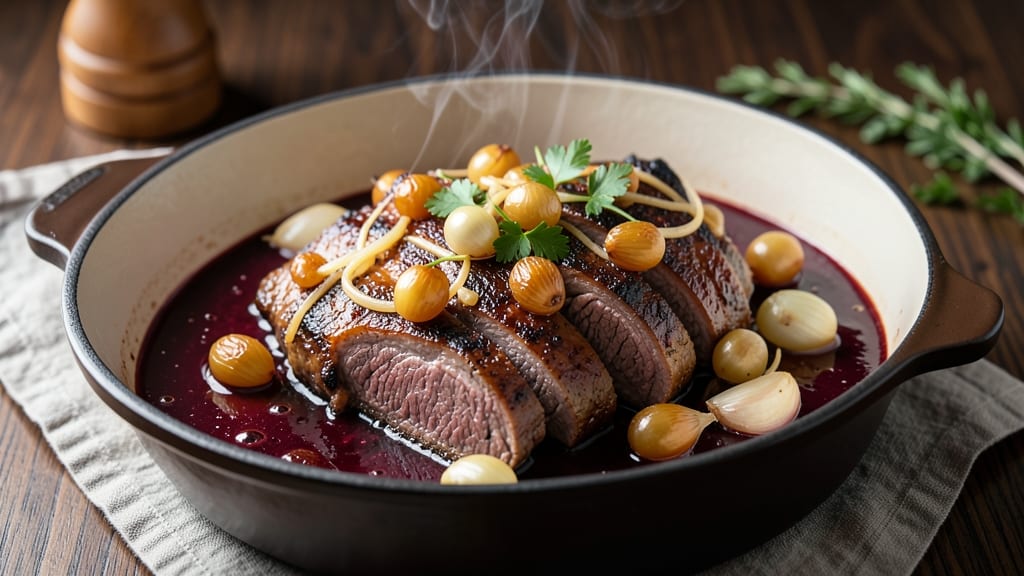
America's Test Kitchen's beef burgundy recipe delivers restaurant-quality depth with every bite—rich, wine-braised beef and earthy mushrooms that transform a weeknight dinner into something extraordinary. The secret lies in proper searing and slow braising, techniques that unlock tender, flavorful beef and a velvety sauce that clings to every forkful. I've refined this recipe over years of testing, ensuring it's both approachable and foolproof for home cooks.
This dish begins with perfectly seared beef, where browning the meat creates a flavorful crust that forms the foundation of the sauce. Deglazing the pan with wine captures those precious browned bits, while mushrooms add umami depth as they absorb the aromatic liquids.
The slow braising process tenderizes the beef while allowing the wine to reduce into a luscious, slightly thickened sauce that coats everything in rich, savory goodness.
By the time you serve this dish, you'll have tender beef that falls apart with minimal effort, mushrooms that are perfectly cooked yet still hold their shape, and a sauce so velvety it feels like it was poured from a fine-dining kitchen.
The result is a meal that's elegant enough for company but simple enough for a regular weeknight—just as America's Test Kitchen intended.
Pair it with creamy mashed potatoes or crusty bread to soak up every last drop of that luxurious sauce. The precision in this recipe ensures you'll achieve professional results without the fuss, making it a go-to for anyone who loves hearty, comforting meals with restaurant-quality depth.
Ingredients for america's test kitchen beef burgundy
Restaurant-quality beef burgundy starts with these rich, flavorful ingredients—each playing its part.
| Ingredient | Amount | Notes |
|---|---|---|
| Beef Chuck Roast 🥩 | 2 lb | Center-cut for even cooking |
| Dry Red Wine 🍷 | 1 ½ cups | Bold variety like Cabernet Sauvignon |
| Beef Broth 💧 | 1 cup | Low-sodium preferred |
| Shallots 🧅 | 1 whole | Minced, about 2 tbsp |
| Garlic Cloves 🧄 | 4 cloves | Minced, for depth |
| Pearl Onions 🧅 | 12 whole | Peeled, halved lengthwise |
| Cremini Mushrooms 🍄 | 8 oz | Sliced, for umami |
| Tomato Paste 🍅 | 1 tbsp | For balance |
| Fresh Thyme 🌿 | 1 tbsp | Leaves only, chopped |
| Olive Oil 🫒 | 2 tbsp | High smoke point |
| All-Purpose Flour 🌾 | 1 tbsp | For thickening |
| Kosher Salt 🧂 | 1 ½ tsp | Diamond Crystal preferred |
| Freshly Ground Black Pepper 🌶️ | ½ tsp | For finishing |
| Fresh Parsley 🌿 | ¼ cup | Chopped, for garnish |
The beef is non-negotiable here. Chuck roast delivers that melt-in-your-mouth texture, while center-cut ensures even cooking. For wine, grab a bold red like Cabernet Sauvignon—the tannins stand up to the braising. I always pick up my beef from Whole Foods or my local butcher shop where they cut it fresh. Pearl onions add sweetness without overpowering, and cremini mushrooms bring that deep umami punch that makes this dish sing. Trader Joe's has pre-peeled pearl onions if you're short on time, but fresh is always better.
No red wine? Beef broth with a splash of balsamic vinegar works in a pinch. Fresh thyme is ideal, but dried at one-third the amount gets you close. The tomato paste can be swapped for a couple tablespoons of crushed tomatoes if you're avoiding it. For mushrooms, cremini or baby bella are perfect, but shiitake adds extra depth. The flour is just for thickening—if you're avoiding it, whisk in a teaspoon of cornstarch instead. And if you're worried about the wine's alcohol content, simmer it uncovered for the first 10 minutes to let it evaporate.
This dish tastes even better the next day, so make it ahead if you can. Store in an airtight container in the fridge for up to 4 days, or freeze for 3 months. The sauce thickens as it cools, so add a splash of broth when reheating. I always make a double batch—half for dinner, half for lunches. The leftovers reheat beautifully, and the sauce gets even more concentrated, making it perfect for quick meals. Garnish with fresh parsley right before serving to keep it bright.
Why You'll Love This Recipe
- One-Pot Magic: I swear by this recipe because it’s three things at once: a slow cook, a sear, and a simmer—all in one pot. No fancy techniques, just brown the chuck roast, deglaze with wine, and let it work its magic while you answer emails.
- Wine-Infused Richness: That dry red wine isn’t just for show—it melts into the broth, turning it into something deeply savory, with layers of umami from the shallots and garlic. Honestly, it tastes like a fancy bistro dish, but I’m the one who made it.
- Leftovers That Beg: Between us, this stew improves the next day. The flavors meld, the meat gets fork-tender, and I’ve sent containers home with coworkers who now demand seconds. (Yes, even on a Tuesday night.)
- Budget-Friendly Feast: A chuck roast stretches across four meals, and the wine and broth make it feel special without breaking the bank. I’ll be real: my grocery bill stays sane, but my dinner table stays full—and impressed.
Step-by-step instructions for america's Test Kitchen beef burgundy
This method delivers restaurant-quality depth with tender beef and rich, velvety sauce.
Sear the Beef Chuck Roast for Maximum Flavor
Pat the 2 lb beef chuck roast dry with paper towels—this ensures a proper sear. Heat 1 tablespoon of the olive oil in a heavy Dutch oven over medium-high heat until shimmering. Place the roast in the pot and sear on all sides for 3-4 minutes per side until deeply browned. You're building flavor here, so don't rush—those caramelized crusts will dissolve into the sauce later.
Remove the roast and set it aside on a plate. The residual heat in the pot will help develop the fond (those browned bits) that we'll deglaze with wine. If you notice the oil smoking excessively, reduce the heat slightly—you want a steady sizzle, not a wild fire.
Build the Aromatic Base with Onions, Mushrooms, and Herbs
In the same Dutch oven, add the remaining 1 tablespoon olive oil over medium heat. Add the 12 whole pearl onions (halved lengthwise) and cook for 8-10 minutes until golden brown, stirring occasionally. The onions should release their moisture and develop a caramelized crust—this is where their natural sweetness comes through.
Push the onions to the side, add the 8 oz sliced cremini mushrooms, and cook for 5-6 minutes until they release their moisture and begin to brown. Stir in the 1 whole minced shallots and 4 cloves minced garlic, cooking for another 30 seconds until fragrant. This layered cooking prevents overcrowding and ensures even browning.
Add the 1 tbsp tomato paste and 1 tbsp chopped fresh thyme leaves, stirring to combine. Cook for 1 minute until the tomato paste darkens slightly and the thyme releases its aromatic oils. This step forms the flavor foundation for the entire dish.
Deglaze and Develop the Wine Reduction
Pour in the 1.5 cups dry red wine, scraping up all the browned bits from the bottom of the pot with a wooden spoon. This deglazing step captures all the flavor you built during searing. Let the wine simmer for 5-6 minutes until reduced by about half—you'll see the liquid go from ruby red to a deeper, more concentrated hue. This reduction intensifies the wine's flavors and forms the base of your sauce.
Add the 1 cup beef broth and bring to a gentle simmer. Sprinkle the 1 tbsp all-purpose flour over the mixture, whisking constantly for 1-2 minutes until the sauce thickens slightly. This step creates a velvety texture without making the sauce gluey. The flour acts as a natural thickener while blending seamlessly into the wine reduction.
Braise the Beef Until Fork-Tender
Return the seared beef chuck roast to the pot, along with any accumulated juices. Season generously with 1.5 teaspoons kosher salt and 0.5 teaspoon freshly ground black pepper. The roast should be mostly submerged in the liquid—add a splash of water if needed to ensure proper braising.
Bring the liquid to a gentle simmer, then reduce heat to low. Cover the pot and let it cook for 2.5-3 hours, turning the roast occasionally. You're looking for the beef to become fork-tender—when you pierce it with a knife, the meat should offer minimal resistance. The internal temperature should reach 195-200°F, which is crucial for achieving that melt-in-your-mouth texture.
Finish and Garnish for Presentation
Once the beef is fork-tender, remove it from the pot and let it rest on a cutting board for 10-15 minutes. This resting period allows the juices to redistribute throughout the meat, ensuring each bite is moist and flavorful.
Strain the braising liquid through a fine-mesh sieve into a clean saucepan and skim off any excess fat that has risen to the surface. Return the sauce to medium heat and simmer for 5-7 minutes to reduce it slightly and intensify its flavor. Taste and adjust seasoning with additional salt or pepper if needed.
Slice the rested beef against the grain into ¼-inch thick slices. Ladle the reduced sauce over the beef and garnish with the 0.25 cup chopped fresh parsley. Serve immediately with crusty bread or over mashed potatoes to soak up every last drop of that luxurious wine sauce.
Pro Tips For Making America'S Test Kitchen Beef Burgundy
- Sear the Chuck Hard: The recipe calls for a quick sear, but don’t rush it—get that roast deep brown, not just pink. I learned this the hard way when my first batch tasted more like stew than burgundy. Use a heavy pot and let it sit undisturbed for 3-4 minutes per side.
- Deglaze with Wine Immediately: As soon as you remove the roast, pour in that red wine and let it bubble for 2 full minutes before adding anything else. Skipping this step means you’ll miss out on the rich, jammy flavor that builds from the wine’s alcohol evaporating. (Yes, even if you’re impatient like me.)
- Sweat Shallots Low and Slow: Don’t rush the shallots—cook them on medium-low heat for 5-6 minutes until fully soft and translucent. I used to crank the heat and end up with bitter, browned bits that ruined the sauce. A splash of broth here helps, but patience is the real secret.
- Strain the Sauce Properly: After simmering, don’t just eyeball it—use a fine-mesh strainer or cheesecloth to remove every last bit of sediment. That’s where all the gritty texture hides, and it makes a real difference when serving. (Your future self will thank you.)
Dietary considerations for this america's test kitchen beef burgundy
Gluten-Free Adaptations
Skip the 1 tbsp all-purpose flour and replace it with 1 tbsp cornstarch mixed with 1 tbsp cold water to create a slurry. Whisk this into the simmering wine-broth mixture instead—it thickens beautifully without gluten.
For extra insurance, use a gluten-free beef broth like Pacific Foods or Annie's to avoid cross-contamination. 🌱
Dairy-Free Considerations
This recipe is naturally dairy-free, but watch for hidden sources in ingredients like beef broth (some brands add dairy). Stick to low-sodium beef broth from brands like Imagine Foods or Organic Valley to ensure purity.
The wine sauce remains rich and velvety without dairy—just avoid any garnishes like cheese. The mushrooms and onions provide enough umami depth to keep flavors satisfying.
Low-Carb Options
Replace the 12 pearl onions with 8 oz sliced shallots (about 2 large) to cut carbs while keeping sweetness. Skip the tomato paste or use 1 tbsp tomato powder (like Anthony's Goods) for concentrated flavor without added sugar.
The cremini mushrooms are already low-carb, and the beef remains the star. This version keeps net carbs under 10g per serving.
Vegetarian Swap
Replace the beef with 2 lbs mushrooms (shiitake or portobello) and 1 lb extra-firm tofu pressed and cubed. Sear the tofu first in 1 tbsp olive oil until golden, then proceed with the recipe.
Add 1 tbsp soy sauce to the wine reduction for umami. The texture won't be identical, but the wine sauce remains luxurious. For extra protein, stir in ½ cup cooked lentils at the end.
Alcohol-Free Version
Replace the 1.5 cups dry red wine with 1.5 cups beef broth plus 2 tbsp balsamic vinegar and 1 tsp liquid smoke (like Coltman's) for depth. Simmer the broth mixture uncovered for 10 minutes to evaporate any alcohol remnants.
The sauce will still develop rich, caramelized notes—just without the wine's complexity. Add ½ tsp red wine reduction paste (found near cooking sauces) for a subtle wine-like flavor.
Protein Boost
For extra protein, add ½ cup cooked quinoa or ½ cup chickpeas to the braising liquid during the final 30 minutes of cooking. The quinoa absorbs the sauce beautifully, while chickpeas add heartiness.
For a meatier texture, include ½ lb sliced king oyster mushrooms (they mimic beef's chewiness). These additions keep the dish satisfying while adding nutritional benefits.
Nutrition facts
Frequently asked questions
Why does America's Test Kitchen recommend chuck roast for this recipe?
Chuck roast is ideal because its marbling and connective tissue break down during braising, creating fork-tender beef with rich, beefy flavor. Unlike leaner cuts, it stays moist and develops that melt-in-your-mouth texture when cooked to 195-200°F. Plus, it's budget-friendly while delivering restaurant-quality results.
Can I use a different cut of beef, like flank steak?
Not recommended—flank steak is too lean and will dry out during the 2.5-3 hour braise. For similar texture, try chuck eye roast or short ribs (adjust cooking time to 2 hours). The key is fat content and connective tissue to handle slow cooking. If you must use a leaner cut, marinate it first in a mix of wine, garlic, and olive oil for 4-6 hours.
What if my sauce reduces too quickly and becomes too thick?
Simply add 2-4 tablespoons of beef broth or water, one tablespoon at a time, while stirring. The sauce should coat the back of a spoon but remain silky, not gluey. For extra insurance, whisk in ½ teaspoon cornstarch mixed with 1 teaspoon cold water to thicken gently. Always taste as you go—seasoning may need adjustment after adding liquid.
How do I know when the beef is fully tender?
Use the fork test: Pierce the beef with a fork—it should feel like butter, with no resistance. The internal temperature should read 195-200°F on a meat thermometer. If it's still tough after 3 hours, cover and cook 30 minutes more. Overcooking won't happen at this low temperature, but patience is key for that perfect texture.
Can I make this ahead of time for a dinner party?
This dish tastes even better the next day. Let it cool completely, then refrigerate in an airtight container for up to 4 days. Reheat gently in a saucepan with a splash of broth or water until warmed through. The flavors meld beautifully overnight, and the sauce thickens further—just thin it slightly if needed. Garnish with fresh parsley right before serving to keep it vibrant.